
Translated material
Claude Louis-Combot: Eternal Returner
The failed priest, the Oedipus with the boy, the adherent of the Ontiric and deeply religious prose, the almost last French modernist Claude Louis-Combam last year was first presented in Russian with a textbook collection-the novels “Vonesya, Black Ternian”, “Hamer”, “The Book of the Son” and a number of essays and confusations.
Being on the periphery of French literature, Claude Louis-Combee is nevertheless one of the most significant writers of his country. This is confirmed by the fact that most of his works were published in the prestigious publishers of Galile, Fata Morgana, FlamMarion and Jos Corti, albeit a small circulation. He is known to the French reader primarily for a frequent comparison of critics with such pillars as Pierre Klossovsky, Georges Batai, Julien Grack and Bernard Noel, as well as the translator Anis Nin and Eric Erickson. But to an even greater extent, wiping for almost half a century of writing of the same thing - the studies of the maternal womb, psychological herological hermaphroditism and martyrdom for almost half a century.
The whiteness and emptiness of the world and the crisis of faith are so frightened by Louis Combees that, through writing, reflexions and dreams, he tries to return to the maternal beginning of a somewhat risky method. The obsessive desire to again become a “returner”, “get closer to something that can recall the original paradise”, to find the stronghold of the infantile existence in the false mother-these are repeating with manic zeal of the author’s fantasy. “The Devil is Love” A report on the two -week expedition “The Black Devil's Office”
For example, in the “Book of the Son”, the child dreams that “... his whole body will follow the advance of the blow ... will enter, plunge, will take the path of darkness, sweets and loss, which will lead him to the center and beginning.” And in “Won, the Black Ternate” - mythobiography (the genre invented by the writer) of the Austrian poet George Truck - the hero’s mistress becomes, in fact, the double of the mother. In addition to the crimes of the flesh, incest is not only an attempt to “reveal the gates of the floor”, return to “Feminine Paradise Wheeves”, but also comprehension of mystical experience.
Another aspect has an incestuality in the mythopoetics of Louis. This is a hope on the androgynous absolute - to dichotomy, separation. Nostalgia for the mythical creature outside the gender. So the synthesis of a woman and a younger man, mother and son, "... form an amazingly closed and absolutely imperishable whisk of eternity."
However, the optics of all works inevitably shifts: from the goddess, the saint, the subject of adoration, the mother turns into the focus of the bloodlessness, fall, and decay. Behind the alluring desire for affection and possession, the destructive gesture of a predatory mother always lies. For attempts to get closer to the “inconsistent tenderness of the walls” of the maternal womb, collapse inevitably. As the translator Viktor Lapitsky correctly noted, pain and sweetness in French are characterized by just one letter-Douleur / Douceur.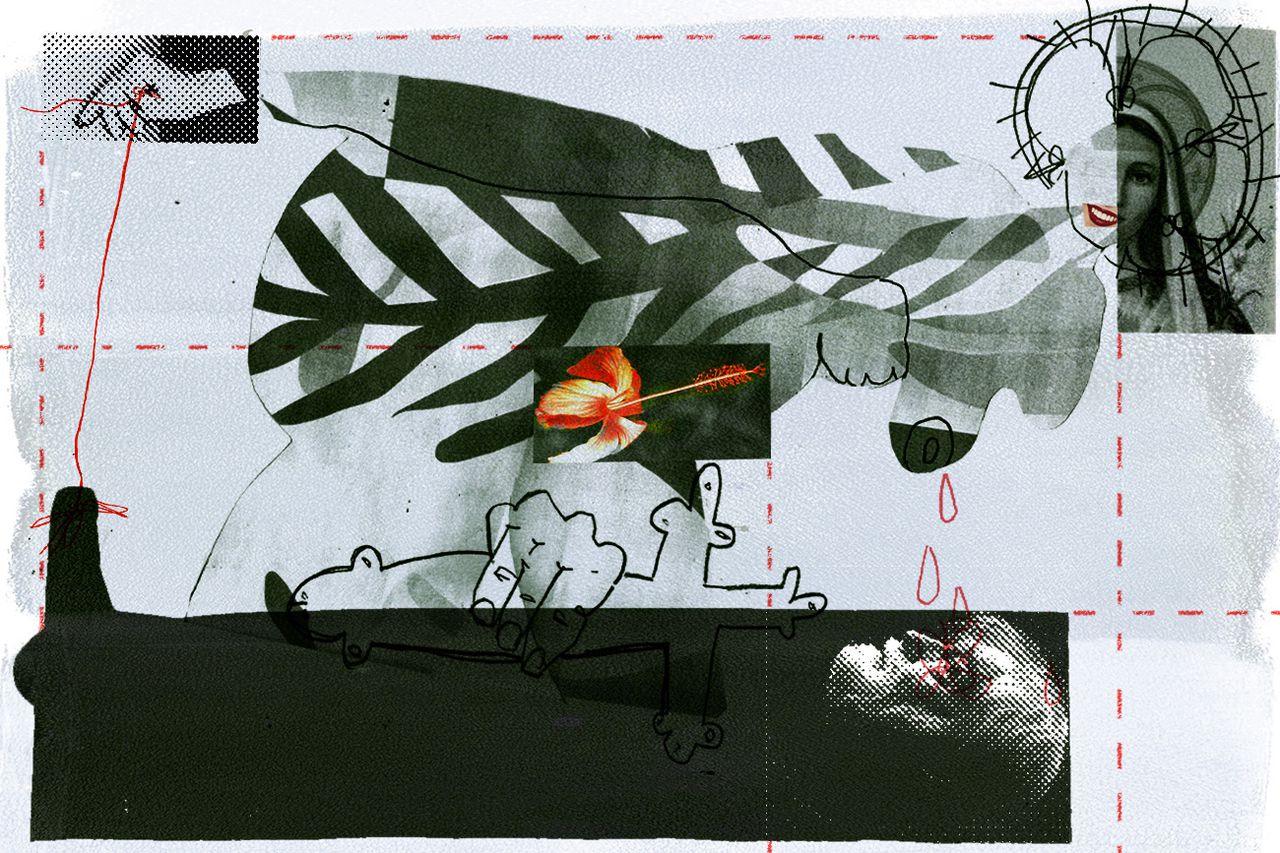
A somewhat apart is the novel “Shsp” - a certain eschatological thriller about the disinfected body and soul, thoughts about whether reality suffers a void. However, he, although to a lesser extent, refers us to the overwhelming non -existence, anticipation of all endeavors - either God, or the bosom is the only one.
The collection is also presented near the essay. It is especially noteworthy of the femininity of writing and, specifically, the French language is another attempt to get into the gender core. As well as essays on comprehension of the text through text, automethetexic experience in the spirit of John Bart.
Be it, a nightmare, or an oneric euphoria, the image of a mother seeps from the space of the unconscious, from a well of archetypal constructions. Louis-Combe in several interviews emphasizes his commitment to psychoanalysis, studying Freudian and Yungian teachings. A dream for a writer is a meeting place with a myth.
All prose is completely autobiographical and originates in the deepest and most hidden roots of childhood. After the death of Father Claude Louis Combee Lucien from tuberculosis in 1937 (in the works of the author, his figure is almost completely absent, as a competitor to Oedipus was absent in his life), the mother leaves her son and his older sister. Caring for children cross the mother’s grandmother (in the triptych of “mother” he calls her “old mother”). In the “Book of the Son”, the author makes several hints about the frivolous and unacceptable lifestyle of the mother, which is why she is a destroyer and a sediment. The gap with the main figure for the child, cold detachment led to its demonization and infernality. Louis-Combe is looking for his answers in the mother of all mothers dominant over the night, darkness and unconscious. For the author, the possibility of knowing its essence is fundamentally transcendental.
Magna Mater is not amenable to domestic sketches. The real writer allows you to look at the portrait of mother only once. In the book “The help of the myth”, individual features primarily appear primarily the extremely carnal and earthly mother, and only then as a demonic essence in the sphere of the unconscious.
Events that occurred in 1937 even now urge the elderly writer to reflect and process memory injury through literature. This is evidenced by the regular return of the writer to the dominant topic of his works: as the early ones - “Tseche” (1972), “Memories of the mouth” (1977), and later - “Mother” (1996), “Mother's Sphere” (2009).
Another aspect is religiosity. Being eighteen-year-olds, Louis Combines enters the seminary of the fathers of the Holy Spirit in order to humble the moaning and desires of the flesh. The writer also admits that he went to the priests in order to save his mother’s soul, to make a kind of border. However, in the toilet, the young seminarist secretly read the works of Sartre, and Nietzsche called love at first sight (presumably, our hero defeated the thesis about the death of God). After three years of the ministry of Louis Combines, he refuses the cassock, from the non-responding gap, the absence called God.
The author and his characters in attempts to abolish bodily attempts sooner or later from the cell plunge into the prominent death of licentiousness. So in the story “Madeleine Au Sang”, the nun with a crucifix breaks the pleura, in order to bleed after, and in “Passion de Maure et Timothe”, the story that takes place during the reign of Diocletian, two lovers crucified by a naked face to each other - beautiful martyrs who stumbled against the flesh.
Talking about Louis Combee, it is impossible to be frivolous. It is difficult to ironize over him and it is also difficult to look for gaps in his prose. We are talking about an incomprehensible, sometimes too ornate and honey -free prose with ontological layers, a smack of Saspenses and inevitable death. A rare, waning letter bordering on confessional poetry. Despite the violent intonations, the attacks of desire and the falls followed by him, this is a very quiet, almost whispering and faceless prose, perhaps perhaps with prayer. Does what we call God / the goddess know the face of our praying? Does it answer us? After reading, the language does not turn to say that yes.