
Translated material
Damned answers
They often think that the difference between the writer and the journalist as the level of written. This, of course, is nonsense. Many journalists write much better than many writers.
The difference between them is approximately the same as between an architect and a master building a house with their own hands. And it sometimes happens that these skills (on the one hand - imagination, the ability to design, think with volumes, and on the other - correctly sharpened hands and the ability to get building materials) fall into one bottle. And then amazing hybrids are born.
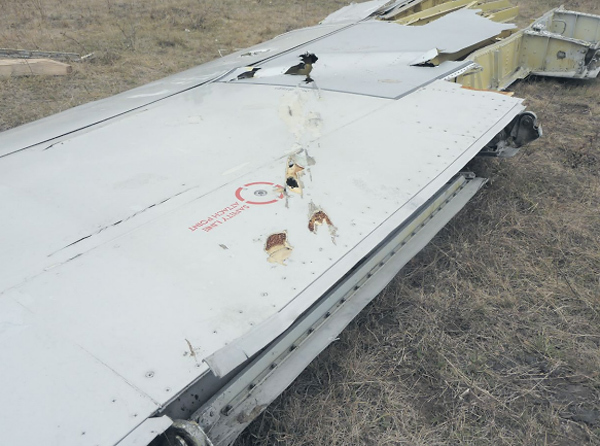
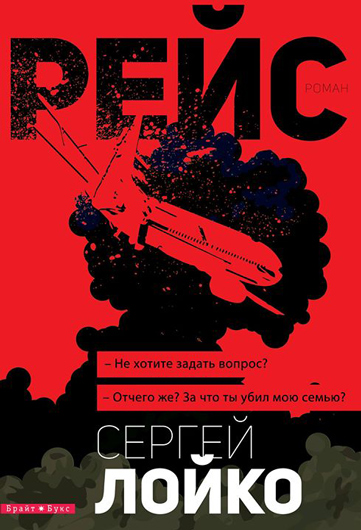
This week in Kiev is the flight - the novel by Sergey Loiko, the military reporter, the Los Angeles Times in Russia newspaper. Sergey is a desperate guy, one might say, reckless, in 30 years in journalism he went through all the hot spots of the planet. My comrade and neighbor. I was lucky to read the manuscript of the novel one of the first. I knew that it was a political detective. I also knew about what - about Boeing, shot down over the DPR. The surprise was what I wrote about the same night when I read the novel, not looking up: “... also prose on the highest chip. I was struck by how you control with such a crowd of characters, how much this crowd is not a mass, but the sum of individuals. And human speech. And how you twist the plot, without losing anything, not allowing a single sagging, I would include in the textbooks the chapter “How to build a plot”. ”
Yeah, the author started the spring with such a devilish insidiousness that, not letting you go for a moment, it straightens throughout the entire space of a thick text, from the first chapter - and shoots not just on the last page, but in the last line. In the last line, Karl! With sudden and magnificent clarity - like a flash of magnesium.
I have never seen this - neither Agatha Christie, nor Boris Akunin, not at all the very cool master of the genre I have very respected.
In short, it is clear that the Roman “flight” is a very worthy and even wonderful example of a detective.
But today, when our profession is about to live a long time, when students are explained at the journalism factory that the journalist must certainly take into account the position of the leadership, when the truth becomes exotic, when Russian citizens do not understand and do not believe that their state is fighting with the closest neighbor (well, like me-Loiko, the door door)-today it is especially important that a detective is written-military, political and journalistic.
Why does a journalist turn to artistic prose, Fix, to fiction?
Well, because, of course, what is tormented by the itching of writing, the fact is crowded to the author. Among other things, this happened to Loiko.
A few years ago, he wrote the novel “Airport” about the battles for the airport in Donetsk, where he did not move away from the texture almost no step. Even to the names. And he described his personal tragedy, the death of his beloved wife, because it is, because for a long time - or maybe he will never be able to distance himself from her. Actually, he wrote about himself, beating in the crazy funnel of this war. He was looking for bullets then, looking for death, I know that. But Seryozha is conspired, perhaps, conspired by the death of Nastya.
Airport was a detailed report with a hero-author. There was practically no fiction in it.
But time passed. And Loiko, an honest military journalist, had to figure out the most damned issue of the season: who is to blame? Each of us, who is somehow involved in the profession, asks himself this question constantly.
I have never seen this - neither Agatha Christie, nor Boris Akunin, not at all the very cool master of the genre I have very respected.
Sergey was thinking about the book and on the answer of 17 years.
- The central, “plot -forming” disaster then was an explosion of the house in Moscow, in which the hero’s family dies. The rest was approximately the same. But the hands did not reach. War. Then the death of Nastya. Then "Airport". And then this “Boeing” (in which the hero’s family also dies, and he, a lone ranger, is investigating the global circumstances of the personal tragedy. - A.B. ). And I left work and began to write. I can't prove anything. I just propose my version of events, based on indirect evidence in general access. Well, of course, he consulted with the military, with the Air Defense General ... He passed the sources, the report of the international commission ... But my book is not an investigation. This is a novel based on real events, like thousands of novels.
Here is the second, and maybe the first reason why the journalist is taking care of fiction. He knows the answers to questions. These answers burst him, as a dangerous secret about the horns of Alexander the Great, his brandy, the hero of the parable about the reed from the reed. But he has no direct evidence. Yes, even if there were: "To eat him to eat, but hto him give him?" No matter what anyone dug up, Seryozha waved his hand, even direct evidence, the commander in chief from everything will discern. “There is no council on them, no one will put them on the bench of the defendants.” And he writes a version of events. A novel based on reality. Because he is, first of all,-a journalist.
Loiko is right, there are thousands of such novels. Even science fiction. No: especially fantasy. Fantasy is the most convenient genre for damned answers. The author chose a fantasy adjacent, as it were, an entertaining genre of a detective. But he came so close to reality that he seemed to be “Aesopov Language” literally burns his bare truth.
And if not the previous Roman-report “Airport”, I would say that, they say, another journalist showed the writer's class, that are well done.
But the reference point, point A - was. And now, when this second point appeared - R , you can see what lies between them: the path. The path is not so much to the historical truth of the fact, but to the artistic truth, which every serious writer passes, as a samurai-the path to death.
The Death Angel accompanies Sergei Loiko hand in hand with the guardian angel. The two birds, black and white, soar each over his shoulder entrusted to him, and this double motorcade provides the book with the volume, that stereoscopy that cannot be achieved with the help of experience or only one imagination.
Almost all characters have prototypes, living people for whom the author wrote down - word for word.
“Flight” is an important evidence of a journalist armed with optics of expanded consciousness. A competent photographer, Loiko understands that a truly valuable “card” is the one that has a story. Volume. Fate. Handsome perspective and development. The episodes of which the Roman “Flight” consists is not photographs. This is a layer tomography. Each character is character, every character is history, every story is fate: from a maniac and his victim to a crazy old woman and a prostitute, from all the military, journalists, bandits, thieves in law and cops to the main characters. This is what I call the journalist the “dilated consciousness” - the ability not only to be beautiful to use the fact that is in the professional piggy bank of each of us, but also to integrate into the general drama, to solder into the plot without a single seam.
Thanks to this, it arises, as Sergei himself says, the 3D effect.
Almost all characters have prototypes, living people for whom the author wrote down - word for word. The real thief in law not only told all the episodes of the mafiosi of the scribes, but also “supervised” dialogs. The main character - a former cop who is a roofing crime, is also a cigaretteal accomplice - also a real and also a consultant. The American journalist is real. The maniac is real. All the episodes with Boeing “I scattered the air defense, I wrote it down again, with intonations” ...
“Having run into the place of the tragedy one of the first, Karzukhin tried to pull the gold rings from the fingers of two torn hands, which he came across in the field, but he did not succeed. There was no tool with you. So he dragged his hands home as a whole.
- Wait! - shouted the Chepurny, as it seemed to him, in a terrible voice. - I will shoot!
Karzukhin stopped, shook his head and threw one of his hands at the fins of the militia:
- On, bitch, choke on, fagots e ** ny!
Chepurny silently raised the gun even higher, directing it directly to Karzukhin in the face. Then the giant finally flew off the coils of the coils, from which even his hair stood on end ... shook his head, growling like a hungry chain mongrel, he dug into his hand with crooked yellow fangs ... "
Well, you can come up with this?
Three years have passed between the first and second novels. The results of which the Loyko writer have reached a jump in the three years, adult writers achieve permanent writing in 10-15 years.
"Flight" is a book by an experienced master. And at the same time - a journalist. But these things are extremely rare-in one or two cases out of a hundred-coincide. Sergei acquired a novel skill - without having lost a single journalistic skill: accuracy, honesty, fidelity, and courage.
But there is one mysterious phenomenon in different literary texts, which I consider to be a test of literary authenticity. Bulgakov identified him with memorable words "Oh, how I guessed!"
Recently, Pavel Kanygin published an investigation into Boeing in Novaya Gazeta. The facts set forth in it coincide with some episodes of the novel.
The material, of course, was written at least a year later than the novel. “I did not know about Pashin investigation. Pasha did not know anything about my novel. He excavated, well done and the hero. He risks very much - unlike me. I have no doubt that it was as he describes. I just know. Even outwardly, his character looks like my hero. The investigation of Kanygin and my book - the coincidence is not accidental ... "
Seryozha could not explain the nature of this coincidence. And from the outside I can.
The journalist and writer are dug up to truth in different ways. The journalist takes the trace - “scum like a dog, an eye like an eagle” - and (often) mortal risk. The writer, as he himself says, "just knows." But, in order to “just know”, 30 years are needed under bullets on different continents and 17 years of searching for an answer, and then three more years of meetings and records “With Intonations”. That is, the work by a journalist.
And then the number goes into quality. The writer - guesses. And fiction reacts with reality.