
Translated material
Saving reading
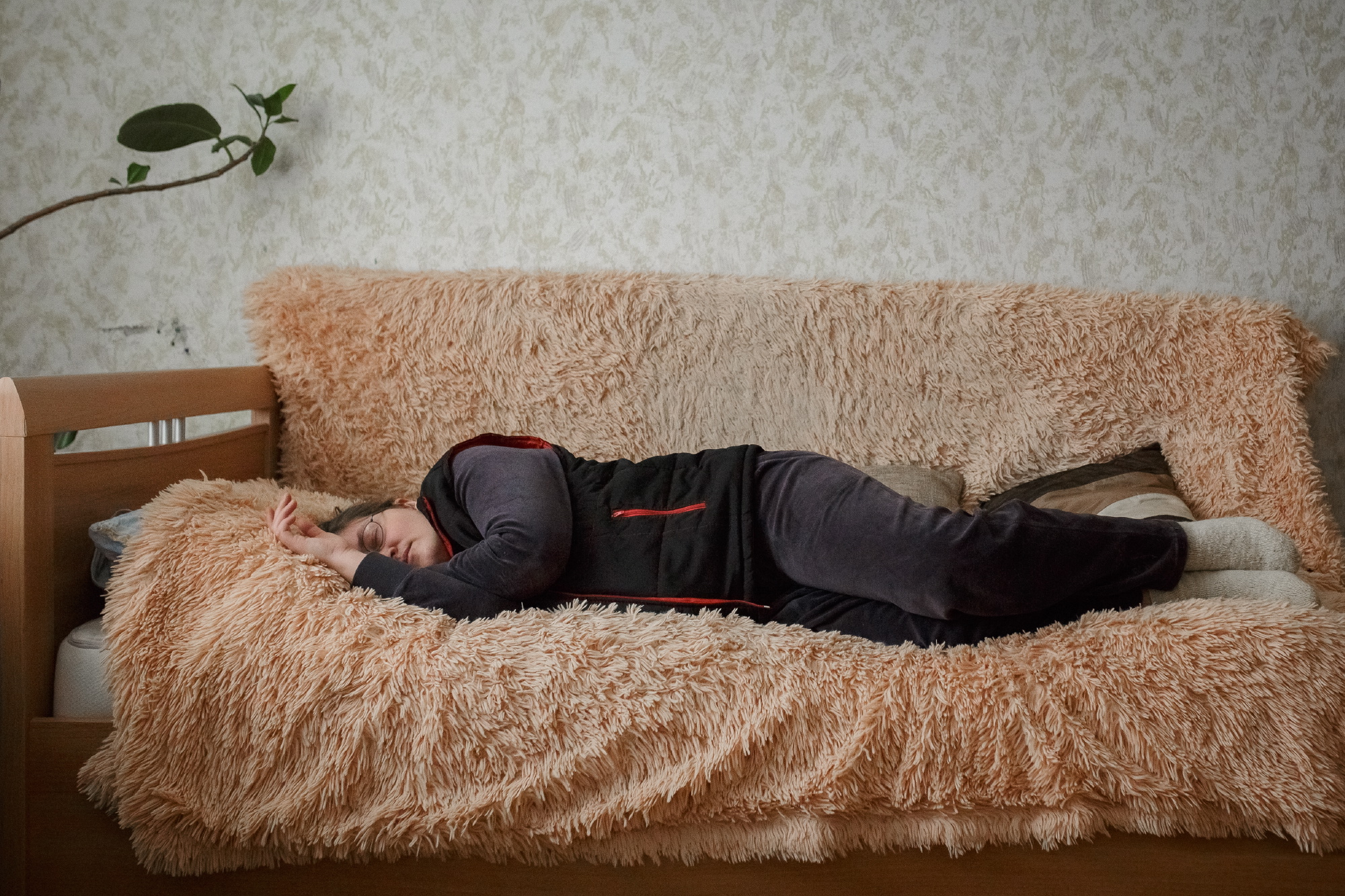
Tanya learned to read at the age of four, since then magazines and books are everywhere with her - at home, in a neuropsychiatric boarding school, even in the children's room of the police. Reading saved the visually impaired and hard of hearing Tanya from loneliness
Help your interlocutor helpTanya was born with hearing and vision problems, but she learned about this only at 11 years old - teachers at school began to complain that she did not understand the first time. Tanya did not like to study, because at school she was scolded, teachers did not like what Tanya was painting on the walls. Once they called a grandmother to school and told Tanya to take to the hospital. There she was diagnosed with “organic lesions of the central nervous system” and sent to a boarding school.
At 7 in the morning, rise.
If you want, do not want, but you have to get up.
We refuel the bed.
We go to receive pills.
In the corridor at the procedural line.
The nurse gives the medicine.
You drink, open your mouth, show that everything has swallowed.
(from the diary of Tatyana Vnukhevich-Bagdasaryan)
Wooden beds, bedside tables, a small closet - everything that was in the ward. There was a small TV in the lobby, which was rarely allowed to watch and under the supervision of the nurse. Sometimes children were given books - everyone is the same and moralizing, like a "fairy -tale punishment." Tanya was worried that her personal library remained at home, and there was nothing in foreign languages: who would have thought that someone would need such books in a correctional boarding school.
"He created our language"
Tanya read at night, highlighting the books with a flashlight, and for this complaints were written against her. After ten in the evening, the nurse laid everyone to bed and turned off the light in the wards. Then Tanya came up with to put things under the blanket, and she secretly went with books to the toilet. “On a broken tank, a plywood lay instead of a lid. I shot her and stacked books on her. Sometimes I wrote works right there, ”she recalls. For a long time, the nurses took things on the bed for Tanya, but when the nanny found out about such a reading, she found an amateur manual on Tanina - she began to engage in the Georgian language at night, bring foreign literature. Tanya rejoiced.
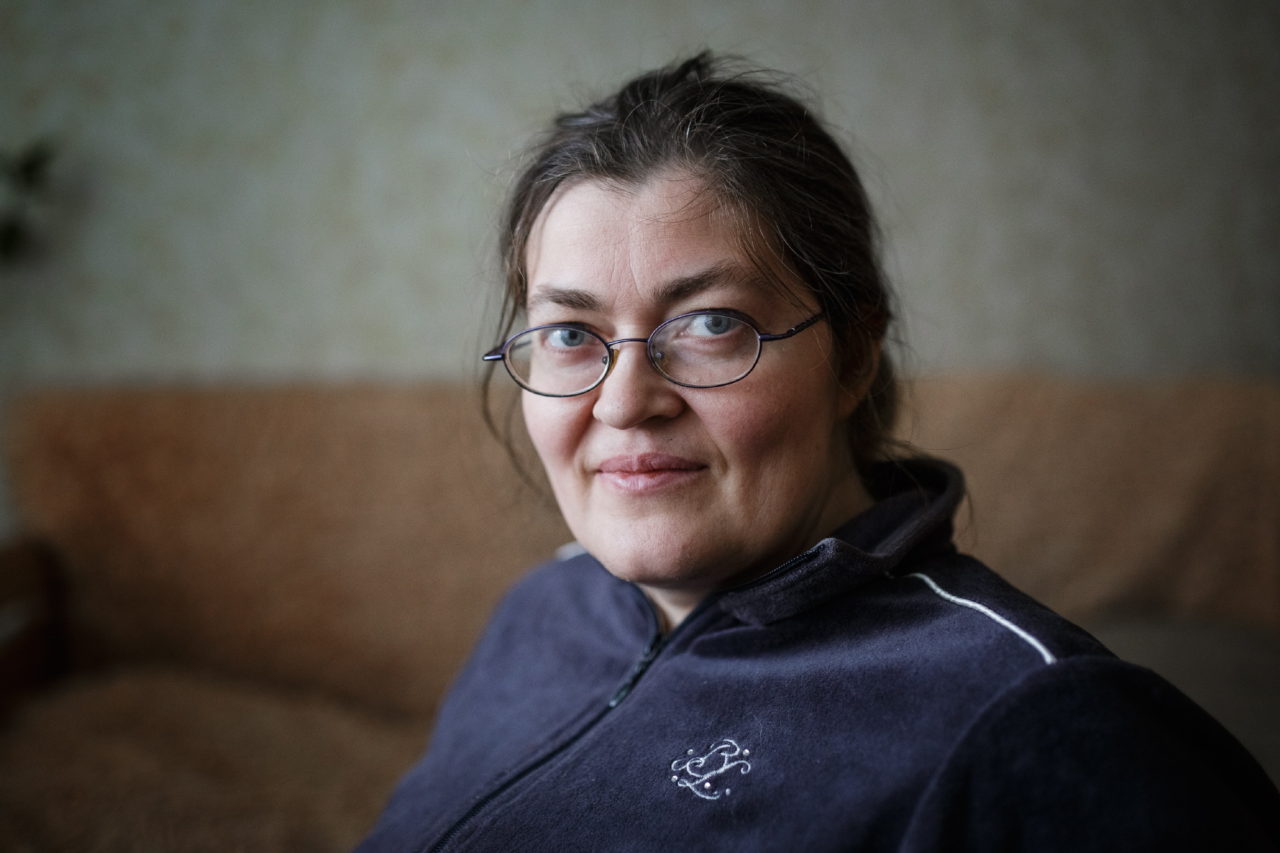 Tatyana photo: Evgenia Zhulanova/Schschi for TD
 I like to read. In the toilet.
There are two shelves with books in the ward.
Another others are hidden under my mattress.
It’s good at night to read adventures - for example, Jules Verne.
The empty corridor is dark.
The moon and a dull lantern are shining in the far window.
Silver poplar sways in the wind, hits the window.
And shimmers in the moonlight.
Perhaps that is why it is called silver.
I am sitting with a book in a long cabin.
The window is open.
Cold frosty air and smell of chloride.
Light swings from the lantern.
I'm in shorts and T -shirt.
But I'm not cold.
I am no longer in Russia.
We are sailing around the ocean, the equator is soon, and it’s very hot ...
The Latin alphabet Tanya learned at six: “It happened by accident. In the kindergarten, the teacher from Riga had many old books in Latvian. She seated us in a circle, read and translated us. She pointed to the pictures: she said one thing, but next to the signatures were others. I began to ask what was written there, and she began to teach me Latin letters. Then I gave me books in German, English, French, and I read them out loud. I did not know the rules, I did not understand what was written there, but I really liked it. ”
Tanya learned the Latin alphabet at six, by chance. At eight - Armenian - and also by chanceAt eight, Tanya recognized the Armenian alphabet - and also by chance. “It was May, I went out onto the balcony and, sorting out things, found an archers in Armenian. The one in which the letters were duplicated into Russian, I began to teach. "
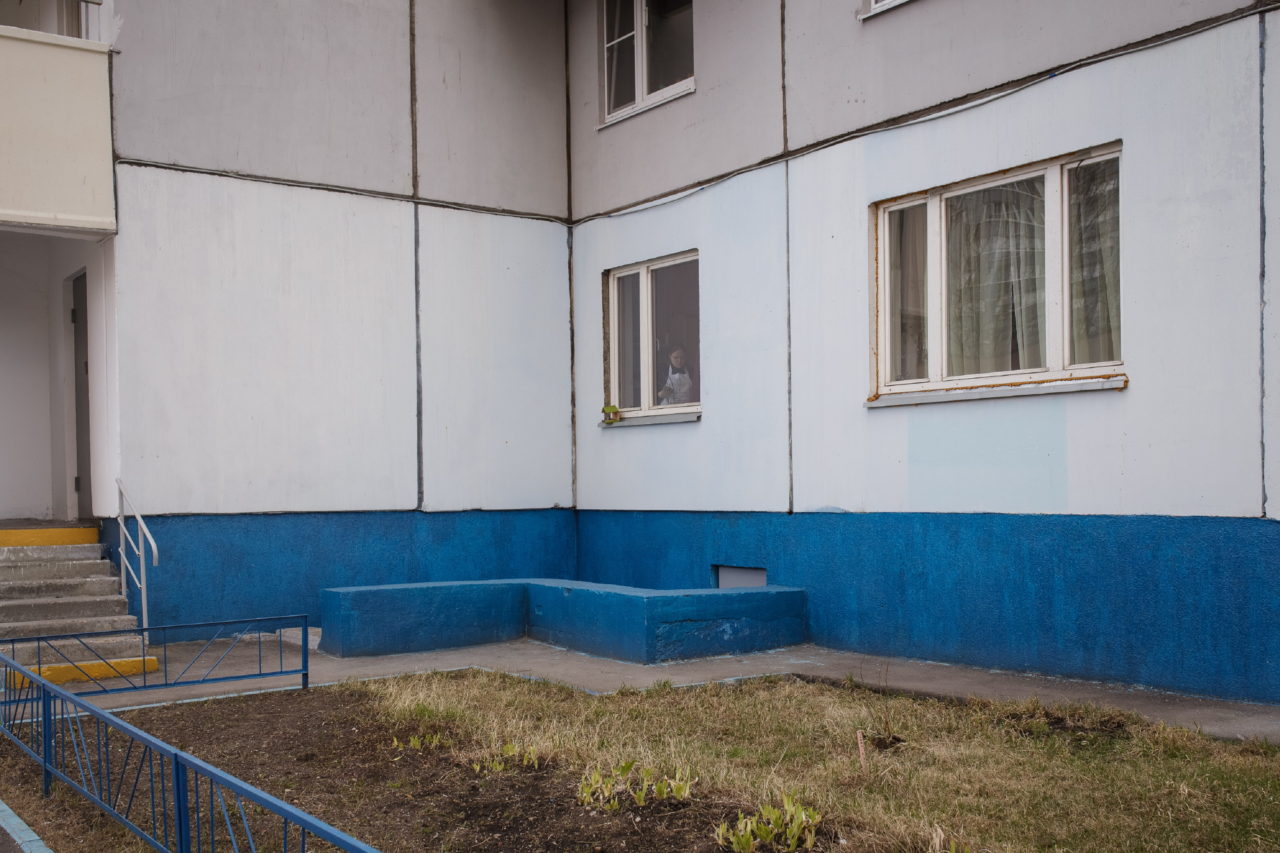 View of a training apartment where Tatyana photo sometimes lives: Evgenia Zhulanova/Schschi for TD
When Tanya was fourteen, in the boarding school she was allowed to spend a weekend at a Sunday school at the Armenian Embassy. They were engaged in music and dancing, lectures on history and literature - all that was so lacking in the boarding school. Tanya fascinated Tanya so much that she added to her surname, Vnukhevich, another - Baghdasaryan. When asked why the Russian girl with the roots of the Polish Jews decided to become an Armenian, Tanya evasively replies: "This is the name of the family from the Armenian community, which helped me a lot." And he adds that the Armenian culture at that time turned out to be much closer than the Russian one.
“I wanted to communicate with my peers, but I did not understand them. She did not like the singers they discussed. I was not interested in modern dances, because in the community we had traditional dances. In the boarding school, I did not know about anyone, because we rarely watched the TV, and there we did not consider it necessary to talk about those who are known in Russia. And in the Armenian school we were told: "These are our architects, our musicians, and these are our singers." I was imbued with great respect, remembered this. I knew that "Mesrop Mashtots created our language."
What can I do for you?
When Tanya left the boarding school, it was not up to reading - I had to work as a nurse, wash the floors at the Helmholtz Institute. Nobody wrote about how to cook food, go to the store and even about the fact that you should spend the night in your bed in your bed, they didn’t talk about it in the boarding school, and my grandmother considered it too adult. Tanya was seventeen.
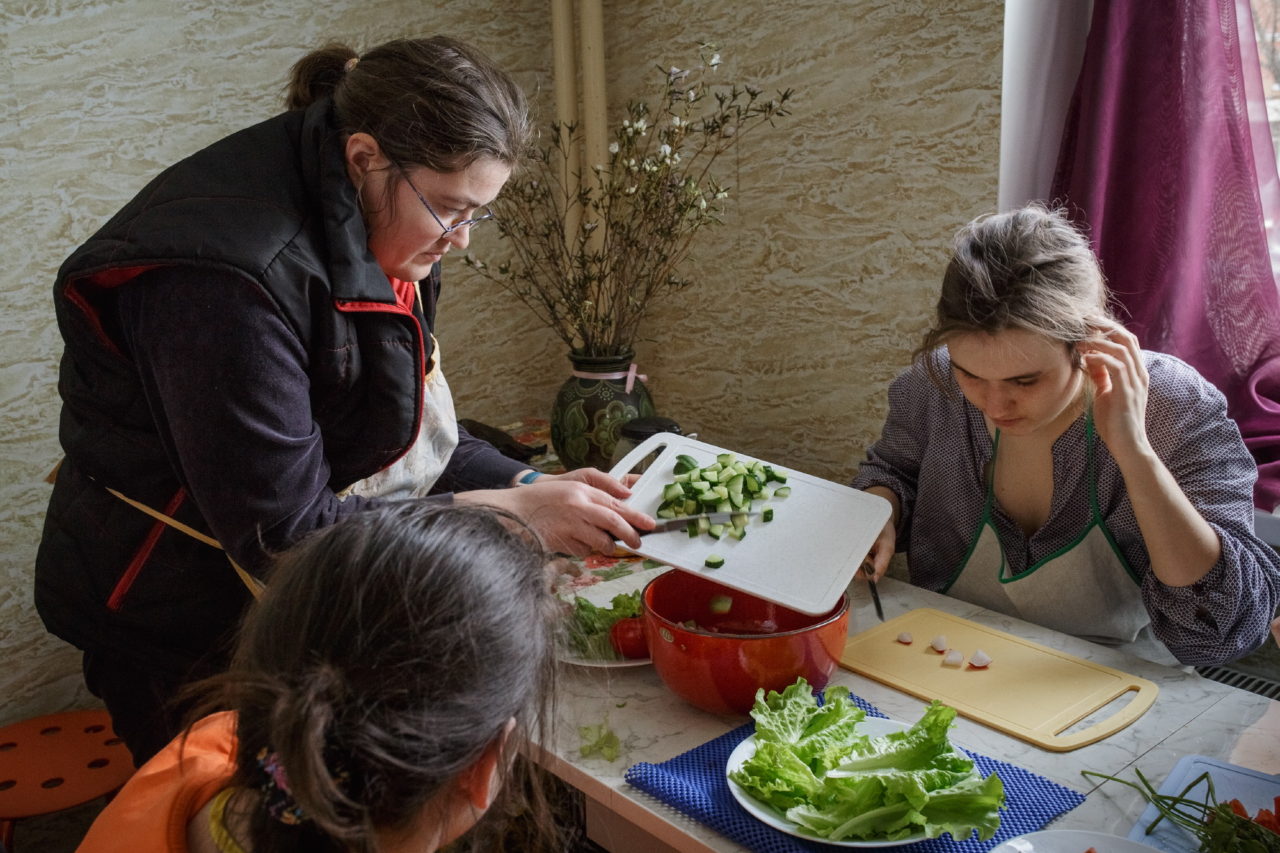 Preparation of lunch in a training apartment photo: Evgenia Zhulanova/Schschi for TD
Sometimes Tanya spent the night on a bench under the summer sky, falling asleep with a feeling of freedom. A single -legged stray, similar to a stable tin soldier, just in case, taught her to bask in the subway.
“One night after work, I went out onto the garden ring. Grandfather with a broken head was walking towards, and I offered him help. He said that he came from the Kaluga region that he was attacked, and now he got lost. He asked to take him to the Kursk station. There you could buy a ticket and spend the night in the train car, but when we arrived, the tickets were already over, ”says Tanya. - He decided to spend the night on a bench, I was sitting nearby. And then the police are going on, the documents are checking. The policeman turned out to be the head of minors, took me to the department. There, he fed me with dinner - fried chicken, a piece of bread. And then he closed it in the GRD, in the cell. Behind bars were only a shop and a nightstand, and a children's magazine was lying on it. ”
In neuropsychiatric boarding schools, I felt independent.
Despite what was the daily routine.
You can get used to it.
I am glad that they gave me a pass and I could go out into the city!
And even go to another country.
It's a pity I can not do this and lives in a boarding school all the time ...
I could buy things, food.
I could buy others when they asked.
I really wanted and want to help them.
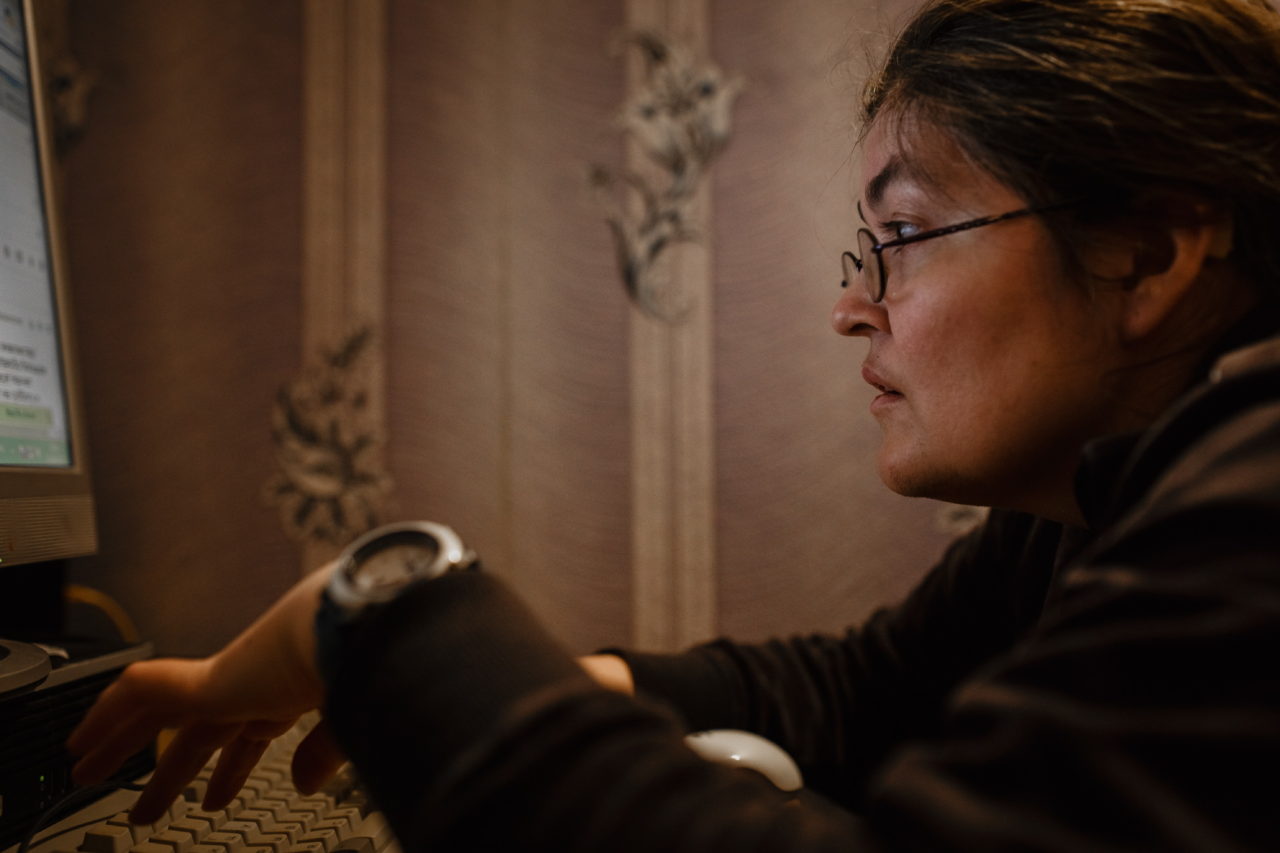 Tatyana works at a computer photo: Evgenia Zhulanova/Schschi for TD
Several times Tanya had to return to the boarding school - the doctors advised. But she could almost always be asked for walks, visit her grandmother, while she was alive, go to the library and meets at the Club of Blaglyuh. In the club, she met Natalya Kremenva, who dreamed of publishing a magazine for people with hearing and vision problems. But then she did not have a Braille display, it was difficult to gain texts, the publication required the authors and translations of foreign publications about Josher's syndrome (an innate disease with a progressive hearing loss and vision). Tatyana approached the future editor and asked in gestures: “I really want to help you. What can I do? "
It all began. Tatyana reprinted the texts that came to the editor in paper letters by mail, translated foreign literature for articles, searched for a printing house. “They agreed to print - now only pay money,” says Tatyana. - I brought them a diskette with a finished layout, but once the layout was sick. It was impossible to tear the issue of the magazine. I did not know how to turn out, but I collected a number in Word. "
Once during the press, the pages moved, and the signatures for the articles lay on other texts. The magazine was released with an error and sent to the regions. Readers noticed this, but only wrote that they were happy with the new number. "Your interlocutor" is printed on the font of Brail and font, it comes out four times a year and always on time.
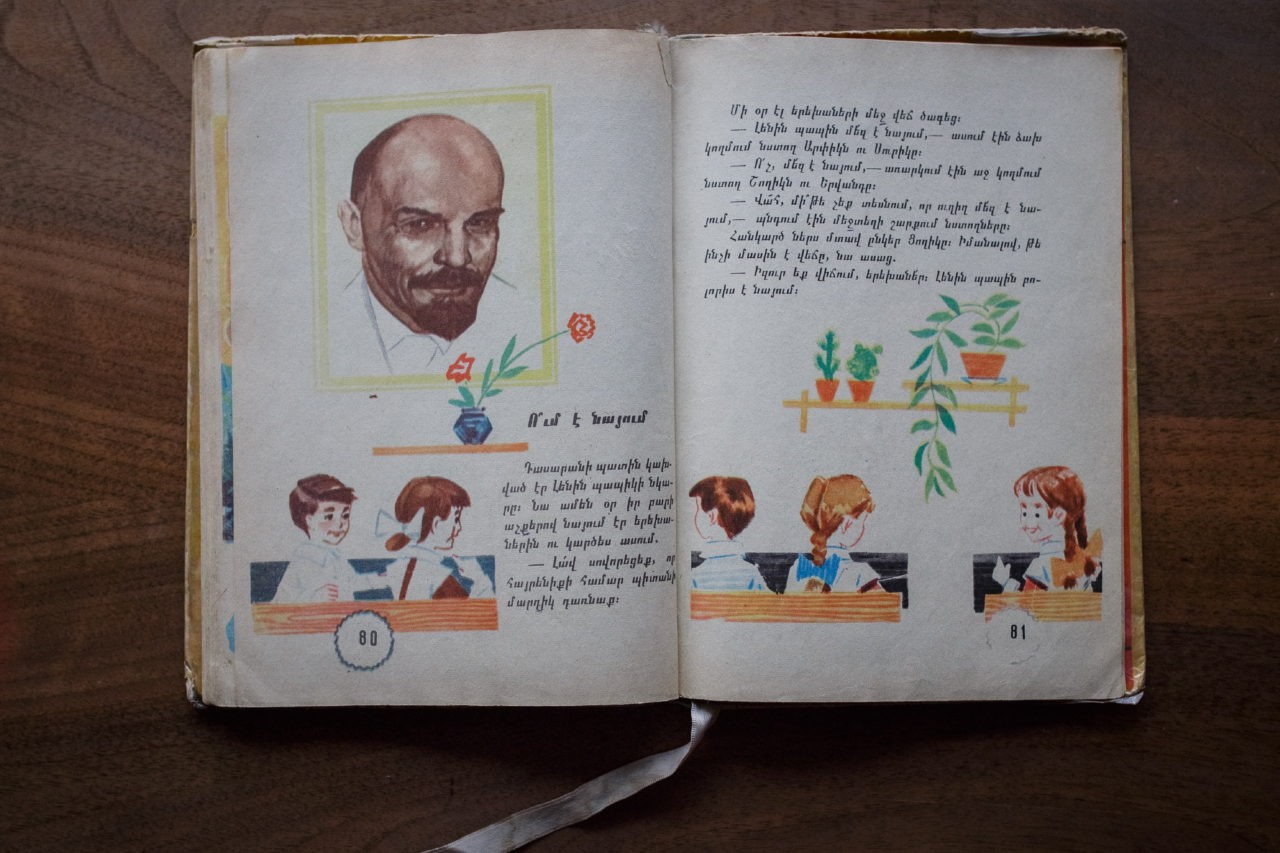 Armenian Primer Tatyana Photo: Evgenia Zhulanova/Schschi for TD
“The magazine was created in the editor’s apartment. We met in the morning in the kitchen, drank coffee, ate kurabier cookies and read the number until late in the evening. Natalya Borisovna (Kremneva) is total visually impaired, I read all the texts in her hand with punctuation marks. She kept the articles and edited in her head, and then dictated to me, ”says Tatyana. - We talked about a lot, not only about the magazine. After all, I was 20 years old, I got out of the boarding school and did not really understand how everything works here. And she taught me, talked about life. In the boarding school, nothing came to us, if only small fragments. ”
Masha Dad brought the hotels.
Masha and Natasha decided to divide the Big Marmalade Mishka.
Bite in turn.
They treat us so often.
They also gave me a bite.
I could not open my mouth.
But when the marmalade bear touched my lips, his mouth opened.
I began to feel the taste.
So my girlfriends treated me.
And it was a connection with the world for me.
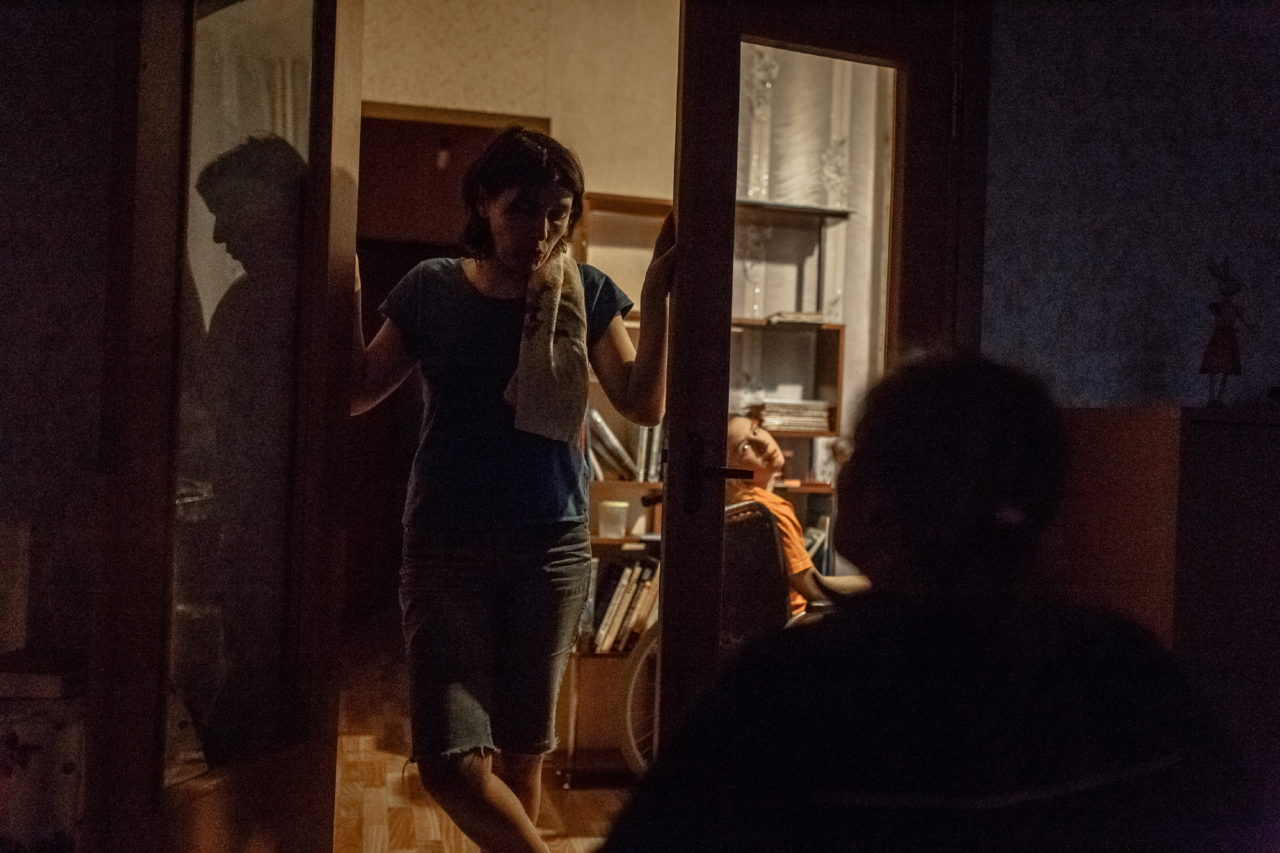 Vita, Varya and Tatyana Photo: Evgenia Zhulanova/Schschi for TD
Two years ago, Tanya recorded a diary of memoirs from the boarding school, and the journalist Vera Shengelia promised to publish it in the form of a book or put a documentary on it. “The boarding school is similar to a hostel, but the psychiatric regime is not very good there. We’ll get up, breakfast, meetings with loved ones, sleep - all on schedule, ”says Tanya. “Recently, the doctor again wrote me a referral to the boarding school, he says I forget to drink medicine.”
Tanya celebrated her birthday in a training apartment - this is a space in which people with developmental features are preparing for an independent life. Here they learn to cook and care for flowers, go shopping and engage in music. In the apartment, Tatyana helps her neighbor Varvara with homework and teaches Georgian and Hebrew with her. She also began to write about this in the diary, but so far she did not show these stories.
Tatyana understands people with dumbfounded almost from the whole world: she knows English, Armenian, Georgian languages and dactyls to themToday, Tatyana is a certified Tiflopedagogue, she is 40 years old, and she understands people with dull lump from almost all over the world. She knows English, Armenian, Georgian, not counting the native Russian, and to each of them by dactil (the form of communication, when the letters are transmitted to the interlocutor’s hand with the help of fingers). The computer stands in the corner next to a small sofa and bookcases. Here she reads at night and writes. At home, Tanya does not need to hide the “Chronicles of Narnia”, “Hobbit”, Pushkin’s fairy tales and his works. Next to your favorite books - the binder of the magazines "Your interlocutor".
The famous defectologist Olga Skorokodova, the author of the book “How I perceive the World”, says that the salvation of blinded people in reading. For example, Tanina's friend from the boarding school, Natasha, determines the words by vibrations of the speaker's voice, applying his hands to his throat. In addition to Tanya, Dactil in the boarding school does not know, but a few like it to communicate with the deaf -blind people as Natasha can. When Tanya is not nearby, Natasha reads "Your interlocutor."
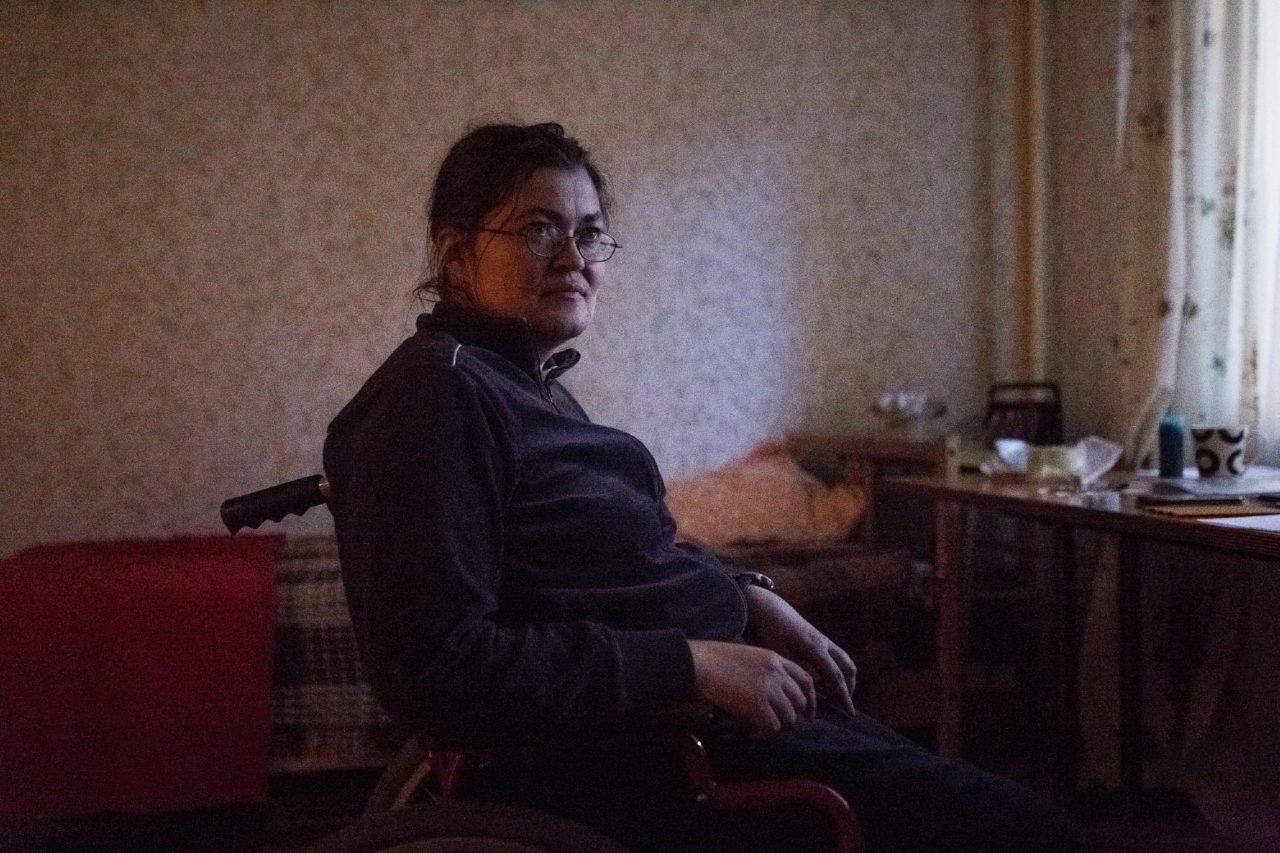 Tatyana photo: Evgenia Zhulanova/Schschi for TD
Tanya considers this magazine very important, and not because it works in it. In boarding schools, where dense people often live, there is almost no freedom and independence. There is no one to tell you how to make food for yourself, how to turn to a lawyer, to care for the auditory devices. They do not know how to get a driver’s license with the features of vision and hearing and master the skiing, or what, for example, can go to Denmark for the conference. But about all this secret knowledge, one can read in the “Your Interlocutor”, which is published by blind people with the help of the Co-Union Foundation and the “Need help” fund.
The magazine, and therefore hundreds of people for whom he is almost the only connection with the world, needs our support with you. You can sacrifice a very insignificant amount - one hundred rubles a month - but if you do it monthly together - the magazine will live. We will pay for the work of Tanya and other authors, an accountant, a tiflosurdor -translator. The magazine will be printed and send the circulation to those who are waiting for him so.