
Translated material
The most “pure” government in the history of France?
Approving the composition of the first cabinet of ministers, President Macron took a pause to verify tax returns
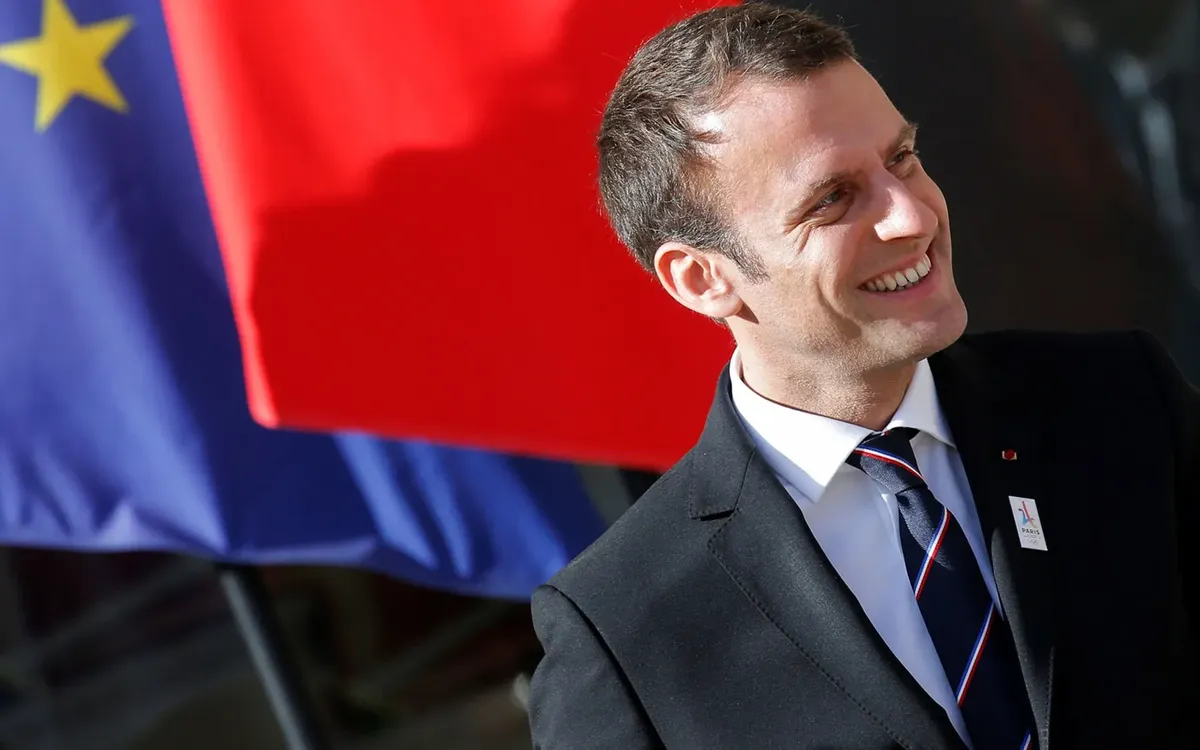
In France on Wednesday, May 17, the composition of the Cabinet of Ministers - the first for President Emmanuel Macron was announced. The announcement was shifted for a day - the Champs Elysees explained this by the need to carefully check the candidates for their “financial cleanliness”.
Macron wants to avoid scandals, the victim of which was his predecessor Hollande (who sought to make a struggle with tax evasion of one of the iconic topics of his five -year plan). But a few months after the entry of Hollande, the minister of the budget Kayuzak (sentenced as a result of 3 years in prison- ed. ) Was the Secretary of State of the Budget of Prison, and in 2014, the Secretary of State for Foreign Trade, was forced to resign nine days after his appointment.
President Macron, who took on a thorough financial audit of the candidates as much as a day, may be able to avoid such scandals.
It is noteworthy that the head of the “financial-artist government” Eduar Philippe before his appointment (which took place on May 15- ed. ) Was accused of allegedly not completely declared his property. The accusation, as reported by the famous Mediapart investigation site, put forward the highest body to observe the transparency of public life (an organization created just after the scandal with Kayuzak - Ed. ).
According to Mediapart, in the answers to the question about the cost of three real estate objects, Philip indicated: “I have no idea.”
What is another new government is noteworthy
The government fully observed parity between men and women (if the prime minister is not taken into account)-however, Hollande adhered to this principle. But in the first Macron government , there are only 23 people - 18 ministers and 4 state secretaries (Secretary of State is a little lower) plus the premiere.
In the modern history of France, only one case was registered when there were fewer people in the Cabinet of Ministers: there were 21 people in the first government of Fion. Under Holland, the number of Cabinet members varied from 31 to 39.
Under Macron, who announced one of his main tasks “Consolidation of France”, the government has become more “motley” : it contains 4 people from the “social party”, 3 people-including the Prime Minister-from the right-wing party “Republicans” (from which Fiion came), 3 from the Center Party “Modem”, 2 from the left-geenting “radical left-handed party”. But the most important thing - half of the new ministers - this is the so -called “Representatives of civil society” who had not previously held state posts.
A few more changes occurred in the organizational structure of the government. For example, the Foreign Ministry was renamed the Ministry of Europe and Foreign Affairs : Macron went to the presidency under the slogans to strengthen and reform the European Union. Now he gave the EU higher status in the French ministerial hierarchy, and at the same time retained the post of "Secretary of State for European Affairs".
The Ministry of Ecology and Transport was renamed the "Ministry of Complex Ecological Transformations". This is a pass, including in the direction of those who voted in the first round of the presidential election for the left candidate of Amon (6%) and ultra -stroke melanchon (19%) - they both promised their voters serious reforms in the field of transition to environmentally friendly technologies.
In addition, it was precisely with the condition that the ecology will “take care” that 62-year-old Nicolas Yulo, a famous TV presenter and a fighter for the cleanliness of the environment, agreed to become a specialized minister. At the President of Hollande, he was a special representative in ecology.
Who else joined the Cabinet of Ministers
The Minister of Foreign Affairs was 69-year-old Jean-Yves Le Drian (Social Party, the head of the Brittan region), one of the most popular Hollandy ministers, who at the last moment supported Macron's candidacy, and wanted to retain the post of head of the Ministry of Defense in exchange, but he was appointed to the Foreign Ministry. And now it is he who will be responsible, including for continuing negotiations in the Norman format.
As the Minister of Defense (2012 - 2017), Le Drian has repeatedly critically spoke about the policy of the Russian leadership. The last example is the performance in the National Assembly on January 12: Le Drian criticized the actions of Russia in Syria, recalling that after Parisian attacks on 13/11/2015 he went to Moscow twice (including with Hollande) to agree on a joint fight against terrorism, but then “nothing happened”. Le Drian said in parliament that the Russians waged an effective struggle against terrorism only in Palmyra, which then "again went under control (prohibited in Russia - ed. ) Of the IS terrorist group." “Speaking of the fight against IG, I as a Minister of Defense of France ask: what are you (Russians - Ed. )?” However, Le Drian is a diplomatic and disciplined person, and will build relations with Moscow clearly along the line indicated by the president.
Macron is now configured to the Kremlin, at least wary: I remind you, during the election campaign, he became the main victim of attacks from hackers and Russian state -owneds broadcasting in French.
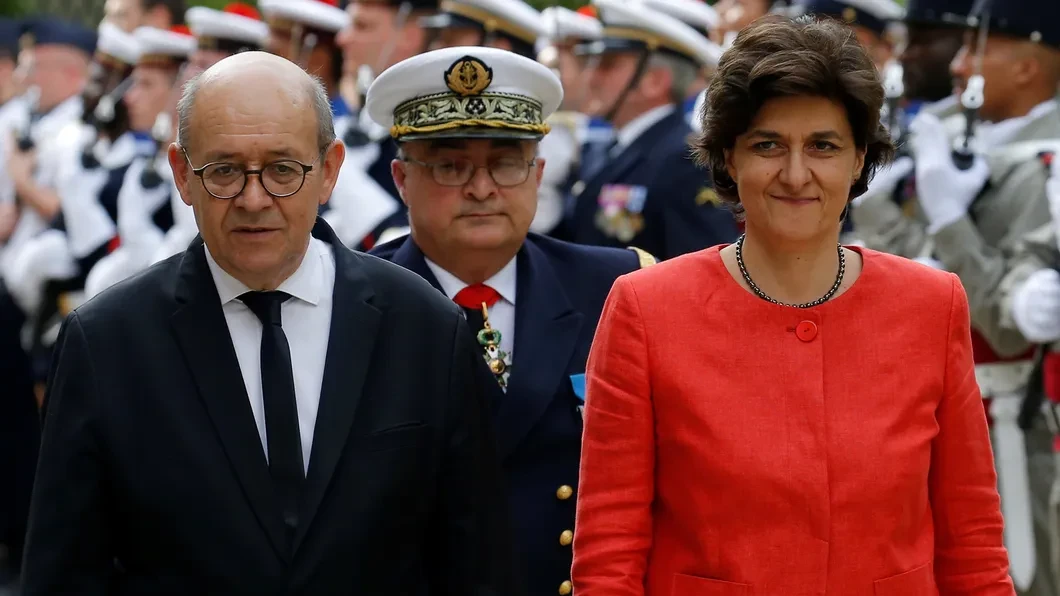
The new Minister of Defense of France was appointed 52-year-old Silvi Gular, a deputy of the European Parliament, a member of the alliance of liberals and democrats for Europe (Adle). It was her, along with the Philip, who was appointed as a result, was called the main contender for the post of prime minister. Gular is not related to the army, she has a typical education of a high level of education for a French policy: she graduated from the Paris Institute of Political Sciences (Sciences PO) and the Higher National School of Administration (ENA). Before that, I received a lawyer's diploma in ex-en-provence. It knows German and Italian well. The first, among its political achievements, Gular itself calls work in the legal department of the Foreign Ministry of France at the time of negotiations on the conditions of the unification of Germany and further work there in the Foreign Ministry in the “German direction”. Gular also worked as an adviser Romano Prodi when he was the chairman of the European Commission. Nevertheless, despite the merits in the field of EU development, Silvi Gular can be called a new person in big French politics.
The Minister of Justice was the 65-year-old Francois Bire , the creator and head of the Center Party "Modem". The appointment of Bayru “for justice” is also a pre -agreed fee for the service: in February, Bire decided not to nominate his presidential candidate and called for voting for Macron. Back in January, until Fiion became a defendant in the financial scandal, Bayra, according to numerous leaks, considered the possibility of “merging” in favor of Fiion.
Bayru has a ministerial experience - a quarter of a century ago, he headed the Ministry of Education.
The Minister of Economics was the 48-year-old Bruno Le mayor (the Republican Party)-a man who managed to first support the corruption scandal of Fionon, then proudly leave his team, and then return to him again. Finally, when Fiion lost, Le mayor entered into negotiations with Macron. For which he was accused of party comrades of "betrayal."
Le mayor, who has experience working as a Secretary of State in European Affairs (under Sarkozy), wanted to get the post of head of the Foreign Ministry, but headed the economic department, and this is probably the most “shot post” now. Macron promised deep reforms to change the long -established French economic model, which is based on the inalienable right of every citizen to a worthy and long rest. It can be predicted that the resistance to the reforms will be fierce.
Le mayor, as well as the Minister of State Policy and the State Budget Gerald Darmanen (who previously worked on Sarkozi) was expelled from the party almost immediately after his appointment.
Another key post-the head of the Ministry of Internal Affairs-was occupied by the 69-year-old mayor of Lyon Gerard Coletb (Socialist Party). He is one of the rare political “heavyweights” that supported Macron from the very beginning, that is, a year ago. The question of how reason it is to appoint the head of the Ministry of Internal Affairs of France to the post of head of the Ministry of Internal Affairs of France - which, after the attacks on 13/11/2015, lives in an emergency mode - a former teacher of literature, remains open. It is clear that ministers are almost always appointed by this principle, but in this case it would be possible to make an exception, and not to repeat the experience of Hollande, in which the heads of the Ministry of Internal Affairs also did not differ in experience and professionalism.
The first meeting of the Council of Ministers will be held at the Elysee Palace on Thursday morning, May 18.