
Translated material
"Musk is primarily about money"
The coup that he makes in the astronautics is not based on unique technologies, but on a sober calculation
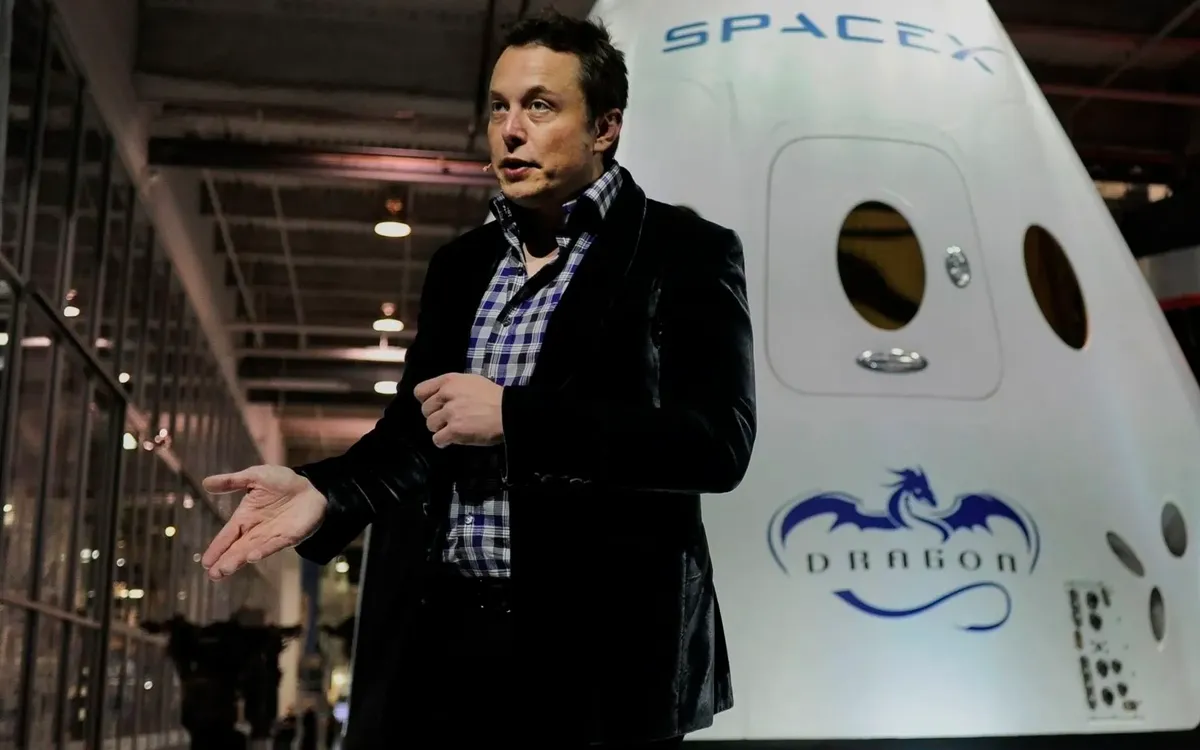
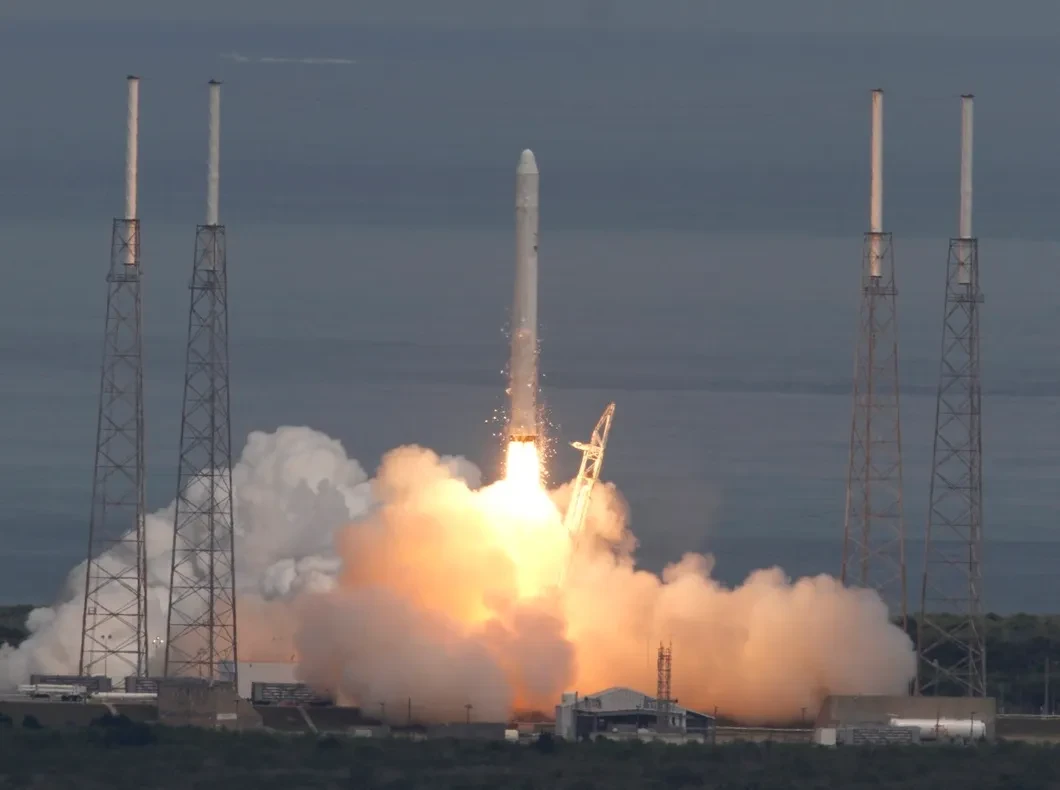
In No. 37 of April 10, 2017, Sergey Krichevsky, a doctor of philosophical sciences and cosmonaut tester, outlined his eyes on the development of world and domestic cosmonautics, including commenting on a successful demonstration of the technology of the returned stage of the Falcon 9 Ilon Mask carrier.
Today we publish a story that reveals in comparison the details of the economy of the space industry of different countries. This is largely alternative to the generally accepted look of Andrei Ionin, candidate of technical sciences and corresponding member of the Russian Academy of Cosmonautics named after K.E. Tsiolkovsky.
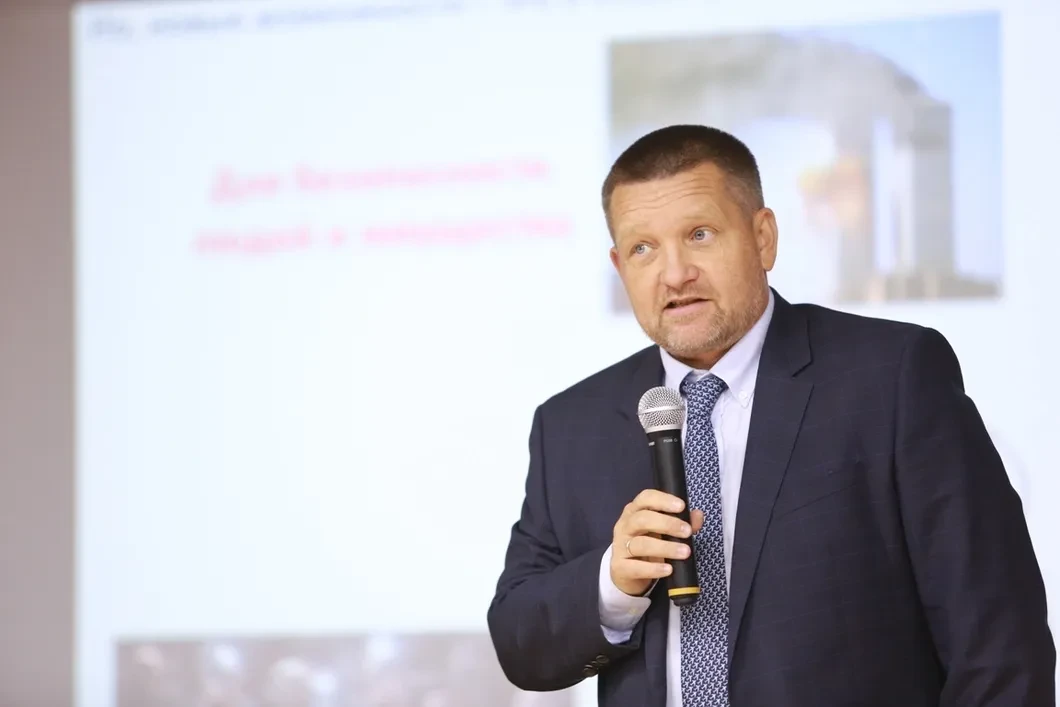
- For me and colleagues in the industry, re -use of March 31 of the first stage Falcon 9 is an occasion for sober thoughts. A number of problems that the expert community should put before the industry have to be solved. Although in Russia and the world, the level of analytics designed to comprehend the past and predict the future in the space industry has decreased almost catastrophically in recent years.
Analytics in the world generally are in many ways akin to carnival of masks. She acquired the features of momentary, sinning subjectivity and engagement, she is reduced to “likes” and “tweets”. A characteristic example is an uncritical reaction of the world media and experts to the statements of a mask that he committed a revolution in the astronautics in March.
From the history of space technologies, it is clear that the launch itself is not a revolution at all. But now such statements are already expertly accepted for a clean coin. Of course, you can’t blame the mask of PR of your business. But the specialists are uncleaning is non -critical of his statements is unforgivable.
A quiet revolution
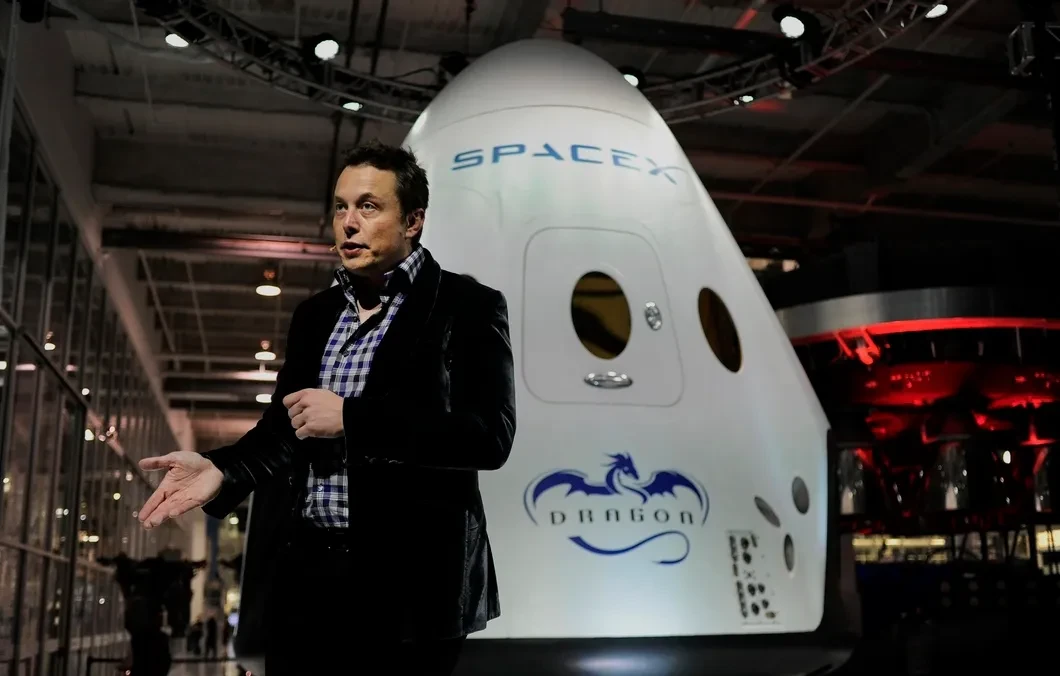
You need to understand what this phenomenon itself is Ilon Musk. He, of course, is a visionary, a brilliant manager, a person with the highest motivation and original ideas. But, first of all, a businessman.
Mask is a world champion to attract money to his projects, “King Midas” in the world of innovation: everything he says is perceived almost without criticism and turns into huge investments into his projects or even into projects that he simply supported.
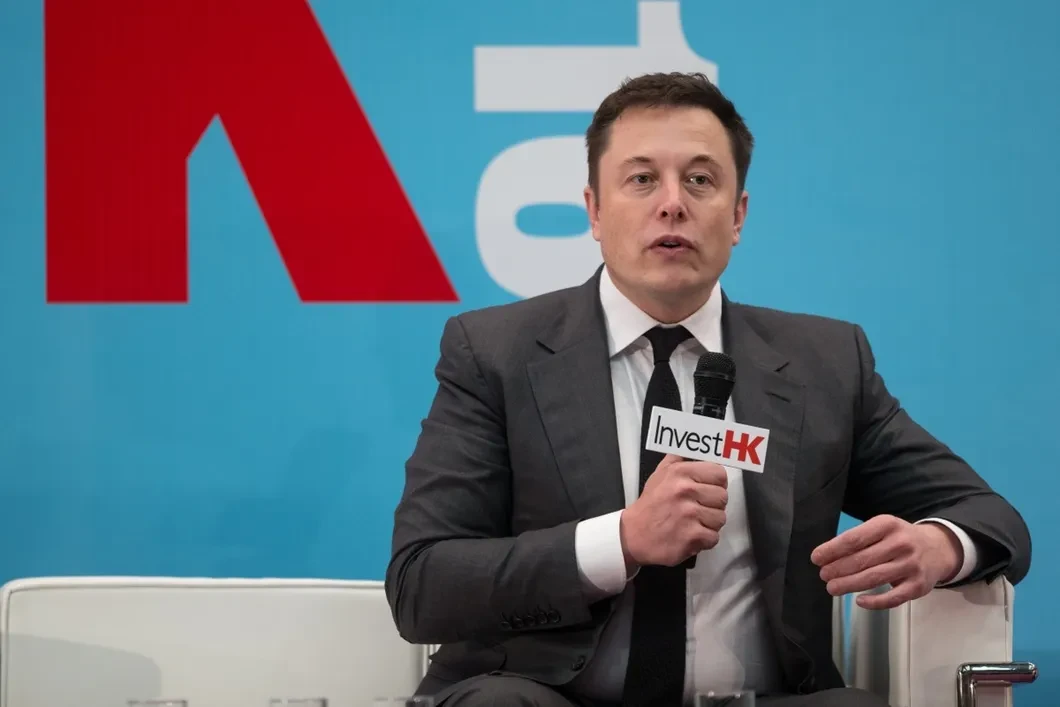
The basis of his business is Tesla's automotive company. The connection between the words about the revolution in the cosmonautics (all the world media were replicated for free) and a sharp jump in the value of the Tesla shares belonging to him cannot be noticed. Following this global PR campaign, the cost of Tesla first overtook the cost of Ford, and a week later General Motors. Today at the market value Tesla is the most expensive US automobile company. Despite the fact that it is “planned to be unprofitable”, seriously depends on the subsidies of the government, tax benefits for electric cars and produces 100 times less cars than GM.
REFERENCE
For the entire 10-year history of existence, Tesla was not profitable for a single year. Last year, she finished with a net loss of $ 675 million, and GM with a profit of $ 9.43 billion.
But Musk really made a coup in astronautics, although not on March 31, but much earlier. Since the 50s, rocket science and astronautics in the USSR and the USA developed in the conditions of the most severe time of time and unlimited financing. The question for both countries was about survival in a possible world war. Resources did not save, the problems were solved very quickly. It was necessary to build a plant - they built, it was necessary to create an institute - they created. As a result, in both countries there was an industry that produced a single unique product in cooperation with a huge number of enterprises.
The developers of missiles were constantly missing the mass of the withdrawn cargo, the main task was: further - more. This was achieved by new, more sophisticated technical solutions at the limit of possible: everything squeezed out of the technique. This sharply increased the cost of any “nut”. These are the most important reasons why space technology cost and is expensive. Such a production model has existed to this day.
Technologies changed, a digital revolution happened, but all this did not affect the global industry little. And after 50 years, Musk first approached this issue as a businessman. He stated that the missiles should be cheap: “Terms and military tasks do not finish me - we will do cheap!”
He committed the revolution, offering a new production model in rocket science, when he created Falcon 1. His motto “everything that I can do - I do it myself. All I can’t - I take in the market. ” Musk radically reduced cooperation, this immediately sharply reduced the cost of the rocket. Wherever possible, he used ready -made “cheap” solutions from other industries.
As a result, in the USA, where there are very high salaries and insurance, prices for materials, he was able to make a rocket 3-4 times cheaper than American competitors. And even cheaper Russian missiles. This was a true revolution.
For comparison: reusable technologies, according to the mask itself, will reduce the cost of launching “only” by 30%. And then, if everything goes as it should. If the company Vladislav Filev S7, who has recently bought the SEA LaUNCH cosmodrome, will put his sleeves and uses a business approach to astronautics, like a mask, then in the future it can also achieve a similar result.
“Space Shuttle” is a project unique in technical complexity, in which all 20 years of experience, knowledge and hopes of the great team that created American astronautics concentrated. The mask missile is technically immeasurably easier, although it is made after 30 years. But also many times cheaper at the expense of this. It is clear the desire of designers and industry engineers around the world to solve more and more complex problems, to create unique devices. But this romantic and technocratic thinking directly contradicts the business logic of the launch market.
We need to take into account this objective contradiction and move from words about a cheap rocket to business. So about the "Angara" in the mid-1990s, absolutely correct words were pronounced: "Due to the unified blocks and modular design, we will be able to reduce the cost of the rocket." But during the development, complex technical solutions prevailed, because they are more interesting to engineers. But Musk chose the cheapest.
Space budgets
It is still unclear how “private cosmonautics” and the space projects of Ilona Mask can exist without constant feeding by the state. It is no secret that the commercial launches of the European rocket "Arian-5" are sitting on a direct budget subsidy. The American Boeing and Lockhid have repeatedly filed a lawsuit to the courts for "unequal conditions of competition."
But the main support of national space companies is carried out at the expense of state, including defense, orders that are distributed “outside the market”. And the state order is more than 80% of world missile and space production.
All missiles of Boeing and Lockhid companies were created at the expense of the state order. Imagine that you built a plant for the money of investors, but you consider all its products to your income, and investors said: “Thank you very much.” But this is how the astronautics of all countries developed, creating production, technology and products on state departments, then appeared on the market.
This is an incredible situation for any “normal” business. 70% of state funds in space are US money, and it was American companies that were “relaxed” the fastest. It is not surprising that in the mid-2000s of Boeing and Lockhid left the launches from the market-their rocket prices became much higher than that of competitors. Therefore, for 10 years the time has come our “Proton” and the European “Arian-5”.
But, unlike Roscosmos or Chinese space corporations, Boeing and Lockhid Cosmos have only 10% of the entire business. For them, departure from a highly competitive market for launches is not a disaster, but optimization: they have enough state orders through NASA and Pentagon.
The cost of launch consists of the cost of the rocket, the cost of insurance, preparation and conduct of the launch, income organizing the market process of the operator. For each of the missiles, only indicative prices are known. They can change depending on the ratio of demand and supply, but the cost of a particular launch is always a commercial secret.
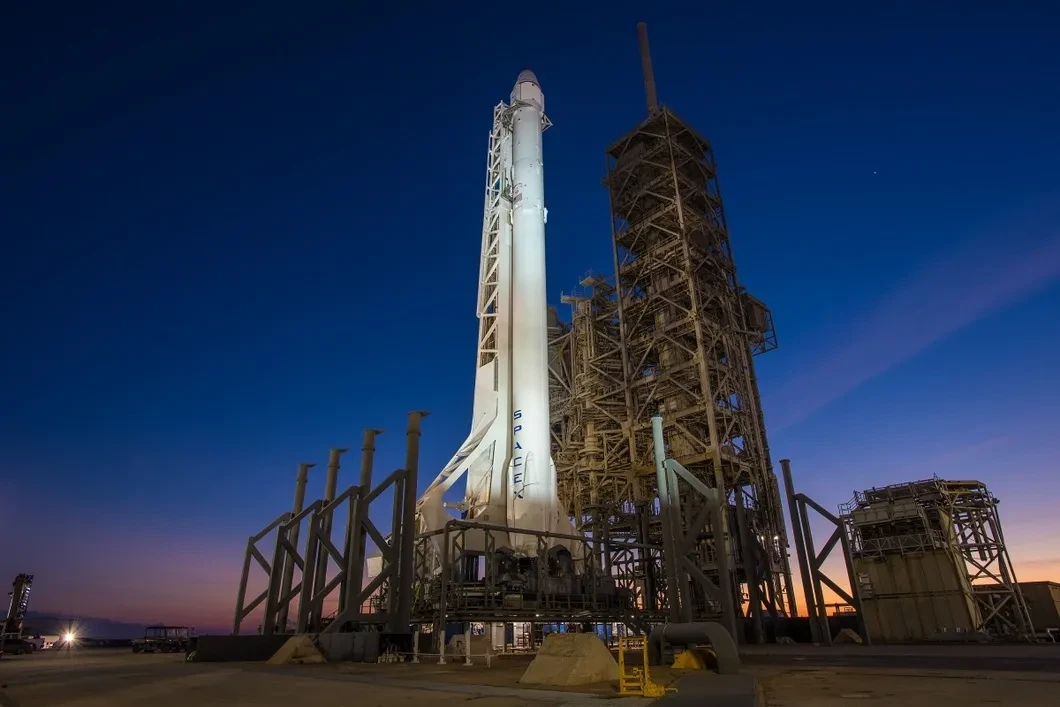
Musk declared an indicative price for its Falcon 9 - 65-70 million dollars. However, a year ago, he received licenses for launches in the interests of the Pentagon and NASA. And from the data on the profit and loss of SpaceX in recent years, we can conclude that it sells its missiles to the state of $ 90 million-50% more expensive than in the commercial market. This is how the first truly large businessman in space behaves.
In the logic of business and profit, we must consider all its actions. Our strategic task is development. In the competition unfolding before our eyes, we must think about creating a new rocket, from the very beginning following the logic of commerce.
Russia should not repeat after the magician - so we will doom ourselves to the role of catching up, and in the yard - the time of the “great turning point”. For example, satellites have always been significantly more expensive than missiles. And we are not talking about unique military satellites, but about everyone. Today, like 20 years ago, a communication satellite for a geostationary orbit costs $ 150-300 million apiece, and its launch-$ 100 million. This ratio has always been like this in the launch market.
But the missiles froze at the level of the value of the 1990s, and the rapid development of microelectronics reduced its satellites at times. Light microsnettes, nanosetics and even picos (weighing up to 1 kg) appeared. If recently a remote sensing satellite of high resolution weighing 150 kg cost $ 30 million, today today it is already $ 15 million, and after a few years manufacturers promise to sell them at $ 5 million.
REFERENCE
Mitsubishi Electric announced the construction of a new satellite workshop in the city of Kamakura, Japan. This will allow you to work at the same time on the manufacture of 18 satellites.
It is planned to create a grandiose group of space Internet ONEWB of 700 satellites in orbit 750 km. The creators of the system argue that their satellites with a weighing of 150 kg will cost already $ 0.5 million. Even if the mask rocket takes out 20 such satellites in one launch, their total cost will be $ 10 million, and even when the cost is reduced by 30%, it will not be cheaper than $ 45 million. The proportion becomes a feedback: the launch of the useful cargo is more expensive. It turns out that literally tomorrow we need a rocket with an indicative value of $ 10 million. And this is no longer Falcon 9, all the more not “Proton”, “Angara”, Ariane-5 or Delta-4.
It is not known whether the Oneweb group will be created in the declared composition, whether it will be commercially beneficial, given the history of the initial bankruptcy, which has not become the mass system of Iridium - the previous undertaking in the field of mass space communications. By the way, the concept of our similar system "Honet" should soon be completely changed to modern technological and market capabilities.
In the process of transformations, one must not forget that technologies are more often born in small companies, even in startups (in large ones, innovations are further refined to the requirements of mass production and are capitalized). And Russia also needs such companies.
Now we are again discussing the project of the reusable first stage of Baikal with a rotary wing, opened by tail and chassis. Although experts have always understood that this scheme itself would not give a significant decrease in the cost of launch - the same 30% (no more), as in the mask scheme.
I was lucky - I am familiar with Yuri Kuznetsov, who developed this idea in his doctoral dissertation. This, in my opinion, is a brilliant development in terms of technology. But with a decrease in value, not everything is so good here. Returning the first step, you are saving mainly the engine, this is about 30% of the cost of the entire rocket. But, like the mask, you must create a reserve of fuel for return, increase the mass of the structure at the expense of the wing, chassis, plumage, and controls.
This will reduce the mass of the cargo brought to orbit by about one fifth. That is, a disposable missile will bring a conventionally 10 tons, and the returned - 8. And it is not for nothing that Ilon Musk hides this difference, this is an important parameter for assessing the effectiveness and further commercial prospects of its entire project. In the case of Falcon 9, I roughly evaluate a decrease in the payload in the same 20%.
But that's not all. You cannot bring the rescued step immediately to the start. It is necessary to conduct a defect - is it capable of re -flight? And these are not so small costs. For example, the principle of re -use (up to hundreds of launches per ship) as the most important factor in the cost of costs in the Space Shuttle project was considered undeniable. After all, there is not only the ship itself, but also the lateral solid -fuel accelerators of the first step were also returned and re -used - the mask is not a pioneer here!
But all the responsible procedures for checking and restoring the ship before re -launch with people led to the fact that the launch cost did not decrease, but increased! This example shows that reusability in itself does not give advantages, the devil in the details. And Musk is now hiding from the expert community the amount that he spent on all procedures for checking and bringing the worked out the step to starting readiness.
Finally, we must take into account the “scale effect”, which operates in the space industry - the more missiles you produce, the cheaper each. The main capacities have already been built if the mask begins to produce only two instead of a dozen missiles per year, but returned, with the same number of working area, equipment and staff, they will inevitably become more expensive.
My colleagues in Russia, foreign experts, of course, discuss these three factors in an increase in the cost of missiles with returned steps. Logic to all techies is clear. This is a beautifully solved complex technical task, which gave a strong motivation that allows the team to mobilize. But the very idea of the commercial success of such reusable systems among specialists is still in doubt and very justified.
The refusal of Airbus and the leaders of the European Space Industry from long -standing plans for creating reusable systems is generated by this logic. Although recently they are amenable to populist requirements "... to do like a mask."
At the same time, Musk has not yet created new markets, has not found new customers, there are no rapid growth in the number of launches yet. Today in the year around the world is less than a hundred launches. There would be a thousand, all doubts would have disappeared. We can (as Khrushchev’s expression) make missiles “like sausages”. And what to launch on them? And Musk is trying to find a way to expand the launches for its missiles. For example, a patent for creating a communication system of 5,000 satellites!
Scenarios for Russia
We should also prepare for such a turn. But the rocket has only two characteristics that concern the consumer: reliability and price. The paradox of rocket science is that the older the rocket, the more equal - the higher its reliability and lower the price. After all, everything has long been worked out and debugged. Soyuz missiles are so worked out that it is very difficult to compete with them in their niche. If the task has not changed for decades, why spend huge funds on the development of more and more new systems?
But the approaches in the astronautics are still changing, this is due to the lobbying activities of corporations requiring new contracts and multi -billion dollar development programs. The lobbying capabilities of Lockhid and Boeing are grandiose, next to them, the lobbyers of Roscosmos, knocking out their money in the budget, look very modest (recalling the recent story with the federal space program until 2025, which “died down” from 3 trillion to 1.4 trillion rubles).
And in Russia everyone wants to produce new ones, at the enterprises they talk about this in a voice. There are plans, and I do not see among the leadership of the industry of retrograde, holding on old systems and technologies. But the key question is: in which model of the industry will the new generation of our space technology be created?
Space missiles are not combat. Here is the key factor "Reliability". It is necessary with the maximum probability to bring an expensive satellite to orbit. That is why space missiles are so carefully prepared for the start. The world record belongs to the American Rocket "Titan 4", which was prepared at the start for a year and a half!
And when they design a rocket for launching people (in Russia it is a “Phoenix” rocket), the main thing is not just the likelihood of excretion, but the probability of crew salvation at all stages of the flight. And even if Space Shuttle is reliable (for 30 years in 135 launches of only 2 accidents) and a brilliant technical solution. But every accident led to the death of the entire crew. It crosses out everything.
And over 50 years, the Soyuz missile launches with manned ships were accidents both at the start and at the excretion site, but they did not lead to victims. And which rocket is more suitable for launching people, and not for working in the market?
Of course, I believe in the future of our astronautics. Although, the priority task of the Roscosmos team is now different - the recovery and reform of the industry. She is seriously ill, and no one hides it. In addition to optimizing the structure, standardization, restoration of the quality control system, it is necessary to solve an acute personnel problem.
If we want the astronautics as unifying the peoples of Russia a political and technological project of lived, we need not just an increase in the economy. Космическая отрасль в одиночку не может решить проблему перекоса в социальных приоритетах, когда к инженерам у нас относятся, как к людям второго сорта. Про отношение к рабочим специальностям и говорить не хочется. Конечно, на дворе уже не 90-е годы, когда слова «инженер» и «неудачник» были синонимами. Но движение тут у нас в стране очень медленное.
Для меня создание госкорпорации и начало реформы отрасли — в целом, позитивная новость. Я, возможно, не во всем согласен с окончательной конфигурацией, но рад, что это наконец состоялось. Начинать реформирование надо было еще в 90-е годы. Но не было ни денег, ни политической воли. К сожалению, реформа не произошла и в двухтысячных, хотя и политическая воля, и деньги уже были. На мой взгляд, руководство страны слишком доверилось самой отрасли.
Решили, что достаточно выделить деньги, а эти умные люди «из космоса» сами себя реформируют. В результате мы начинаем реформу на четверть века позже США и Евросоюза. Ведь до 90-х годов там, как и у нас, космические отрасли насчитывали десятки головных предприятий. В конце 80-х начался процесс укрупнения, приведший к созданию в США двух, а в ЕС полутора многопрофильных авиационно-космических холдингов. Мы этого не сделали, и потому до сих пор проигрываем в эффективности.
Поскольку экономика России почти в десять раз меньше американской, то и бюджет на космос у нас всегда будет меньше. Создание госкорпорации позволит сконцентрировать ресурсы и повысить эффективность, но бюджет не изменит. И если мы хотим заниматься в космосе всем, то делать это мы сможем только в формате широкой производственной кооперации с другими странами. Например, если мы делаем очень хорошие ракетные жидкостные двигатели, то это и может стать нашим местом в такой кооперации.
И надо понимать, что МКС — это все-таки сотрудничество, а не кооперация. Сотрудничество в космосе с США и Евросоюзом у нас есть и, надеюсь, в будущем останется, но кооперация с ними для нас уже практически невозможна. Значит, надо искать других партнеров: Китай, Индия, Бразилия, ЮАР, страны ШОС и ЕАЭС. И не надо бояться копирования наших технологий, о чем часто говорят, намекая на некоторых партнеров. Если ты сам не останавливаешься в своем развитии, партнер тебя не догонит, тем более когда он уже заложник твоей скопированной технологии.
Представьте, для меня отзыв 71 дефектного ракетного двигателя на Воронежский завод — тоже хорошая новость. Это свидетельствует, что реформа идет и система контроля качества восстанавливается. И хорошо, что это не скрыли под ковром, а вынесли в СМИ. Это признак выздоровления.
Это же видно и в многочисленных судебных процессах, которые «Роскосмос» ведет со своими же предприятиями, исполнителями космических проектов. Так восстанавливается практически утраченная за 25 лет договорная дисциплина. А без нее никаких успехов не будет.
Чтобы конкурировать с Маском, недостаточно просто демпинговать. Единственный путь для всех — отойти от исторически присущего космонавтике технократического подхода, перейти на новую производственную модель. А общественному мнению надо понять и принять: чудес не бывает, выздоровление ожидается долгое. Как сказано в «Драконе» Шварца: «Зима будет долгой. Надо приготовиться».