
Translated material
When not Elena
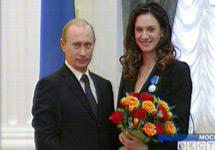
At least until November, the Russian anti -doping agency will not be able to independently test athletes. Such a decision was made at a meeting of the Council of Founders of the World Anti -Doping Agency (WADA) in Montreal, TASS reports .
Nevertheless, WADA noted "significant progress" in the issue of restoring the rights of Rusad. The Russian agency until the next meeting of the Council of the founders of WADA remains to fulfill four conditions.
WADA demanded to shift from the post of head of the Supervisory Board of Rusad a two -time Olympic champion in jumping with six Elena Isinbaeva. According to the requirements of the World Agency, the head of the Nabor council should be independent, while Isinbaev was nominated to a leading post from the Russian Olympic Committee.
The remaining three points require that the Russian side provides access to the data of biological passports, which are stored in the Moscow Anti -Doping Laboratory, issued gaps for doping officers to closed cities so that they can take samples from athletes living there, and introduce changes to the charter that exclude the conflict of interests.
The question of the removal of Isinbaeva was agreed with the Russian side, said WADA President Craig Reidies. "The people with whom we are doing in Russia were aware that the head of the structure should be independent. We explained it to them, and they accepted it," Ridie said.
Isinbaeva will leave the post until May 31. The election of the new head of the Supervisory Board of Rusad should take place in the next 7-10 days.
On November 18, 2015, on the basis of the conclusions of the report of the Independent Commission, the World Anti -Doping Agency recognized the activity of the RUSADA that is not relevant to the Anti -Doping Code WADA. Accreditation of the National Agency was suspended.
Isinbaeva led the Nabs council of Rusad in March. A few days before, the acting director of the agency, Anna Antzeliovich, resigned . “This decision is in no way connected with the publication of The New York Times, simply according to the criteria (restoration of the organization. - Ed.), A person should not have experience in the previous leadership of the Russian Rusad. The other day a competition will be announced to replace the position of general director, Anzeliovich will be engaged in a similar work, but in another structure,” Vice Prime Minister Vitaliy Mutko said.
On December 28, in an interview with The New York Times, Anceliovichrecognized the existence of a doping system in Russia . According to her, "it was an institutional conspiracy." At the same time, Antzeliovich emphasized that representatives of the country's top leadership did not participate in it. I.O. The head of Rusada added that she was shocked when she found out about it. As the publication noted, this is the first time that Russian officials recognize the presence of a Russian doping program.
In the Kremlin, in response to the publication, they stated that they did not relate to the "confessions" by Antzeliovich as the source. “We need to check the reliability of these words until we can say anything,” said Presidential press secretary Dmitry Peskov. - How much it corresponds to reality, how valid the words are that it (Antzeliovich. - Ed.) Are attributed to what was meant, in which context - all this must be understood in order to draw some conclusions. "
In Rusada, in turn, they stated that the words of Antseliovich were distorted and torn from context. "During the conversation, Anceliovich with the journalist Rebecca Ruzi, the acting director, was made a remark that in the report published on December 9, 2016, Richard McLaren refused the words" state doping system "and used the phrase" institutional conspiracy ", thus excluding the possible involvement of the highest leadership of the country. Unfortunately, Rebecca Ruz, Tearing these words from the context, I gave the impression that the leadership of Rusada recognizes the presence of an institutional diagram of doping coating in Russia, ”the agency said.