
Translated material
We will fix them all
The anonymous group threatens Chechen refugees in Berlin with death for choosing a “wrong path” and beats them. Report "Medusa"
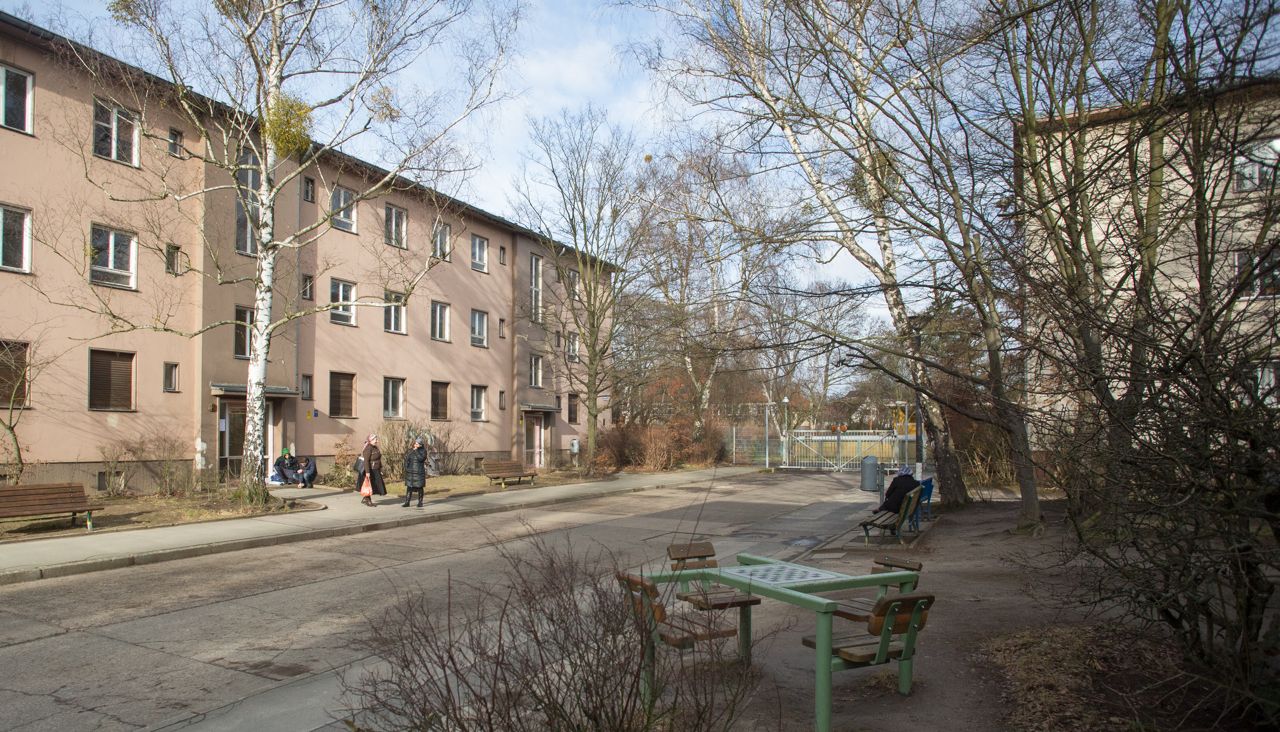
Several tens of thousands of Chechens now live in Germany, most of whom came to the country in recent years and claim the status of refugees. Medusa has already talked about how Chechens are trying to go to Europe across the border of Belarus and Poland. At the request of Medusa, the journalist Dmitry Vacedin, who was living in Germany, found out how the life of the Chechen community in Berlin is arranged and learned about the existence of an armed group, whose representatives threaten fellow countrymen with death for immoral behavior.
Late September in the evening of 2016, erotic photographs of 20-year-old Madina (the name changed at her request) from the stolen mobile phone were sent to all contacts of the girl. An hour after that, in one of the quiet Berlin areas where she lives, a phone call was heard.
Madina herself picked up the phone, recognizing the voice of her uncle. An enraged relative announced that he would not talk to the “prostitute”, and demanded a mother and father to the phone. The girl woke up her parents. In her presence, a family council was arranged, on which it was decided what to do with the disgraced family of Madina. The uncle living in another European country on the phone suggested “solving the problem within the family” - to take the girl to his homeland and execute there. He himself volunteered to kill the girl and even specifically to come to Chechnya, which the family left in 2010 due to the conflict with the local authorities. It was decided that in the morning, mother and Madina would fly to Chechnya, where they would meet with uncle for execution.
While Uncle organized tickets, my mother had to guard the girl so that she would not run away. Mother gathered and hid her daughter’s documents, and then lay down next to Madina in her room - his uncle had to call the morning prayer, at about six in the morning. Two women spent the rest of the night silently, the mother refused to speak with her daughter. Both pretended to be sleeping. About six in the morning, his uncle called and said that he bought them tickets from Berlin to Grozny with a transfer in Moscow on a morning flight.
When my mother left the room to wake her father, Madina grabbed her mobile phone and at exactly 6:31 called the police. She who took the woman explained that she was a Muslim, her parents learned that she had a boyfriend (it was not true, but there was no time for explanations), and now they want to kill her. I dictated the address and hung up. After seven minutes, the police called the door of the apartment. As Madina recalls, seeing the police, her mother began to hug the girl. As it was - in pajamas and without documents - Madina left with the police in a female dormitory for victims of violence.
A week later, Madina first called her parents. Those were affectionate with her and repented that they scared the girl. Two weeks later, she returned to the family. As soon as she entered the apartment, her mother beat her, cut her hair, put on a burden on the girl and took her for an examination to the gynecologist. After the gynecologist found that Madina was still a virgin, the family decided to keep the girl under the castle until the elders decide her fate. A week later, the girl - again with the help of the police who took Madin under the pretext of helping in the investigation of the theft of a mobile phone - managed to escape.
However, troubles did not end there. Since she left her family, Madina's case ceased to be a family issue and went into the category of problems of the whole community. As the girl says, to find and punish her is now the duty of any Chechen, regardless of whether he knows her or her family personally. And now in Berlin there is a group that specializes just in resolving such issues. “There is no law, they intervene in other people's affairs,” says Madina. “Just such concepts.”
"We went out, swearing on the Qur'an"
In early May, in which Chechens living in Germany communicate in Germany communicate, a video was distributed. Against the backdrop of a photograph of a man in a mask that directs a pistol into the camera, a male voice pronounces the following in Chechen: “Assalam Aleikum, brothers and sisters Muslims. Here, in Europe, some Chechen women and men, similar to women, do terrible things. You know this, and I know, everyone knows. Therefore, we make such a statement. About 80 people gathered for now. Even [others] want to join, get together. Having lost their nokhilla ( national identity, character-approx. Medusa ), flirting with men of a different nationality, marrying them, who have chosen the wrong way Chechen women and those [creatures] who call themselves Chechens, we are corrected all of them as possible. We went out, swearing on the Qur'an. Here is such a statement, then do not say that we did not warn that you did not know. Give Allah the world to us, let him lead us to justice. ”
According to the sources of Medusa, the representative of the Berlin group, which has up to a hundred activists and led by people from the encirclement of the former leader of Chechen separatists, Johar Dudaev, pronounces this appeal. In recent weeks alone, members of the group have beaten at least two Chechen girls (one of them lives in the Berlin district of Neukeln). All Berlin Chechens are known about the existence of this group.
As the Medusa interlocutors are recognized with the situation, in smartphones at least half of the unmarried Chechen girls are enough in order to bear the “verdict”. Communication with men of a different nationality, smoking, alcohol consumption, visiting hookah, disco or even pool - all this can become the basis for retaliation. One photograph posted in a public votsap-chat can lead to the fact that the whole family turns into outcasts and the rest of the diaspora must interrupt contact with it. In a situation of extreme suspicion, when everyone is responsible for everyone (Chechen girls say that even unfamiliar Chechens often approach them on the street and “read sermons” because of their appearance, for example, painted lips), theft of the smartphone and the distribution of compromise are becoming a hard blow-there is simply no one to protect the disgraced person; The one who posted the photo does not risk anything.
The interlocutors of Medusa have repeatedly noted that the morals in the diaspora abroad are stricter and tougher than in Chechnya itself, where girls can even afford to wear short skirts. This is explained by the “competition for righteousness”, which the “Antikayrovskaya” European diaspora leads from the “Kadyrov” Chechnya - each of the parties seeks to prove that it represents the “right” Chechens. However, in many respects their ethical codes are similar. “If Kadyrov learns about this, he will send his people and will take me to Chechnya,” Berlin Chechen admitted to the Medusa correspondent meeting with a foreigner.
In the fall of 2016, a young Chechen woman, who later told her “Medusa” story, was shot on the video - she walked along the street, talking with a man of another nationality. That evening, several dozen Chechen men drove up to her house in the north of Berlin, not one of whom was familiar. The man with whom she thought so inadvertently on the street was brutally beaten - almost all his teeth were knocked out. The girl managed to hide.
“I am thinking - what is the matter of [them] before my personal life? I don't know them and do not want to know. I am not a sister or a daughter for them. My personal life should not touch anyone, ”says the interlocutor of Medusa. According to her, and according to other Chechens, “violators of the law”, despite all the threats, becomes more: Chechen girls who moved to Germany go to German schools, where among other things there are lessons of sexual education, or to German courses, where they can communicate with people from other cultures.
Two girls admitted to Medusa that they tried to wear a hijab and hold on to Chechen traditions, but could not "bear the hypocrisy of this double life." “Even in a hijab, I was called a prostitute - for example, for painted eyes. Then I thought: who am I trying for? " - says one of them. “In order for everyone to respect you, you need to put on a hijab, lower your eyes to the floor and sit at home without anywhere. But who wants to live like that? " - another is perplexed.
After his second flight from the Madin family, he is hidden from representatives of the diaspora. She cut her hair, inserted a lenses of a different color in the eyes; plans to change the name and lie down on plastic surgery. “If you do not change the name and face, they will find you and kill you,” she explains. The situation of the girl is almost hopeless - to change the name, she needs to contact the Russian passport office, which is equivalent to a confession. With honors, the girl who graduated from the German gymnasium sits all day at home - it is simply dangerous to go out, they are looking for her. “I don't want to be a Chechen woman,” she says.
People of violence
The number of Chechens living in Berlin is difficult to calculate. According to Frankfurter Allgemeine, in the last five years, Germany has adopted 36 thousand Chechens. A significant part of them remains in Berlin and the city of Brandenburg surrounding the city, despite the attempts of the German authorities to redirect the flow to Bavaria. In 2013, the city authorities even tried to “close” Berlin for Chechen refugees in order to prevent the formation of too much diaspora in one region. As far as one can judge, this attempt was unsuccessful. Despite the fact that Chechens' chances to a positive response at the request for asylum are extremely low - in 2016, only 2.8% of the Chechens who gave such petitions received the desired status - the diaspora is not reduced. According to Frankfurter Allgemeine, nor to Poland (where the Chechens mainly come to Germany), nor to Russia they are massively deported-110 people were sent to Russia in 2016. The Berlin Chechens told Medusa and about illegal ways to get from Poland to Germany.
German researchers confirm that in Germany the Chechens are not too happy. “[Representatives of German political forces] creates that this stream is caused not so much by conflicts as rumors and false ideas about the benefits and opportunities that Germany will provide them with, and in addition, it is supported by the Russian state,” says Rafael Bossong, expert of the Berlin Foundation “Science and Politics”. According to him, the German authorities are well aware that what is happening on the Polish-Belarusian border, where the Poles do not let the Chechens into the country and, contrary to European norms, do not allow them to submit a petition for the provision of asylum, illegally. “However, I do not know a single German politician who would be indignant about this. Honestly, they are not very upset that the Poles work “not cleanly”, ”Bossong notes.
In order to return the situation on the Polish-Belarusian border in the legal direction, the European Union wants to finance the creation of foster centers for Chechens in Belarus. Bossong openly suggests that they are created solely so that the Poles can legally “unfold” Chechens on the border - the fate of the Chechen refugees in Belarus does not particularly excite.
Allowing the Poles to perform “dirty work”, Germany protects itself from the stream of Chechen refugees, which, according to Bossons, is not going to integrate. “The forecast for integration does not seem successful to the German authorities. Due to the low level of education, Chechen men are very difficult to find a job. In addition, it is believed that they are influenced by Islamists, ”he says.
The Chairman of the German-Caucasian Society, Eccuchard Mas, believes that Russia “managed to impose a Chechen to Europe as a man of violence and terrorist,” but the vast majority of Chechens living in Germany are successfully integrated, and problems arise only with a slight and marginal part of the diaspora.
“There are three laws in Chechnya. This is the Russian constitution, and this law is the least important. The second law is the sharia imposed on top with Kadyrov. And the third is adats, traditional Chechen norms that are deeply rooted among the people, ”Mas explains. According to him, in Germany there are times when adats contradict German laws, which leads to serious conflicts, but this rarely happens. “It happens that the husband beats his wife, but not as often as the Russians,” he says.
When you ask Mas about repressions to the Chechen gays, he moves into Russian. “As for the persecution of the“ blue ”, this topic is a taboo, no one says about it, and, of course, no one will confirm you what it was,” Mas says. “But this, of course, was, and I personally know these people.” There is no need to talk about this at all, this is a sore subject. ” The Berlin Chechens, with whom Medusa spoke, did not hear about gay prisons in Chechnya and doubt their existence. According to them, gays in the republic simply “would be killed on the spot”, so the prison would not be needed.
MAS believes that the main problem of Chechens in Germany is not a relationship between the diaspora or integration, but the fact that refugees are increasingly sent back to Russia, where they are persecuted by the people of Ramzan Kadyrov. Other Medusa interlocutors also talked about such cases - from the words of Mas it follows that this is a tendency of recent times, not yet taken into account by statistics. I did not hear the existence of an armed group standing on guard of Chechen traditions.
Mostly Russian -speaking social workers work with those who have arrived with Chechen refugees. For example, a native of Western Ukraine Olga, who does not hide her irritation from the situation. “They were accepted and abandoned,” she says. “The system simply does not work.” According to Olga, if until 2015, Chechens could count on help and support, then after Germany opened borders for refugees from Syria, it is very difficult for them to get housing or adequate medical care.
In addition, the Chechens were left alone with an opaque and rather illogical social security system working on the principle of lottery: here they can suddenly pay a lot of money, but may refuse the most necessary help. According to Olga, in the Chechen environment the most fantastic rumors run from the hostel to the hostel - for example, that you can order goods on the Internet and then not pay for them. As a result, after only a few months of life in Germany, many Chechens accumulate thousands of debts. Some even manage to accumulate fines of one hundred euros for stiseral travel. With the arrival of the Syrians, the situation was only complicated - according to Olga, the Chechens are considered "refugees of the second grade." She talks about cases of eviction of Chechens from normal dormitories to containers in connection with the influx of Syrians.
However, the social worker considers the main obstacle to integration a strict ultra -conservative moral code that refugees brought with them. “They came to Germany because Germany here, but stubbornly want to turn it into their Chechnya with medieval customs,” Olga is indignant. - This inability and unwillingness to integrate infuriates not only in them, but also in any emigrants. Only those have the twentieth century, and the Chechens have feudalism. ”
"It is best to throw stones"
Valida is about forty, he wears a dressed beard without a mustache and baggy clothes. He had to leave Chechnya in 2012 because of suspicions in connection with a separatist underground. He is a positive, exemplary example of a Chechen refugee: not related to crime, does not create problems for social services. Together with his wife, mother and four children, he has been living in a hostel for refugees in one of the suburbs of Berlin for five years. The family is placed in a tight three -room apartment, where beds occupy the main place. On the wall of the living room hangs a “speaking” children's alphabet in Russian, guests treat Olivier, carrots in Korean, cheeses and cake.
Valid does not work anywhere and does not even go to German courses. Nevertheless, he praises Germany very much, although his view of the country is quite peculiar. For example, he rejoices when he finds a similarity between strict Islamic and strict German laws. “The Germans never pursued my religion,” he says. He does not love his neighbors in the hostel, Syrian and Afghan refugees, he calls it “lawmakers”: according to him, they are hooligan and do not obey any authorities. Usually, Walid very carefully chooses words and uses sharp expressions only once - when he speaks of gays. “Islam says that such people need to be killed,” he remarks very calmly. “It is best to throw stones.”
Islam, according to Valid, also prohibits songs and dances. When asked why there are so many Chechens in Berlin clubs, he does not answer. But the mother of Valid, who entered the room, answers. “Are these men? Men can. The main thing is not a girlfriend, ”she says, and again goes to the kitchen. Dense curtains in all rooms of a small apartment are lowered, the apartment is quite stuffy in the apartment - women are sitting in the kitchen, children hide in one of the rooms. Со двора доносятся крики детей «беспредельщиков» — сирийцев, афганцев и цыган. Они, несмотря на поздний час, радостно кружатся на карусели.
Dmitry Vacedin , Berlin