
Translated material
Screen - a square of anxieties
Review of the films of Estlund, Khazanavichus and Hanek shown in Cannes
Due to the inconceivable detailed inspections of security, even it is quite difficult to break through to press scraises, closely, dreary. It seems that reality itself penetrates the screen, or, on the contrary, cinema in the spirit of gloomy Nuar models reality. Before showing the next competitive film, a “certain object” was discovered in the huge film concert hall, after which they evacuated everyone from the building, a thousand journalists “pushed pushed” ”with the help of security, creating a large empty space -“ security square ”...
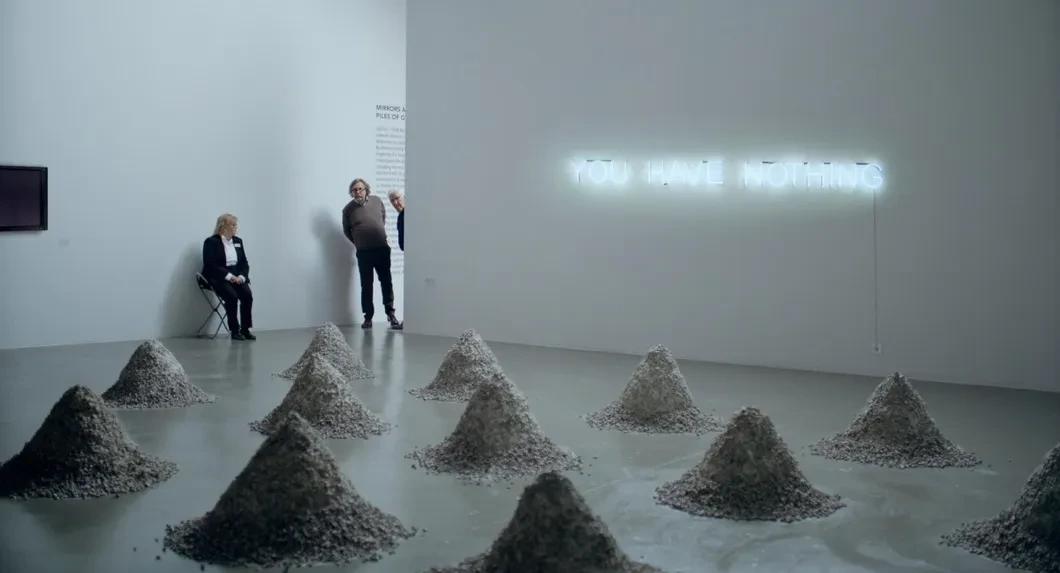
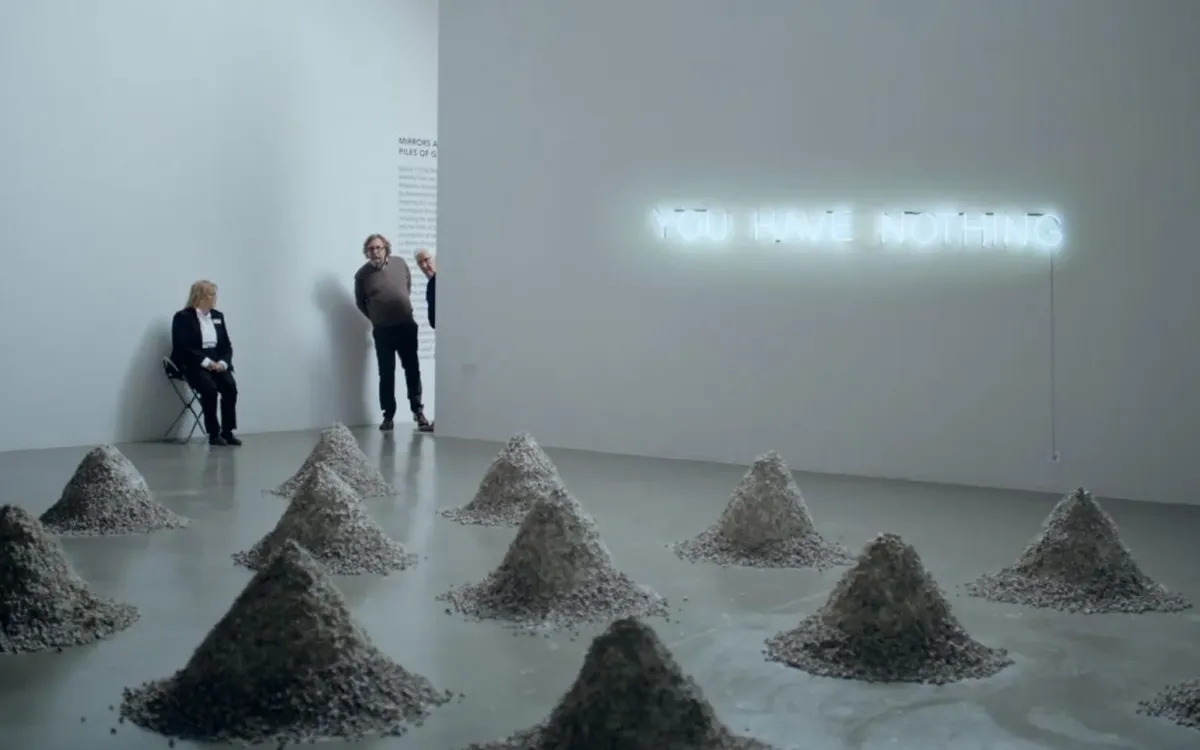
In the Swedish “square” of Ruben Estlund (recalls his provocative, ironic “force majeure”), sketches with through heroes grow into a non-trivial description of the modern art world. Christian - the curator of the Museum of Contemporary Art is passionate about a new project - the installation of Square - the area of good, solidarity, equality and justice outlined by the cobblestone. Here people will have a chance to help each other, get rid of the main scourge of isolationism. But real life (the impressive Christian is robbed directly on the “Consent Square)” herself will install the hero on circumstances where his beautiful people suffer Fiasco.
Estlund has a great fantasy and gloomy humor. The contemporary figures themselves are in the field of his acute vision (which the played by Elizabeth Moss Art Critic Anya, living with chimpanzees as a permanent performance, or a couple of advertisers who can make a hit for YouTube), and radical works from any absurdity. Gravel heaps under the vigilant guard of the caretaker accidentally draws a cleaner vacuum cleaner - you have to urgently look for a road gravel on the street ...
Like many competitive paintings, the “square” has been remarkably started, then it becomes viscous, stomping in place, and closer to the final falls into such moralization, from which fans of modern art would be petrified and turned into gravel.
Wolfgang Amadeus Hodar
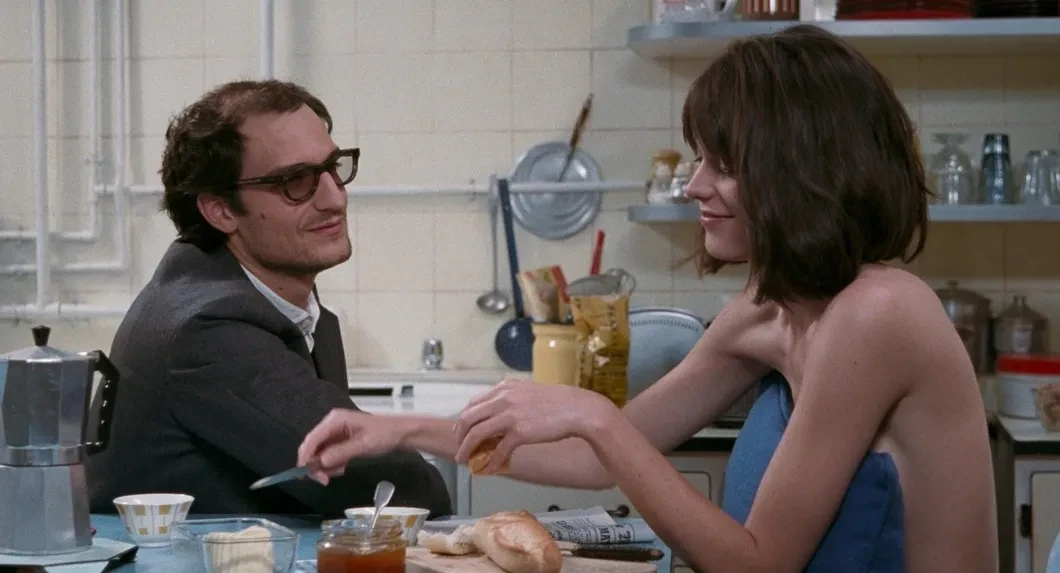
Among the critics, zealous disputes flashed around the “Young Godard” (as the film “The Terrible” ) Michel Khazanavichus, rewarded with Oscar for the film “Artist”, will be called the film “The Terrible”). So far, some laughed merrily at the quite spectator satirical comedy, the hero of which was the great and terrible god of Kino Godar (at the heart of the plot of the memoirs of Anna Vyazemski, the short -term wife of Godard with Russian roots) - others were insulting serious. The portrait of the founder of the new wave in the farce of Khazanavichus introduced to them by an evil caricature. The 37-year-old Hodar performed by Louis Garrel is an eccentric type, scandalist, a pathological egocentric, rushing with the leftist ideas of Mao. Those who were nourished his film “Chinese” based on “demons” with Anna Vyazemski in the title role. In the picture, a love story is interspersed with the “revolutionary ordeals of the popularity of the movie book in student circles. But the main events of the film are concentrated around the crushing 1968, when Europe was seized by a protest left movement. Demonstrations, street student riots naturally connected with attacks against the bourgeois massive, well -fed cinema. That year is memorable for the Cannes festival. A detachment of filmmakers, led by Jean-Luc Godard, burst into the forum and closed it ahead of schedule.
Khazanavichus may involuntarily draw the image of “Wolfgang Amadeus Godard” - as the first titer of the film reads - in ironic colors, sometimes rolling into a parody.
At the same time, the film is made masterfully, looks in one breath. Khazanavichus is a director of a modest talent, but a magnificent stylizer. I think he was in no way going to offend the classic, to defile his cult. He is generally not very interested in the true spirit of the era, her mood, dreams. The director directs lighting devices with filters to her. He shows the bald Anfan Terrieb, whose speeches are amazed in different student audiences. He enthusiastically quotes Godard's films, shamelessly including mise -en -scenes, music and emotion of the philistine cinema, against which film revolutionaries fought. The director of the Khazanavichus narcissist virtuoso plays with the image (black and white and color, negative), with fonts, dialogs (which seize as on a spoiled record). Remembering the conscious greening of the image and sound in the films of the new wave, it gives subtitles that reveal the thoughts of the heroes hiding behind banal phrases. And he even repeats the trick from the During the History of the Water, when the phonogram breaks and the film plunges into silence.
“Young Godar” is a bright, cheerful, memorable work of the mass-pult for the audience, who, of course, heard something about Godara, but did not remember his films very much. As one person said from a glossy magazine (a response that the most “formidable” would bring rabies!): “Hodar” is so cute! Isn't it? "
For connoisseurs of the films “New Wave”, this “Variation on the Holy theme for the Kinomans” will most likely cause irritation. According to rumors, the Godar himself did not see the film, he did not meet with Khazanavichus. Once upon a time he.
Family portrait in ...
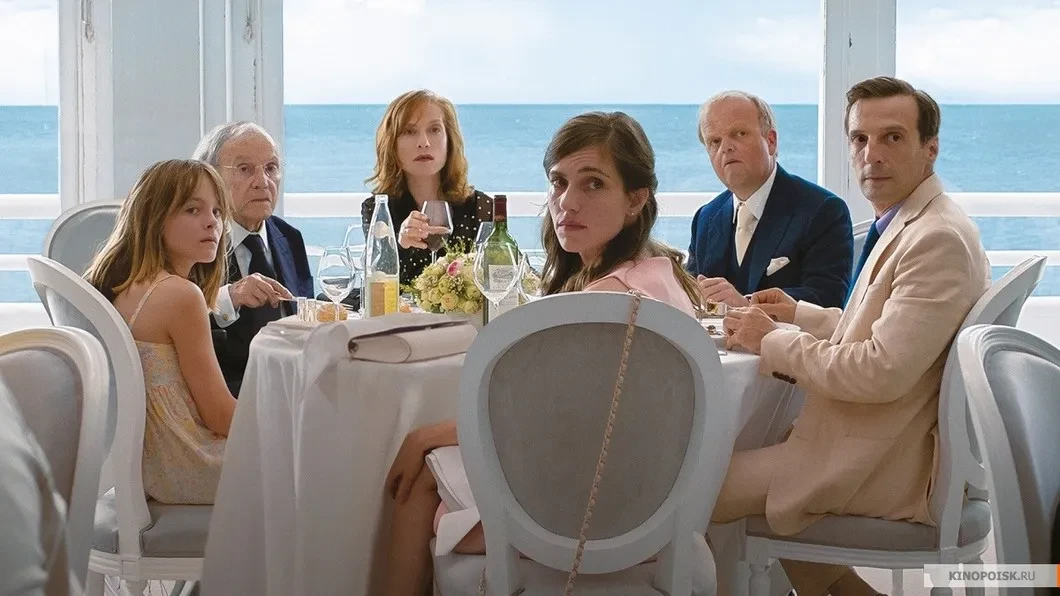
The most famous participant in the competition, the owner of two gold palm branches, Michael Hanke, presented his vision “Happy End” . The name of the film is inspired by approximately the same gloomy irony as its chilling blood “funny games”. In general, the Happy End is laying out by almost all the topics that the Haneca touches in its cinema: the space distance between different social layers, the collapse of the family, latent xenophobia, “visible and hidden”, an attempt to dialogue with close death. The inner relationship (and the heroes of Trentignan and Jupper) connects the Happy end with the recent “love”. But if “love” is a physiological essay that rises to the heights of the tragedy, really is the history of grandiose love, then the time of the “happy ending” action is after love. And after love, according to the Hanek, only death is possible (or desirable). Or her expectation. Actually, the elderly hero of Trentinignan is trying with all his might to appoint a date “The Old Woman with the Clay”, but she in every possible way dodges the meeting.
In the center of the narrative, a picturesque bourgeois family - owners of a large -scale construction, a chic estate, cream of society living in Calais - the same, as we remember, a miraculous city in the north of France, where a vast camp of migrants was demolished with the support of residents. Fat smear written characters. Merit, family secrets. The director uses different methods of spying on a contradictory reality embodied on the screen: from a camera to a mobile phone, from wide panoramas to a Facebook page and pornographic correspondence of one of the well -being of the family in the messenger.
The story with refugees turned out to be taken from the advance of the plot to its underwater part, but therefore did not fade at all. Hankee gives a family portrait in the interior of the modern world, exposing the unbearable horror of the upcoming being behind the fed ritual and decency. This is probably not the best film of a modern movie. But the carefully prescribed PAMABR HANECE is disturbing, causing a nervous laughter and a clear feeling that before the prosperous Europe, reality itself in the uniform of a broken meterdotoda opens the inlaid doors inlaid in the abyss.