
Translated material
Life is life
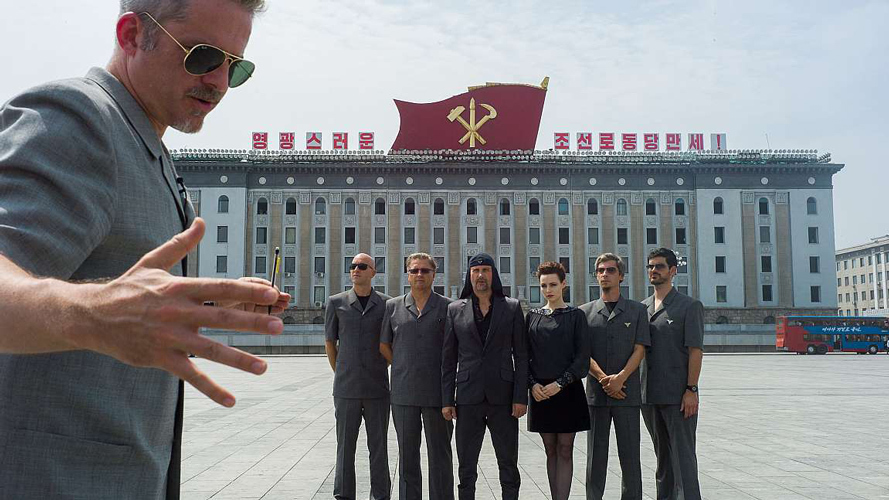
In the summer of 2015, a sensational message appeared in news feeds - Laibach will play a concert in Pyongyang! At first, all this was perceived as another duck - fantastic and invented from the beginning to the end of the story about North Korea serve as an excellent trafficial. But on August 15, on the day of the liberation of Korea by the Soviet troops, the concert really took place (colleagues from Afisha even visited it personally and wrote a detailed report on the event ). To find out the details that slipped away from the eye of the press-that is, the whole of backstage and the chronicle of preparation for the concert is from the film "Independence Day" , shot by the acting organizer, the Norwegian art tricster Morten Trovik (by the way-former student Peter Fomenko). In addition, in the cinema you can hear the official theoretical justification of this conceptual gesture.
But the main intrigue of the “Independence Day”, its main attraction is, of course, not Laibach , but the DPRK itself, according to which Slovenian musicians move under the close supervision of responsible comrades. However, each doctrine about the DPRK (and this is no exception) has one unchanged feature: the formal object of consideration each time remains completely impenetrable for the cameras of the stranger. For known reasons, rather organizational than existential, the look of a stranger who came to North Korea rests on a total installation. Somewhere behind it there is a real life that can be learned about from the blogs and lectures of Korea, but everything that eventually affects the screen is the figure of the documentaryist. The North Korean propaganda apparatus and tourist infrastructure turn out to be a black mirror in which the beliefs and features of the observer himself become noticeable. The Trikster cruelty of Mads Bruges (“Red Capella”), the stubborn non-conformism of Mansky (“In the Rays of the Sun”), the family drama of the Sun-Mi (“Songs from the North”), the left activism of Anna Broinovsky (“Set above the goal in creativity”) ...
 © Travik.info
“Independence Day”, in some places homeric, in some places sad, fits perfectly into this tradition of unintentional self -disclosure. Self -reflection is absent at all (and this is the most valuable quality of the film), since the “Independence Day” is actually a self -portrait of European guests and their charming impresario Morten Trovik, the theater director, fascinated by the strange world of the DPRK and visited this fabulous state 17 times. In parallel with his Pankovsky projects (Miss Anti -School Mina Beauty in Angola, the joint performance of Norwegian cadets and North Korean mass spectacles in Kirkenes) Trovik shot music videos, including for Laibach . And, of course, when the impossible idea to bring his beloved group to his beloved country became real, Morten could not let the control levers and became the director of the chronicle about this incredible event.
Incredible on paper, but, alas, not too spectacular on the screen. In the first, acquittal, part of the film, Trovik and musicians (to a lesser extent) are trying to explain to the correct civilized world, what the hell they generally went to act in a country, which the media of the whole world is described as an ominous Stalinist dictatorship. And their arguments cannot be refused liveliness and originality. So: throughout the history of Laibach, the yellow press accused them of totalitarianism and fascism (we recall that as the musical part of the large multimedia project “New Slovenian art”, the group constantly worked with symbols and patterns of totalitarian propaganda, deconstructing them, cleansing from a particular political message and showing the universal principles of propaganda machinery). These accusations, as is obvious to any reasonable person, are groundless; What the group was doing in their most gloomy "golden" period, most precisely, would be called social art.
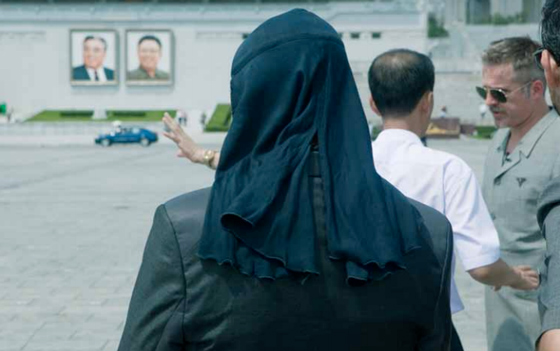
But the same newspapers are accused of totalitarianism and fascism and the DPRK. Bingo! Immediately, the installation of scraps of screeching bitter -beets and demonstrators in Pyongyang, who are convulsive of adoration at the sight of the great leader and teacher. “North Korea is one of the few places in the world (except for football stadiums), where mass exaltation and the merging of personalities into the team are still possible,” says Trovik dressed in the Pyongyansky functionary, “is it not obvious that this is an ideal place for a rock concert?” Sounds beautiful.
 © Travik.info
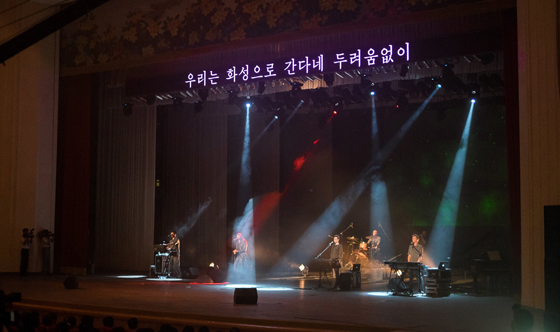
But the final performance in the Pyongyansky recreation center of the Ministry of Folk Security for one and a half thousand disciplined Pyongyans and several tourists sitting in old -fashioned seats is least like an ecstatic show. The process of preparing for the concert looks like a real cabinet drama, the main plot here is Machiavelli negotiations with censorship (as a result, the program was halved, songs and video transmission are edited). And the non -conformist enthusiasm of the musicians - despite the strictest ban on Trovik, Ivan Novak on the very first day escapes the city without accompanying - is replaced by dull relativism. In an interview on the eve of the concert, Novak is already trying to maneuver, saying something in the spirit that politics should not interfere with the rapprochement of people and, possibly, the visit of the Western group will slightly change the picture of the world of the Northern Koreans (apparently, the representatives of the cabinet aristocracy, the main beneficiaries of the hybrid regime, in some ways similar to the USSR in the early 80s).
As a result, what was declared as a rebellion against conventions and prejudices of the Western world becomes an inglorious history of giving positions. An alternative to liberal dogmatism is the stuffy comrades in white shirts, constantly shaking, no matter how anything happens. Monthly concern of the officials of the officials, the DPRK, who has been assigned to the group of officials, times becomes not just comic, but absurd - censors are looking for non -existent elements of Nazi symbolism in the concert program, which have a very vague idea of. As a result, the victims of censorship are the Wehrmacht crosses in the frames from the Iron Heaven, the cover on Life is Life (about horror, German!). Black Club of the frontman Milan Frace, however, manages to defend.
In order to give this meaning and make the discouraged musicians not the victims of the compromise, but the wise ambassadors of the world, muses whose singing is drowned out by the roar of the guns, the trovik successfully introduces into the film a parallel line with a military exacerbation on the border that happened just during the group’s visit (Kim Jong -un of the trench gives the “katyusha” to give a volley of South Korean loudspeakers who broadcast propaganda programs through the 38th parallel in response; Nothing that the exchange of shells happened five days after the concert.
 © Travik.info
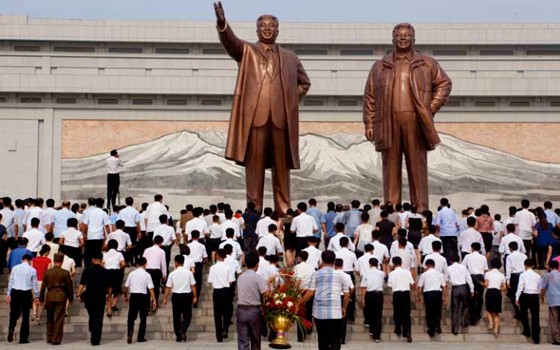
“Any art is the object of political manipulations-except for art speaking in the language of these manipulations,” the NSK art didrin formula recall at the beginning of the film. “Independence Day” proves in detail the arrogance of this Maxima: day after day, the DPRK performing the DPRK is quite successfully manipulates by the performance of visiting European musicians. There is no unity of two outsiders, Koreans masterfully neutralize all the attempts of the group to enter their aesthetic territory, while uprooting all the most explicit traces of Western culture from the program. The guests remain to obey the firm politeness of the hosts, to make ritual offers to monuments and (this episode, by the way, was prudently left behind the scenes-but we know about it from the reports from the concert) to pronounce the ritual formulas of reverence to the great leaders-yes, of course, only for the session. Against the background of “Independence Day” , the Mansky looks “in the rays of the Sun” , where the vengeful artist just won the unconditional revenge, freely and recklessly using the media at his disposal, neutralizing all attempts to manipulate his own manipulation, including heavy artillery - extremely subjective ordinance commentary. But the film and the Trovik project has something in common-both there and there the artist is equally helpless before the “real politician”. Both Mansky and Laibach were included in the space of North Korean propaganda with a romantic expectation of something radically different in relation to today's European culture and civilization, demonic or ecstatic-it does not matter. And both were faced with the amazing prosicity of this space, a banal bureaucraticism, the substitution of a truly utopian (or anti -utopian) gesture depicted on the murals and posters decorating Pyonguyan, showdown, caution and diplomatic politeness, often covering ordinary sabotage. At the same time, Pyongyansky functionaries are much more professional, agile and at the same time more tolerant Russian guardians who stupidly entered the Laibach blacklist. Pulling the German language that are quite harmless to the internal audience, non -existent swastikas and even lines of songs in the southern dialect, the Koreans allowed the strict post -industrial sound of the group. What really forced the delicate visitors of the Palace of Palace of Ministers of Public Security to start with amazement.