
Translated material
Soil and fate
Zakhkhok is a novel about a civil war in Tajikistan of the 1990s
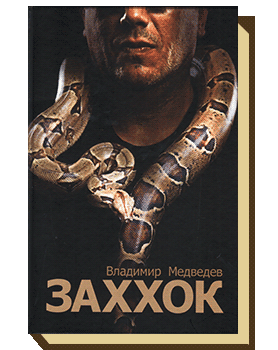
Vladimir Medvedev. Zakhkhok. M.: Arsisbooks, 2017.On the map of the world there are places where something is always happening, and most often-is wrong. They are not told about them at school geography lessons, but they certainly are. Balkans, for example. Or Jerusalem and the surroundings - in the broad sense of this concept. And, of course, the Pamir, the northern outskirts of another “bad” region, where the boundaries of the five states are twisted into an unexpected snake tangle: India, Pakistan, China, Afghanistan with its famous Vahansky corridor and the former Russian Empire, the former USSR, and now independent Tajikistan. It is there that the notorious “international tension” is periodically aggravated, so that the sky becomes hot: in the British-Russian Pamir crisis of 1895, and in the First Indo-Pakistani War of 1947, and in the Chinese-Indian border military clashes of 1962, and in the Kashmir armed uprising of 1989. It is there, on Pamir, that the action of Vladimir Medvedev’s novel “Zakhhok” takes place.
The main thing is not at all clear that with these points on the map it is not so. People there live beautiful, chic places, it is impossible not to fall in love. Rest - it is better not to find options. Living is very difficult. It is always restless there, something has always happened there, it happens and will happen. The devil knows what the reason is, what kind of exits of Inferno were formed to the surface, but the fact remains: there something accumulates there all the time, accumulates to break through one day. Yes, so break into the first stripes of the entire world press. Then everything somehow calms down, and again pastoral, landscapes and tourists. Until the next breakthrough.
It is about the last breakthrough that Vladimir Medvedev tells. This breakthrough is usually called the “Civil War in Tajikistan in the early 1990s”, it is the largest military conflict in post-Soviet times in the post-Soviet territory-and the most unknown to the widespread population of the former sixth. We know practically nothing about this war of the “Vovchiks” with the “yurchiks”, and do not build illusions - after reading the novel by Vladimir Medvedev, you will not have much added knowledge about it. Because the book is not about the war, but about people.
 People are seven. The first of them is the 16-year-old half-rebel Andrei, after the murder of his father (chief physician of one of the capital's hospitals), taken away from sin from Dushanbe to the family family nest, the Pamir Mountain Nittle. The second is his twin sister Zarina, who, together with his brother and mother, trying to somehow get used to the strange and terrible world in which they found themselves: after all, it was the mountains of Darvaz and Badamshan who fled the broken “Vovchiks”, those, of course, who did not go to Afghanistan. The third is the head of their new family, the brother of the murdered father Uncle Jorub, a former collective farm veterinarian, and now an ordinary dekhanin, which differs from the villagers except with education. The fourth is the dark and dense noded guy Karim, nicknamed “Pumpkin”, which even a little more advanced peers laugh at. The fifth is the metropolitan journalist Oleg, who had grown up in Tajikistan, who flew to a small homeland to interview one of the main leaders of that war, a thief in the law of Sangak Safarov (one of the three historical characters of the novel, in the past - 6 convictions and 23 years spent by the "owner", now the unimaginable status of a folk hero). The sixth is a former Soviet officer Davron, by and large, he never ceased to be, but an employee not to the Soviet Union, but Sangaku in the position of either a field commander or a military commander. And another “former” closes the seven - without five minutes a doctor of philosophical sciences, who threw the pulpit after the death of his father and became living under the tomb of the local St. Sufi Sheikh, Eshon Wahhob.
These seven tell the story of how the former Party-worker of the middle level Zuhursu, who became a field commander who successfully cosplaying the serpentine, Zakhhok from the poem “Shah-Name”, built his independent principality. They say either alternately, then interrupting each other and wedging in line - each in his own voice, in his own unique manner. Stylistic-oriented critics, of course, will not fail to notice that, for example, Sorokin in “telluria” is not made as an example of better, but this is not very important. Zakhkhok is not written at all for linguistic acrobatics - "but I can also get out of it." Unlike most of the works of Bolitra in recent years, Medvedev’s novel was written not for demonstration, but for a message. This is the very rare case when the author has something to talk about, and he talks about it. He tells skillfully, masterfully constructing a plot, not sagging for a minute, filigently holding the intrigue. Sets out the answer to a simple, in general, but forever urgent question: "What will happen to the homeland and with us?"
Although this issue ends with this issue, the guess should be sought not on the latter, but on the first pages of the book. And it begins with the proverb “under each followed by the horse two hundred eyes are buried”, or, as Andrei immediately deciphers: “Yes, we, like, have many generations that wherever a kopny is - a hundred people are everywhere.” This is the depth of the cultural layer is extremely important - it, in fact, is the key to the guess of “bad regions”. Medvedev’s book is not just a unique description of one of the most distinctive and wayward regions of the planet in its depths and truthfulness. This is also a convincing reminder that you have to pay for everything, and no one was going to ask your opinion. The rock is omnipotent, inexorable and unpredictable, we all walk under it - it was still knew the tribesmen of one of the main characters of the Pamir legends of Iskandara Zulkarninin, Alexander the Macedonian. All these "bad regions" unites one thing: at these points, not even culture converge, but civilizations, ancient civilizations. And the deeper the cultural layer, the more different components; The more complicated the system, the more often it has to be updated and upgraded.
This book is about the point of bifurcation, about the time when the system is scattered, and it seems like everything, entirely, to the deepest layers. But in the formed chaos, the assembly points are immediately distinguished. The inexorable and inevitable, methodically ruthless assembly of the new system. The new system, in fact, is extremely similar to the old one. The reception, of course, is not new, although it is very complicated: through a drop of water to show the ocean, and in a small mountain village to accommodate all the dying Soviet civilization. And the novel by Vladimir Medvedev “Zakhhok”, the best Russian novel of the year, if not decades, is not about the field commander Zuhursu and not even about this eternal renewal wheel, but about a person. A small Soviet man who fell under this wheel and did not even understand where it drags it - up or down. About a man opposed to the fatoma and stubbornly does not want to become an assembly point. About a person who understood something very important about his land and his time-but what did you think, why did the poet breathe “soil and fate”? About a person who, in the end, has comprehended the true essence of all these cataclysms of grinding the past and building a new one:
This is by no means a modern setting of the old drama in new decorations and with new performers of old roles, but just a continuation of the same play after the intermission. The next action. And there was no break between acts, although it seemed from the side that the curtain fell and the action stopped.