
Translated material
Excess Theater
Pursuit of Gogol Center as an invitation to leave the country
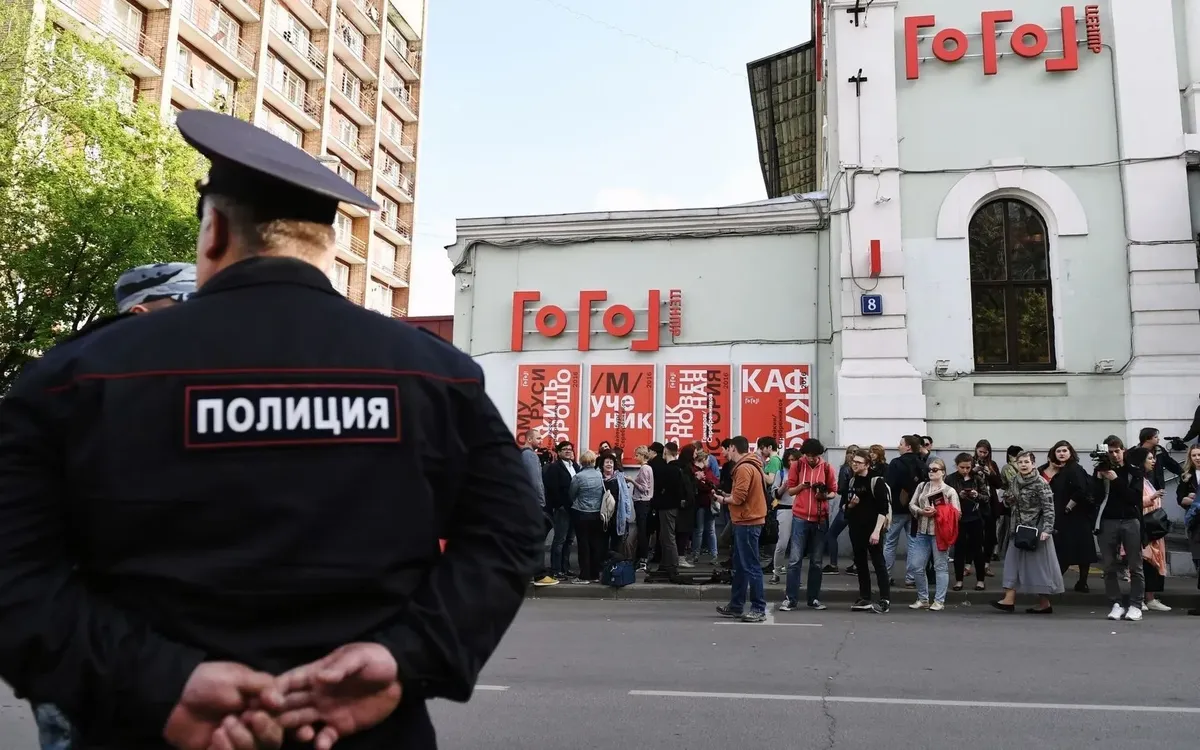
Director Kirill Serebrennikov, after a search at home, said exactly that after the first clash with security officials it is customary to say to the Russian intelligentsia: that he is in shock, and that he wants to figure out everything. Along the way, the Gogol Center, not hoping too much for the reputation of the Investigative Committee and its competence, formulated a political response. The audience was called to support the theater and come to its building, while Serebrennikov communicates with the investigator.
It will be difficult to destroy one of the best theaters in the country: there are not the last people in the country among the audience. But it is important both the direction of the impact and the operational response of the Gogol Center, clearly intentionally defending themselves-after searches in the theater, evening performances began to be prepared.
Up to 70% of the Russian economy is now in the hands of the state, and the account of large cultural and social projects not related to it is generally at best for tens. This means that if you want to do something in Russia, you are forced to cooperate with the state. Agree to the terms of officials, look for a compromise, report on the work done. The peculiarity of this cooperation is that agreeing on it falls into the gray zone of law - it is most often impossible to comply with all state requirements and regulations. Everyone who did something in Russia with state participation, yes violated something. Further, all cultural figures are divided into those who can be understood and forgiven, and those in relation to which the law must be applied in all severity. These lists are compiled depending on the current hardware order and the economic interests of competing clans.
In the era of President Medvedev in Russia, several spaces were created in which these rules seemed to not act, and where people were simply allowed to work. In Skolkovo, scientists should have developed new technologies, in the Gogol Center-modern Russian culture. When they came to the innovation center, questions began to appear: what do you think, how will investors react to this situation? Personally, would you like to invest in where the result of your work at any moment can be destroyed by any captain of justice-without any chance of a fair trial? Following innovation, contemporary art is now sent. Serebrennikov, his team and spectators, is clearly understood: people like them are not needed here. If you are engaged in art, you are dangerous to be in Russia. Search for this some other country-and another state.
Such a soft terror becomes a sign of our moment. All living organizations in the country are “Levada Center”, a European University in St. Petersburg, a little earlier Rash and innovators from Skolkovo, media holdings, and now the Gogol Center are under constant exhausting attacks.
There was information that the current problems of the Gogol Center are related to complaints about the abuse on stage and the propaganda of immoral behavior, which supposedly takes place in the theater. And that in this way the “economic investigation” that the Investigative Committee is talking about has supposedly an ideological background-one of the figures of “patriotic art” reported to the “enemies of the people”. But one ideology cannot explain the situation. The “Orthodox community”, for example, had many complaints about the director Alexei Teacher, but information about the gray schemes for financing Matilda filming, presented by journalist Anastasia Kirilenko several months ago, did not interest anyone in the UK. Apparently, for the reason that the investigation of Kirilenko mentioned very influential people who previously served in the management of the President.
What is happening around the Gogol Center is not like the ideocratic police of morals. Rather, the use of censorship arguments in power entrepreneurship. Now it is important not what your ideology is, but whose person you are. And here it is no longer up to contemporary art.