
Translated material
"I am really a slave at the FSIN"
Former security forces - about their seizure in the colony for the elect

Preface
As a member of the Moscow PMS, I have repeatedly visited SIZO-6. Although this is a female insulator, but there are also the so-called “b/s”, that is, former policemen, miners, prosecutors, judges, fsbeshniki, jailers, investigators ...The "Baesniks" have a special relationship with the Federal Penitentiary Service in Moscow: they contain them in small cameras; The cooks are preparing separate food for them. If pieces of fat are given to ordinary prisoners instead of meat, then the "beesters" are certainly served meat and good quality; Medical assistance to them is provided in the first place; Searches are carried out delicately ... that is, in all positions of the "Beses" in the insulator a privileged position.
It seemed that the same special situation “closed from under the shoulder straps” would be in the zone-after all, separate correctional institutions were built for them. But it turned out that in the colonies of former judges, prosecutors, investigators and police officers, he was waiting for the same lawlessness as ordinary prisoners. In general, no matter how cynically it sounds, but this is a good science for those who are still in positions and proudly call themselves security forces ...
We continue to talk about the Mordovian colony of strictly regime No. 5 for the "Beesnikov". By the way, the number of Novaya Gazeta for April 26, 2017 (No. 44), in which the article “Shizov for its own” was published about what is happening in the IK-5 RM, was not delivered to the subscribers in IK-5. But all the same, as the prisoners say, “the newspaper was pulled into the zone” ...
"I am uncomfortable when a man feels me"
Vladimir Melnikov (former employee of the internal troops, a participant in the fighting in Chechnya. At the end of April 2017, he was freed from the IK-5 RM. The name and surname were not changed): “ In the zone, some strange desire of the employees to undress the prisoners all the time ... On the one hand, they undress in order to inspect thoroughly, this is understandable, there are cunning convicts, can hide something and elastic from panties. Well, some employees, such as Garkushen (chief of the detachment), can also feel. I am uncomfortable when a man feels me. I say: "Why are you feeling?" And he: "What if you tied something under the eggs." I say: “What are you, chasing, or what? You look like that, you see what to feel there. ” Well, there are still lovers to feel Eroshkin, Rykshev, Vilyakin ... They feel the genitals with their bare hands, without any rubber gloves. They do not know what gloves are there at all. They are all young men. I think a normal man will not feel a man. They probe all. Sometimes it is painfully done, clearly on purpose. Most likely, they are non -traditional orientation.
When they touch the genitals with their hands, this can happen with several prisoners. Yes, they don’t care, they also include DVRs. I say: “Why are you shooting, what right do you have to shoot me in the video when I undress. This is not legal. You search, but turn off the registrar. ” They say: "So legal."
These habits to undress and feel the genitals are under the current chiefs-under anoshin (beginning. IK-5), under Trofimov (deputy. IK-5 in bior (on safety and operational work)) appeared. Before that, they somehow did not undress. This is someone's initiative.
January 13, 2017 in the morning I was taken to search from a schizo. They searched and, I look, stands Eroshkin Fedor Petrovich (junior inspector O) on Prodol (in the corridor) and winds the lace on his finger. This lace was adapted for opening the window, because there is a local grate, which does not allow to open the window. The distance from the lattice to the window is about half a meter. The grate is small, the hand will not crawl there. Eroshkin tore off this lace, that is, deprived me of the opportunity to ventilate the room. I say: “Why did you tear off? The same room needs to be ventilated. ” He: “I don’t care” - obscenities. And he says: "We went to a second search." I say: "I actually just searched me, I do not have any prohibited items, a second search will not give anything." Well, they took a search. Eroshkin says: "undress." I began to unfasten the jacket, he at that moment in the groin knee. I bent in pain, and at that time he began to jump on my right leg. Further, Eroshkin began to beat me with the edge of his palm on the neck above, from below, on the tub, he hit the stomach several times. “I will survey you here. You will suck here now, ” - this is how I yelled at me. He had a foam right on his mouth. Vilyakin stood nearby, he is also a junior inspector of the security department, and Butusov (DPNA - the assistant to the head of the colony), who said: “What are you, gasping? What are you ... ”And in every possible way insulted me.

On the same day after lunch, there was a commission, I was transferred to the PCT (chamber -type premises). The commission was held led by Trofimov. I told him: "The attack was made on me in the morning." He ran so with my hand from head to toe: “Something,” he says, “you can’t see anything for you.” And I say: “They hit me, they beat me, I have a swollen scrotum, they hit me a lot of my knee, top my leg, I have a bump here, it hurts me.” He says: "Well, nothing is visible." Schpartyuk is sitting on the window and says to me: “Well, a gynecologist will arrive in two days, we will call you for inspection.” And they are all there (Hilko - the BIRA inspector, Trofimov, Shulgin - deputy n from the OPO - department of educational work, Stolyarov - chief of PCT and SUS (strict conditions of detention), Shpartyuk and Shumkin) begin to laugh. I say: “I do not need a gynecologist. Do you behave normally? " Although Stolyarov is shooting me on the camera, I am sure the same video where they are mocking, they will not provide management for the report. Then they give this video to the club, in the club the convicts cut this video and make a video editing, and they already look as it should. And so they behave disgustingly at the commissions - they mature, insult, scare ...
I did not receive any medical care due to the fact that my scrotum was swollen. On that day after I was attacked, after about an hour there was a bypass of a medical officer Lieutenant Kazeva. I asked her to conduct a medical examination and write a conclusion. But she did not give me any help, she did not give a conclusion, she did not even examine. I wrote a complaint to the prosecutor's office. I have not received a single answer yet.
Doctors in the colony are two old women, who are long ago to retire. They come, you say: "Give aspirin." “What are you,” they say, “are you kidding me?” Why are you asking him, you know that he is no longer for two months. ” They come, they do not have any drugs. In general, you will not get to the doctor. You say: "It hurts me." She: "Write a statement to the doctor."
And why, you write it, it goes to the “basket”, that is, they throw it into the garbage basket. Employees themselves say: "Why," Korsinkin "to send him?" I say: "No, pass on the doctor." You pass the doctor yourself, no one causes anyway.
Here on March 31 of this year, all PCTs were taken out immediately, although usually each camera is displayed into a separate courtyard. Georgians were sitting in a schizo, his name is Kakha, he was 50 years old, he found an open form of tuberculosis. He was taken to the hospital, and they came to us, poured all the continuation (corridor) with chlorine, in a schizo all cameras and continued. When we were brought up from a walk, they closed it, there was directly horror, all our eyes burned, the whole mucous membrane was shifted, my head was very ill. Then, for two weeks, we soap soap for days, and chlorine still stuck and stuck. That is, we were simply poisoned like insects. We complained, demanded that we be transferred to another room. And where will we be transferred? Everyone was flooded with chlorine, where we will be transferred. The latter who were with Kahu in the cell, the two were prescribed a diet. But before that he was with others in the cell, and it is not known when he fell ill with tuberculosis. We went all together in the same bath, for walks. And for walking there are narrow courtyards, just the sky in the cell, sheets of metal. We constantly intersected with this Georgian. They had to put everyone on a diet and treatment with preventive treatment. But no ...
The fact that I wrote a complaint affected the content. At first, the bosses said: "Write wherever you want." And you begin to write, they begin to press. They make up far -fetched reports, put in a schizo so that others and show you that whoever writes is suffering in order to disappear, fight for justice. The bulk of the convicts is therefore afraid to write something, because dates, parole. And the second mass is afraid, because they will put in the SUS, in the PCT, they will roll up along the schizo ...
In the zone, they mock us as they want. Here the miscalculation should be carried out for 40 minutes, well, an hour. According to the law, it is laid: in minus 25, the check is carried out in the detachments, there is no charging. But with anoshin and under Averkin-all the same: it is raining, frost, 27-28,-they drive out for charging, miscalculations for two, three hours. For example, the same shmona, winter, frost arrives in the morning and we are standing on our feet in the cold for four to six hours. Well, that is, they mock as they want. In the cold, they can search - take off the hat, put the pea jacket. You say: "Frost on the street." - “So what? I don't care". You come to the detachments after these searches, things are in a heap. Imagine that we have 150 people in the detachment, we have each Baul signed with a tag, each has their own things in Baul. You come, and things in the middle of the corridor, right in one pile of Bauls, all shake out to the floor, and that’s all. Everyone breaks, break. Panels, ceilings, walls are torn off in the rooms ... They behave like barbarians. ”
"Kozloderka"
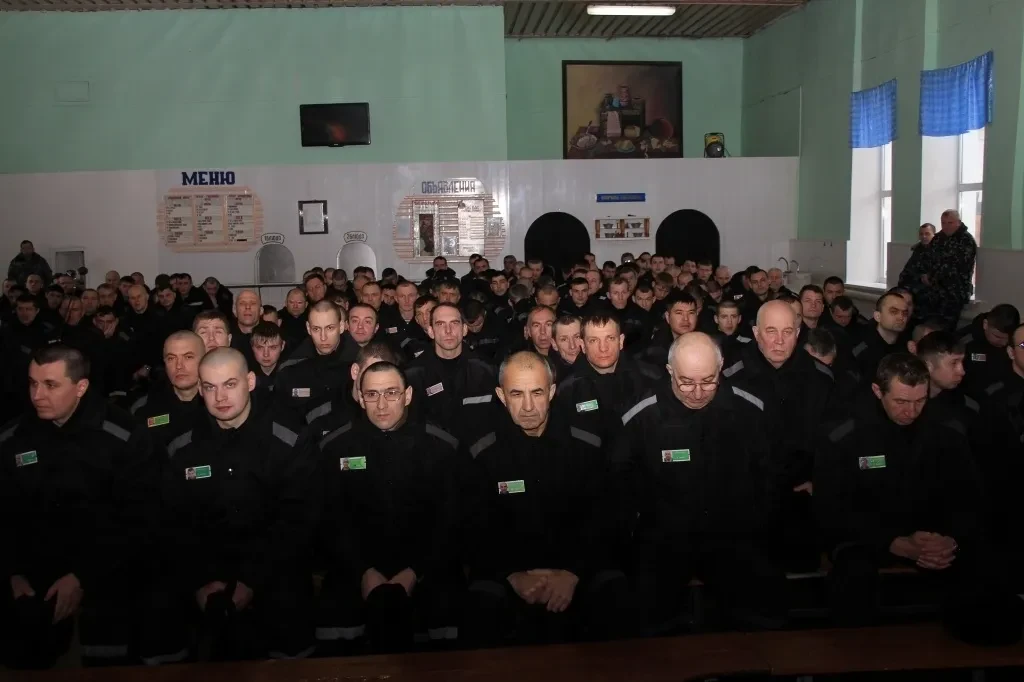
Ivan Mordvin (former investigator of the Investigative Committee, concluded by the IK-5 RM, the name and surname are changed for the security goals of the prisoner): “There are beatings of prisoners in the colony. But such things cannot be taken out into the street, this does not happen in front of everyone. One was taken away, the other was taken either to the schizo or to the duty unit, that is, where unauthorized persons are not allowed except employees. Here, in the colony, such know-how is practiced: if you did not like you (I will not say, the employee is objective, not objective), he leads you to the “goater”. It is located directly opposite the duty unit. This is a search room, in everyday life it is called a "goater."
This room is designed so that the people who come to the colony come to the colony are searched, and then they are diluted in quarantine or by units. That is, this is an ordinary search room where you cannot hold out for more than 20 minutes, according to the law. And not according to the law, you can go out into the street, you are in the same slippers for the fact that you were in slippers on the street, put them in this “goater”, and you can sit there for up to three days without food and without bedding, because there are no beds, shcons there, there is only a table. And you will be taken out once a day to the toilet. There can be several people there, because one employee did not like one ZEK, the other - the other ... The previous chief Averkin (this is the predecessor of the current chief) lasted a man of 40 in the summer of last year, they really stood like herring there. The size of the room is very small: the width is 2.5, and the length is about 3.50 meters. How can 40 people fit? And easy. Someone got on the table, there in the middle of the P-shaped table, on which the convicts who come, lay out their things, and in the middle of the letter “P” stands an employee and looks, searches all these things. Here someone stood on this table, someone stood on the bench, someone pressed ...
Naturally, in no way the landing in the "goater" is not issued. Why don't they send a prisoner to a schizo, but closed to this room? And it’s easier for employees - it is not necessary to draw up in any way. And then at least some square meters will be in a schizo at the prisoner, he will sleep there at night, even on the bunks, which are thrown back only at night, but with bedding. And the room in this room is just a type of punishment.
Our boss, except for money, is not interested in anything. You see, due to constant pulling out into the duty unit, the premises in the "goater" and the fear of beating people do not grumble. No one openly against the administration will trample, because they will grab him alone, whoever, will take him to the duty unit, Hilko will come there, Trofimov will come and personally take up education.
If you write a complaint to the prosecutor's office? So she will not leave the colony. Those who have Internet access write complaints, but not on their own behalf. Afraid.
Here is the mutual guarantee of the prosecutor's office, the Federal Penitentiary Service of Mordovia and the colony. They all know each other, they are all relative relatives, live in one place ... Here is an example. The prosecutor for supervision arrived, all convicts, so that they would not get to the reception, drove into the detachments and near each detachment the administration employee stood up and did not let anyone out into the street. No one could break through to the prosecutor. After all, the prosecutor himself could enter the detachment. But he does not walk in the detachments, he does not need it. He arrives, well, maybe for the Probability, maybe for a checkmark, so that in the book of visitors on the checkpoint there was time to have time that he arrived at so much, to go into so much. When the prosecutor arrived and went with the head of the colony, one convicted person at that time was in the library (and the library is outside the local sectors, that is, if you are in the library, you can calmly leave there). And so he waited until the prosecutor with the then head of the colony Averkin passed the library, went out of there and rushed to the prosecutor. The boss saw, said: "Wait, where are you going?" He says: "To me to the prosecutor." Well, the prosecutor can no longer be lost to the convict, he says: "Yes, I'm listening to you." And ZEK began to complain about the head of the colony right in his presence. The prosecutor listened to everything, turns to the head of the colony, says: “Well, let's go, we will fix it in writing.” You know what the chief Averkin said to this prisoner, right at the prosecutor: “I am hot. Here he will leave, and I have been hot. " Averkin was a year acting as the head of the colony. In general, he was in operational management, he is operas in the Federal Penitentiary Service in Mordovia and supervised our colony, that is, he was our overseeing opera. Now he is the deputy head of the operational department of the Federal Penitentiary Service in Mordovia. "
Vladimir Melnikov: “ Employees take everything - letters, manuscripts, statements to the prosecutor’s office, which in principle are not subject to censor. The oak -up prosecutor arrives, causes me to go to him. Before that, they search, take these manuscripts. I go to the prosecutor (the last time was the prosecutor Mashkov), I tell him: “I went to you, the operative detained me, took the documents” the prosecutor says: “I am not interested in it now. I came for a different reason. The main prosecutor (Melnikov) sent me to take an explanation from you about the attack on you on January 13. And another does not interest me. I have it now, ”he says,“ a day off. ” I say: “Then come to the worker. How this may not interest you, you are a prosecutor, you must react. ” Prosecutor: “Nothing of the kind, I am not interested in it. I told you, I just take a statement. ” The prosecutor's office covers everything here. ”
"We cannot, we will be kicked out of work"
Ivan Mordvin: “A psychologist for a colony should be a courier between convicts and administration employees. To listen to claims, complaints, maybe something happened at home, some personal tragedies, and just listen to a person, help with advice. And in our country, psychologists are engaged in search events. That is, the employees about (security department) on a voluntary-order order say to the psychologist: "We went to the search with me." We go home from work, psychologists stand and search us along with other administration staff. We are going to work, again psychologists are standing there ... There is no trust in them.
In general, this colony is characterized by the fact that for the most part administration employees are engaged in unusual affairs. When the chief of the detachment searches you, you immediately associate it with an operative or with an employee of the security department. When the operative comes to sewing production and says: “Why aren't you working?”, You ask him a counter question: “Are you an operative, you are not a manufacturer, what do you need here at all?” And they are still in every barrel of a plug. You can draw an analogy, this is the same if you go to the police into the office of the investigator and say: “So, traces, gathered, took machine guns, took body armor - and patrol on the street.” And PPSNIKS will sit in the place of trace to investigate criminal cases. Here is about the same thing in this colony with the official duties of employees.
Administration staff, younger personnel what they will tell them, they will do, they do not contradict the bosses. They can then come to the convicts when there are no colleagues around their colleagues, and complain how difficult it is for them to work, how they cannot withstand it. And when you tell them: “Get to the courage, say that this is not included in your duties and you will not do this,” they say: “We cannot, we will be kicked out of work.” Because there is such a village, and he receives 30-40 thousand rubles as an officer of the Federal Penitentiary Service. And he cannot sacrifice such money and go somewhere to work, because, firstly, he does not know how to yell anything except on the convicts, and, secondly, well, who needs it, except for the Federal Penitentiary Service.
The colony officers work here for life and inherited positions. We have several such cases on the colony when children work directly with their fathers, they can even be in the same shift on duty. There is no rotation of personnel here. ”
The fetid spirit of the sausages

Ivan Mordvin: “The administration really feeds us with slop, they are disgusted. У нас на колонии есть колбасный цех, где делают колбасу на продажу.
Раньше в колонии разводили свиней, но год назад прошла какая-то эпидемия и на всех свинарнях, и на нашей колонии, в том числе, они как бы всех свиней сожгли. Ну, как сожгли? Закрыли свинарники. Свиней-то скормили нам, их в баланду нам кинули.
Сейчас колония просто закупает фарш. В этом колбасном цеху они делают в том числе сосиски ( по данным УФСИН по РМ, в ИК-5 производятся сосиски «Классические» .- Е.М .) Я точно знаю, что они заключали договора с солдатскими частями, с другими исправительными колониями на поставку сосисок. Они делают тонну, а холодильник у них может вместить только 100 килограммов, а остальные сосиски тупо тухнут. Если не успевают довезти до потребителя, тухлые сосиски скармливают зэкам. Когда в столовой открывается бак с этими сосисками, такой зловонный дух, такой зеленоватый дым из этой кастрюли идет, что видно, что это отрава. Зэки, у кого нет возможности купить еду у барыг, едят эти сосиски. А им делать больше нечего. Мучаются животами, но едят. Сосиски даются не каждый день, но раза три в неделю точно.
Встает вопрос: какой смысл делать такое количество сосисок, если холодильник на сто килограммов? Чтобы все тухло? Ведь они же могли бы делать меньше сосисок, или холодильник больший купить. Мне кажется, что они списывают через нас таким образом деньги, они списывают на нас сырье. Покупают якобы больше, а на самом деле в продукцию идет меньше».
Владимир Мельников: « Сосиски дают отвратительные. Последний раз их давали, так они были не просто с запахом, они были зелено-серые, ну прямо протухшие, видать, тухлятина вообще. Я не смог есть такое. Кто-то ел, единицы какие-то. Но основная масса не ела, конечно».
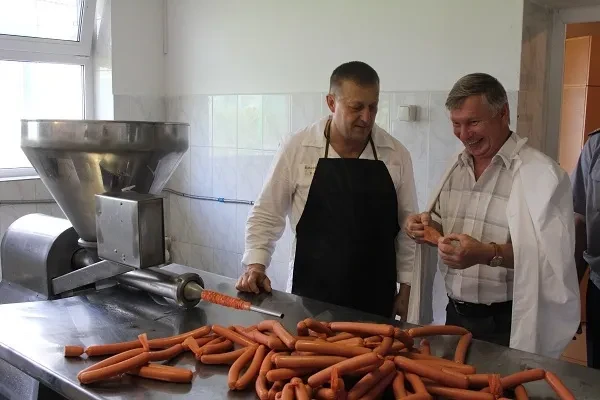
Иван Мордвин: «Кроме сосисок этот цех делает еще колбасу: варено-копченую и сырокопченую колбасу. Я не могу сказать, что она протухшая, но реально она невкусная. По соотношению цена-качество, колбаса эта не выдержит конкуренции. Стоит 400 рублей килограмм. Но реально там ну совсем нет мяса. На территории колонии есть магазин, где ты можешь купить что-то себе поесть, в том числе и эту колбасу ( по данным УФСИН по РМ, в ИК-5 освоен выпуск трех видов колбасных изделий с громкими маркетинговыми названиями: колбаса вареная «Кремлевская», колбаса полукопченая «Дворянская» и колбаса полукопченая «Делегатская» . — Е.М .)»
Владимир Мельников: « Пищу зэкам выдают отвратительную. Утром дают обыкновенную крупу сваренную на воде — перловка, сечка, ячка. Все это с плевелами. Качество круп такое, что ими только лошадей кормить. Ну, как скотину нас кормят. За полгода, которые я провел в ШИЗО, в ПКТ, нам только два раза давали рис на воде — на Пасху и на следующий день. Гречку давали в последнее время. Она вся черная. То, что обычно выбрасывают, когда крупу перебирают, то нам давали, черноту всю.
В обед дают суп. Ну с голодухи можно съесть. Про мясо даже не спрашивайте. Какое мясо? Сало в супе плавает — это в лучшем случае. Второе — разваренные макароны с водой, ну каша такая клейкая. Макароны темные, сорт самый низший, что может быть. Ну кости от курицы могут дать. Мякоть всю посрезают, кости сварят и дают. И все пресное. Соль нам не дают. Хлеб керосином отдает. Не знаю из какой муки его пекли. И еще хлеб все время сырой, от него постоянно живот болит.
Чай дают светлый, ни вкуса, ничего. Бывает чуть подслащенный. Молоко вообще отсутствует: ни в кашах, ни так, его вообще нету. Хотя по закону положено 100 г мяса, 100 г молока. Яйца могут дать раз в две недели.
На ужин обычно дают картошку прямо с гнилухами, с капустой, с водой, типа рагу овощного. Картошку на кухне не чистят непосредственно перед приготовлением пищи. Картошку заранее завозят, допустим, машина 10 мешков, и они раз — ее всю перечистят. Ничего не выковыривают, ни глазки, ни гниль, ничего не обрезается. Там стоят синие бочки 170-литровые с водой, штук пять. Они на неделю, на две чистят эту картошку электрической картофелечисткой и кидают ее в воду. И когда картошка плавает в воде неделю-две, она покрывается кислой коркой, ну киснет, и в этих бочках она плавает. Потом оттуда просто достают, порубают и дают зэкам. Если картофельное пюре, то могут разбавить сырой водой из-под крана до уровня киселя».
Иван Мордвин: «Еда в столовой очень-очень-очень отвратительная. Кому позволяют средства, там не едят. Берут только хлеб. Ну, если прижмет, конечно, пойдешь есть туда, потому что ничего другого не останется.
Барыги у нас в колонии, безусловно, есть, но администрация с ними борется, они их не устраивают. Семь месяцев назад к нам пришло новое руководство, начальником колонии стал Аношин Андрей Викторович, ну «хозяин» мы его зовем. Он с барыгами начал сразу жестко бороться. Их сажают в ШИЗО, с ними постоянно проводятся профилактические беседы. Администрация скоро поборет всех барыг. Пусть цены у них высокие, но без них нельзя, правда нельзя. Барыг в колонии осталось всего несколько человек: Белый в 11 отряде, Степухов во 2 отряде, Черданцев в 10 отряд, Газин и Климов в 6 отряде.
Коррупция есть везде, но, с другой стороны, если бы не было телефонов, если бы не было такой коррупции в колонии, мы бы не смогли сообщить обо всем произволе. На мой личный взгляд, барыги осужденным скрашивают немножко жизнь. Ну, реально они очень здорово помогают. Это обыкновенная рыночная экономика. Да, у них большие цены, с этим никто не спорит, накрутка на тот же батончик «Сникерса» составляет ровно два раза. У барыг «Сникерс» сейчас в колонии стоит 95 рублей. Колбасу, сыр они продают в зависимости от сорта сыра, стоимость его может составлять от 400 до 700 рублей, но в среднем дешевые сорта покупают, потому что нам тут не до жиру, быть бы живу.
Лично я могу себе позволить покупать у барыг, и, конечно, барыги этим пользуются. Другие не могут купить, от этого у них и обида на барыг. В колонии сейчас чуть меньше тысячи человек. Две трети могут себе позволить покупать у барыг. Я в месяц у барыг покупаю тысяч на пять. Это немного, потому что у меня есть возможность самому звонить таксистам, переводить таксистам деньги и таксисты везут сюда продукты без посредничества барыг. Некоторым зэкам не присылают посылки, у них остается лимит на получение посылки, они мне его и отдают. У них просто нет возможности «греться», им не присылают ничего, у некоторых просто нет родственников. Им тоже выгоден такой симбиоз. Потому что они ведь не бесплатно отдают право на посылку, они тоже на этом получают — или тысячу рублей, или блок сигарет, как они сами захотят. Я у них бесплатно этот лимит не беру. Я прихожу к какому-нибудь человеку, бедолаге, как мы их называем, и говорю: «У тебя есть лимит?» Он говорит: «Да, есть». — «Дашь?» — «Дашь» — «Чего хочешь?» — Он говорит: «Блок сигарет». Пожалуйста, блок сигарет. Тысячу рублей? Пожалуйста, тысячу рублей. В зоне блок сигарет «Донской табак» (самые популярные у нас сигареты) — 90 рублей пачка, то есть 900 рублей блок стоит. По сути, та же тысяча.
Администрации выгодно, когда люди покупают у них в магазине, например, те же копченые куры, потому что прибыль идет в бюджет колонии. В связи с этим в прошлом году перестали принимать в передачах любые продукты питания, кроме консервов, сушек, сухарей. Издали специальный приказ, не знаю, насколько он законен. Во все остальные мордовские колонии можно через интернет-передачу заказать и «Докторскую» колбасу и куры-гриль, только в нашу колонии такие передачи запрещено делать.
Я звоню таксисту, говорю: «Уважаемый, не будешь ли столь любезен, я тебе переведу денег, привези мне, пожалуйста, 20 штук кур вот на такого человека». Он привозит, а ему говорят: «Нельзя куры-гриль передавать». Он говорит: «Почему?» — «Все, запрет. У нас приказ, начальник сказал не передавать». Но в то же время в магазине колонии спокойно продаются куры-гриль. Стоят в зависимости от веса, от 190 до 230-240 рублей — полцыпленка. Expensive. Это может готовиться как в столовой, так и на других колониях. Наша колония, например, делает колбасу, а копченного цыпленка делают на другой колонии, на 14-й. На 2-й колонии (это женская колония) — газированную сладкую воду в бутылках полуторалитровых, она называется «Двоечка». Отвратительная вода, но ее тоже берут.
Администрация запретила проносить в колонию то, что приготовлено на свидании.
Если раньше на длительном свидании с родителями или с женой, в последний день ты там жаришь, паришь, готовишь курицу, котлеты, плов, яичницу, упаковываешь это все в пакетики и потом все это спокойно выносишь и кушаешь со своими друзьями, раскладываешь по холодильникам, как-то стараешься растянуть, то сейчас это все под запретом. Со свиданки можно консервы, можно сушки выносить, а готовая еда под запретом».
Швейка и чурбачки
Иван Мордвин: «На зоне есть градообразующее предприятие, откуда в основном идут все деньги, — это швейное производство. То есть это пыль, нитки… Летом тупо потеешь в этом цеху, потому что сидят 300 человек, работают двигатели у каждой швейной машинки, все нагревается… Летом цех нагревается иногда до 45 градусов. Нынешний начальник Аношин, первым делом, когда пришел, закрыл в швейном цеху душевую. Он сказал: «У вас не грязное производство. Вы относитесь к категории легкой промышленности. На легкой промышленности душ после работы не положен». Все шьют, все работают, там же есть и слесари, электрики, швейники… Все в этой пыли и элементарно потеют. Рабочий день заканчивается, а ты не можешь вымыться, грязным идешь в свой барк. Меня крайне раздражает манера нынешнего руководства, они лишили нас даже элементарных удобств — элементарного душа. Они говорят: «Вам положено раз в неделю помыться, вот и мойтесь». Хотя по закону не раз в неделю, а два раза должна быть баня.
Мы жаловались, писали жалобу, что по новым правилам внутреннего распорядка мыться надо два раза в неделю, а нам предоставлено только раз в неделю. И УФСИН, и прокуратура за надзором ответили, что нас моют два раза в неделю. А по факту — один. А как нам доказать, что нас не моют два раза? No way. Только свидетельские показания заключенных. Но зэки боятся давать показания против администрации.
Еще по поводу продолжительности рабочего дня. По графику, утвержденному начальником колонии от 14 февраля этого года, рабочий день длится с 9.00 до 18.00. С 18 до 18.30 — кто что хочет, то и делает. А по факту рабочий день — до 18.30. Кто в 18.15-18.20 встал из-за машинки, тот ночует в ШИЗО и может провести там суток 15-40. Чтобы не платить нам полную ставку, чтобы не засчитывать восьмичасовой рабочий день (с 9 до 18), они сделали перерыв на обед не час, а полтора часа (с 12 до 13.30). А по факту все равно все к 13.00 возвращаются и работают. То есть нам незаконно на полчаса увеличивают рабочий день. В воскресенье, 30 апреля, нас в добровольно-принудительном порядке лишили воскресенья и погнали на работу. Чем объяснили? А ничем не объяснили.
В цеху около 250 машинок, то есть 250 швейников плюс обслуживающий персонал (то есть обрезка, размеловка, звеньевые, которые туда-сюда крой носят), в день цех должен выкинуть порядка 500 костюмов готовых. Зэки шьют робы, костюмы, форму. Шили, например, костюмы дворника. Сейчас шьются костюмы для ЧОПовцев и одновременно шьются костюмы «Антигнус» с сеткой на лице. Костюм «Бастион» шьется.
Мы шили месяца три-четыре назад костюм для нашей армии. Очень сложный костюм, песочного цвета, для Сирии. В норму не влазил никто. Это был очень дорогой костюм. Фирма за пошив одного изделия платила 650 рублей. А на сайте этой фирмы такой же костюм стоит 12 тысяч рублей. То, что фирма платила колонии за костюм, считается очень большими деньгами, потому что в среднем нам фирмы платят за костюм рублей 150-200. Швейники, которые выполняют норму (а она всегда завышена), получают минималку: 3-4 тысячи. Но если в цеху шьют 200 человек, то из 200 эту норму в состоянии выполнить человек 20. В общем, мы дешевая рабочая сила. Я сам себя называю рабом. У меня высшее образование и все прочее, но я раб. Я реально раб у ФСИНа. Это и из-за отношения к нам в колонии, и из-за зарплаты. Ведь в основном нам платят копейки, не больше 200 рублей в месяц. То есть на полкилограмма отвратительной колбасы. Но что поделать…»
Владимир Мельников: «Я, когда только приехал на зону, работал. В швейном цехе, на размеловке. Отработал месяц, мне заплатили 40 рублей. Я пришел к начальнику и сказал: «Это что за такая рабская оплата труда? Я работал достойно месяц. Я не прошу мне заплатить 30 тысяч, я все понимаю, но хотя бы пару-тройку тысяч я уж точно заработал. Что это за унижение такое?» Он: «Ты, чего заработал, то и получил». Я говорю: «Ну, вы разберитесь». Он говорит: «А чего разбираться, у нас тут так. Ты куда попал? В зону» Ну раз такая оплата, тогда ради чего мне работать. И я стал писать жалобы. Поскольку у меня серьезные заболевания, меня вывезли на больницу. И там мне прописали ограничения по работе — исключить ночные смены, работу в шумном помещении… Ну, в итоге никакой работы на зоне для меня не нашлось».

Иван Мордвин: «Кроме швейки, у нас есть угольное производство. Для одной фирмы у нас в бочках производят древесный уголь для мангала для шашлыка. На этом производстве человек 40 работает. Это такие большие бочки с топкой, объемом по 5 тысяч литров. Туда закладываются березовые чурбачки, бочка растапливается и березовые чурбачки под температурой за трое суток преобразуются в уголь. Потом туда в противогазах залазят зэки и выгребают этот уголь, грузят в картонные пакеты по пять килограмм, приезжает машина и их забирает. И люди на воле жарят на этом угле шашлыки. Мы, конечно, без претензии к людям, которые покупают этот уголь, но само производство как для зэков, так и для жителей поселка вредное. Экологическая прокуратура дала разрешение нашей администрации на использование 10 бочек и все бочки должны иметь общую вытяжку — высокую трубу. А по факту получилось, что у нас 15 бочек стоит, 10 бочек дымят в большую трубу и дым высоко над землей стелется, то есть ты не дышишь этим. А пять бочек, когда затапливают, они дымят непосредственно над землей. То есть ты ходишь и дышишь этим всем. Этот дым уходит в местный поселок, где люди живут, дети дышат этой гарью, эта гарь у них оседает всюду.
Около полутора лет назад у нас здесь был бригадир цеха паросилового хозяйства, так называемой ПСХ, которое отвечает за отопление помещений в зимнее время. Константин Иост его звали. Администрация (замначальника Трофимов) сказала: «Сейчас ставим бочки, в них будет делаться уголь, к ним надо провести трубы, чтобы по ним шел дым». Без страховки, на свой страх и риск они погнали его: «Давай залазь на трубу». Иост говорит: «Как я полезу на трубу? А вдруг я оттуда упаду?» — «Ну ничего страшного, — говорят, — разберешься». Он залез на эту бочку в пять тонн (это примерно железнодорожная цистерна в половину, а по высоте такая же). Он должен был с бочки приварить трубу. Труба, в которую уходит дым, метров 30-40. Ну, он оступился, упал, труба упала на него сверху. Dead body. Трофимов, конечно, сказал: «Я никому указаний не давал лазить на бочку, да вы что? Мы без страховки… Боже упаси». Ну все, отказной...»
«Надо скинуться на ремонт»
Иван Мордвин: «Мы живем в отряде, приходит завхоз, нажимает на звонок, все собираются в ПВР (комната политико-воспитательной работы), это то место, где смотрят телевизор. Это самое большое помещение, куда может вместиться весь отряд. И завхоз говорит: «Ребята, у нас течет крыша, нам надо ее перекрыть. Если мы ее сами не перекроем своими силами, то вы понимаете, что администрация нам не поможет в этом. Короче, ребята, я жду денег». Хотя администрации выделяются деньги на ремонт. Но они не доходят непосредственно до бараков.
Скажем, в раздевалке отряда потекла крыша и идти с этой проблемой к администрации и говорить, что «у нас крыша протекла, выделите денег», конечно, они денег не выделят, даже если у них будут. Они скажут: «Справляйтесь своими силами. Единственное, — говорят, — чем мы вам поможем, мы закроем глаза, что мы вам разрешим загнать (ну то есть привезти на зону) цемент, штукатурку…» То есть они еще делают одолжение за то, что мы делаем ихнюю работу. У них здесь такая вот логика. Они это возводят себе в заслугу.
Была, например, в колонии построена церковь, сруб церкви. Строилась она четыре года и четыре года на эти цели деньги собирали осужденные. Приходила администрация и говорила: «Нам надо отчитаться, что мы строим церковь». В итоге церковь построили, но на деньги осужденных.
Я уже не говорю о всякой бытовой технике. Все телевизоры, холодильники, все микроволновые печи, которые есть во всех отрядах, куплены на средства осужденных. На них на всех стоят инвентарные номера, что это как бы колонии принадлежит, но по факту они все куплены на деньги зэков».
Владимир Мельников : «Собирает завхоз отряд в ПВРке и говорит: «Надо скинуться на ремонт». Ведется список — кто, сколько. Если ты не сдал деньги, тебя дергает начальник отряда: «Так, сейчас тебя по 106-й за отказ работать ( по ст.106 УИК «Привлечение осужденных к лишению свободы к работам без оплаты труда», осужденные могут привлекаться к работам по благоустройству исправительных учреждений и прилегающих к ним территорий не более двух часов в неделю. Отказ от работ может повлечь помещение заключенного в ШИЗО или ПКТ. — Е.М .). Сотрудники персонально тебя начинают шмонать. На тебя делается особое внимание со всех сторон. Суммы требовали разные. На хозрабты и по 500 рублей, и по 200 требовали. Differently. Раз в месяц это как минимум нужно было сдавать, а бывало и по несколько раз в месяц. То на крышу надо собрать, давайте по 300 рублей скинемся, то на краску 200 давайте…».
Revenge
Владимир Мельников: «Мне дали надзор на три года. То есть с 10 вечера до 6 утра сидеть дома и два раза в месяц отмечаться. Это колония так решила. Меня незаконно признали злостным нарушителем. А судья даже меня не слушал. Это месть колонии за то, что я жалобы на них писал.
Знаете, какими словами сотрудники колонии проводили меня на волю? «Ну чего, скоро тебя ждать?» Я говорю: «Я не собираюсь сюда». А так, зарекаться тоже нельзя, сейчас такое время. Говорят: «Ну чего, жалобы будут?» Я говорю: «Ну, конечно, я буду продолжать добиваться справедливости по вашим незаконным действиям». Они говорят: «Ну давай-давай, удачи тебе, пиши, нам-то все равно, отпишемся, если ты еще не понял…»