
Translated material
Monasteries are waiting for tourists
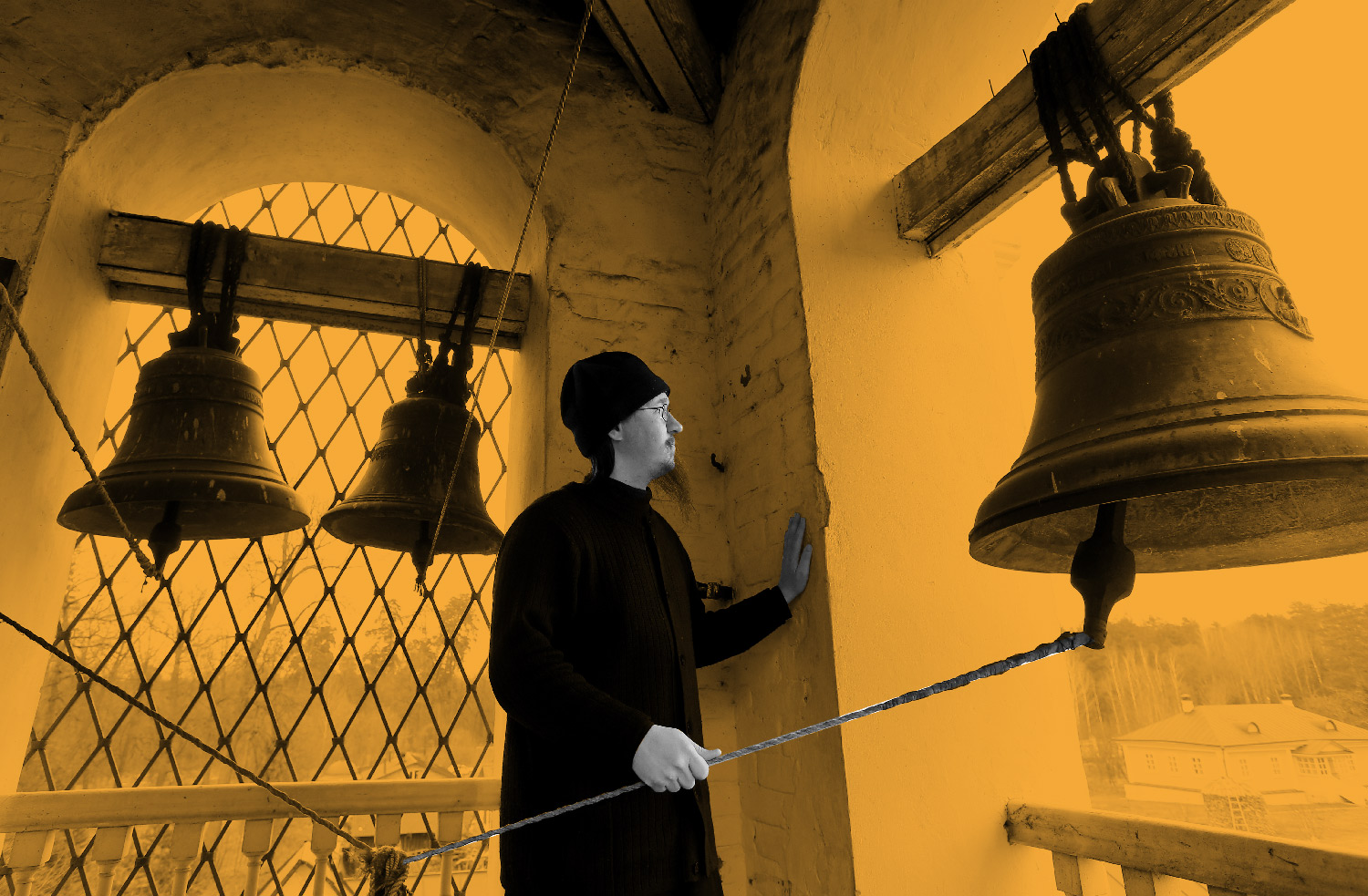
Young people greatly helped the revival of monasticism in Russia. But many monks have a clash with real monastery life to disappointment in Orthodoxy
The rapid growth of monasteries
In the Soviet Union there was a large deferred demand for monasticism. On the one hand, in parishes, or even in secret monastery (in village houses or urban apartments), there were thousands of secret monks and nuns and an even larger number of laity who wanted monastic life. On the other hand , in society, especially among the intelligentsia, there was a belief that the monastery life should be revived as part of the national cultural property. With the third - the new government considered it right to convey the destructive monastery monuments of architecture of the Russian Orthodox Church (Russian Orthodox Church).
Therefore, the number of monasteries, when they were allowed, grew up by explosive pace - 50 times in 30 years. In the USSR in 1985 there were 18 of them, and at the beginning of 2016 - 926 (455 male and 471 women).
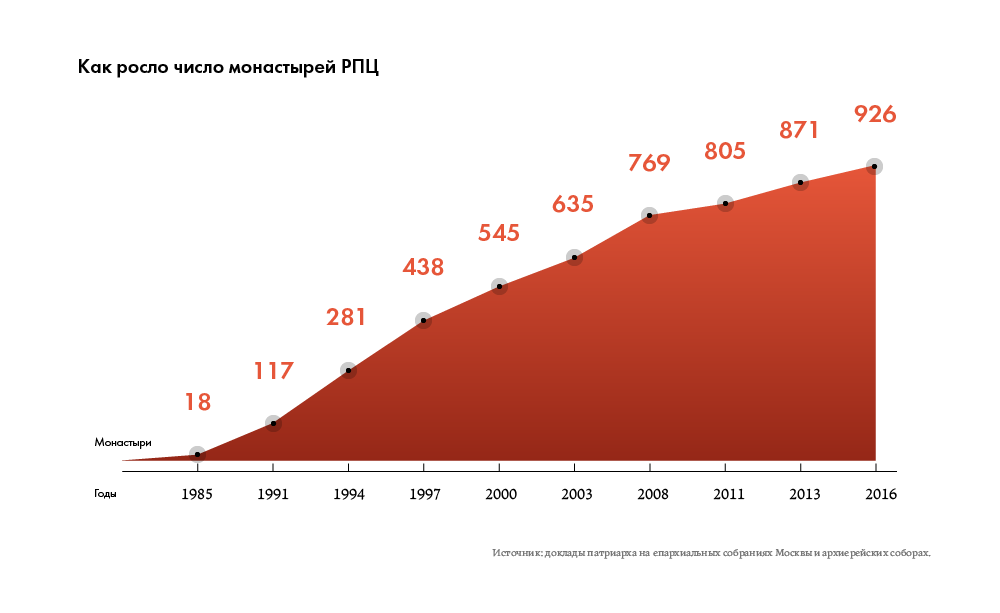 Illustration: Anastasia Alexyuk for "TD"
 At the same time, the Russian Orthodox Church did not have any program to revive monasticism. The decisions of the opening of the monasteries were made by local bishops - bishops, archbishops, metropolitans, and the Holy Synod only approved them.
The bishops usually wanted to open in the regional center, where they had a residence, one female and male monastery. The first was to be washed by the bishop and sew the vestments for the clergy, the second was the center of the “spiritual leadership” by city parishioners and the frames of diocesan administrators were forged. Then these monasteries were opened somewhere in the suburbs of the “monastery” -non -self-state monastery farms, where the bishop’s personal cow stood in the stall and his beloved mare grade.
Plus, in the region, there were often significant historical monastery complexes, which had to be occupied from the point of view of both a strategic position and justification of the hopes of the governor for the “Renaissance of Orthodoxy”. This is for a start a couple of monasteries - male and female.
By the end of the 1990s, four monasteries became a minimum for the average Russian region.
From children - to monks
When the monastery opens, not only monks should come there, but also those who know how to arrange a monastic life - and this is a whole art. Those who entered the leading core of 18 active Soviet monasteries, that is, several dozen people, had such an experience. For the leadership of the created monasteries of experienced monks and nuns from the old monasteries, they were sorted out to be clean. However, they were not enough. The rectors of the new monasteries were people with minimal monastic experience, or even without it.
They received the necessary knowledge from old, hastily reprinted books, used tips and rumors, and bypassed their own everyday experience.
The situation was no better with ordinary inhabitants. The first monasteries had the opportunity to choose and gathered the best personnel under their roof. By the end of the 1990s, there were already 50-100 monks or nuns, which fully provided their needs. From the speech of the Patriarch it follows that in 2015, in the “stavropigial” monasteries subordinate to him personally, the average number of monks was 65 for male abode and 54 for female. But, according to my data, most new monasteries today have less than a dozen, or even one or two full-fledged inhabitants in the monastic dignity.
In the 1990s, youth willingly “blessed” for monastic life. Meanwhile, before the revolution, the young man was kept in the status of a novice up to at least 30 yearsThe main inhabitants of the monastery are those who are not monks. They are divided into two categories.
The first is novices, that is, those who have the right to wear a monastic robe, “accepted into the fraternity”, but are not tonsured monks. There are relatively few of them, since the need for full -fledged monks is large and they are stripped relatively quickly. The second is the workers, that is, those who, living in the monastery, are obliged to work (for money or at the table and overnight), but still far from entering monasticism. There are many of them. Most often, these are paid workers, homeless people, “wanderers” (including fugitives from the law), as well as people who decided to make a “stop” in life.
To make up for the shortage of monks, the Russian Orthodox Church in the 1990s used all its authority.
The youth in every possible way "blessed" for monastic life. This went against pre -revolutionary traditions, when a young man was kept in a novice in the status of at least 30 years. It was believed that at this age, a person can already make a meaningful decision so that later he does not become a “cut -in”.
From the monastery - to the world
The crisis occurred in the late 2000s. “A reduction in the number of people who seek to become nuns and monks” and “insufficient level of canonical consciousness of the inhabitants and even leaders of monastic communities” was recognized by Patriarch Kirill. At the same time, ten years of life in the monastery for many people who came there young ones turned out to be enough to survive disappointment. Paradise is far away, and the problems are close - hard physical work, a strict daily routine and army dependence on the tyranny of the authorities.
The famous publicist, abbot Ignatius (Dushain), writes about this: “I think about ... many who have accepted monastic tonsure and the sacred dignity at the hands of eloquent vitia. Who paid with his life, mental health or broken fate for his illusions, for faith in the “spiritual” leaders, for the naive assumption that they do not give a damn about them. They were still boys and did not know either themselves or the consequences that inevitably waiting for them. But the one who threw them like kittens into a whirlpool, did he not know? "
In addition to the exit to the parish from the monastery, there is also a radical exit - into the world. Often it is accompanied by complete disappointment in OrthodoxyFor men in this situation, there is a decent way out. Since the vast majority of monks have a holy dignity, they can go to priests for a parish. The episcopate appreciates such personnel. Firstly, the priest-monk already has significant church experience, which favorably distinguishes him from the "recruits." And secondly, in which case it can be driven to any unpromising parish - there will be no complaints about the inability to feed the family. The nuns are more difficult: for them, the possibilities of being outside the monastery are formally limited by the bishop residence. But in reality, they can be taken on the parish - there is work for qualified personnel.
Read also Such Russia: for all the priests of the Mercedes, the public does not have the public reproaches “priests on the Mercedes”, and the priests complain about poverty. Both are right: the "Mercedes" in the church go to few
There is also a radical exit - into the world. Often it is accompanied by complete disappointment not only in monasticism, but also in Orthodoxy.
The Internet is full of stories to cutting about the sad monastery reality, established by free families, new work and life for their pleasure.
There is no complete statistics. In the most prosperous, stavropigial monasteries (including such famous ones as the Trinity-Sergius Lavra, Valaam, Optina of Deserts, Solovki) This is the case. The total number of monasteries subordinate to the Patriarch is slowly growing, the total number of monks is also.
At the same time, the average number of monks per monastery since 2010 has slightly decreased, from 62 to 60, and for one deceased in some years there were three departed either for the parish or to the world (see table ). In non -so prestigious abode of business, most likely, they are worse. In fact, monasticism from “calling” has turned for a significant part of people into a variant of “life experience”.
The elders are against the bishops
The monastery brotherhood often recognizes the head of the bishop not even appointed by him the leader of the monastery, but informal spiritual authorities - “elders” and “old men”. What are the elders are well shown, for example, in the film by Pavel Lungin “Island”. For such monks, demons are always nearby, and the struggle with them should be wound using means that many would consider magical: various objects consecrated on the relics of saints, land and sand from their graves, etc.
Here is the recent story of the abbess of the Pokrovsky Monastery in Moscow Feofania (Miskina) about how she began her career: “It was a difficult but happy time ... Since 1995, she went to the Danilovsky cemetery to the blessed Matronushka, asked for help in business, carried all important papers, put them to the grave. My sisters and I even fed the parishioners there - only so that Matronushka heard us and help. They took sand and slowly from tenants (who did not want to move out. - N.M.) poured him in the premises of the monastery. They read the akathists to the Queen of Heaven and the Holy, prayed at night. For three years the confrontation continued. ”
The elders (or “confessors” - in the case of being in the sacred dignity) make up that part of the church organism that does not allow the most radical groups of believers from the church. Elders and old people form complex network structures. The main elders have partnerships among themselves, personal spiritual children, among whom are the abbot and confessors of various provincial monasteries, nickels of parishes and even bishops.
“I went to the cemetery to the blessed Matronushka, asked for help in business, drove all the important papers, applied them to the grave”In monasteries, this informal hierarchy won a greater influence than the episcopate. The average bishop was forced to come to terms with this. He knew, for example, that the governor of his monastery enters the clan of one of the elders, regularly professing the permanent members of the Holy Synod of the Russian Orthodox Church. Or that another governor is a spiritual father for a third of the priests of the diocese. Or that the abbess of his third monastery remains a girlfriend of a nun, transcribing a patriarchal bed. In addition, a secular public - officials, bandits, entrepreneurs quickly began to swirl around the rectors of significant monasteries. As a result, from the second half of the 1990s, bishops do not control monasteries by monasteries.
Monastic-Turistic complex
Monasteries were created as the "replicas" of pre -revolutionary rich and crowded abode. If from the point of view of monastic work this did not succeed, then wealth and crowds in many cases are evident , especially on weekends. The economic growth of the 2000s did not bypass the monasteries.
The main role here was played by the state. It was more and more ready to spend on the "spiritual". And the temples and monasteries were natural recipients of that kind of money. It is convenient to report to a revived monastery to the voter. At the state level, there was a well -financial assistance program. Let's say, according to a recent investigation of the Stavropigial Valaam Monastery, for each of 80 monks and novices over the past 10 years, 43 million rubles of state investment had it there. And at the level of bosses, there is a fashion to collect donations for the revival of Orthodoxy among private entrepreneurs. A couple of years ago, RBC told in detail how the state -owned companies and members of the “Richest List” take off on the Moscow program “200 Temples”.
The middle class wanted to take his children somewhere for a weekend except to barbecue and vodka. here the monasteries were by the wayIt became pleasant to go into restored complexes to the laity. The Russian middle class, who acquired new cars, wanted to take his children somewhere for a weekend except to barbecue and vodka. And in the average Russian region of places where you can go "with the cultural program" at least in the first half of the day. And then the monasteries and temples were by the way.
And where the tourist trail was laid , the money flowed there. Since the mid-2000s, my electronic mailbox began to score spam, advertising a weekend holiday with a departure from Moscow. It was clearly intended for organized entertainment of ordinary workers of factories and offices and included bus tours that ensure a combination of visits to temples and monasteries of the Ivanovo, Vladimir or Yaroslavl dioceses with sledding and daily evening tasting products of local liquid plants.
Read also Three ways to the priesthood are the demanders who seek and gays the number of priests in the Russian Orthodox Church since the time of the USSR has grown more than three times, there are already about 40 thousand of them. In the career of a priest, some attracts status, others - spirituality, third - gender tolerance
In 2015, I happened to drive along such an Orthodox-tourist route - between the old city of the Verkhoturye of the Sverdlovsk region, in which there are two monasteries, and the village of Merkushino, where the courtyard of one of them is located.
The route filled with minibuses with the “weekend pilgrim” from Yekaterinburg and Nizhny Tagil included a couple of rural temples, a new chopped roadside temple near the memorial stone, where they traded “branded” forest herbs and teas, and a final stop in the Orthodox women's monastery, where it was possible to plunge into a cold “holy source”. The latter is a typical chip of such travels.
So many monasteries turned into a tourist business. It is not necessary for its maintenance by a large number of monks. A few people are enough to conduct church service and public representation. All the rest - from administration to trade - can be engaged in hired employees who are dressed in subdigns for decency.
The author is a historian, a sociologist, an associated researcher at the Research Center for the Study of Eastern Europe at the University of Bremen (Germany)
Save
The material uses links to publications of social networks Instagram and Facebook, as well as their names are mentioned. These web resources belong to Meta Platforms Inc. - It is recognized in Russia as an extremist organization and is prohibited.
The material uses links to publications of social networks Instagram and Facebook, as well as their names are mentioned. These web resources belong to Meta Platforms Inc. - It is recognized in Russia as an extremist organization and is prohibited.
Monastery of the Russian Orthodox Church Tourists