
Translated material
"First persons" again receive their
Patriarch Kirill and Valentina Matvienko became honorary citizens of St. Petersburg
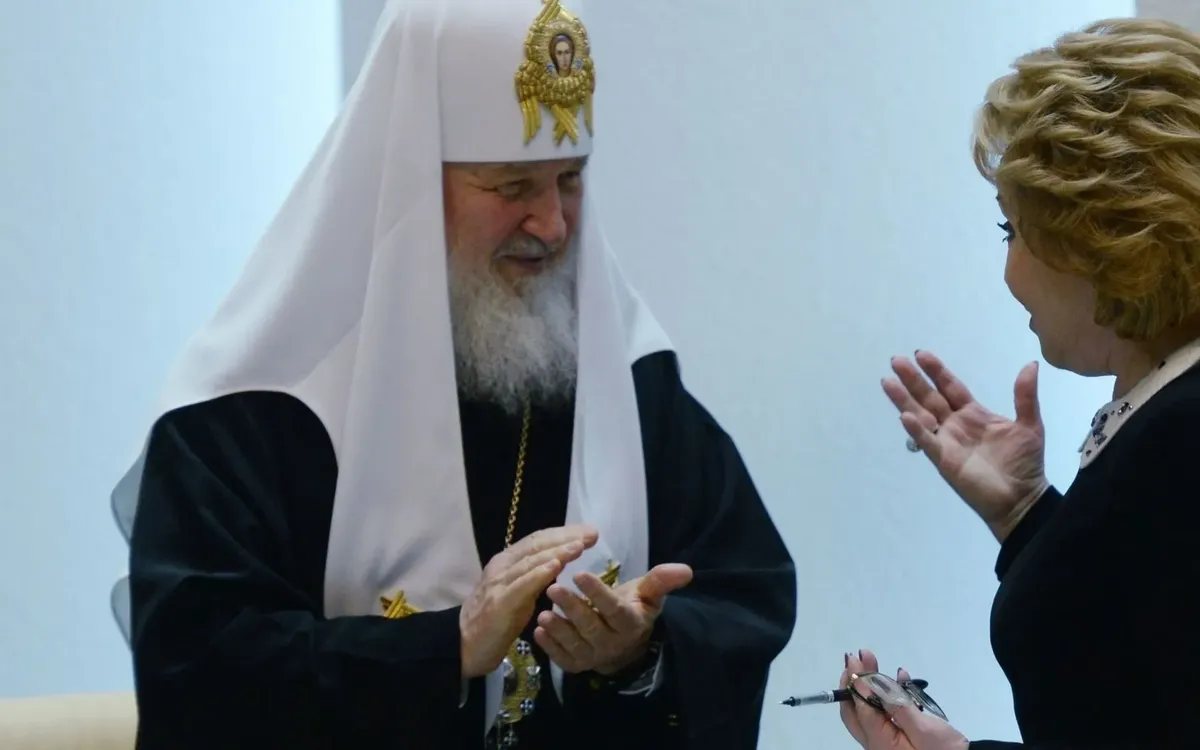
On May 24, the St. Petersburg Parliament chose new honorary citizens of the city-those who made “an outstanding contribution to the development of St. Petersburg, increasing its role and authority in Russia and in the international arena, in strengthening democracy and protecting human rights, in science, art, spiritual and moral development of society.”
Among the candidates for honorary citizens were the Matematic Professor Mark Bashmakov, the Russian national team coach Elena Lozko, Doctor of Medical Sciences Boris Rachkov, physicist, corresponding member of the socialist Mikhail Miroshnikov, President of Leninsky holding Anatoly Turchak, People's Artist Edita Piekh, People's Artist of Russia and film director Alexander Sokurov. And also - the head of the Federation Council Valentina Matvienko and Patriarch Kirill, who are called the main applicants for this title in 2017.
Meanwhile, a real honorary citizen of St. Petersburg is the one who is usually asked about: what, is he not yet an honorary citizen?
The one whose voice is heard in difficult times and sounds like a tuning fork. The one whose opinion on acute issues is important and necessary for citizens.
That is exactly what one could say, for example, about Daniil Granin and Oleg Basilashvili-at the same time, Granin became an honorary citizen only in 2005, and Basilashvili (after several unsuccessful attempts)-only in 2012.
Of the current candidates, this can be said about Alexander Sokurov - more than once a title, but never became an honorary citizen. Just as Boris Strugatsky and Alexander Gorodnitsky, Mark Taimanov and Edita Piekh did not get them - could not gain the necessary number of deputy votes.
As a result, neither Sokurov nor Piekh received the title this year - they were preferred by Matvienko and Cyril. Based on not so much from the contribution of these persons to the development of St. Petersburg as from their status of the first persons.
If you discuss their contribution, the grades will be, to put it mildly, different.
Thus, it is not possible to recall the outrage of Cyril with the outrages that took place in St. Petersburg-the construction of the Okhta Center, the destruction of the monuments of the Okhtinsky cape, the plans for the “alteration” of the stable department and the resettlement of part of the historical center outside, the transformation of the 31st hospital into a medical center for senior vessels, inciting national enmity and aggressive homophobies, dishonest elections and dishonest elections and dishonest elections and dishonest elections and dishonest elections and dishonest elections and dishonest elections and dishonest elections and dishonest elections, and dishonest elections, and dishonest elections and dishonest election "Kadyrov bridge", and many others. As for Valentina Matvienko, being the governor of St. Petersburg, she left few indifferent. At the same time, some called her the “greatest statesman”, while others were harshly criticized-for the same “Okhta Center” ...
But the essence of the matter is not in these assessments, but in principle.
Now Matvienko and Cyril to refuse in honorary citizenship (according to the logic, within which the parliamentary majority usually acts, confusing the bosses with the Fatherland) - would mean showing a glaring political illness: "Any doubt will be punished as disobedience." To assume that the United Russia and their allies will be decided in this case for “disobedience” - political fantasy.
Exactly in the same way in 2006 - with the protests of a few democratic deputies - President Vladimir Putin became an honorary citizen of St. Petersburg. And even when this was made, which did not decorate the SKS, the decision, they said that in principle, those who occupy high positions should not apply for the title of honorary citizen. After resignation - please, but only after. Then, when it will be possible to evaluate their contribution to the development of the city or strengthen democracy without binding to their existing official position.
Based on this logic, in 2014, in the last convocation of the Legislative Assembly, an amendment of Yabloko was adopted to the Law on Honorary Citizens of St. Petersburg. According to it, the “title“ Honorary Citizen of St. Petersburg ”may be assigned to a person who replaces the state position of the Russian Federation or a constituent entity of the Russian Federation no earlier than three years after the completion of the term of office or his work in this position.”
It would seem that the question is resolved? It was not so: in January 2016, with the next supposedly “technical” edits of the law, which remained unnoticed (alas, and the author, too), the specified norm was excluded by the second reading. And now the "first persons" get their own again. If only they themselves do not refuse - but neither Matvienko nor Cyril did this.
In 2006, when an honorary president was chosen by an honorary citizen, the opposition said: "The last thing is to award the first persons."
After a decade, this thought remains just as relevant.