
Translated material
A new list of diseases that impede the content in prison has been adopted
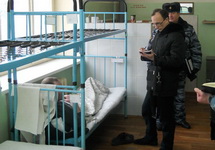
The government approved a new list of diseases that impede the content in conclusion. The corresponding decision signed by Prime Minister Dmitry Medvedev, dated May 19, on the 26th, was published on the official portal of legal information.
If the previous list approved by Decree of Government No. 54 of February 6, 2004 included 41 positions, then there are 57 of them in the current list. It is, however, not so much about expanding the list of diagnoses, but about their regrouping according to the new classification.
So, if in the 2004 list there was a separate section “Tuberculosis”, which included 5 different positions, now 5 varieties of tuberculosis, the names of which are formulated differently, are included in the “Infectious Diseases” section, which did not contain in the previous version of the list. Neurosyphilis and AIDS are added there; In the old list, the first of these diseases belonged to the category of "disease of the nervous system and sensory organs", the second was in the section "other diseases".
On the other hand, if various types of diabetes in the previous list were combined in 1 position, then in the new they are divorced 6 different.
In fact, the government’s decree on the impossibility of detention of persons with certain diagnoses is ignored by the courts, the prosecutor's office, and the Federal Penitentiary Service. So, at the beginning of 2014, in Moscow, paralyzed Vladimir Topekhin was sentenced to a real term on charges of fraud; The appeal instance reduced the term, but left the convicted person in conclusion. IK-1 in Kostroma, where Topokhin was taken, she filed an idea of his release and won the trial. However, the convicted person was released only after the decision stood in the appeal: the prosecutor's office appealed the court of first instance. In May 2016, the ECHR ordered Russia to pay Topikhin 19.5 thousand euros compensation for non -pecuniary damage.
Convicts, who are already in prison, human rights activists in some cases manage to free, and each time it requires significant efforts. So, at the end of 2014, the Chelyabinsk Regional Court released a patient with Cancer Andrei Lavrov , canceling the refusal decision of the district court. In March 2016, the ECHR ordered Russia to pay Lavrov 20 thousand euros for non-ordering medical care.
However, in other cases, the efforts of human rights activists are unsuccessful. So, in April 2015,the prisoner Vladimir Klimov, who suffered from cancer of the III-IV degree, died in Chita. At the same time, the decision on the liberation of Klimov was made by the district court back in April 2013, but the prosecutor's office successfully appealed him to the regional court. Further appeals of the patient and human rights activists to the courts of all instances remained unsuccessful, although even FSINED doctors insisted on his liberation.