
Translated material
Zbignnev Brzezinsky died
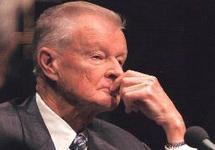
In the hospital of the city of Fols-Cherch, Virginia, on May 26, at the age of 89, the American political scientist Zbignnev Brzezinsky died. It is reported by The New York Times with reference to the daughter of the deceased.
The political scientist was born on March 28, 1928 in Warsaw in the family of the Polish diplomat Tadeusz Brzezinsky. In 1938, Tadeusz Brzezinsky was appointed to Canada, and the family left there with him. At the end of the university in Canada, Brzezinsky moved to the United States; In 1953, at Harvard University he defended his thesis on advice. The Polish October and the Hungarian Revolution of 1956 approved the political scientist in the idea that the Eastern European countries were able to withstand the USSR.
In 1958, Brzezinsky received American citizenship. After that, he joined the Democratic Party and joined in a practical policy. In 1960, he was a foreign policy adviser to US presidential candidate John Kennedy. He warned against hostile policy against Eastern European countries. Even then, Brzezinsky pointed out that the USSR entered the stage of economic and political stagnation and, as a result, will decay into separate national states.
Subsequently, working in the administration of President Lyndon Johnson, the political scientist spoke with the idea of a pan -European conference. The idea received implementation several years later after the end of Johnson’s presidency, in 1973. Then a conference on security and cooperation in Europe was organized, transformed in the OSCE in 1995.
In 1977-1981, Brzezinsky was an adviser to national security in the presidential administration Jimmy Carter. It was the highest state post that the political scientist occupied. Brzezinsky contributed to the further normalization of relations with communist China. He also played an important role in the signing of the Camp-David agreements between Israel and Egypt.
Brzezinsky advocated in support of Soviet dissidents. After the USSR invasion of Afghanistan, he developed a strategy for undermining Soviet positions in this country, to the implementation of which he attracted Saudi Arabia, Pakistan and China.
After leaving the White House, Brzezinsky almost until his death continued to participate in practical policy, having a reputation as one of the most authoritative experts. A number of large American politicians are considered his students. Among them Madeline Olbright, US Secretary of State at Bill Clinton's presidency.
In February 2014, Brzezinsky met in Munich with the leaders of the Ukrainian revolution of dignity. After the victory of the revolution, he sharply condemned the annexation of Crimea, comparing Vladimir Putin with Hitler and Mussolini. In April 2014, he advocated direct military assistance to the United States to Ukraine.
Brzezinsky owns a number of books. The most famous of them is the Great Chess Board (1997). In this work, the capabilities of the United States to maintain hegemony in Eurasia are explored, overcoming the competition of Russia and China.