
Translated material
Anti -Soviet person
Zbignnev Brzezinsky died
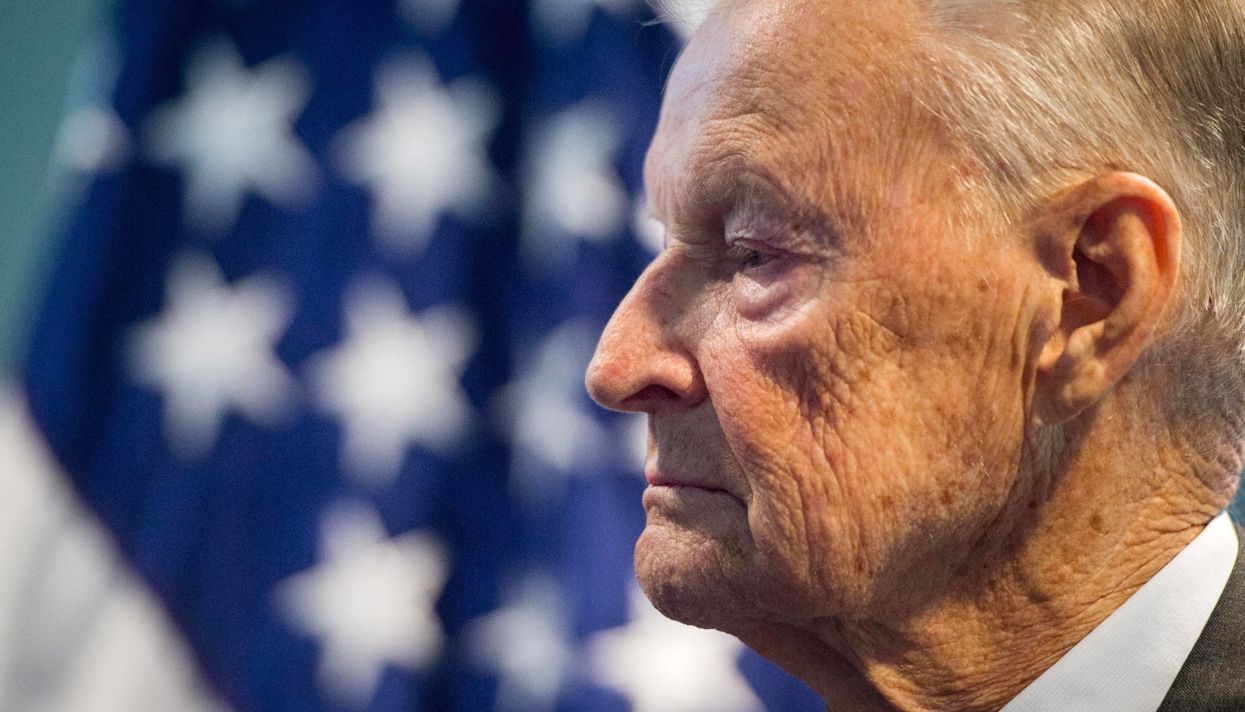
In the United States, on May 26, in the 90th year of life, Zbignnev Brzezinsky, a scientist and statesman, author of dozens of works on political science and sociology, national security adviser Jimmy Carter, one of the ideologists of the American foreign policy of the second half of the 20th century. In the 1970s and 80s, Brzezinsky defined the foreign policy of the United States almost solely, but in subsequent years retained a significant impact on it.
Zbignnev Brzezinsky was born in 1928 in Warsaw, but spent no more than three years of his life in Poland: his father, diplomat Tadeusz Brzezinsky, for most of the 1930s, along with his family, served abroad. Including - from 1931 to 1935 in Germany, from 1936 to 1938 - in the Soviet Union.
Brzezinsky admitted that his children's memories of Poland were “simplified”, and he could hardly remember what happened in the countries where his father worked, but the further fate of his native country had a strong influence on his views. In 1938, the Brzezinskys were transferred to Canada, and in 1939 Poland was divided between Nazi Germany and the USSR . In an interview with Al-Jazire in 2010, Zbignnev Brzezinsky recalled : “The terrifying cruelty that fell to Poland, of course, influenced how I look at the world, allowed me to feel much more clearly that the world politics is largely a fundamental confrontation.”
Having graduated from the school and the university in Montreal, Brzezinsky first thought to go to England to learn from the diplomat and continue to work in Canada, but instead entered Harvard University, where he focused on studying the domestic policy of the Soviet Union. His first book, Permanent Cleaning: The Politics of Soviet Totalitarism, was published in 1956 shortly after the defense of the dissertation at Harvard.
Brzezinsky did not hide hostility towards the Soviet system, considering the USSR not only responsible for the beginning of World War II, but also by one of the opponents of the United States - defeated according to its results. This hostility was not ideological in nature, but was rather personal: unlike contemporaries, Brzezinsky did not consider Marxism hostile to the ideology, and China’s communist slogans did not prevent him from working together between Washington and Beijing - including in the peak of Moscow. It was Brzezinsky in 1979 that the restoration of diplomatic agents between the United States and the PRC, for which he was awarded the presidential medal of freedom.
The idea of confrontation with the USSR largely determined the entire state career of Brzezinsky. Having come to work in the State Department in 1966, Brzezinsky brought with him the ideas of a tough and unconditional opposition to the totalitarian Soviet system (and only strengthened in them after Soviet invasion of Czechoslovakia in 1968), and ten years later, having first become an adviser to foreign policy, and then the national security adviser to President Jimmi Carder, he He began to consistently carry out these ideas to life.
In the civil service, Zbignnev Brzezinsky showed himself not only a talented strategist and a vivid ideologist, but also a tough hardware worker: in fact, under his leadership, the National Security Council completely pushed the State Department - a specialized foreign policy - from the formation of American foreign policy. If the State Department, led by Secretary of State Sayirus Wans, advocated the establishment of a world system with three centers - in the USA, China and the USSR, then Brzezinsky believed that there was no place in the Soviet Union in this history. As a result, he, according to his own memories, “threw Carter with reports” until he agreed to send him to China to work on bilateral relations.
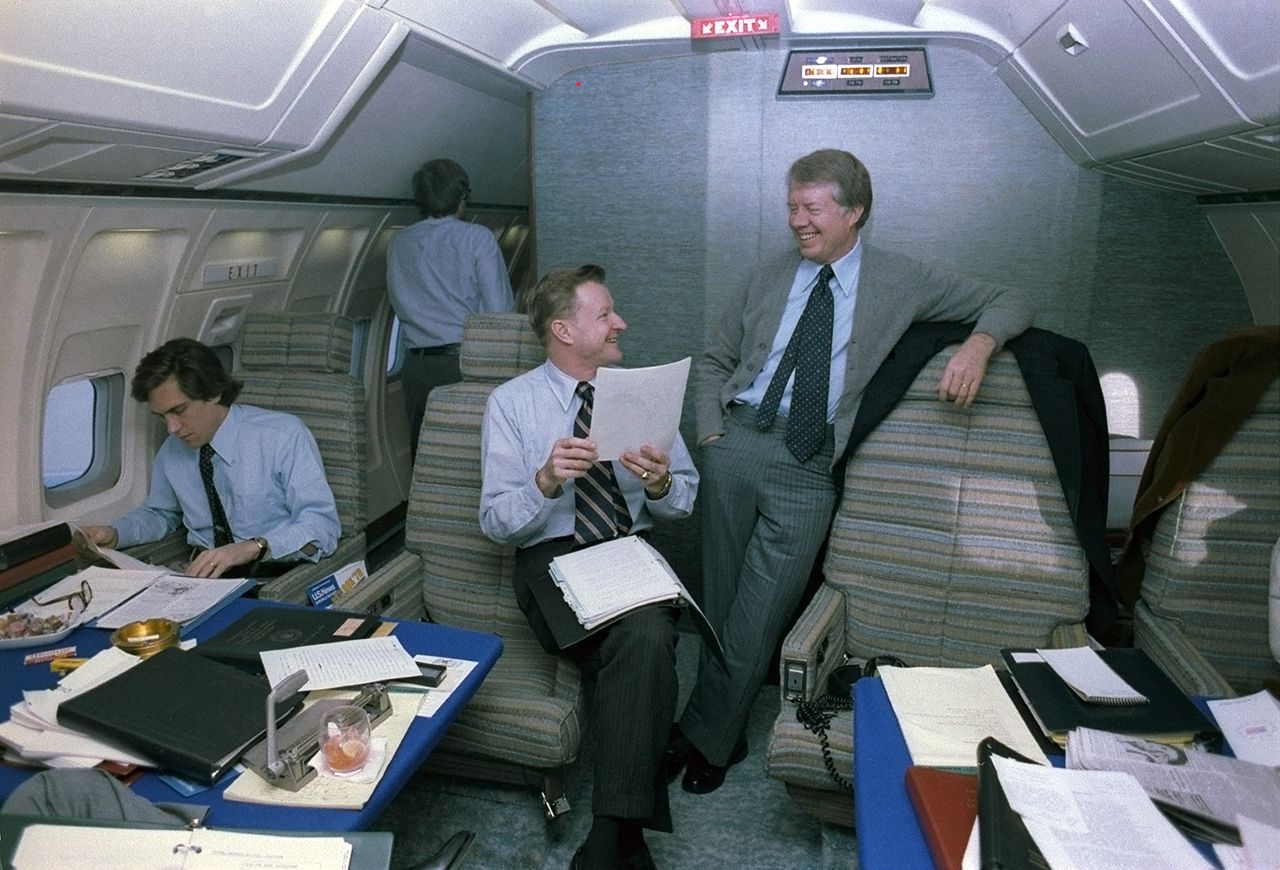
During the years of work in the Carter administration, Brzezinsky fought with the Soviet expansion without sparing his strength and not very versed in the means: he sought to cancel the signing of contracts to reduce strategic weapons, lobbied the allocation of billions of Islamists in Afghanistan, and supported (through China) the regime of red Khmers in CHBOJ - to prevent the country of Vietnam - the USSR allied.
Brzezinsky also played a role in an unsuccessful special operation to liberate the Americans, captured in hostage during the 1979 Iranian revolution. A group of soldiers, abandoned in Iran as part of this operation, did not reach Tehran, eight people died. The Secretary of State Wans, who opposed this plan, eventually resigned. It is believed that Brzezinsky supported the operation to prevent Iran’s involvement in the sphere of Soviet influence - despite the fact that most of the Carter associates such a prospect seemed more than dubious.
The New York Times writes about the obsession with the Brzezinsky struggle with the USSR: “Soviet aggression in Asia, in the Middle East, Africa and Latin America, of course, was not the fruit of Mr. Brzezinsky. But his commitment to the idea that any event can be reduced to the threat of Soviet domination, even at that time, seemed amazing. After all, just then, many participants in the American external -soldier establishment came to the belief that the best course will be discharge - a gradual relief of tension between the USSR and the USA. ”
Having left the civil service in 1981, Brzezinsky focused on research, although the administration of Ronald Reagan and George Bush Sr. periodically attracted him as an adviser on one or another foreign policy. In the 1980s, he continued to engage in the confrontation of the United States and the USSR, in 1990 he devoted to the collapse of the Soviet regime the book “Great failure: the birth and death of communism in the 20th century”.
In the 1990s, the main theme for Brzezinsky was the preservation of the role of the world leader-this is devoted, in particular, the book “The Great Chessboard” published in 1997, which is considered one of his most significant works. In it, in particular, he wrote about the need to prevent the revival of the Soviet Empire, for which, for example, to withdraw Ukraine from the sphere of Russian influence.
At the same time, Brzezinsky’s faith in American domination was neither blind nor unconditional. In the 2000s, he criticized the US public structure a lot, stating, in particular, that the consumption society has no right to dictate moral principles to the world; Consistently opposed the foreign policy of George Bush Jr.-from a war with terrorism and ending with an invasion of Iraq. Gradually, in his works, Brzezinsky moved away from the idea of the sole dominance of the United States, proposing instead of dominance the role of a leader and noting that "America, which decides to act alone, risks one -on -one and with the consequences of its decisions, not to mention the hostility of the surrounding world."
At the same time, Brzezinsky’s views on the key world processes - and especially on the foreign policy ambitions of Russia - for his long life practically did not undergo changes. If until 2014 he talked about the need to integrate Russia into a transatlantic space, then after Ukrainian events, he accused Vladimir Putin of chauvinism. At the same time, according to Brzezinsky, Russia remains a European country that will sooner or later return to normal relations with the West: “Just because an alternative path - to become a vassal of China - is unlikely to seem to Russians especially attractive.”
Konstantin Benyumov