
Translated material
Trump's European brings
The deal between the American president and European allies still took place
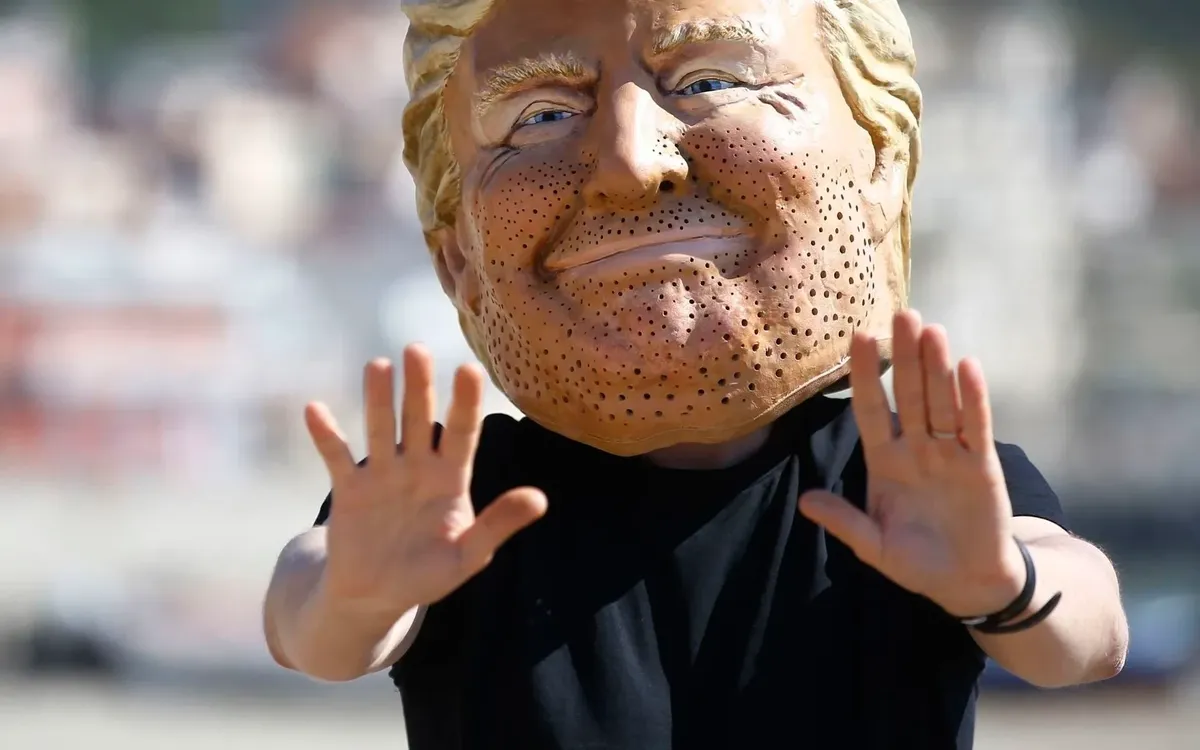
A meeting with six colleagues from the Big Seven countries against the backdrop of the Etna volcano, the Emerald Sea and Sicily's picturesque cliffs ended with the first trip to Europe, US President Donald Trump. She was not as triumphal as her visits to Saudi Arabia and Israel in front of her. On the eve of Brussels, European leaders met a new head of the White House with cool, distrust and, judging by the expressions of some persons during his speech, with condescending irony.
He, in turn, partially confirmed the worst stereotypes and related to the power of the future transatlantic connection that had developed about him in the Old World, which guaranteed the safety, stability and prosperity of the West for more than 70 years.
On the other hand, the communication of European leaders with a overseas partner and an ally showed that the differences between Europe and the new American administration, with all their seriousness, are not as dramatic as it seemed during the Trump election campaign. In any case, regarding the most interesting to us by all of Russia and the Ukrainian conflict.
The leader of views on the Internet and the popular plot of many European television channels was the video about how the American president, making his way to his place on the podium of the “family photo” at the NATO headquarters, unceremoniously pushed the Prime Minister of Montenegro Dushko Markovich, whose country will be about a full member of NATO.
True, the comments of the Chernogorsk opposition and our Senator Alexei Pushkov on this subject were too meaningful for Montenegro and its place in the western alliance.
It is unlikely that Trump generally knew who this man who was in his way in the crowd of presidents and premieres. He is just used to behaving like that.
Why is it different? Representing himself as a pragmatist and master of the transaction, Trump immediately outlined his position: the United States spend more money on defense than all other NATO members combined. 23 out of 28 members of the Alliance do not reach the targeted two percent of GDP, which, they say, are still not enough to overcome threats of the 21st century. Along with terrorism and mass migration, he ranked Russia to them.
“NATO should be largely aimed at terrorism and immigration, as well as threats from Russia and [threats] to the eastern and southern borders of NATO,” he said at the opening ceremony of the memorial to the victims of the New York tragedy on September 11. A fragment of the northern twin tower is installed at the entrance to the new Complex of NATO headquarters in Brussels, the opening of which was specially dedicated to the visit of the US president.
At the same time, as if by chance, a real estate specialist Trump noted that he did not ask how much the construction of this giant futuristic complex of the new headquarters (a little over a billion euros-the NATO official website answers).
Trump begins to discuss honest contributions to the Alliance from 6:30. Video in English
The shameful heads of state and governments listened to this notation, someone, moving with a neighbor, someone, like an angel Merkel, with an impenetrable mine on his face.
The day before, she told reporters that it is impossible to measure the contribution to defense and safety only by the amount of money, but it is important to take into account its quality and it is difficult to blame for this Germany.
Merkel was along with Trump the second heroine of the day, because she represented another memorial on the front alley of the new NATO headquarters: a fragment of the destroyed Berlin Wall, a symbol of the triumph of Western values that NATO defended for all the past 70 years of its existence.
Trump's election rhetoric left a deep mark in the memory of European leaders. In the European media and the expert community, a painful reaction was caused by the fact that Trump, unlike previous US presidents, did not say about the firm adherence of America to the fundamental fifth article of the North Atlantic Treaty (about the collective defense on the principle of “one for all and all for one”). Most likely, I just forgot, but the Europeans were worried. They were reassured by both the press secretary of the White House and the Secretary General of NATO. Like, Trump’s participation in the opening of the memorial indicates the unwavering fidelity of the United States to the obligations to European allies. The fifth article was involved the only time in the history of NATO: in irony, just in connection with the attack of September 11, 2001.
The transaction between Trump, drawn into a difficult intra -American political whirlpool for him, and European allies still took place.
At least, at first glance, it is win -win for all participants, which allowed both parties to leave the Brussels Summit of NATO, claiming that everyone had received more than he gave. The French and Germans removed their objections to the official accession of NATO to the military coalition, which fights (prohibited by the Islamic state in Iraq and Syria. European allies also agreed to submit annual national plans for increasing military spending.
And Donald Trump returns to Washington, presenting the matter so that he put pressure on the Europeans, forced them to actively fight terrorism and increase contributions to the alliance, which he once called the “outdated” in the fusion of the election polemic.
It doesn’t matter that the official attachment of NATO to the coalition against ISIS does not bring anything new: it does not involve the participation of the alliance in military operations, and NATO countries, all in individual quality, and so participate in it. According to Merkel, the attachment of NATO to the coalition is "a strong signal, but Germany’s contribution will not be beyond what it is already doing."
Otherwise, the NATO part of Trump's visit was more jerks, and not a subject discussion. At the summit to all 29 speakers, the same time was allocated for performance. Given ceremonial events, there was simply no time for any discussion.
The same can be said, apparently, about the meeting of the "seven" in Taormin. Four of the seven club members participated for the first time: Trump, the owner of the meeting Italian Prime Minister Paolo Gentlone, the newly elected president of French Emmanuel Macron and the Prime Minister of Great Britain Teresa May. Acquaintance, reconciliation of positions. One of the main issues - the participation of the United States in the Paris Climate Agreement - remained suspended until the next case.
The topic of adaptation to the climatic change, which is actively promoted by the European Union, was also one of Trump's main at the Brussels meeting with the heads of the EU institutes-Donald Tupskoye and Jean-Claude Junker. In the context of stinging, on the verge of a foul, mutual reproaches and assessments during the American election campaign, this more than an hour's meeting was held in a strict confidentiality. European officials, obviously, were not able to convince Trump of the need to fulfill the Paris Agreement signed by Obama to issue carbon dioxide and the struggle against global warming, which Trump once called “mystification”. The parties remained at their own and on the conclusion of the Treaty on Transatlantic Trade and Investment Partnership (TTIP). Trump does not want to continue negotiations about him and prefers a protectionist policy.
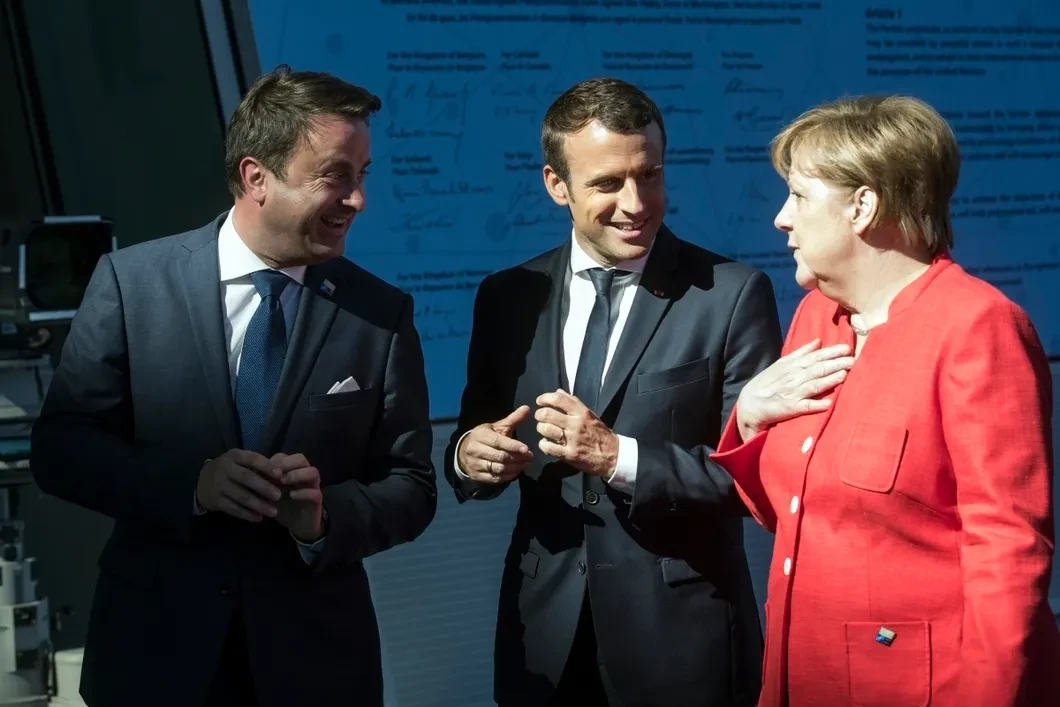
In Brussels, he called the Germans “very bad” for selling “millions of their cars” in the USA and promised to stop it.
Somehow forgetting that the largest German car manufacturers produce five times more of their products in the United States than exported there ... We agreed to create working groups to fight against unscrupulous trading practices.
The results of this meeting can be judged by the statements of Tusk, who later talked with journalists. “I have the impression that we agree on many issues, but some have remained open, such as climate and trade,” he said.
As for Russia and Western sanctions acting against it, then, according to Tusk, he is not sure that their opinions with the American president "coincide for 100 percent." But according to the Ukrainian crisis, with the settlement of which and with the implementation of the Minsk agreements, the EU connects the abolition of sanctions, “we seem to adhere to a single line,” he added.
Brussels