
Translated material
"We will no longer go to negotiations"
In opposition to President Maduro, not separate political forces, but the people of Venezuela
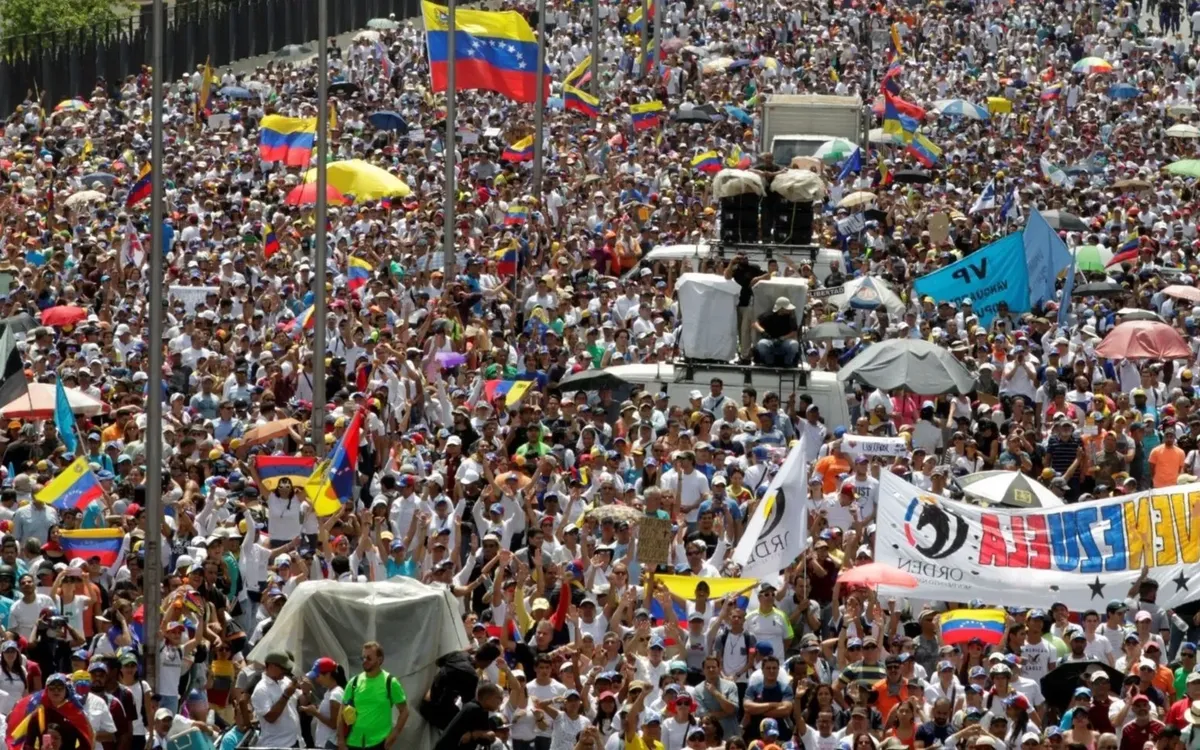
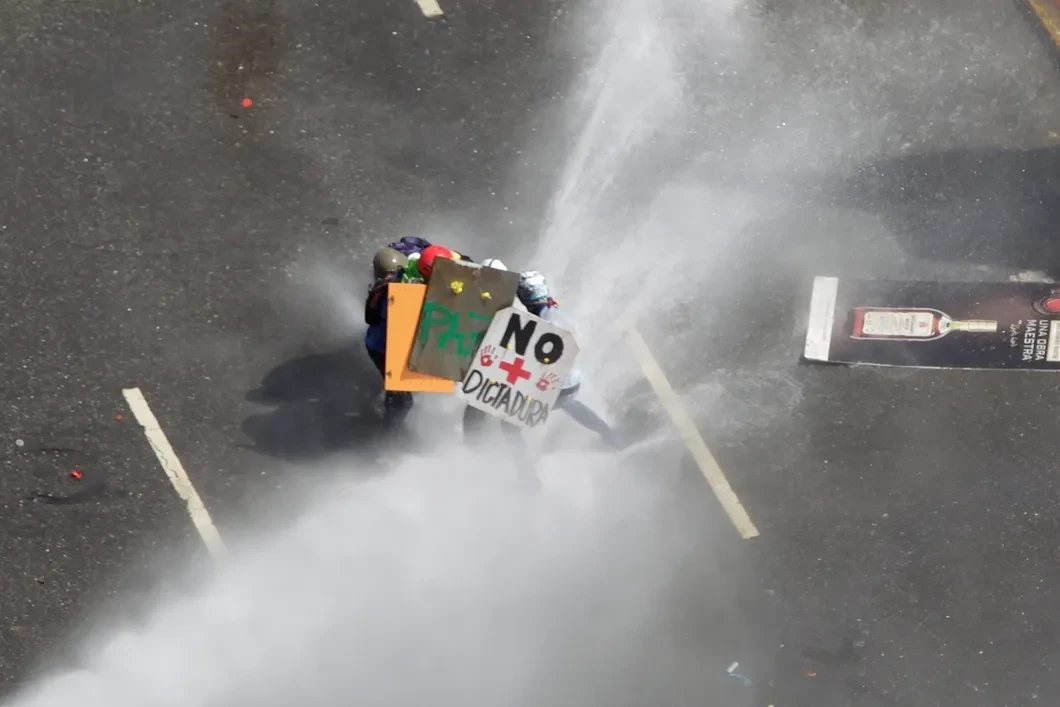
Mass demonstrations of protest against the regime of President Maduro have been going on in Venezuela for two months now. Tens of thousands of people almost daily take to the streets of Karakas and other Venezuelan cities with the requirements of the early elections of the president, restore the powers of parliament, the termination of repression and the liberation of political prisoners.
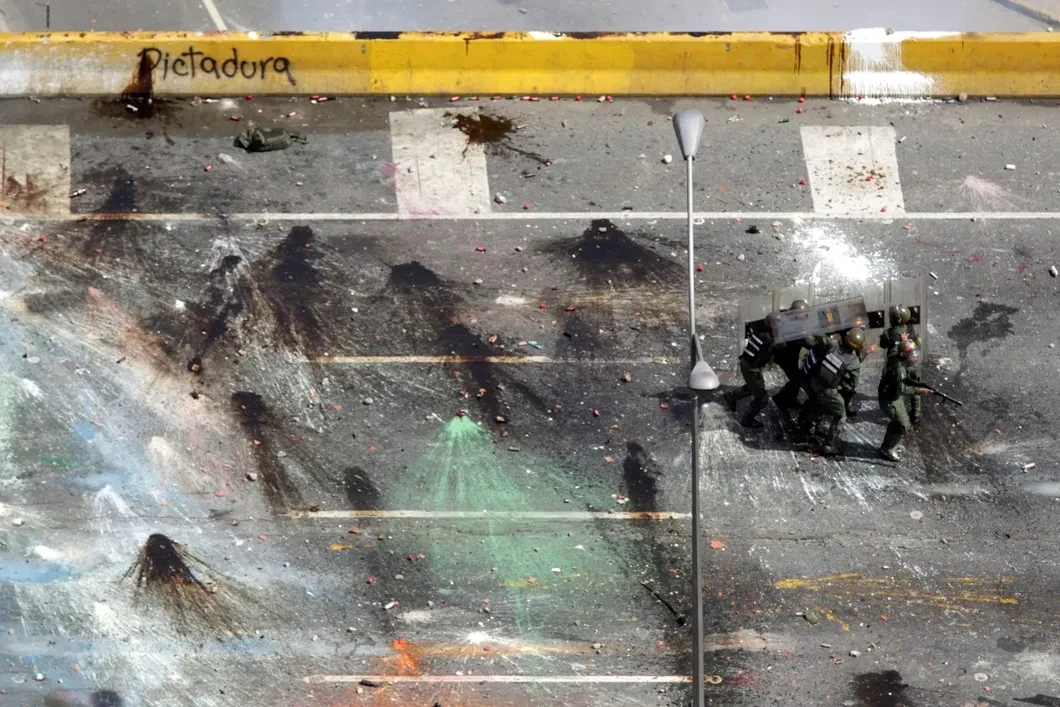
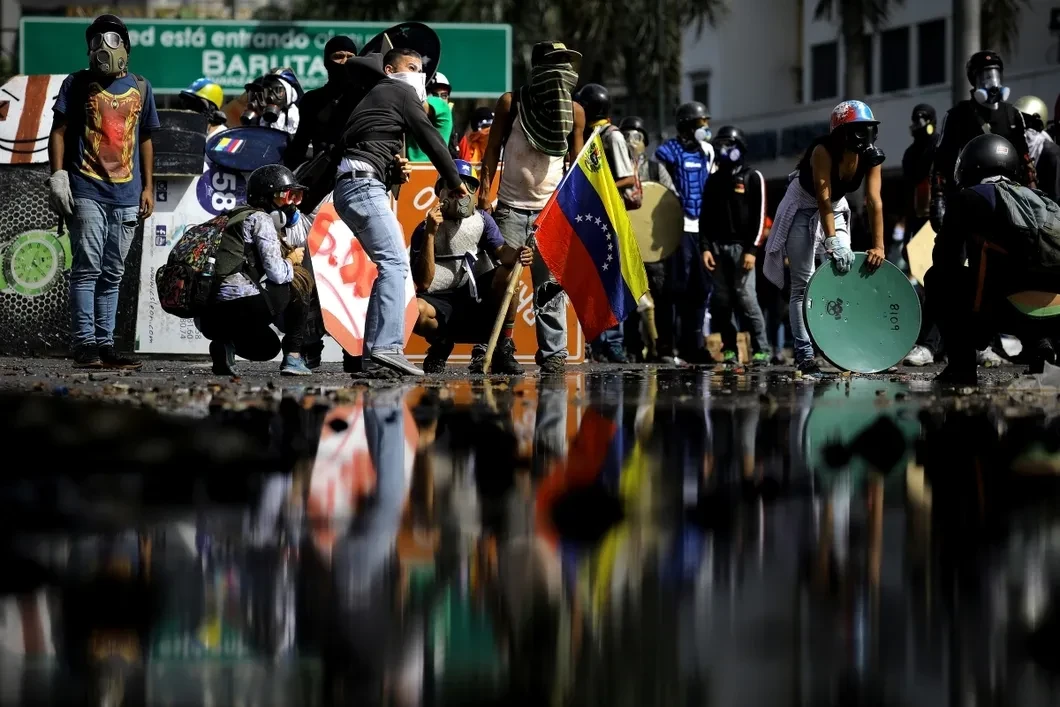
During this time, 55 people were killed, the vast majority of which (with the exception of seven police officers) died from bullets fired from firearms, or as a result of a direct hit of grenades with tear gas. Several thousand people were wounded during clashes with the police and with half -willed shock groups of armed regime supporters, the so -called “colectivos”, who firing the manifestants, rushing past them on motorcycles. Hundreds of people arrested.
But people continue to go outside. The people clearly ended in patience: the 18 years of the regime, created in 1999 by Hugo Chavez, and especially the last four years after the deceased leader was replaced by President Nicholas Maduro, plunged the country into a state of growing humanitarian catastrophe. The crazy economic policy of the government, the unbridled corruption of officials and businessmen close to power in the context of the fall of oil prices led to the actual destruction of food supply and healthcare. Even having defended a long time, people cannot buy elementary foods: vegetable oil, flour, chicken. Medications completely disappeared. As a result of a man -made economic disaster, the main achievement of the “Bolivarian Revolution”, which is so proud of the regime, is a complete coverage of the population, especially the poorest, social security and health care.
The country without exaggeration on the verge of hunger. According to official figures, in 2016, children's mortality increased by 30% in relation to 2015, maternal - by 65%.
Infectious diseases appeared again, which were considered long -defeated: diphtheria and malaria. Inflation in Venezuela is more than 700% in annual terms.
The combination of socio-economic disaster and political arbitrariness led to the formation of a wide protest coalition. It would be completely wrong to consider what is happening in Venezuela as a conflict of the left regime and the right opposition. We are talking about the confrontation between the majority of the people to an increasingly repressive authoritarian regime, which sequentially destroys the remnants of democratic institutions and seeks to completely usurp power (and property) in the country. The opposition coalition “Round table of democratic unity” leads protests unites all opposition to the power regime: from right -wing and legalist to the left, including those who at the first stage supported Chavez.
The political origins of the current crisis are in the crushing victory of the opposition in the parliamentary elections on December 6, 2015. The “round table of democratic unity” then won the qualified majority into two -thirds of the deputies of the National Assembly, turning the elections into an actual plebiscite against the ruling regime. The parliament demanded the immediate liberation of political prisoners, including one of the opposition leaders Leopoldo Lopez, who was convicted in 2015 for “incitement to violence” during mass demonstrations of protest in February 2014. In addition, the opposition began the process of collecting signatures for holding in 2016 a referendum on the recall of the president, provided for by the Constitution of the “Bolivarian Republic of Venezuela”, adopted on the initiative of Chavez in 1999.
However, already in September 2016, the Supreme Court fully controlled by the regime announced all the decisions of the National Assembly invalid. After long delay, the National Electoral Council blocked the referendum on the recall of the president and postponed the regional and municipal elections, which were supposed to take place in October 2016, in December 2017, which also contradicts the Constitution.
In other words,
Maduro did not think not only to give up, but also to retreat. Despite the fact that, according to public opinion polls, more than 80% of the population opposed the regime.
Despite the continuous protest performances that took place at the end of 2016. The control of the authoritarian regime over the executive branch, the Supreme Court and the National Electoral Council, as well as the most important institution of real authorities - the armed forces - increasingly depreciated the electoral victory of the opposition. The parliament, which under the Chavists was turned into an appendage of the executive branch, stamping its decisions, under the control of the opposition also did not become a lever of power, was marginalized. Doubleness did not work.
At the end of March 2017, the regime tried to go on the offensive: the Supreme Court decides on the transfer of the legislative powers of the National Assembly, which is actually equivalent to the decision on its dissolution. And although two days later, the Supreme Court (at the request of the National Defense Council) cancels this decision and returns its constitutional powers to the parliament, nothing could be corrected: there was a political explosion of colossal force, which has been going on in Venezuela for two months.
The opposition increases the offensive, successfully involving not only the city middle class, but also the inhabitants of the poor Karakas quarters, who, being the main beneficiaries of the social policy of Chavism, were still under political control of the regime. In these quarters, in fact, there is no state, and the police are afraid to enter the narrow labyrinths of poverty villages, where real power belongs to criminal gangs.
The opposition is configured to win. According to the chairman of the parliament, Hulio Borges, the country does not have a threat of a civil war that scares the regime. “In Venezuela, we are not talking about a split country, we are talking about the confrontation between the people and regime, which seeks to seize all power and take away the rights from citizens. This is the struggle of the people for their dignity and law, against the minority in power, which robs the country, usurpates power and violates the constitution. ”
For many years, the opposition has been taking people out to the street for many years, participates in the elections and overcomes the obstacles that the regime constantly repair it. Now she needs to survive and continue the struggle until victory. “We will no longer go to negotiations: we are talking about compliance with the constitution and laws - Maduro violates them,” says Borges. The main requirement of the opposition is the early presidential elections, which in the current conditions will undoubtedly lose.
But Maduro, quite obviously, is determined to stand to the last. According to the American researcher Stephen Levitsky, "in most cases, the regime goes before everything becomes so bad." It looks like this is not the case. Maduro and the highest ranks of the Chavist regime are in a hopeless position, quite typical, however, for any authoritarian government: it inevitably mights in corruption, the future retribution for which it makes you cling to power, which leads to even greater authoritarianism and an increase in repressions.
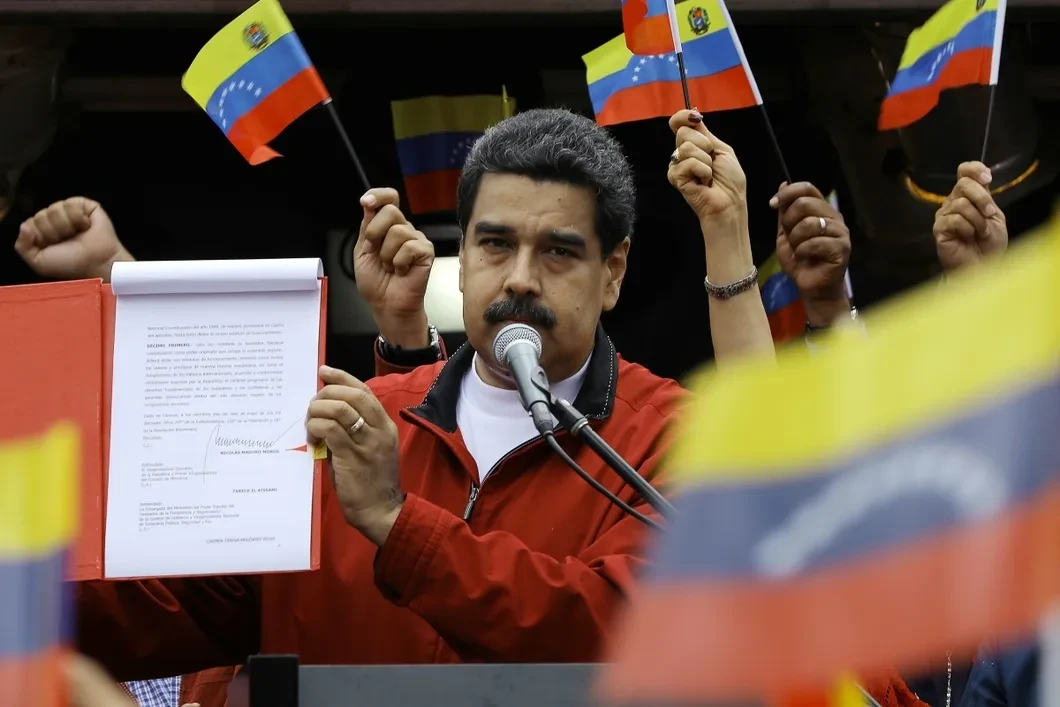
On May 23, Maduro signed and published a decree on the convocation of the Constitutional Assembly, which should adopt the new Constitution of the country. Of the 540 deputies, 168, according to the planes of the regime, will represent various sectors of society, namely: workers, students, communities, pensioners, entrepreneurs, people with disabilities, peasants and fishermen.
Thus, the regime is trying to introduce the principle of corporate representation, characteristic of the South European fascist regimes Mussolini and Franco.
364 deputies are supposed to choose by the principle of one deputy from the municipality, regardless of the number of people living in them. It is obvious here to reduce the electoral weight of urban districts, which traditionally vote for the opposition, and increase the representation of rural areas where Chavism still retains control. 8 places are allocated for representatives of the Indian peoples.
The convocation of the Constitutional Assembly means, in the best case for the regime, the change in its favor of the institutional rules of the game and especially the abolition of the entire upcoming electoral cycle-the elections of governors and mayors in 2017 and the president of the country in 2018. In the worst case, this is just an attempt to win the time in the conditions of deepening the socio-economic crisis and the growing loss of controllability. It is characteristic that the regime refuses to submit to the referendum both the convocation of the constitutional assembly and the new constitution that this assembly will develop. This contradicts the radical principles of the founder of the regime: during the 14 years of his reign, Chavez spent several referenda on political and constitutional issues so that all his steps, including the possibility of an unlimited re -election of the president, are approved by the people. The plebiscite, direct democracy, the “democracy of participation” was the main component of the official ideology of chavism - “socialism of the 21st century”.
It is not surprising, therefore, that the convocation of the Constitutional Assembly caused the resistance not only to the opposition, whose leader Enrique Caprilus called the whole project fraud, but also some representatives of the regime itself, who saw the fundamental principles of chavism in this. Thus, the general prosecutor of Venezuela Luis Ortega Diaz, who has been holding this post since 2007 and has not yet been seen in freedom, made a public statement that the convocation of the constitutional assembly "is not necessary, appropriate or useful." In her opinion, instead of contributing to the establishment of peace, this measure will deepen the crisis, and the "corporatic nature of indirect representation will contribute to the dictatorship of the executive branch." Many observers and leaders of the opposition say that a split is enhanced inside the regime. The key in this sense is the position of the armed forces: whether the military agrees to shoot at the people by order of Maduro if the shaft of indignation will increase and police repressions are not enough.
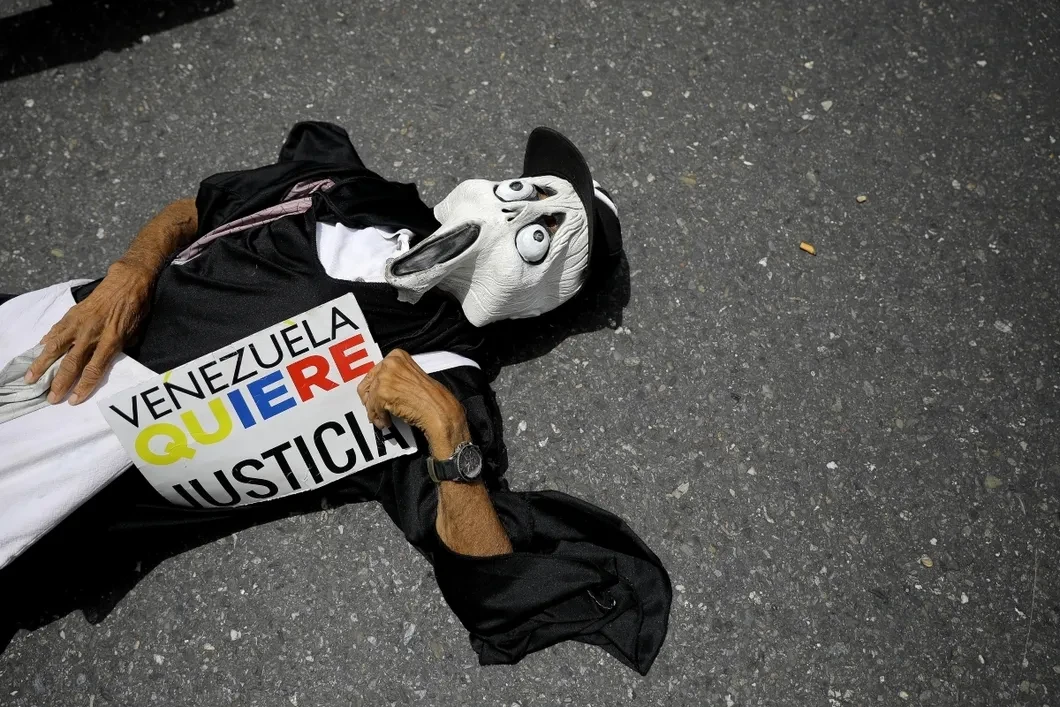
Obviously, Venezuela entered the decisive moment of her history. What will be the denouement, no one can predict now.
Losing supporters, the regime accelerated into an open dictatorship, losing the populist features that characterized it under Chavez. By increasing repressions, which only hold the regime from collapse, he loses the ability to social control and co -optation, which made it politically invulnerable in the previous decade.