
Translated material
The woman is from dodging
The mysterious murder cannot reveal for half a century. Now the journalists have taken up the case
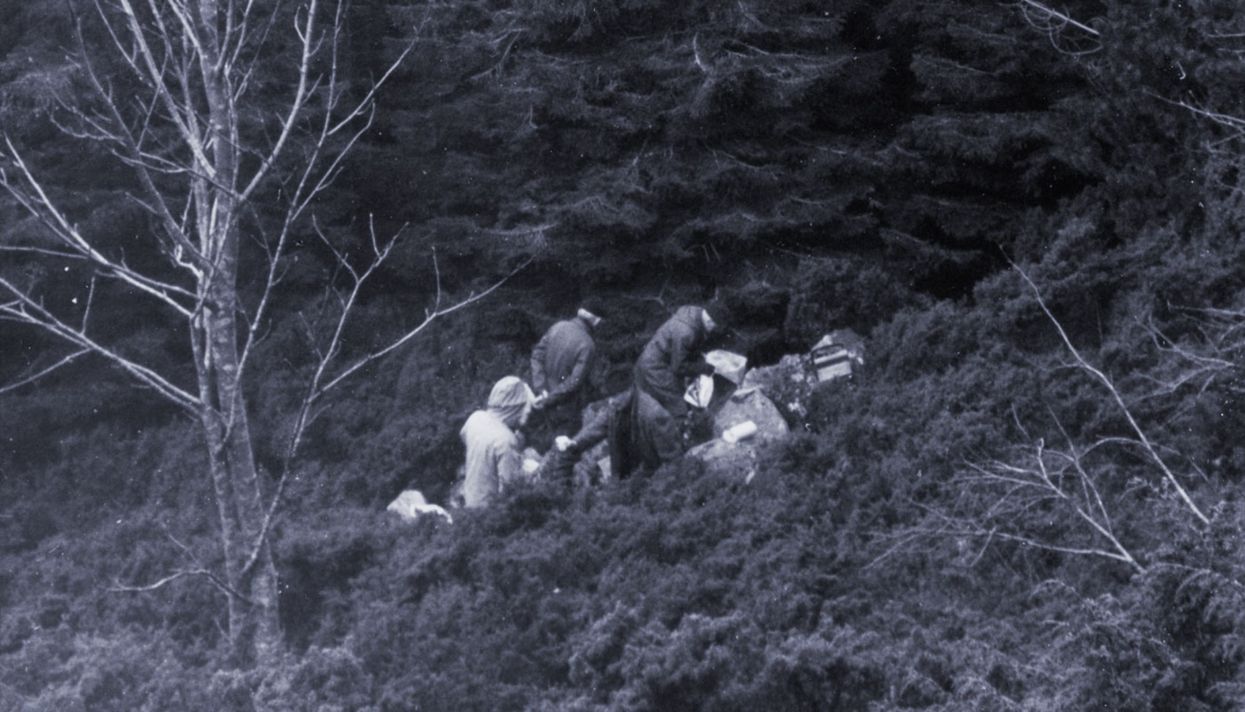
In 1970, in the Valley, it was dispersed, not far from Bergen, they found a warmed body of a woman, and personal belongings were laid out next to her. What seemed at first a strange murder was soon overgrown with amazing details - and clues that led from one secret to another. For almost half a century, the fate of the “Woman from Disdan” remained unclear; In 2016, Norwegian journalists took up the investigation - and some new details began to appear in the case. Medusa says what is known about this terrible and intriguing history.
On November 29, 1970, the Norwegian professor of the story of two daughters went for a walk in the vicinity of the lake of the weldel near Bergen. The idyllic walk was clouded by a terrible find: away from the path, between the boulders, the 12-year-old daughter of the professor noticed a half-naked body. The frightened family had to go around the lake on foot to get to the nearest police station and report what happened; All the way they looked around, fearing to meet the killer.
Arriving at the place, the police immediately noted a specific smell (later they found traces of gasoline nearby) and the pose of the victim - the so -called position of the fencer, which occurs after a concussion. The face and whole body of the woman in front were burned beyond recognition, but the fire and other parts of the body from behind did not touch the back and other parts of the body. Police officer Karl Halvor AAS, who was on duty that Sunday, recalls that along with a literally climbing the slope to get to the place - all this did not look like the woman just went for a walk, stumbled and fell face into the fire.
Next to the deceased found the remains of clothing, an umbrella, a pair of rubber boots, a ring, earrings and watches, nylon tights, a bottle of a local herbal liqueur and two half -melted plastic bottles - both with a carefully erased marking. There were no labels on any of the things of a woman. It was not possible to identify the body - in the laboratory of the Bergen University, where they conducted an autopsy, she was assigned number 134/70. One of the forensic experts especially noted how neatly the jewelry was laid out-as if for some ritual.
The requests sent to all Norwegian police sections did not give any clarity: as if no one was looking for a woman. A few days later, two suitcases left on November 23 were discovered in the storage room of the Bergen station: their shelf life expired, but no one came behind them. Fingerprints on suitcases coincided with the prints of the deceased woman. But the hope that the solution was close was close, immediately faded away. Inside the suitcases, there were even more clothes with cut shortcuts, cosmetics, several pairs of glasses, wigs and a notebook with the first page painted with codes. From all cosmetic tubes, as well as from water bottles, any identification marks were erased; Neither the director of Galeri Lafayette, nor the employees of other major European department stores, to whom the Norwegian police sent photos in the hope of finding out at least something, could be identified.
Among the finds, however, was a package from a shoe store in the Norwegian town of Stavanger. The son of its owner was able to recall an unusual customer who entered the store three weeks before: she meticulously examined the assortment and left with a couple of rubber boots of the then fashionable model of the Selebriti. Exactly the same was found next to the body. The seller described her as a well-dressed and attractive woman with dark hair, who spoke English with an accent. Under the description was the confusion of one of the neighboring hotels, renting a number in the name of Fenella Lorc.
But this clue did not lead anywhere either: the name turned out to be fictional. In several more Norwegian hotels, forms filled with handwriting were found; Everywhere she stopped under various names. The dates of residence coincided with some codes on a note from a suitcase: it was so possible to find out that the mysterious woman visited Paris and Oslo. In the opinion of a few witnesses, she was from 25 to 40 years old; Everyone remembered that she looked very elegant and traveled alone.
The investigation was at a dead end on this, although even secret services were engaged in it: all the finds and mystery of circumstances hinted that the “woman out of the Disdal” could be a spy. But what kind of country, what exactly brought her to Bergen and why her life ended under such circumstances, it was not possible to find out. Even the Mossad agents interrogated; All to no avail. The results of the autopsy said that she died from a combination of medicines and burns: 50 not completely dissolved phenobarbital tablets - a powerful sleeping pill, were found in her stomach. According to the official version, her death is considered suicide.
For many decades, this story has remained one of the well -known unresolved puzzles, exciting many (for example, on Reddite they put forward a version that the “woman from the Dodel” was an agent of the KGB). In 2005, a 57-year-old resident of Bergen said that he saw in the mountains a similar woman five days before the body was discovered, and not one, but in the company of two men. He claimed that she looked frightened, but then the police did not attach importance to his words.
Now, in the wake of interest in the genre of True Crime (that is, journalistic investigations of criminal stories), Norwegian television and radio company NRK took up the case. On October 17, 2016, the NRK documentary unit launched its podcast about a mysterious woman: the whole story was gradually restored according to archival materials and stories of the investigation witnesses that have survived to our days.
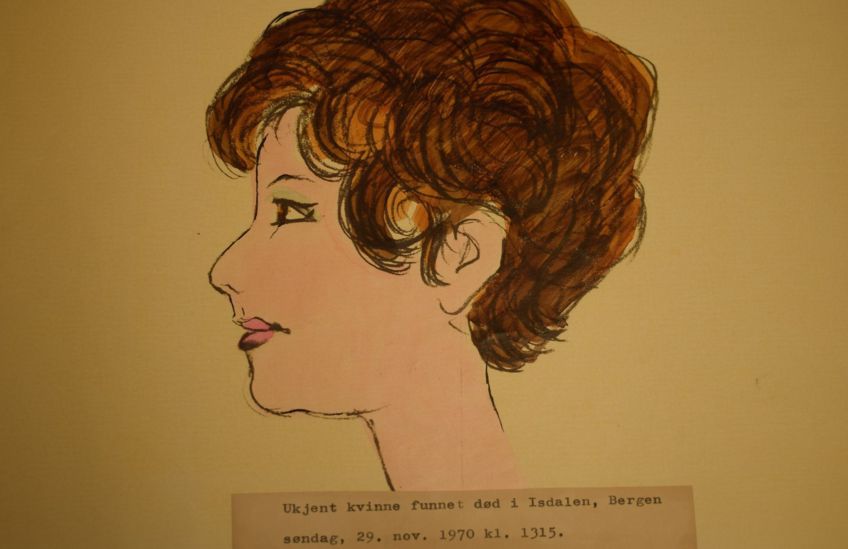
November 29, 2016 - that is, exactly 46 years after the terrible find near Bergen - NRK published a portrait of “Women from Dodalen”, drawn according to eyewitnesses. Moreover, after the request of documentaries in the archive of Bergen’s university hospital, her jaw, which was considered lost. The Norwegian intelligence department took up the case. In addition, over the past decades, new technologies have appeared, which allow more accurately to establish the identity of the dead.
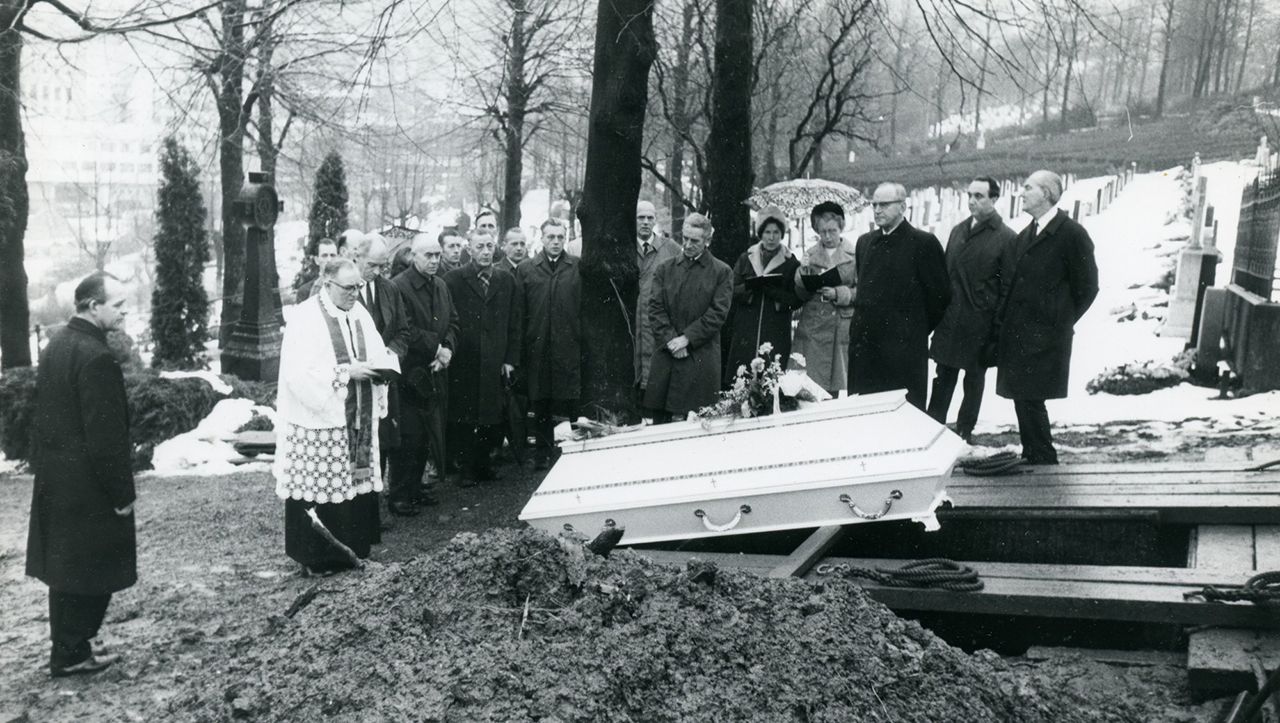
At the request of special services and journalists, scientists from Norway, Austria and Australia, specializing in DNA analysis, connected to the investigation. In particular, the molecular biologist Walter Parson, who took part in the identification of the remains of the royal family of the Romanovs, the skull of Mozart and the victims of the tsunami on Sri Lanka.
On May 19, 2017, the results of a study of DNA and dental enamel of the deceased were published - by the presence of certain chemical elements in it, scientists can determine even what products a person at one time at one time. The specialists managed to establish that a woman from washed was probably a origin of Eastern Europe, but moved in childhood (before or during the Second World War) to France or Germany. These data will allow you to narrow the area of new searches - and, perhaps, in the new series of the NRK investigation, we will learn about the fate of the “Women from Dodalen” a little more.
Olga Strachovskaya