
Translated material
"The reader is not the navel of the earth"
A fragment of the book of Stanislav Drobyshevsky “The Given Link” - about the evolution of man
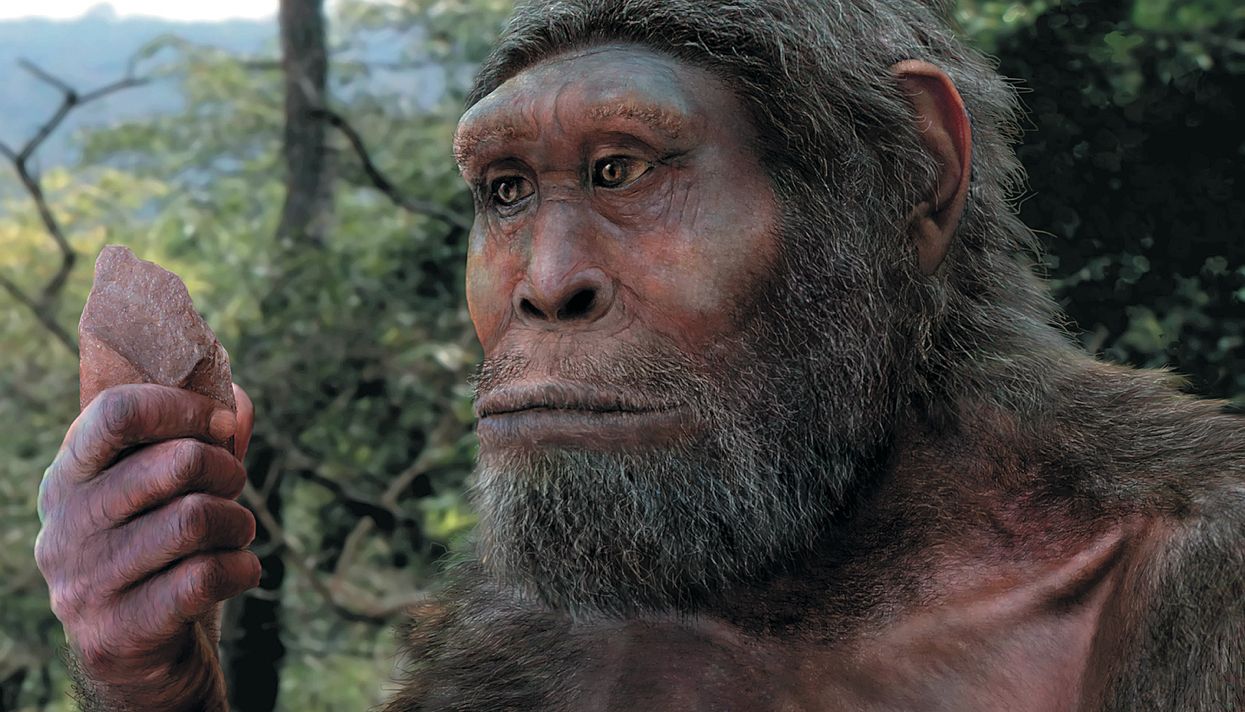
The publishing house Corpus will be a two -volume of the Russian anthropologist and the popularizer of science Stanislav Drobyshevsky - an extremely excitingly written book on how (and why) we became what we became. With the permission of the Medusa Publishing House, he publishes a fragment of the “Given link” - an excerpt from the head of the “Top of Evolution”, which will help to look at this statement a little differently.
Part is the sixth, again a short, leaving mixed feelings in a patient reader, for it refers to why the reader is not the navel of the earth
It is common for a person to consider himself a crown of creation, the peak of evolution, the older brother of our brothers smaller - in general, the umbilical waist of the earth. This is told by many legends, myths and legends, which emphasize the moment of obtaining specifics that distinguishes a person from other living beings. The scientific view of the world must admit, in this regard, he has not gone from religious. Typically, features that distinguish a person from animals, a priori are recognized as progressive, and bring together - primitive. I admit that I often use such terminology myself. Surprisingly, the signs that distinguish any other species from others are usually called specialized, but this term is extremely rarely used in relation to a person. What is the trick here?
Probably, it is worth clearly defining the meanings of words.
A primitive is usually a sign that was present among the ancestors of now living organisms, but changed or disappeared in many of them.
The newly emerging signs should be called progressive, giving the opportunity to enter the view to new evolutionary spaces.
A specialized sign is a sign that cannot vice in the future, and therefore turns out to be an evolutionary impasse.
Let's see how the species -specific signs of a person are distributed, since there are not so many of them.
Large size of the brain - both absolute and relative - without a doubt, can be considered the greatest human achievement. However, it is the combination of both indicators that is important here. The absolute size of the brain is twice as much in dolphins, whales and elephants, and the relative one is the indicator of cerebralization - significantly “more progressive” in hummingbirds, ground, mice, and among primates - for example, in spider -shaped monkeys and Tamarins. It is clear that the gigantic brain of giant whales is mainly busy maintaining sensitivity and motor skills, and the “relatively giant” brain brain is very small. Thus, we must talk about the progressiveness of a person not in terms of brain size as a whole, but in more significant indicators - the percentage of a new cortex or percentage of associative neurons. Unfortunately, it is very difficult to reliably assess their development in a comparative aspect. Even the percentage of the frontal lobe bark, which, it would seem, can simply be measured in linear sizes, areas or volume, can be evaluated in different ways. So, according to some calculations, a person does not differ in the relative size of the frontal lobe from the monkey -shaped; However, other researchers reject these conclusions. According to the most accurate estimates obtained through the tomographic examination of the brain, a person in terms of neocortex, especially in the frontal lobe, sharply exceeds all other primates. A person has an ideal combination of large absolute size and large relative size of the brain, although for each of these indicators a person is not a record holder. However, is it possible to regard a modern person as progressive in this regard?
It has already been said above that the average brain size of men of Neanderthals and Cro -Magnons surpassed the size of modern men. Explanations were given different, but the fact remains: over the past couple of tens of thousands of years, the size of the brain has decreased quite noticeably, so that its modern value cannot be considered unambiguously progressive.
The large brain is difficult to regard as a progressive organ and due to its extreme energy intensity: it is difficult to imagine what wide evolutionary prospects can be in such a feature. Reason is not a prize in the race, it is much more logical to regard it as a bizarre specialization, such as the trunk of an elephant or long legs of a tushka.
The large size and energy intensity of the human brain is associated with an increase in the sinus system and the amount of nutrient holes in the bones of the skull. Due to the change in the configuration of the back of the head in a modern person, a sigmoid sinus is more curved, even in comparison with Neanderthals. But all these differences are secondary and cannot be considered as progressive on the same grounds as their root cause - an increase in the brain.
Indirectly, the complete disappearance of the vibriss, available in chimpanzees, includes the complete disappearance of the nervous system. This is probably due to the reduction of the wool and, accordingly, an increase in the sensitivity of the skin directly. Or the exit to the open habitats, coupled with upright, ascended their face so high from everything that the vibrissas could touch, that they simply became useless. Be that as it may, the disappearance of the organ and the type of sensitivity can hardly be considered progressive innovation.
The next rich group of signs is associated with directness. This includes, in particular, the displacement of the large occipital hole in the middle of the base of the skull, the cervical and lumbar lordoses of the spine - its bends forward, a short and wide sacrum, a wide and flattened chest with the glorified sternum, a wide low form of the pelvis and its specific orientation, longitudinal and transverse arches of the foot Consolidation of the foot with a lack of thumb and reduction of other fingers, lateralization of the foot - the strengthening of the first and fifth metatarsal bones, reduction of the hairline and increased sweating. How progressive are these signs? From a medical point of view, this whole complex is continuous regression, since it is accompanied by numerous disorders in functions. Vertical spine with lordoses is fraught with intervertebral hernias and pinches of nerves; The rising heart is the veins of the veins of the legs; A non -standard pelvis - or legs that are non -standardly turned relative to the pelvis -, coupled with a large head of the baby, lead to big problems during childbirth, falling out of the uterus and rectum; The arches of the foot strive to straighten and achieve stability in flat feet; Reduction of wool with longing is remembered by long winter evenings, and it’s scary to talk about increased sweating. In addition to all this, a person sharply loses in the speed of movement to all animals of a similar or larger size and most - smaller, including, for example, cats. It wins, however, in endurance, although camels could argue.
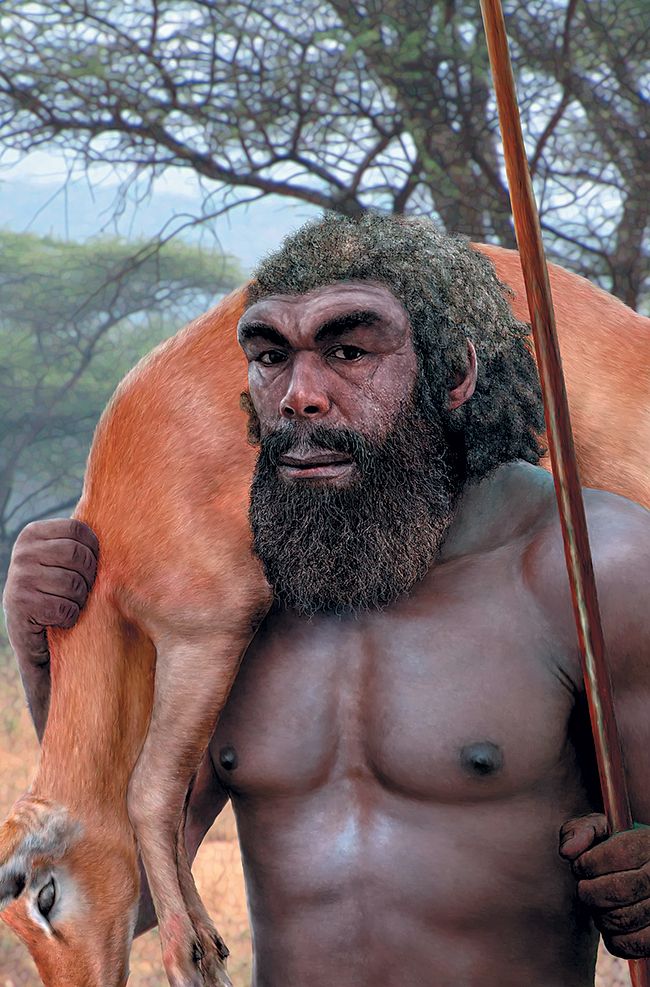
From an evolutionary point of view, too, not everything is unambiguous. Some large gorillas have lumbar lordosis, they can also grow together with the body of the sternum. The pelvis of the Afars Australopithecus “Lucy” and all the famous archanthropes were relatively lower and wider than that of a modern person, so that the current state can be regarded as some step back - to the proxols. According to the degree of consolidation of the foot and reduction of the fingers of the horses, cows and ostriches on land, and according to the degree of lateralization - walruses with seals at sea left us far behind. You can, of course, say that the hoof of the horses and flraps of the seal is a dead end specialization, and the person has a noble-progressive foot, but in reality a person simply did not have enough ten to two millions of years before turning the foot into an ideal support point of a non-part-time or paired-cake. In all terrestrial running, the number of fingers decreases over time, it is unclear why a person should be an exception. However, a person has a culture and anticipated too slow evolution, creating an artificial hoof - a boot. However, even in shoes, a person is far from perfection of the legs of ungulates. At the same time, the coolant joint device guarantees dislocations even out of the blue. By and large, it is clear to everyone that it is much more reliable that it’s much more reliable to not run anywhere, but to attach a strong stalk to the soil and become God's dandelion - the sea lilies have set us back in Ordovica.
The reduction of the wool is typical for all large ground animals of the savannah; In such an extreme expression as in a person - with the complete disappearance of down hair - it can only be regarded as a specialization that limits the evolutionary opportunities in the future. In addition, the number of hair per square centimeter in humans is the same as that of chimpanzees, so we are talking about either the reduction of the downy hair before the appearance of a person, or the species -specific decrease in hair size, but not their number.
The two -year -old, of course, served as a necessary condition for the exemption of hands and labor activity, and this plus all its minuses should be written off. However, on the one hand, the diverse two -legged dinosaurs, birds, carcasses and kangaroos are an example of the fact that bipedia is an insufficient condition for the development of labor activity. On the other hand, quite four -legged monkeys and even raccoons do a lot with their hands, and parrots do the same with a beak. Chimpanzees can use guns using four limbs - this is much more convenient than two. The subtlety is that biploster allows you to specialize the hand to the gun activities, and the monkey brushes should be primarily functional hollow walkers.
Here we move on to the following feature of a person - a labor brush. In her complex, the contrast of the thumb with the saddle joint of the first metacarpal and bone-trapping, a wide palm, as well as the preservation of all five fingers-straight, long, mobile, capable of point capture, with dilated and shortened end phalanges, is especially noteworthy. The progressiveness of such a brush can be called into question. On the one hand, it has long been noted that the five -fad is a generalized (read, primitive) state. On the other hand, in many primates, the brush has been modified in comparison with the rat -like initial state much larger than in humans. There are many examples - from Potto and Colds through spider -shaped monkeys and bells to gibbon, orangutans, gorillas and chimpanzees. A grasping brush is a feature of all primates; In this regard, you can again remember the raccoons and parrots. The thumb of Potto is contrasted much more opposite than that of a person, which is due, however, by reduction of the index finger. For some Neanderthals, the thumb was contrasted with a flat or spherical first metacarpal joint joint-usually this is regarded as a minus that causes the need for great muscle efforts and a decrease in the accuracy of movements, but the presence of a thin retouching on some moustier guns speaks for itself, and on the other, the strong brush is bad? Strong male handshake was always preferred to be sluggish and limp, and even someone, and Neanderthals could tightly shake their hand! The bullying of the fingers is longer and more mobile than in humans. In the Dolgopyat, the final phalanx of the fingers is not an example wider and more flattened than human. The reduction of the thumb in the woody species of monkeys, of course, is rightly regarded by everyone as a specialization, but the hand of hominoids, adapted to the support for the phalanx of bent fingers, clearly left the option of the proxulle further than the human one. Experiments show that even macaques are capable of point capture, although they rarely carry it out. Thus, the human brush represents the mosaic of many primitive and several specialized features, but progressive - revealing new horizons of evolution - it may not at all in it.