
Translated material
The age of the moon cannot be seen
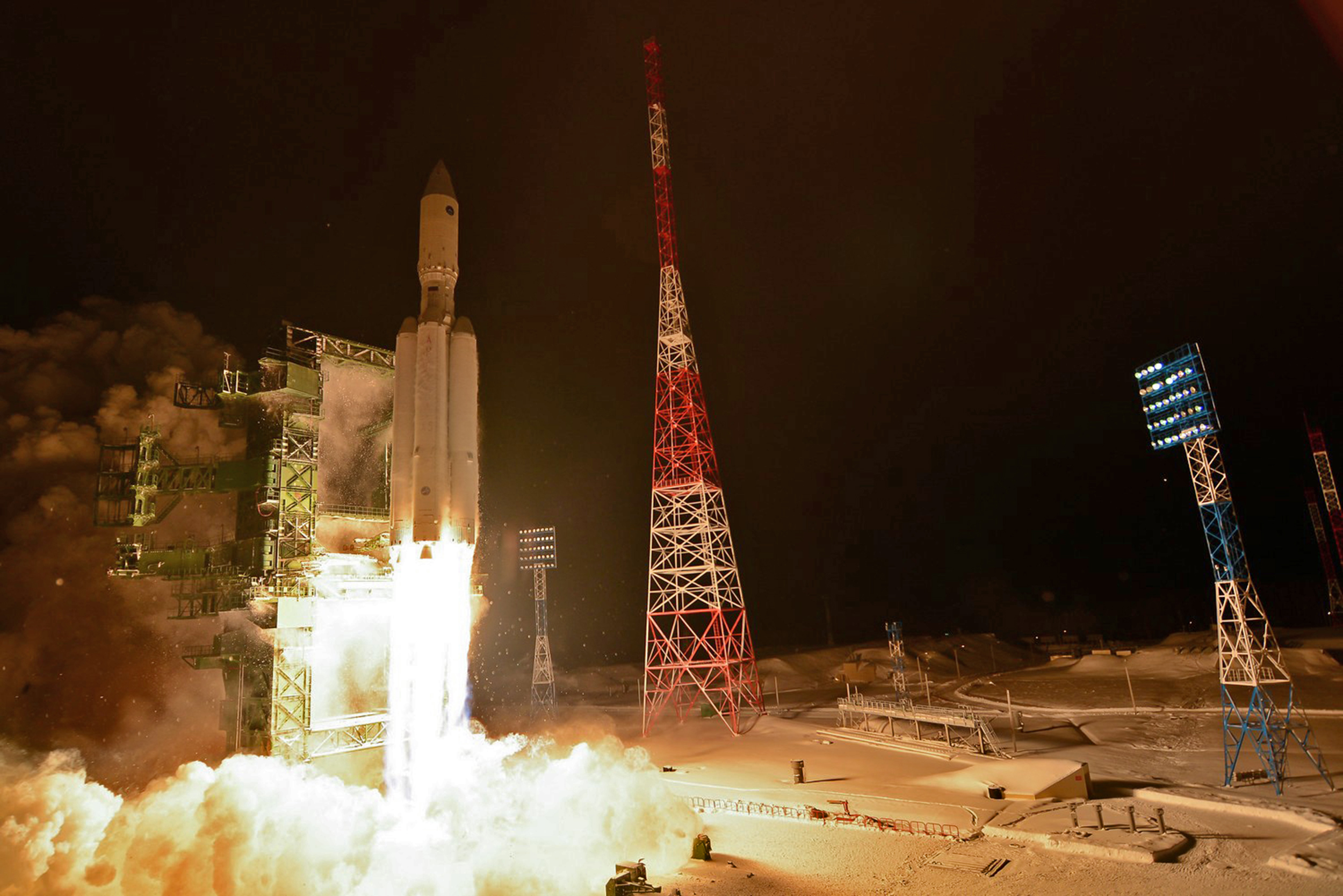
Russia is going to abandon the program of using the Angara-A5P heavy missile for manned launches. This is a direct consequence of the significantly cut budget of the federal space program for 2016–2025, which will be funded by 1.4 trillion rubles instead of the expected 2 trillion.
It was assumed that the first start of the "Angara" with the new spacecraft "federation" will be carried out from the Vostochny cosmodrome in 2021. In the future, this launch vehicle was supposed to become the basis of the Russian lunar program scheduled for the 2030s. Now the prospects of the entire Angara project, on which more than 160 billion rubles were spent in a quarter century, is foggy. The lunar program is pushed back to even less definite time, and the eastern spaceport for many years will remain secondary, if not a reserve. To date, the “Angara” has been launched only once - from the Plesetsk cosmodrome in 2014 (not counting the suborbital test launch). Eastern one also boasts with only one launch -Soyuz-2.1A launch vehicles in April 2016. However, there is also a positive side in the change in priorities: having tightened the belt, the Russian cosmonautics refuses expensive political projects in favor of potentially more effective programs.
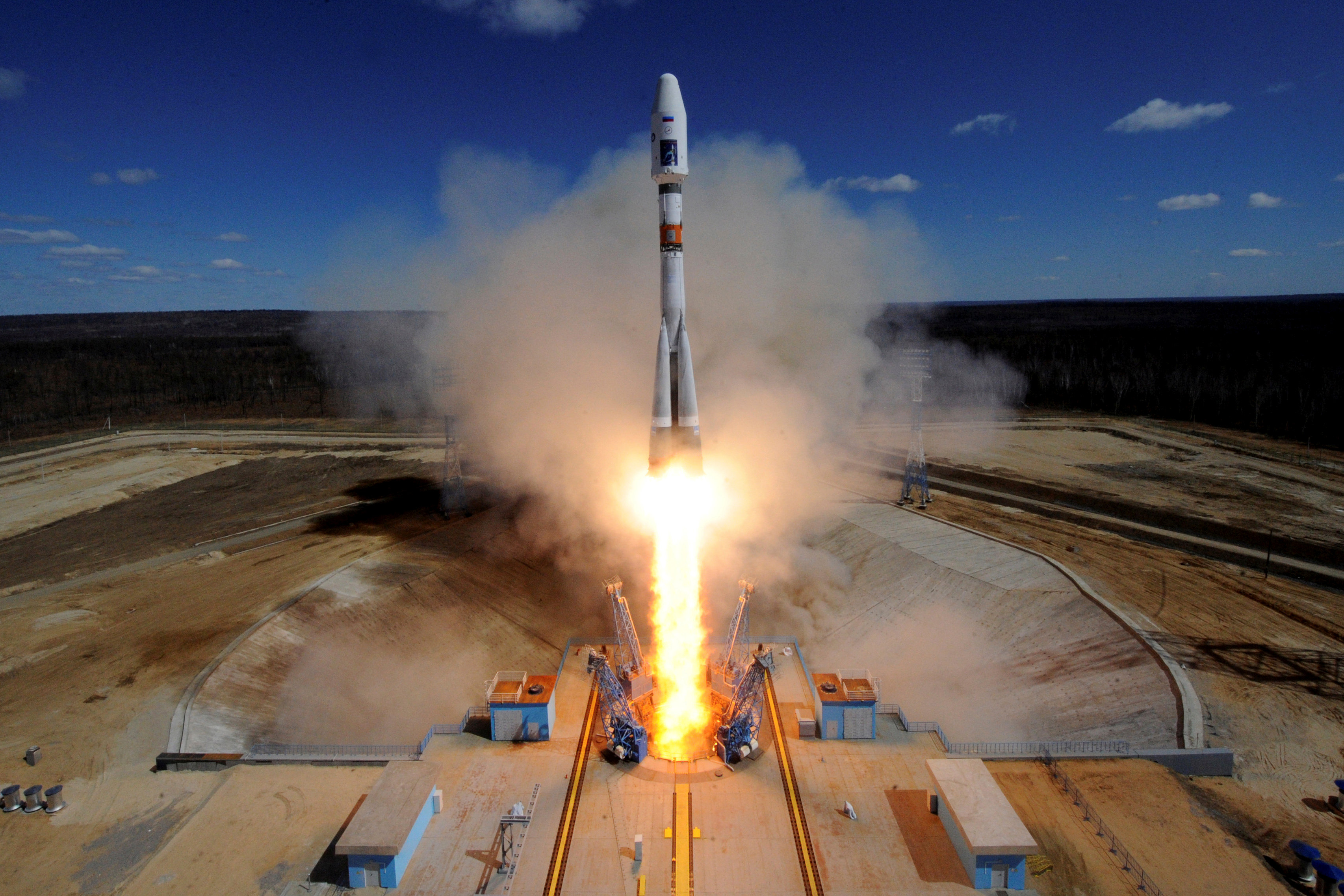
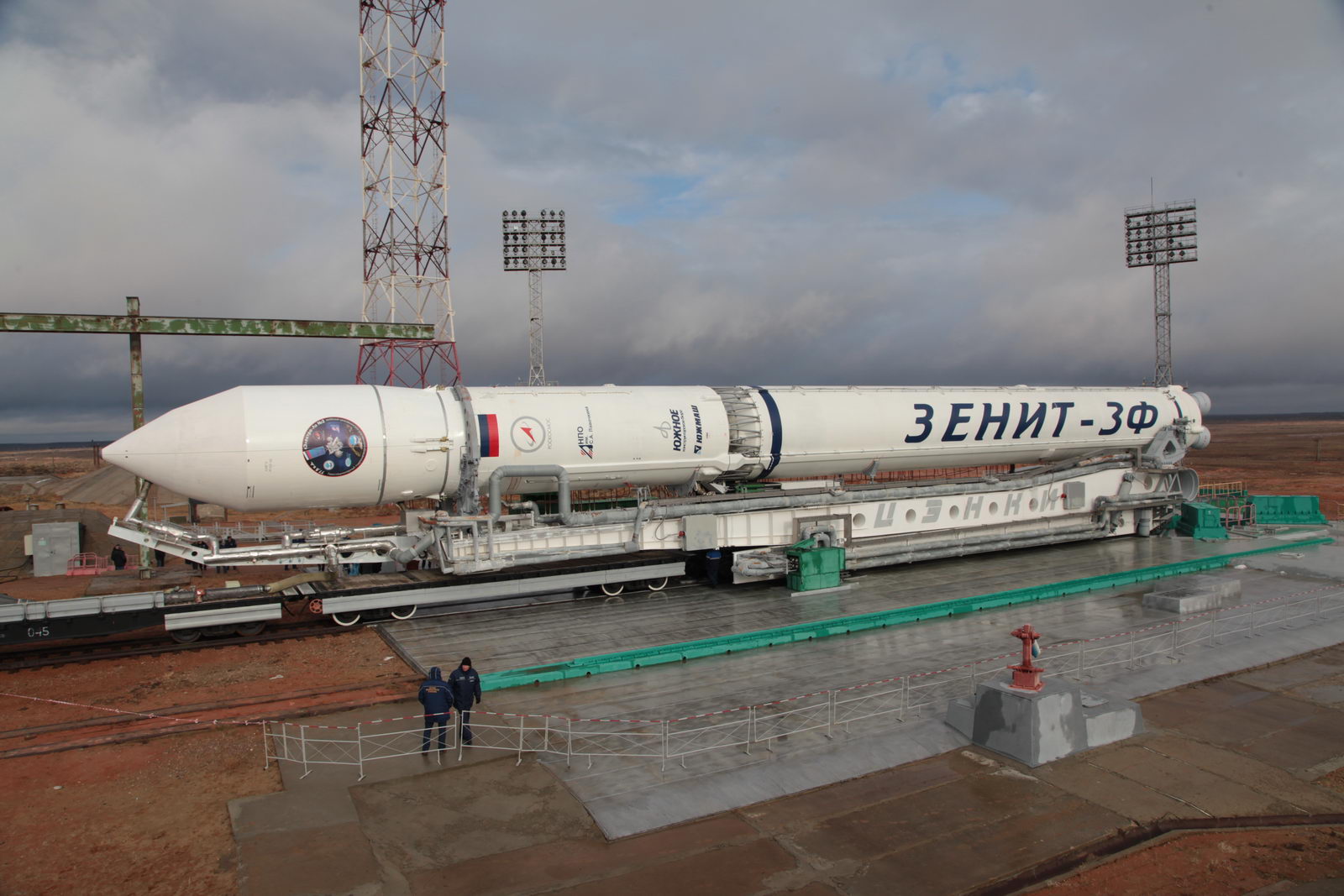
According to the interlocutor of the TASS agency in the Russian space industry, Roscosmos will refuse to build part of the infrastructure for launching "Angara" at the Vostochny cosmodrome. It was planned to build two starting tables-for cargo and manned launches of a heavy launch vehicle, now they will only build one-Angara cargo launch from East is still scheduled for 2021. But for promising manned launches in the RSC "Energia" a new rocket will be developed, Phoenix-a completely Russian analogue of the Russian-Ukrainian middle missile "Zenit". For the launches of "Phoenix" you can use the starting complexes of Zenit on Baikonur and on the floating SEA Launch cosmodrome, that is, additional capital investments in the launch infrastructure will not be needed. Vitaly Egorov , employee of Dauria Aerospace and an expert in the field of astronautics, believes that this may be the most reasonable way out in the conditions of budget reduction.
- Why didn’t the Angara project work?
- "Angara" was born as a post -Soviet project, when the connections between the republican industries exploded and they had to be relaxed. Russia had an idea to create its own heavy missiles. Under it, a competition of projects was arranged, which won the GKNPC named after Khrunicheva, who defeated the project, began to receive funding-in the 90s there are few, then more. Ultimately, a rocket turned out. At the same time, all the tasks that were set before her, that is, the excretion of medium loads, heavy satellites, and so were performed by existing missiles - “Soyuz”, “Zenit” and “Proton”, which continued to fly all the time while the “Angara” was developed. In fact, it turned out to be a rocket without its task, while twice as expensive than a “proton”, which can withdraw the same load from Baikonur. Even the military, who, it would seem, have a lot of money, are not interested in a rocket, which is twice as much as Russian development. But the Proton flies only from Baikonur, which is located in Kazakhstan. Problems regularly arose with Kazakhstan: there were accidents, and the “proton” uses poisonous heptil as fuel. Russia pays, of course, for the rental of Baikonur, but this fee is not so large (115 million dollars a year. - Approx.) . Therefore, "Angara" became a rocket for demonstrating Russian independence in space, a starting table in Plesetsk was built for it, although from the point of view of the geographical location of Plesetsk, the most inconvenient cosmodrome for launching a heavy rocket. The starting table for the Angara is planned on the Eastern, but so far in essence everything continues to work on Baikonur. Now normal relations have been established with Kazakhstan ( Kazakhstan will take part in the development of Phoenix. - approx. ), It became clear that Kazakhstan and Russia were ready to work together for a long time in Baikonur. Therefore, in the starting table on the eastern for "Angara" does not make sense, especially since the budget is reduced. Roscosmos decided that it is better and cheaper to operate the Baikonur cosmodrome, moreover, saving on the abandonment of Angara or on the extra starting tables of the Angara, you can get money to develop another Phoenix missiles. It was just starting to develop it, but it already looks more promising if it is allowed from Baikonur than the existing "hangar", under which there are no starting tables. It is easier to make a new missile than to continue to rush with Angara.

- Why on the eastern did not build starting tables for the Proton, which, in characteristics, is close to the "hangar", but double?
- The key argument was the toxic fuel of the "Proton". When the issue of building the eastern was raised, it was a very strong public opposition, environmentalists raised noise in the Far East. Roscosmos spent a lot of effort to convince the Far Eastern public that there would be no toxic missiles. By the way, scientists, including ecologists, regularly check both the falls of the spent steps of the “Proton”, and the places that it flies over, and no traces of the toxic effects of its fuel are observed. The problem occurs only if the “proton” flies abnormally and falls with full tanks somewhere in the fields. He is uncomfortable, bulky, poisonous, but cheap, so his operation with Baikonur is unlikely to stop in the near future.
- TASS said that Roscosmos refuses the piloted launches of the Angara. Do you think freight will be?
-They say that after all, the starting table will be built on the eastern. I think this is done in order to maintain Russia's ability to independently start conditionally environmentally friendly, in any case, not toxic heavy missiles. At the same time, the "Angara" will be made in very small circulations-just to preserve the potential, so that everyone can see that Russia is not threatened with the loss of any capabilities in space if we refuse for some reason the "Proton".
- And the commercial launches of the "unions" from the eastern are justified, in other words, can the cosmodrome work with benefit?
- In principle, of course, it is cheaper to carry them out with Baikonur, if only because from Samara where the Soyuz is produced, to take the missile to Baikonur than to the eastern. At the same time, to preserve the Russian potential, the eastern must exist, it should work. Some missiles will be sent there to load it with work, load the staff who need to study, gain experience. Roscosmos launches have a large order for at least 20 missiles from the European-American startup Oneweb , which is going to take a huge number of satellites for the global Internet in orbit. I think this order will be executed, among other things, from the East.
- Do the Phoenix project really good prospects?
-“Phoenix” is an analogue of the Zenit launch vehicle, which was a by-product of the Buran development product. “Zenith” is structurally - this is one of the side accelerators from the Superent Energy missile, on which Buran flew, but this is a completely independent and quite effective missile. Even Ilon Musk, when he was asked in one of the interviews: “What rocket do you consider the best except Falcon-9?”, He replied: “Zenith”. This missile is weaker than Proton, but much cheaper, it is the cheapest missile in its class and, in principle, one of the cheapest in the world. The fact that the project has stopped for quite obvious reasons is the sad news, but this is an inevitable fact. Although now there is a hope that perhaps the production will be resumed, as well as the cooperation of Russian and Ukrainian manufacturers. In principle, this is in the interests of both of them. But Russia understands that political problems should not affect space activities, it is necessary to develop its own rocket of this type, especially since Zenit uses the Russian engine RD-170. And such a project called "Rus'" began to be done in the RSC "Energia", but then they closed under the pressure of "Angara", where they transferred all the money. Now the "energy" will return to it, the production will be established in Samara, the same RD-170 engines will be used, modifications that were built for "Buran". They are now nowhere to be used, except for “zenith”, but it is a pity, these are really high -quality, super -efficient, super -powerful engines, they have no analogue in the world. They must fly. And hope - on the "Phoenix", which was not accidentally called that.
- Can we expect that for several years the RSC Energia will cope with the development of a rocket from scratch?
- I communicate with different people, including from "energy", they are very optimistic, they seriously believe that they are able to do this work in 5 years. To be honest, looking at the modern pace of development of space technology in Russia, I have great doubts about this. Five years is a very serious pace for the development of a missile of this class, Sergey Korolev would have dealt with it, Ilon Musk would have coped with him. But Roscosmos - it’s good if you cope in seven years.
- How can the Russian program of manned flights to the moon look like in the light of new plans?
In the next 10 and even 15 years, you should not count on the moon
- In the next 10 and even 15 years, you should not count on the moon. The next 10 years, I warn you right away that there will be no superheavy rocket at all, no matter what they say on TV. But in the future, when they make a “Phoenix” and it will begin to fly, you can conduct more improvements and collect 5 “phoenix” into one missile. From afar, it will look like a "hangar", but several times more, and this rocket will be able to launch our astronauts to the moon. Then we can already talk more seriously about the possibility of planting Russians on the moon. But such a rocket will need a separate, expensive starting table, which, probably, will still be done on the eastern. However, I do not believe that they will begin to do it earlier than after 15 years.