Date
Author
Борис Парамонов; Александр Генис
Source

Preserved copy
Translated material
“Dead Souls” - 175 years later
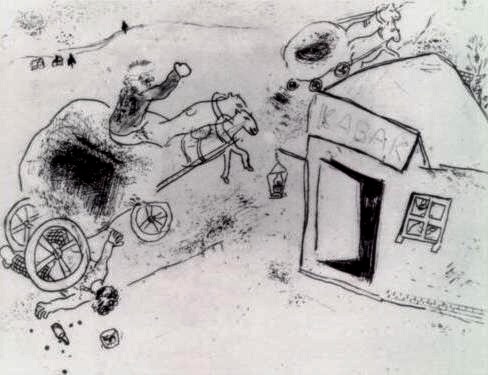
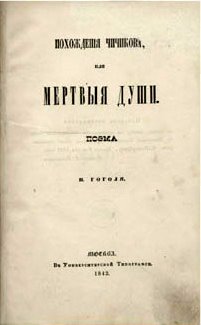
Alexander Genis: Today Ach will open a new issue of Boris Paramonov’s author’s heading “History of Reading”, in which we will celebrate the 175th anniversary of one of the main books of Russian literature. Along with “Onegin”, “war and peace” and “Karamazov’s brothers”, the Gogolevsky masterpiece “Dead Souls” is one of the whales on which there is domestic literature. Perhaps therefore, it is so difficult to look at the glorified poem with a fresh look. Actually, for this I invited Boris Mikhailovich to the studio.
Boris Paramonov: After all, it would seem, from childhood a familiar book: what is called, from the first games and the first letters, and what we really remember about it. Well, perhaps the surnames of the landlords, but parsley with Selifan. Would they still remember the horses of the Chichikovsky, Kaurogo with an attacked chill.
The great Russian book is remembered purely nominatively: a few names and perhaps the scam itself with revision souls: they say, for the dead to get a laying as living - and walk, Chichikov!
The book did not become a native, truly childish, that is, the most intimate, for life memorized reading. But such a book as it should be remembered from childhood, with such a fantastic plot. This is a fairy tale, a kind of fairy tale! It was at school that it was necessary to love her forever!
Alexander Genis: Why, in your opinion, Boris Mikhailovich, our teachers ruined this truly classic reading?
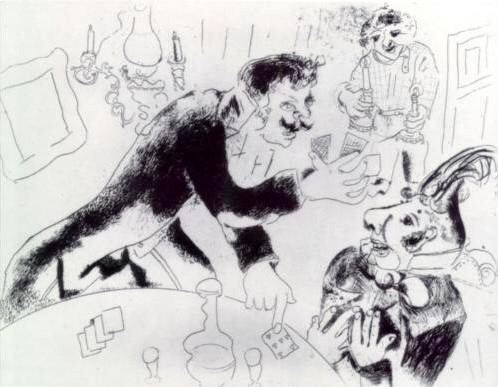
Boris Paramonov: Yes, by the sociology of his pseudo -Marxist, or what she later began to be called there. Instead of enjoying the wonderful Plutovsky novel - and explain at the same time what a romance is a romance, what a cheerful folk genre it is - they began to poke about the initial capitalist accumulation in Russia. Here they say Chichikov Knight of this very initial accumulation, the type of a nascent Russian capitalist. After all, "dead souls" the book is primarily very funny, funny, when it is read in the class, laughter should stand. One box with nozdrev is worth it!
And Manilov with his sons Femistoklis and Alkid! Moreover, Femistoklis dropped Saliva into the soup. That would be Saliva at the same time explain.
Alexander Genis: The first task of the teacher when reading Dead Souls is to show and explain the humor of this book. And then love will remain for life. My brother has been reading “Dead Souls” forty years at dinner. On each page there are stains of borsch. And all because in our youth we boasted Gogol. After all, this is a delight that cannot but share. So you rejoice at the discovery, it is not known where hiding from all previous readings. I was most proud of Khlestakov’s conversation with strawberries:
“It seems to me that you were a little lower than yesterday, isn't it?”
- It can very well be.
Boris Paramonov: Koncho, this is a kind of Iraa-comic epic. “Dead Souls” as a parody epos.
Alexander Genis: Therefore, in “Dead Souls” Gogol laughs by the homeric - heroic - laughter: if Plyushkin and the gap, then immediately throughout humanity. Gogol’s past is majestic in sins and vices, the future remains unwritten, the present is worthy of irony. For example, so:
“No matter how benefit to their estates if every peasant was brought up so that, following the plow, he could read the book about thunderous bounces at the same time.”
Boris Paramonov: Yes, funny there - for ten years of study. I would have to show the students these clots of humor: say, when describing the nosdrev psarny, what kind of breeds and dog nicknames are collected there: the Black meat fortress simply makes amazement, the shield - the needle! And quote:
“Having entered the courtyard, they saw all kinds of dogs there, and dense and pureb, all possible colors and stripes: Murugi, blacks with tan, half a bee, Murugo-pygikh, red-pygikh, black-eared, curous ... There were all the nicknames, all the imperative moods: shoot, steal, flush, spinning, span, span, spoke, span Cherkai, Chuckle, Bake, North, Killer, Award, Trusteer. ”
Or here is another example of Gogolian verbal games: Korobochkina Vykopecki:
“I ask you to dutifully eat,” said the hostess.
Chichikov looked around and saw that there were already fungi, cakes, speedy, shanks, spinners, pancakes, cakes with all sorts of priests: with a handle with a ray, a handmade with poppy seeds, a handmade with cottage cheese, a cheap with a holiness, and there was no one.
-Pesic pie with an egg! - said the hostess.
Alexander Genis: My favorite quote is Nozdrev’s words: “Before my fence, and behind my fence.” Napoleon's ambitions.
But even better, Gogol’s humor that takes away from the story and under the cover of frivolous and friendly mockery creates the universe with a stranger, like Carroll in Alice, with physics. Here, let's say, a world, like Dickens, a scene describing Chichikov’s departure from a box of the box, accompanied by a minor conductor:
“They could not get out of the lanes before noon. It would be difficult to do without a girl, because the roads spread in all directions, like caught crayfish, when they are poured out of the bag.”
The visibility of comparison is obvious, its insanity comes gradually and does not lend itself to explain at all. Gogol has changed the road and riders. The ability to move has passed from the latter to the first. Supplying the road, Gogol first put them in one bag, and then threw them into the field, allowed them to disperse, confusing the traces. Clostering and leisurely, like crayfish, they are not so much crawling as they stare, striving to return to their original state. Therefore, Brichka Chichikova cannot leave the possession of the box. Weaving and circle, sags, as in a folk tale, turn space around the traveler. The road has become a border, it does not lead, but holds. But it is precisely along it, along this road, that Rus should jump, overtaking - or scaring - other peoples.
So a humorous retreat into one short paragraph is a holographic image. This means that one detail contains the whole - the whole poem with its through road motive and ambiguous pathos. As you know, in the bright future of the Brichka is lucky in an inventive crook
Boris Paramonov: The school gave him the main place. I remember that when discussing “dead souls”, the main emphasis was on Chichikov’s biography, on the teaching of his father: a copy of a penny, the best friend will give out, but the penny will not give out. That's what a bad person Chichikov: he collected a penny, atu him! Meanwhile, Pavel Ivanovich is a very pleasant person who causes universal sympathy. Gogol and he admires them: you are a muzzle like that! Alexander Blok wrote that Chichikov is Gogol's secret love. Yes, not so secret.
Alexander Genis: About this, Sinyavsky wrote in detail in the book “In the Shade of Gogol”. All the heroes of “dead souls” and “auditor” are elegant mechanical toys, and the author admires them. Or vice versa, stopping the plant.
Boris Paramonov: Well, yes, the first turn of the Golden Key in the “Examiner” is the name of one of the chapters in the book of Sinyavsky. "Dead Souls" is the atmosphere of pure comic. Chichikov’s biography and the struggle for a penny is the most boring part of the Dead Souls.
Alexander Genis: This is somewhat cut by the story of his customs plows - about the rams in double sheepskin coats, between which smuggled Valencienne lace are hidden.
Boris Paramonov: Rozanov recalled how he could not wait for him to read “Dead Souls” in childhood: the very name of the book seemed so exciting. After reading - he was disappointed, there were no Gothic horrors in the book. But then he rehabilitated himself with the excess: after all, it was Rosanov that belongs to the innovative reading of “dead souls”. He proved that no satire, no convictions in the book should be sought, should not be sought.
Alexander Genis: In the prey, the hero of “City En” admires the friendship of Manilov and Chichikov and envies her.
Boris Paramonov: The fact is that the characters of “Dead Souls” are not living people at all, these are cartoons, the museum of skillfully worked wax figures. Gogol does not convict, but plays. And we must catch it in this game. Admire it.
Alexander Genis: This was used by Aksyonov, who asked his American students to work at home - to come up with the adventures of Chichikov in America. Vasily Pavlovich said that it turned out funny. And I can believe. Other heroes are a box or nozzle - purely Russian, and Chichikov, as you said, is a typical hero of a universal plutovsky novel.
But still, Boris Mikhailovich, does not at times take horror when reading "dead souls"?
Boris Paramonov: At the very beginning, or rather in the chapter two, Chichikov’s visit to Manilov. There is a moment of a certain fear when Manilov has a pipe from his mouth. And then he pronounces such words:
“But let me report whether this enterprise will not be, or to put it even more, so to speak, a Neevity, is this non -universal civil decrees and future types of Russia?”
The entire plot, which we are just guessing about, suddenly ascends into a certain prohibitive to common sense space. There is a certain infernicity.
And the second such infernal moment, when Chichikov had already bought souls, made a purchase in city presence and is preparing to send his peasants to the Kherson province. Here, the inhabitants of the city N, again, otherworldly conversations: as Chichikov, it is more abundant to manage with such a troublesome and bulky act. After all, his peasants will scatter either, or they will rebel, or something else. And Chichikov in response assures that his peasants are excellently calm. Do you feel how the action of “dead souls” goes into some other dimension?
Alexander Genis: Or the exact opposite plot move: Chichikov’s famous conversation with his dead souls, who come to life and lead their independent action on this subject.
Boris Paramonov: I have only one replica on this score: death, where is your sting? Hell, where is your victory?
And such a metaphysics to translate into a comic plan - Russian literature does not know a more grand victory!