
Translated material
The disappeared charm
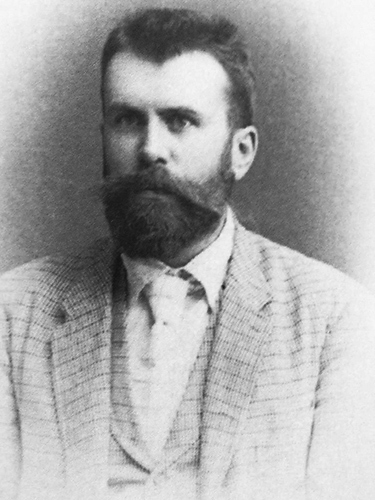
Konstantin Leontyev since he began to write, passionately sought to be heard - there is nothing surprising or deserving special mention, with the exception of two circumstances. Firstly, unlike many other writers and printers, he had every right to attention and realized him well-he realized that he was objectively one of the original Russian thinkers, those who speak by no means trivial-and at the same time does it masterfully. He expected by no means a general consent with his ideas - here, from his early journalistic experiments, Leontyev admitted that there would be no easy consent, he went against the current and flaunted it, preferring consciously “paradoxical”, scratching formulations. But for the most part, the little attention that was given to him was just in turning to this outside - little irritated him as the glory of the “paradoxalist”: a sharp wording from his sharpness was not yet a logical contradiction, the Leontiev “paradox” - only a violation of our mental habit, which is logical precisely the combination of inconsistent, not surprising, which is not surprising, which We do not think, do not think about it, sliding along the taned paths of not reasoning, but speaking. On the contrary, the Leontyevsky “Paradox”, what is perceived in this way, in his own eyes is only the result of a consistent thought, bold enough, so as not to change in fright before the unusual or the disapproval of the public.
Secondly, Leontiev expected not approval from the public; He not only agreed to accept the contrary, but also wished him - struggle, contradictions, dispute: he sought not to agree with himself, but to be heard. Therefore, he was so annoyed by the characteristic of the “paradoxist” - having given a similar assessment, the speaker saved himself from thought. Leontyev needed interlocutors, opponents, in the tension of the mental struggle-and he was again and again attributed to some of the already familiar cells of the then public life, qualified-as a “stranger” or “his own”, but in the latter case everything was far from successful: after all, no matter how much it was understood, then it was felt that this “allied”, “allied” Obviously, it means far from what others, outwardly unanimous. Therefore, it turned out that although Leontiev was printed by both the “Russian messenger” of Katkov, and the “citizen” of Meshchersky and he himself was, albeit for a short time, the leading publicist of the “Warsaw diary” - but also with Katkov and Meshchersky, he remained “standing on the hilly”: responding to the most discussed topics of the moment, Leontiev did not become another “vote” - Even when he seemed to say the same as others, it was felt that he was saying it on other things, than others.
 © Vladimir Dal, 2016
In order to write and reason, Leontyev certainly needed a reason - he was not from the breed of theorists who could find pleasure in the thorough deployment of thoughts alone with himself; All his articles are response, answer, question - a voice in a conversation, invariably assuming the interlocutor: his monologue no less assumes another than the dialogue - only this will not be an opponent, but a student. He made passionate efforts to cause this conversation - so in recent years he responds on the pages of the “citizen” to the controversy of Vladimir Solovyov with the insurance regarding “Russia and Europe”, invading the conversation as a third, but in essence turning to one Solovyov - calling him to the answer, but without waiting for a copyright copy abandoned in the printing of articles: “Not completed; Tired in the spring and quit <...> ” [1] . It was not physically tired, because at the same time he tirelessly corresponds and sketches other articles - tired of saying into the void: Soloviev, in fact, the only one that he recognized intellectual superiority, the one, the conversation with which he appreciated almost most of all, did not respond - instead of leaving the controversy, the monologue turned out to be a monologue without address, Leontyev forces himself, and even more fragmentary, all the more fragmentary ones. Articles, a series of replicas - to negotiate, for himself and in this form, it is clear for the reader - unnecessarily and already written: after all, the indignant subscriber and the grateful will grab the words equally for the words that “Katkov, Herzen, Slavophiles, Danilevsky” “Emperor Nicholas I gave <...> the opportunity to develop slowly and mature” [2] , and people will consider it smoking A favorable citation on the pages of the organ of the prince of the Meshchersky reasoning of Chernyshevsky [3] , and a special twist of the mind is to bring Granovsky’s words as an argument against the excessive spread of the “Gutenberg invention” [4] .
Therefore, Leontiev can be completely heard only when, according to the title of an excellent book written by O.L. Fetisenko, you hear him “in the circle of interlocutors and students”-he always says, either responding to something and someone, or turning to someone. So really in this sense, Leontiev is a completely “newspaper” or even “magazine” thinker: he was forced to go to this compromise with the era, but, like any compromise, this one was not quite successful. And therefore, he especially appreciated the small circle of students who found in the winter of 1882/1883 among the pupils of the Moscow Lyceum of the Tsarevich Nikolai, better known as “Katkov”, a circle, which further joined several persons: they formed a pressing necessary environment of communication for him, both personal and epistolary, and became the hope of the future, that his thought would not be the thought that his thought would not be thought. It is forgotten that it will not pass without a trace: after all, there is no memory without removal. Here, Leontiev’s hopes were justified quite-not as soon as he hoped, and by no means as vividly, but it was they, these late students, friends and interlocutors, who approved Leontiev’s place in the history of Russian thought-their works (primarily Joseph Fudel) came out already in the 1910s of his works, many of the letters were gathered, and memories of him were left.
The most beloved, most expensive of them was Ivan Ivanovich Christie (1861-1894) for Leontiev - “Child of Soul”, as he once called him, “Vanichka”. Probably, Christie was very sweet, charming - otherwise it is difficult to explain the strong, almost blind sympathy for him by Konstantin Leontiev, a man, very vigilant and sober in his estimates by others. But all that remains is only letters and several articles. There is almost nothing in them that would justify Leontiev’s review - of course, he was pretty that the student tried to repeat his thoughts, apply them to various subjects, but, except for the review of Polenov’s picture (“Christ and the sinner”, 1887), these are all awkward, weak attempts. Strakhov wrote to Tolstoy about the “literary review”, which took Christi in the “citizen” of Meshchersky: “So stupidly that I am at a loss” - and the truth is that Christie's articles do not so dull as the “childish” impression, not only the inability of the author, but also his internal immaturity, as when he, for example, is taken about the sincerity or insincerity of the thick, thickness, the thickness of the thickness. Practicing "Reading in the hearts."
Christie lived a short and awkward life: the son of a wealthy Bessarabian landowner, he graduated from the historical and philological faculty of Moscow University and was left at the university, carried away by the study of church history. With the last goal, he enters the freestyle of the Moscow Theological Academy, works on a dissertation dedicated to the AP. Pavel, but he does not succeed in passing exams at the Academy-faced with the united resistance of the “Popovichi” in relation to the nobleman, he is forced to use ties, to obtain permission to continue exams in a less hostile St. Petersburg Theological Academy. At the end of the relatively successfully passed exams, Christie hopes to complete and defend the dissertation - but here he is overtaken by the disease: from a very young age, a patient with syphilis and who has been the first stroke at twenty -four, at twenty -nine, he experiences a sharp exacerbation of the disease - and after a year of treatment, temporary relief in thirty years, his mind goes out forever, and after three years, the body also dies. In the incomplete ten years, almost the entire intellectual and spiritual life of Christie, closely connected with Leontyev and Solovyov, closely familiar to him and very significant for him: so, the most serious of the published Christies, who later became an important reason for the thin relations to him at the Moscow Theological Academy, is dedicated to the protection of Solovyev’s views on the dogmatic development of the Church.
Christie's image is given to a larger volume published in the same volume of his letters to S.A. Rachinsky, the founder of the famous Tateyevsky school, a distant relative of the correspondent (who in 1889 will make an offer (unsuccessful) to the niece of Rachinsky: she will not be ready to go to the hollows, choose the life of the priest’s wife - at that time Christie himself decisively aims - and her family will suspect him of the desire to receive the Tateye school as a kind of “dowry”, the future inheritance; Relations with S.A. In these letters, as O.L. Fetisenko, in front of us is another Christie, much more open, free than in letters to Leontiev, to which he experiences a constant sing and is forced to constantly make excuses, feels guilty - both in everyday circumstances, the non -fulfillment of certain instructions of Leontiev, and in much more serious - both not justifying his expectations. Of course, you can see in this and the approaching last illness, but clearly not only an excited letter to the teacher, dissatisfied with how Christie, was published as Christy, the “national politician as an instrument of the World Revolution” published his father: “This is worse than your letter. You do not know how I cried, having received it ”; "I <...> published her out of love and with love."
Extremely nervous, easily worried, Christie constantly looks at Leontiev, who is in the full sense of the word as a teacher of life, including everyday behavior: so, reporting his unsuccessful engagement, he was in a hurry to assure the mentor that his letter was written “with great dignity”, as earlier, trying to arrange for his choice, “she also considers to the professor, also considers rudeness ,” - And even in the last letter, from a fading mind, Leontiev informs: “I liked your second article more than the first. I kiss you <...> ".
This book can be read as a reminder of the departed nature - that only a disgraced one remains from a person, one way or another fixed in the material, designed. Traces of his life - by which we are trying to restore it. But this is always just a fragment. Not life - we add it from ourselves. (This was true by romantic historians; subsequent historians only make other requirements for verifying this reconstruction, skeptical of “poetic imagination” that replenishing the lack of data-but there was almost nothing left of Christy-from what would justify the attention of Solovyev, love for him Leontyev, hope, laid down by terror Filippov. If we only believed what was preserved from Christie himself - or that Christie managed to write about the teacher, then we could only pass by. But here, in the end, it happened the other way around: not the student retained the memory of the teacher, but thanks to the teacher Christie returns to our memory. As a very expensive, close, reverently significant person for Leontiev. If we manage to partly touch, understand the charm that was in Vanichka, then, in the least extent, thanks to the articles and letters remaining from him, the teacher conveyed to us the news of the road that he felt in his unsuccessful, convincing, confused and so sad life to the student. And we can only believe in the word to a mentor who was well able to see people - and, therefore, seeing in Christie something that deserves deep affection, paternal care: something that is not preserved in time, indifferent to everything that has not gained shape.
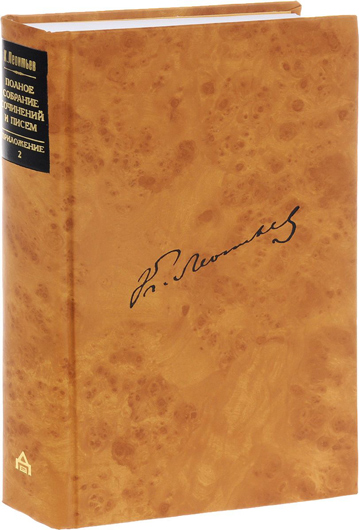
Ivan Christie. Letters to K.N. Leontiev. Articles / Compilation, introductory article, preparation of text and comments by O.L. Fetisenko. - St. Petersburg: Vladimir Dahl, 2016. 697 pp., Ill. (Appendix to the complete collected works and letters of K.N. Leontyev. In 12 vols. Prince 2.)
[1] Leontiev K.N. Vladimir Solovyov against Danilevsky // Leontyev K.N. Collected works. T. 7.-St. Petersburg: Edition of the Russian Book T-V-V-V-V-VASTER, 1913. P. 360, approx. 1.
[2] Ibid. S. 356.
[3] Ibid. S. 343-344.
[4] Ibid. S. 345.