Translated material
Against Abbot-Rusophobe, Muscovites and Illuminati
Five literary enemies of Catherine II
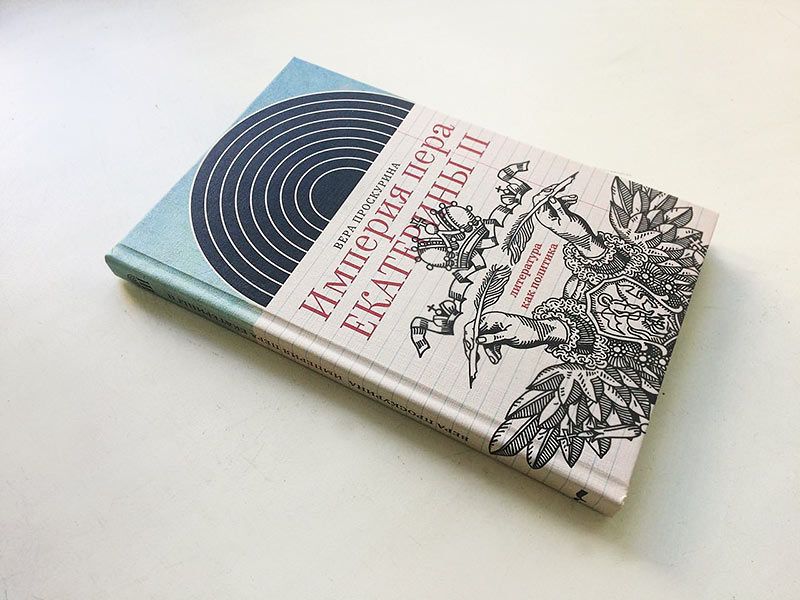
The literary activity of Catherine II was not only a tribute to the Enlightenment, but also a serious political enterprise: in her works, the empress sought to enter Russia into a European context, but at the same time was cut with opponents - reactionary Moscow nobility, Masons and Turks who did not want to get out of Crimea. Maria Nesterenko got acquainted with the new book of Vera Proskurina “The Empire of Pen Catherine II: Literature as a Politics”, which recently published in the publishing house “New Literary Review”, and talks about the five main literary enemies of the Empress.The research interest in the personality and the era of Catherine II has always remained stable, only approaches and ideological interpretation changed. The literary activity of the Empress of the All -Russian most often, and is quite fair, was considered as a component of its political project. Catherine very well understood the social power of literature and tried to use it for public purposes. As a writer, she is almost not present in the literary field, although not a single reference article is complete without mentioning her experiments, and in the dictionary “Russian writers of the XVIII century” about the empress was written in sufficient detail. For a long time for the history of literature, the relationship between Catherine with writers and poets was more significant. An important figure “Northern Minerva” was and remains for researchers of female literary work in Russia: the presence of such a powerful precedent prompted women to try their forces in the literary field.
In recent decades, under the influence of the ideas of interpretative anthropology, on the one hand, and the works of the Tartu-Moscow Semiotic School, on the other, the study of the so-called ideological metaphors and the spheres of their production became especially relevant: literature, theater, architecture, court ceremonial, religious holidays, oratory. Catherine II, “The triumphant Minerva”, has repeatedly become a heroine of such research (see, for example, “Scenarios of Power” by R. Wortman, “Normy Eagle” by A. Zorin). Vera Proskurina in her new book dwells in more detail on the literary experiments of Catherine and considers them as a political enterprise. The legacy of the empress is very extensive, so the researcher chooses several of the most important plots from his point of view and explains how they integrate into the ideological context of the era.
Catherine’s literary classes had a double pragmatist: for the Russian reader (and the viewer) - this was an instruction, often under the mask of laughter, for the European audience - a demonstration of enlightenment and belonging to “République des Lettres”. “The literary activity of the empress was supposed to reinstall the boundaries of Europeanism <...>. Russia on the map of civilization was almost always marked with a white spot of endless snowy plains and is meaningful as barbaric and backward anti -cyvivation, ”Proskurin writes in the preface. Many writings of Catherine had a “geographical” dimension; Designing the place of creation of the work (“translated on the Volga”, “composed in Yaroslavl”, etc.), the empress sought to enter Russian territories into a European context.
1. Against Abbot-Rusophobe
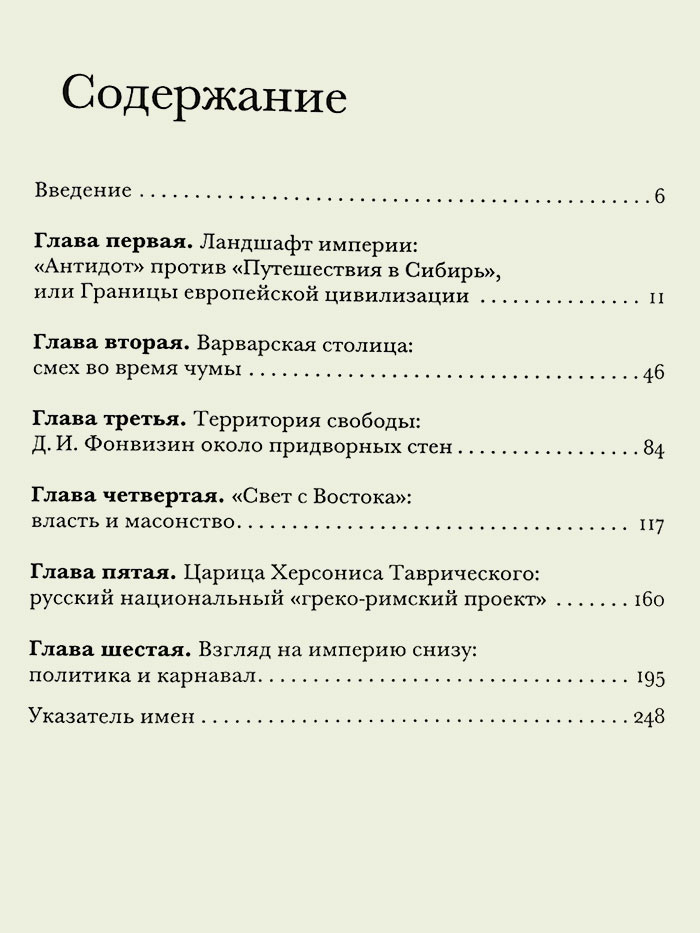
The main work on this front was Antidot, a refutation to the book of Abbot J. Shapp d'OTOSH “Voyage en sibérie” (1768), printed anonymously in St. Petersburg (V.P. Stepanov indicates the first place of publication Amsterdam) without indicating the place of publication. In Opus, weeding not only Siberia, but all of Russia presented as a barbaric country brought by snow, and its inhabitants - corrupted by vices. From the point of view of the enlightened Abbot, this was a consequence of despotism. Catherine responded to the “slander” by a two -volume composition with the speaking name “Antidot” (literally - antidote). Her authorship was kept in the strictest secret even from the close associates, otherwise she risked "appear <...> in an uncertain light, to be Ridicule, answering such a small person from the height of the imperial throne." Proskurina believes that the point was both in the inappropriateness of such a polemic, and that Catherine sought to create an author’s mask - an educated nobleman who speaks foreign languages and extensive knowledge, capable of literally to defend Russia. Moreover, the empress also directed the fate of the author outside the text, hinting in one of the letters that he died heroically. Of course, the “antidote” also possessed political pragmatics: mystification was associated with the circumstances of the Russian-Turkish war. In the letters of Catherine to Voltaire, this war was comprehended "in the paradigms of the struggle between the new Russia, which adopted the laws of education from the weakened Europe, on the one hand, and the Asian, despotic and barbaric ottoman empire." The Northern Minerva did not want to be an empress in a barbaric country, and it was such an abbot that represented Russia in his essay, so a polemic response was supposed to appear to him. Proskurina embeds this plot not only in the context of Catherine’s policy, but also in the context of European education, showing how the myth of Russia balances between the ideas of Montesquieu and Rousseau.
2. Against Moscow
The second plot of the “Persian Empire” is a cycle of comedy plays of 1772 (“On Time!”, “The Non -Ninins of Mrs. Vorchalkina”, “Front of a noble boyar”, “Mrs. Vesnikova with the family”, etc.). For him, as the author writes, Voltaire “A Priori, Catherine issued a pass to the enlightened republic of writing, attributing to the comedies of this unknown Russian Moliere a universal wit that is understandable to a sophisticated European” - which the empress wanted so much. In the comedies, she not only exposes the vices of society, but, again, makes them part of her political project, for which “the order was also written, satirical magazines were initiated, created or, in any case, were declared as the necessary institutions of civil society (such as the laid commission), the latest educational institutions were opened.” Comedies had a pronounced anti -Moscow character. Moscow for Catherine was the embodiment of ignorance and almost the plague that was raging there at that time, the plays "were somehow interconnected by repeating heroes and anti -Moscow context." However, this is only one dimension of comedies. Proskurina shows that conditional Moscow is not only a place of concentration of vices and ignorance, but also the embodiment of reactionity, with which the “non -employed” nobility was associated as a class that opposed its reforms.
The place of creation of all the plays from the cycle is called Yaroslavl, which for quite some time knocked down researchers: why did Catherine needed this game? Proskurina believes that “the link to Yaroslavl was the most important factor in that mental geography ... Yaroslavl was associated with the project of a new - ideal, reasonable city that was supposed to serve as a model of enlightened reforms in the country,” he thus acted as an antithesis of Moscow.
 3. Against Fonvizin
In the next chapter, the “territory of freedom”, Proskurina offers an updated interpretation of the controversy of Catherine II and Denis Fonvizin, who arose on the pages of the journal “Interlocutor of Lovers of the Russian Word” in 1783. At this time, Catherine sought to create a new image for herself: "Man on the throne." Derzhavin sang the anthem of the humanity of the empress in the famous Felitsa, thereby legitimizing her idea. And at this very moment, the monarchy received an anonymous article that sentenced her to her rule.
It is generally accepted that the brave and talented writer Fonvizin opposed the empress, who rolled up in repression, for which he fell into disgrace (so they interpreted the plot of Gukovsky, the wall, the rashin, etc.). In fact, the researcher believes, everything was somewhat more complicated because of different factors-the empress for a long time did not know who was the author of the article at all. “Questions” were transferred to Empress E. Dashkova, who actually inspired the game, and Catherine willingly participated in it. She sought to "offer a new type of literary discourse - light, game, not loaded with serious or boring, in its view, material." Thus, it becomes clear that classes in general and the polemic with Fonvizin in particular had not only a political, but also a purely literary dimension, which is no less important.
4. Against the Illuminati
“It was a real political battle,” writes Vera Proskurina. This time, Masons became opponents of Catherine. The displeasure of the empress caused primarily Moscow Martinists, led by Nikolai Novikov, who tried "in their charity and publishing undertakings to oust the government from all the humanitarian spheres." In addition, the Masons “pulled” Pavel Petrovich’s heir in their affairs. The personal struggle of Catherine successfully fit into the pan -European context: the entire last quarter of the 18th century, Europe was passionate about all kinds of mystical practices, or “shamanism”. The empress presented before the public as a zealous advocate of the ideas of the Enlightenment, inspired, by her admission, by French encyclopedists. The fighting again unfolded in the theater: in 1786, three “anti-Masonic” plays of Catherine, “deceiver”, “seduced” and “Siberian shaman”, were very successful. In these comedies, the monarchine sought to discredit the Masons, to show them with miserable charlatans. She again solved two important problems: strengthened the image of the enlightened ruler and was cut with influential opponents.
5. Against the Turks
Of course, Catherine had much more ambitious plans than clicking on the nose of negligent nobles. Thus, the “Greek project” (the crushing of the Ottoman Empire and the subsequent section of its territory between Russia, the Holy Roman Empire and the Venetian Republic), whose symbolic dimension was analyzed in detail, was analyzed by A.L. Zorin in the book "Putting the two -headed eagle." Vera Proskurina is more interested in the poetic legitimation of this project and the appeal of Catherine II to the historical topic. The main idea that artistic texts had to convey was the accession of new territories peacefully. It was not enough for Catherine one annexation - a new myth was needed that legitimized the right to own new territories: thus, the modern Crimean khanate turned into a Hellenized Tauride Chersonesos. The words “Queen of the Tauride” were added to her title, thereby Catherine hardened the connection with Greek culture. The monarchine in general comprehended her relationship with history in several plays: “The historical representation from the life of Rurik”, “The initial management of Oleg”, and later - “Igor”. “The Varangian theme, however, turns out to be a prelude to the main - Greek - theme of the historical dramas of Catherine,” Proskurina writes.
Scientists often saw in the works of Catherine the political meaning and considered him a granted one. Until now, the reconstruction of this meaning has not been devoted to a special study. The "Empire of the pen of Catherine II" Vera Proskurina replenishes the gap. The plots chosen by the author reveal political pragmatist and show, if you like, the “psychology of creativity” by Catherine II, who sought to be not only an enlightened monarchy, but also a philosopher, a writer on the throne.
_____________________________