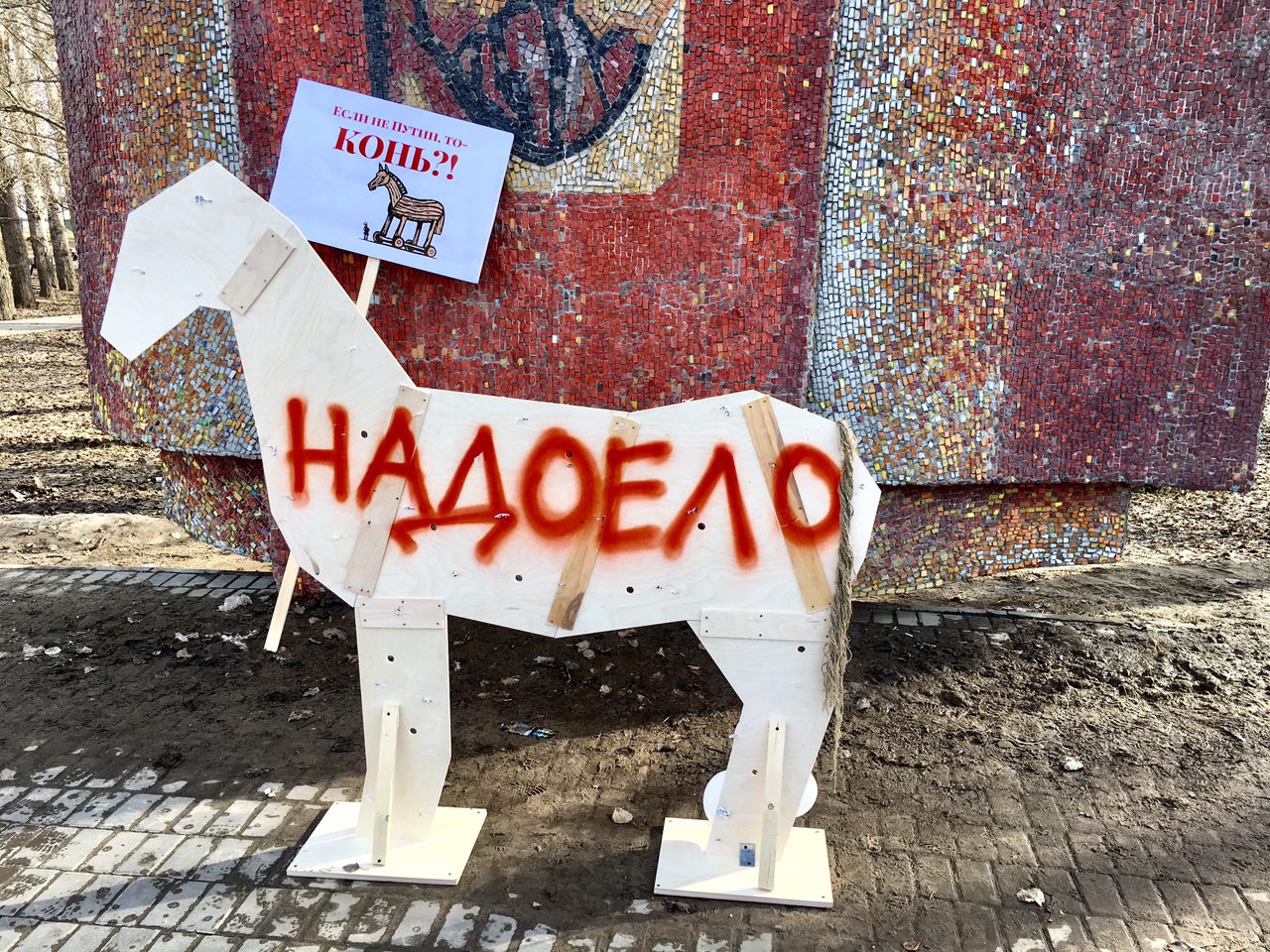
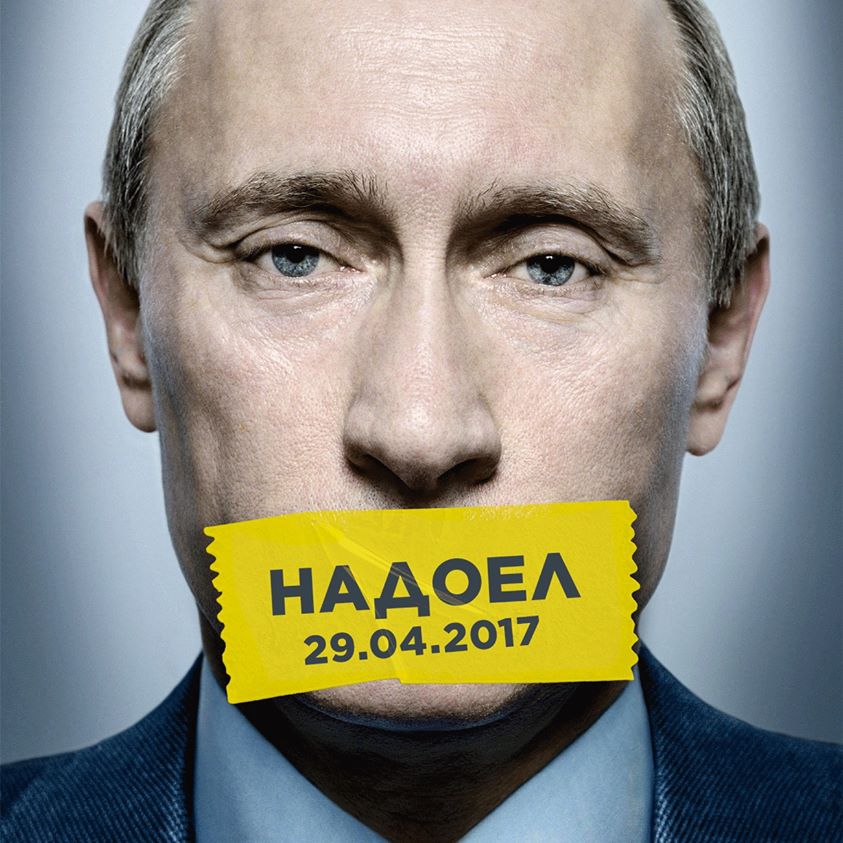
The coordinator of the Open Russia Department in Krasnodar, Jan Antonov, opened an administrative case, she faces a fine of 5 to 15 thousand rubles. Antonov is accused of the fact that it consists of an undesirable organization, the case is instituted under Article 20.33 of the Code of Administrative Offenses. Antonova - the organizer of the action "Tired" in Krasnodar, which took place on April 29 in many Russian regions. Its participants collected signatures under the appeal to President Vladimir Putin with a request not to take part in the elections in 2018.
On the eve of the “Tired” campaign, the Russian Prosecutor General’s Office recognized the activities of several foreign non -governmental organizations unwanted in the country. Among them were OR (Otkrytaya Rossia) (Open Russia, Great Britain), Institute of Modern Russia, Inc (Institute of Modern Russia, USA), Open Russia Civic Movement, Open Russia (public network movement "Open Russia", Great Britain).
"These organizations carry out special programs and projects on the territory of the Russian Federation in order to discredit the results of the elections in Russia, recognition of their results by illegitimate," the department’s website reported .
Banner of the action "Tired"
Later, the Ministry of Justice said that he did not find branches of the Open Russia and Institute of Modern Russia recognized as undesirable in Russia, registered in the UK and the United States.
On April 27, in the office of the Open Russia movement of the same name, searches were held in Moscow. Law enforcement officers seized equipment and leaflets. In Kirov, the police arrested the entire circulation of forms of appeals to Russian President Vladimir Putin, released before the action "Tired". Police officers also tried to search in the office of traffic in Kazan.
The fact that she is a member of the "undesirable organization", Yana Antonova found out, appearing on May 29 by the agenda for interrogation to the prosecutor's office.
The Coordinator of Open Russia was informed that it is a member of the British organization Otkrytaya Rossia. The next day, an administrative case was brought to her. On May 29, district police officers also came home to other employees of the Krasnodar branch of Open Russia. According to Antonova, the prosecutor’s office has not called any of them.
The chairman of the Open Russia movement, Alexander Solovyov, told Radio Liberty that the case against Yana Antonova was illegally instituted:
This is a desire to get in order and scare activists
- This is either the incompetence of employees of the regional prosecutor's office, or the desire to curry up or scare activists. Because the representative of the Russian Prosecutor General Alexander Kurenny almost immediately after the recognition of the unwanted British organization of Open Russia said that this would not affect the Russian movement of the same name. Because the Russian public movement "Open Russia" is valid under Russian legislation, according to the law on public organizations, and acts in the form that does not require registration. The law on unwanted organizations can not concern Russian organizations, it can concern only foreign organizations. But for some reason, employees of the Krasnodar prosecutor's office refer precisely to the decision of the Prosecutor General. Obviously, they did not hear the words of the official representative of the Prosecutor General’s Office, or the words of the Minister of Justice Konovalov, who said in the same way that this would not affect the activities of the Russian movement.
- Nevertheless, the case has been started. What threatens Yana Antonova directly?
I hope that nothing threatens her. This is not us, that's all
“I still hope that this does not threaten her.” Our lawyer leaves for Krasnodar, we are already defending Yana Antonova. Because nevertheless, organizations that are registered in the UK appear in the protocol. This is not us, that's all. If even the case is brought to court, relatively speaking, they do not cancel this protocol, I hope that the court, despite the fact that we have objective problems with the court in the country, will take a reasonable side. Because what is written in the protocol is not true.
-Are there any other cases of pressure on your regional activists?
They have already turned searches in Open Russia into everyday life
- This is the first attempt to draw up a protocol on the fact of recognition of undesirable organizations to which we have nothing to do. But pressure occurs in other ways. Searches are carried out. They have already turned searches into some commonplace. That is, no one is interested from writing this from journalists, because they constantly search for someone from Open Russia. They motivate searches with different pretexts, but all of them are politically motivated and are always carried out with violations, ”said Alexander Solovyov, head of Open Russia.
The lawyer of Open Russia Sergey Badamshin informed the RS that in the near future he intends to get acquainted with all the materials in the case of Yana Antonova, accused of relations with an “unwanted organization”. However, he once again recalled that we are talking about British Open Russia, to which Antonova has nothing to do, and called the actions of the Krasnodar prosecutor's office "a small desire to distinguish and stand out."
The action "Tired", organized by "open Russia", took place on April 29 this year. In Moscow, there were no detentions, more than 120 people were detained in St. Petersburg, 72 of them were drawn up on participation in an unauthorized procession. On May 10, the court in St. Petersburg fined 10 thousand rubles by the coordinator of the Open Russia movement Andrei Pivovarov for organizing this unauthorized action. In Kazan, the local activist of movement Daria Kulakov was arrested with appeals to Vladimir Putin. She spent 10 days in a pre -trial detention center.
Open Russia was established in 2001 by the shareholders of the Yukos oil company and a group of private individuals for the implementation of charitable, educational and educational projects. Until April 2017, Mikhail Khodorkovsky was the chairman of the board of Open Russia, during the conference of the organization in Tallinn, it was elected by the Coordinator of the Open Law project Alexander Solovyov.
"The defense line passes through each" 09 May 2017
The famous action "Immortal Regiment" was born in Tomsk in 2012 as an emotional impulse of local journalists - grandchildren of soldiers of the Great Patriotic War. A few years later, officials and formal social activists from the ONF privatized the people's initiative. The organization "Immortal Regiment of Russia" arose, which now masters multimillion -dollar budgets. Officials and administrative zeal emanating from the BPR distort the very idea of the popular movement, according to one of the founders of the Immortal Regiment, journalist Sergei Lapenkov. In an interview with Radio Liberty, he recalled the initial, very important meanings of the movement.
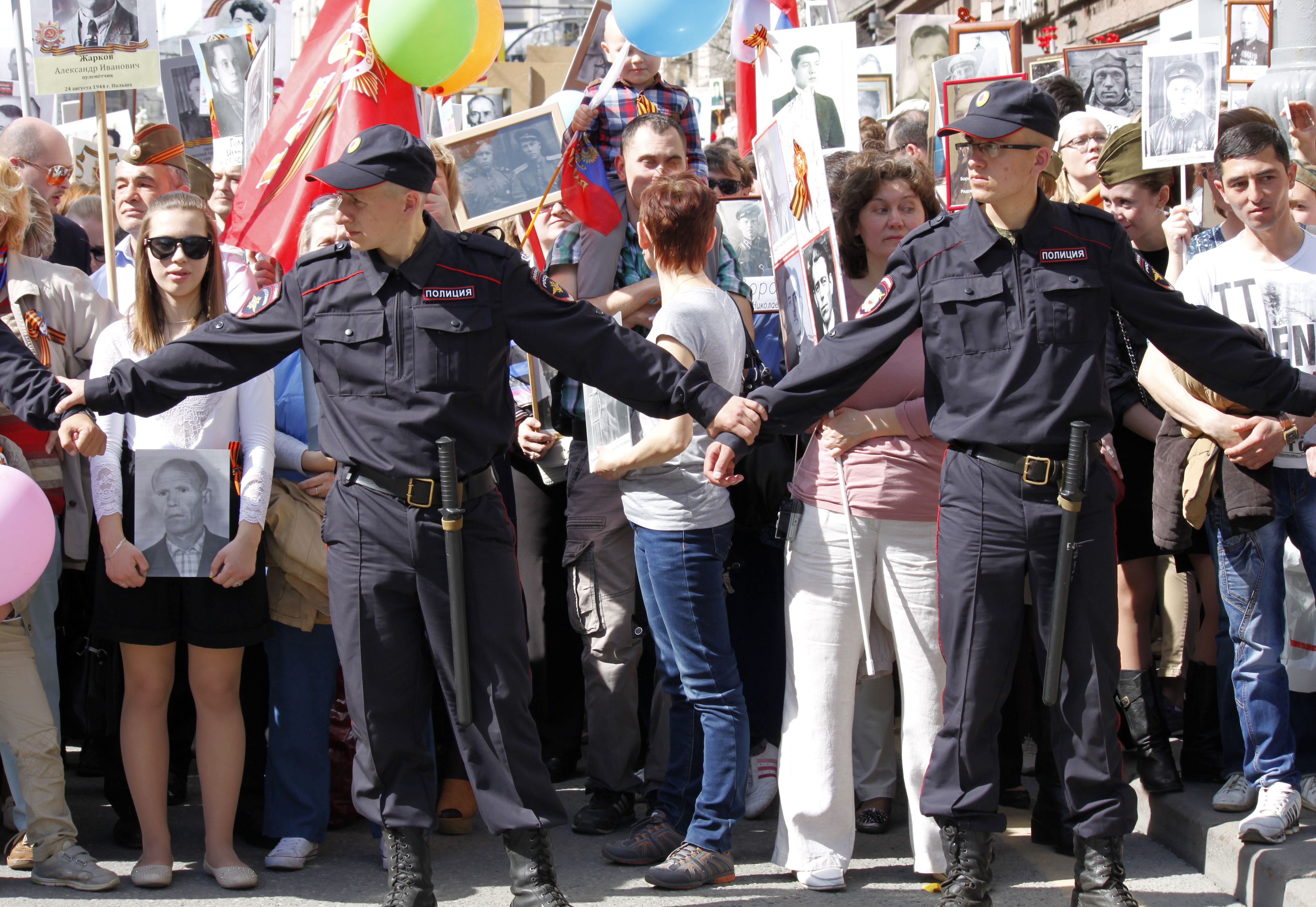
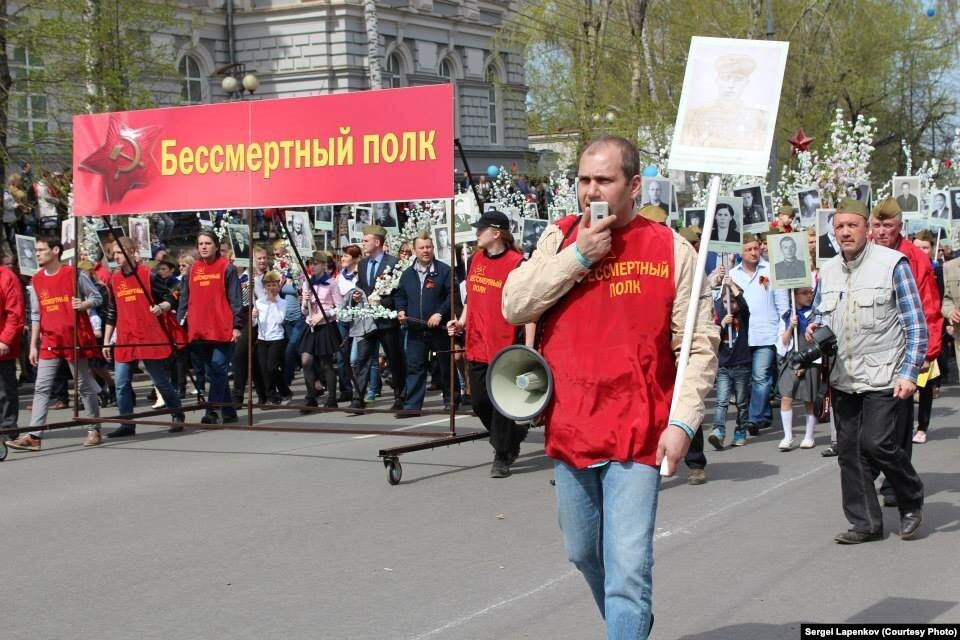
Immortal regiment, Tomsk, 2012
"Return the main character - a man who went through the war"
- Sergey, let's turn to the beginning of the history of the Immortal Regiment movement - how was the idea itself born?
We wanted to return the holiday of his main character - the man who went through the war and to whom we are all ultimately grateful for living today
-The idea came up with my colleague Igor Dmitriev, now he lives in St. Petersburg. In May, we usually met - I, Igor and Sergey Kolotovkin, our third comrade - near the eternal fire in the city of Tomsk. We came with the children. This day was important for each of us: we are all - grandchildren of soldiers, all grandfathers fought. And so Igor, observing, apparently, what makes the time (there are fewer veterans, there are more and more paphos speeches), suggested: let's take the portraits of our grandfathers to the parade next year. We wanted to return the holiday of his main character - the man who went through the war and to whom we are all ultimately grateful for living today. No matter how pathetic it sounds, but it really is.
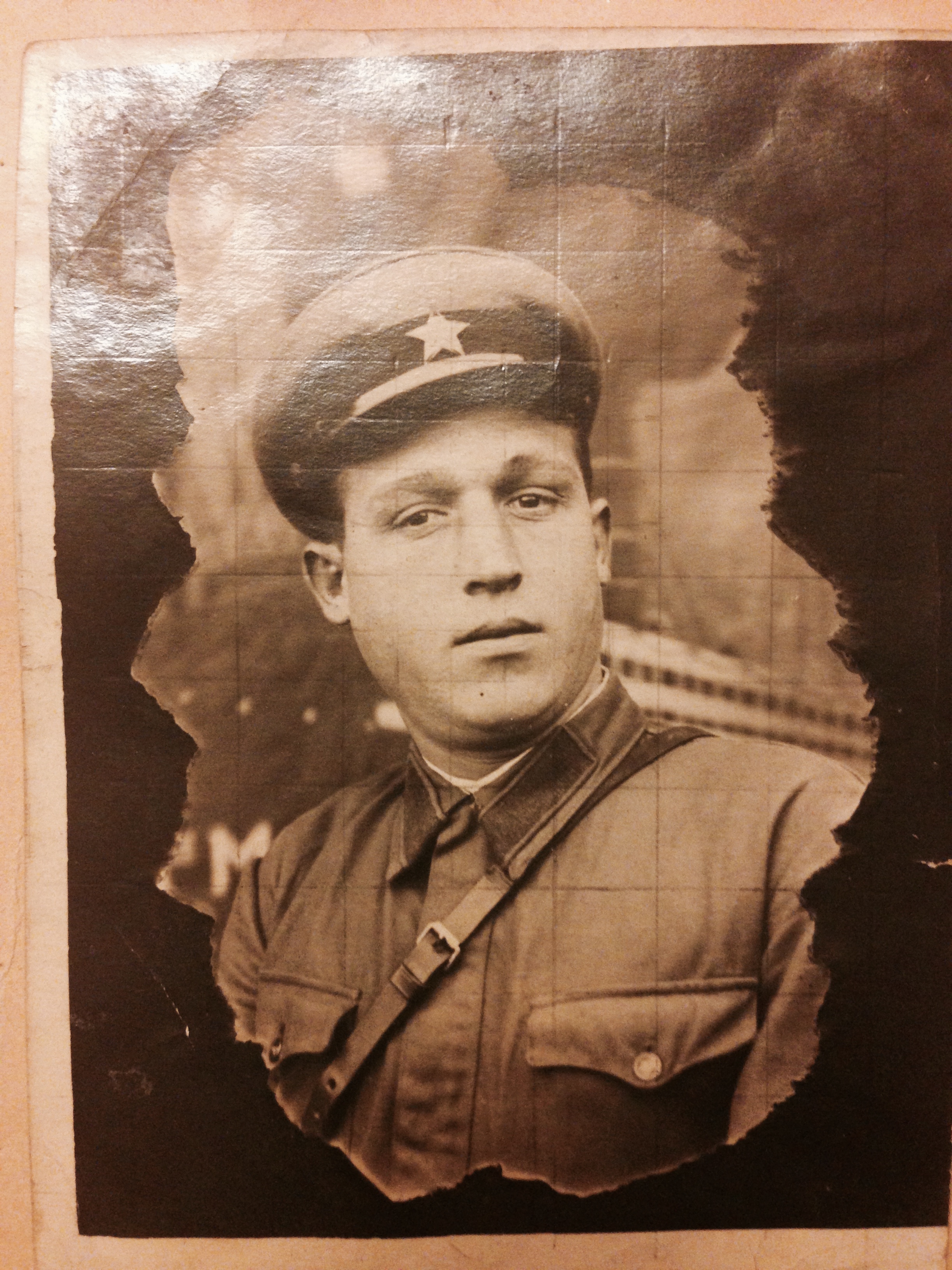
This story from the very beginning was personal for us. The day of May 9 throughout my life was special day. Grandma’s house, then mother on this day always had a photograph of grandfather in a prominent place. They took it out of the album, put it so that it was visible, next to a glass of vodka, a piece of black bread - here, this is his day, he is a front -line soldier, he fought.
“Do you remember your grandfather well?”
In general, thanks to my grandfather, I thought for a long time: it is normal that if a person is a soldier and returned from the war, then he has no legs or not
- Grandfather left when I was 6 years old, in 1974. I got in touch with him a little. He went through two wars - Finnish and Great Patriotic War. Ivan Adamovich Lapenkov - Hero of the Soviet Union, a scout, was demobilized by a senior lieutenant. He returned from the war without legs - he was already injured in Germany, and as a result, both legs were taken away from him. In general, thanks to my grandfather, I thought for a long time: it is normal that if a person is a soldier and returned from the war, then he has no legs or not hands.
Ivan Adamovich Lapenkov, Hero of the USSR
I remember how my grandmother in the summer morning I wake up on the cot - a small apartment is two -room, and I’m sleeping on the lining there - and now my grandfather is opposite on the bed. He throws a blanket, takes out prostheses from under the bed and fasten them to his feet. And I am a child, it was at first surprising for me, and then I got used to it: well, my grandfather is so. And so, he rose on prostheses, smiled - he always smiled. He was a very welcoming person. Then, when I became an adult, the neighbors told me-they recalled Ivan Adamovich as a very kind person, to whom they could turn with any trouble, for advice, for something else. These are my memories of my grandfather.
And of course, I wanted my emotional feeling from him to convey further - my family, my son. I still lived next to these people, not only with my grandfather, but in general with the generation of front-line soldiers, and those who are younger are no longer. In my opinion, these are special people.
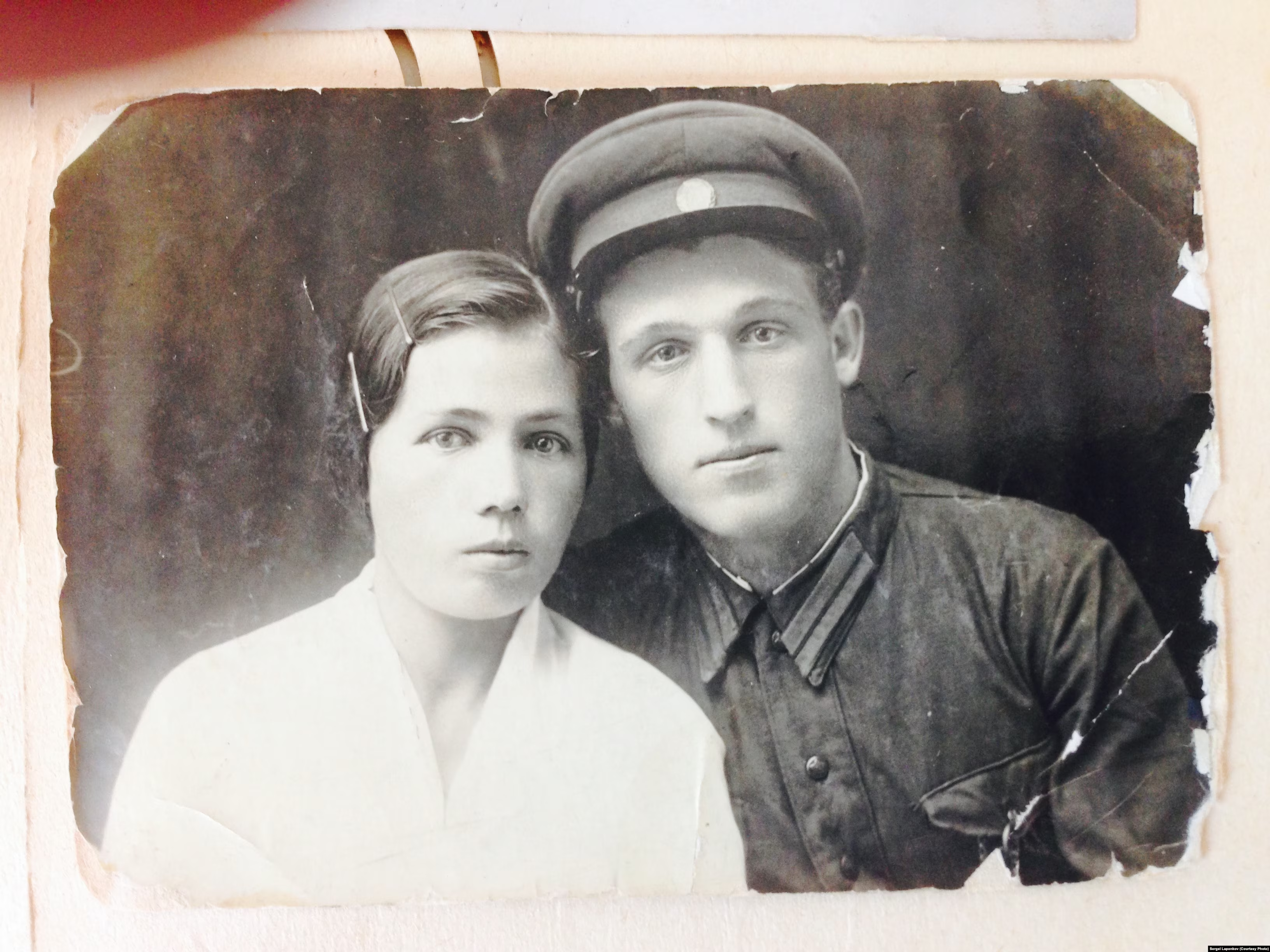
Ivan and Maria Lapenkov
By the way, thanks to the “regiment” I found that part of the Lapenkov family that still lives near Mogilev in Belarus, from where my ancestors moved to Siberia, because there was land in Siberia. They wrote to me, and this summer I will go to them.
- In what year did the Immortal Regiment first go on the streets?
-In 2012-they just remembered the conversation and decided: let's do, why not? Each of us then in the Tomsk media group was engaged in a certain work. I was the director of the radio, Sergey Kolotovkin was the director of the Internet, Igor worked at the advertising agency of our media group. We made the first information materials to contact people. The videos went on the air. The first video with the text: “Grandfather, get up, look how little yours left in this honest system”, which Igor wrote - he, in my opinion, is generally the best that can be said about this.
- Whose portraits did you take?
-Each of us took the photo of his grandfather-fontovik. Although it was obvious to us, and we recorded this in the charter that the “Immortal Regiment” is not a story in the literal sense of veterans of the army and navy. For us, this is a generational story, the story of all people who passed in the 40s. This is a human memory. As Sergey Kolotovkin says: every grandfather had a grandmother. She was waiting for him, she raised children, for her sake he, in fact, rose to attack.
- How many people joined you in the first year?
- More than 6 thousand people, that's for sure. We agreed with the workshop in Tomsk on the production of banners with portraits of soldiers, and we understood that about two or three people were behind the same banner, because it was a family story. In the first year, about two thousand banners were made. Plus, a lot of people came out with home -made banners, just with photographs. I saw a person who made a banner from a children's shoulder blade: he secured a laminated photograph, and it was very convenient for him, in fact. In general, I think at least six thousand people.
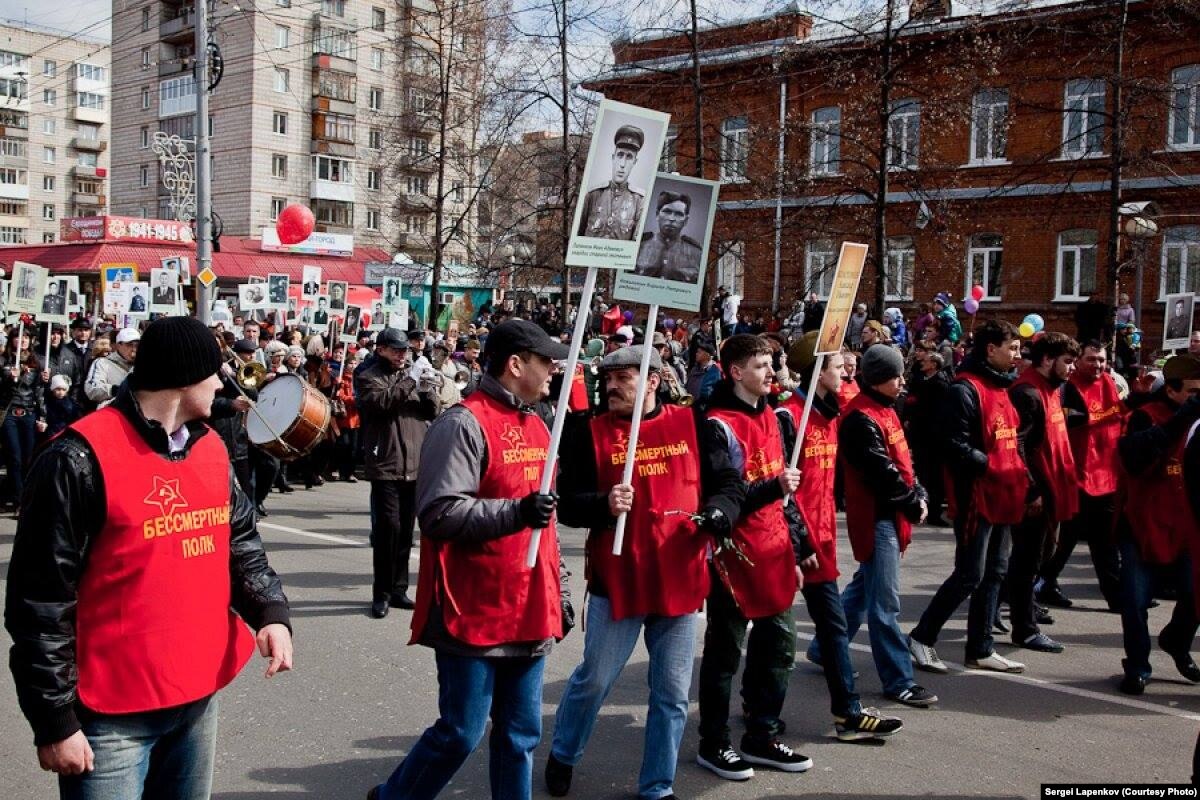
Sergey Lapenkov in the column of the Immortal Regiment, Tomsk, 2014
- Is it a lot or a little for Tomsk?
- This is a lot. In general, this is more than usually gathered for an official rally, which took place on May 9. There were always several thousand people at the parade, and only then, when they removed the cordon in the camp garden, where the eternal flame burns, the townspeople carried flowers with families, laid the monument to the monument to the front. Moreover, many people have knocked out the names of relatives there. And at the rally there were corporate columns, schoolchildren, well, as usual. Therefore, we immediately doubled the number of participants, at least. We must pay tribute to the city hall, they worked promptly: seeing that many people came, they spread the columns and made it possible for everyone to get up and pass. They hoped that there would be a five hundred people, and for this number they allocated a place in the column.
- Tell us how in the early years the authorities reacted to the initiative?
- Yes, it reacted normally. As for the municipal authorities, in general we never had problems. From the first year to this day, despite all the questions that, apparently, ask our city hall in Tomsk: who is now engaged in the "Immortal Regiment"? These questions do not reach us.
There were cities, rather, in the form of an exception, where a year, two could not hold an “Immortal Regiment” because officials rested
In most cities that joined the "Immortal Regiment", people managed to agree among themselves. Much was determined by a simple human sensation. You are talking to a person about the "Immortal Regiment", and it is immediately clear: he somehow makes this story to himself or not. If a person at that moment recalls his grandfather or great -grandfather, then he manages to speak the same language.
There were cities, rather, in the form of an exception, where a year, two could not hold the "Immortal Regiment" because the officials rested. Here, Kemerovo, for example, such a city. There, in the first year, the guys, local journalists, who took up this work, said: to go either with the flag of "United Russia", or nothing. They said: well, in no way, probably because according to the charter it is impossible. The next year, another person took up the organization of the "regiment", and the officials asked: how many people will come? She says: I would like the whole city to come out, it is impossible for a person to say: you did not fit into the Immortal Regiment and you do not come, because our quota is over. How much will come. And the official replied: I cannot give you permission to hold a mass event, if the number of participants is not known. And then in Kemerovo they decided to make festivities in the city garden. And in 2015, when the order of the Victory Committee appeared, the officials already held, of course, the “Immortal Regiment” in Kuzbass. A little in your manner, with school columns, but nevertheless.
- Have you immediately decided to extend the action to other cities?
There was just a desire to do this for yourself, for your fellow countrymen. But it quickly became clear that this is a very good human story that unites people, regardless of the barriers that they are divided on other days
- When we collected the first “regiment” in the 12th year, we did not think about it. There was just a desire to do this for yourself, for your fellow countrymen. But it quickly became clear that this is a very good human story that unites people, regardless of the barriers that they are divided on other days. And it seemed to us important to endure this story outside Tomsk. Some time after May 9, 12, we began to show the "Immortal Regiment" to our comrades, regional journalists, using a variety of sites. We said: here, look, if it is important for you - just take it and do it at home.
- And people just connected?
- Well, yes. The first 20-30 cities are my friends-journalists, those whom I knew in my profession. The people who came with the first wave still hold the "regiment".
Then friends of friends began to come, then some already completely strangers. The Immortal Regiment Internet resource appeared. Initially, he was a visit from the community, but now he has grown into an absolutely independent history - a folk memorial. People write down their family stories there, bring the names of their ancestors there. To date, there are already more than 380 thousand names. For us, this is a very important direction. We opened the search center on the site. We help people collect information. There is a request to expand the memory field, it is rather narrow in most of us. Remember a little, it happened. People begin to look, and our volunteers help them, orienting where, how, what requests can be sent. Today it is the main job.
"The very appearance of the" Immortal Regiment of Russia "was a violation of the principle of voluntariness"
- Tell me, at what point in the idea of the "Immortal Regiment" began to show the interest of "United Russia" and generally power?
- We had no complaints about United Russia. It was easy and simple with them. We told them: do not, put it, do not take it, it's folk. They like this: Sorry, we wanted to help - and put in place. To what is happening today, United Russia has nothing to do. Not in everything, United Russia is to blame. Initially, the space of communication was built in such a way that we did not care what party a person belongs to, what religious views he professes, rich or poor. We were only interested in one thing: if a person is engaged in the “Immortal Regiment” - a comrade, here is a charter , which, in particular, clearly states that the regiment is a non -profit, non -political, non -governmental initiative. Which excludes the transformation of the "regiment" into an image platform for any forces and personalities. If you are ready to observe this charter, we ask for mercy, stand nearby.
We have an example when the coordinator, a member of United Russia, drove out of the columns of formal social activists of the Popular Front, who came there and began to unfold their banners. Therefore, I am for looking at the actions, and not at the signs.
"United Russia" came to us in 12, offered to make the "Immortal Regiment" by the federal project. We said: wait, we will now translate the spirit a little - in the hope that they will forget about it, well, they forgot. And we began to deal with the site, the search work, realizing that the faster we are the history of the "Immortal Regiment" such as it appeared, we will bring to as many people as possible, the more difficult it would be to distort it.
-At what point did you suddenly notice that something was going wrong? Where did the "Immortal Regiment of Russia" come from?
- We had a coordinator who was engaged in the conduct of the Immortal Regiment in Moscow, Nikolai Zemtsov. He came in 13 in the spring and was a municipal deputy. This did not bother us exactly because we proceeded from the principle of trust in a person, regardless of other markers that he carried on himself. Nikolai was the grandson of a soldier, for him it was a family story, and he looked very sincere at that moment. We began to cooperate, and in 2013 we helped in holding the Immortal Regiment in Moscow as far as we could. But at the end of 13 years, when we recorded the charter, a crack arose in a relationship.
It should be clarified that a year and a half we existed as an informal movement, without any seals and other signs of the organization. But still they decided that we would create a legal entity, because the coordinators began to ask us about it. They needed to talk with the regional authorities, and it is always easier to talk with the authorities if you are some kind of organization, even if it exists on paper. I needed a blue seal of the Ministry of Justice.
We said: you know, in the country of total theft to create the opportunity to use the "Immortal Regiment" as a pocket from which someone will carry money, we are not ready
We decided to organize an interregional NPO, creating departments in Tomsk and in Moscow. The charter that our lawyers wrote did not provide for any commercial activity and even economic activities in the interests of the movement. And Muscovites began to ask about it. We refused. We said: you know, in the country of total theft to create the opportunity to use the "Immortal Regiment" as a pocket from which someone will carry money, we are not ready. Zemtsov said: well, guys, Moscow - such a city is large, it is impossible here without a budget.
After some time, Zemtsov created a separate organization in Moscow, registering the "Immortal Regiment-Moscow". For two years this organization existed only in Moscow. 2014 and even 15 years, when the “regiment” has already become widely known, no one knew anything outside Moscow, either about Zemtsov, nor about the “Immortal Regiment - Moscow”. And Nikolai Zemtsov came in handy at the moment when, apparently, they decided at the top of what to do with a spontaneous folk movement. Because after all, in the 14th year, in the third year of the existence of the "regiment", half a million people in 450 settlements of five countries took part in it. And by 2015, the "Immortal Regiment" existed in 20 countries.
- And this was still a public initiative?
-Yes, there were no organizations except the Interregional historical and patriotic social movement "Immortal Regiment", which, in fact, was not an organization, but was a community of people united by certain meanings.
The decision upstairs was made as follows: not to build any relations with the popular movement, but simply to build your organization
But, realizing that the anniversary of the victory is ahead of the anniversary, and the authorities will still pay attention to our movement and we must build some communications, you won’t pass this, we visited the working group of the Victory Committee, they told about the Immortal Regiment. A document appeared, which is essentially correct, signed by the then head of the presidential administration, Sergei Ivanov, which said that there is such a folk movement "Immortal Regiment" and, we say, we recommend in those regions where it has not yet been supported, supported. And it seemed that everything was going fine.
But gradually we began to observe more and more examples of bureaucratization of movement. And then in 2015, in the fall, the Immortal Regiment of Russia appeared. Apparently, at some point, the decision was made upstairs: not to build any relations with the popular movement, but simply to build your organization.
- Simply put, we decided to squeeze the idea from you ...
In schools, some mobilization actions began to be held: it was necessary to bring an essay about their grandfather without fail, some quotas were distributed to participate in the procession
- Well, how to squeeze? You see what the matter is: you can squeeze something that people consider to be their own. We did not consider the Immortal Regiment our own. We considered him the personal history of each person, and we continue to insist on this. We do not organize and do not compete with the BPR as an organization, so they do not know what to do with us. We are not judged with them, we do not pretend to be in the legal sense. We only criticize them when the meanings of the "Immortal Regiment" are violated, and not for the fact of the existence of this organization.
- When did the first reason appear for criticism?
- When the Immortal Regiment - Moscow began to hold pickets in support of United Russia. Then, even more strange things began to happen in Moscow. In schools, some mobilization actions began to be held: it was necessary to bring an essay about their grandfather without fail, some quotas were distributed to participate in the procession. People wrote to us about this, complained, we all published it on the site. There is a “guardhouse” section-we decided at some point to open it to fix the violations of the charter.
The very appearance of BPR was, of course, a violation of the principle of voluntariness of the Immortal Regiment. That is, along the channels of the Public Chamber of the Russian Federation and the All -Russian Popular Front, some activists from the regions were convened, and these people voted for the creation of the BPR. Our coordinators were not called there, not a single volunteer from the popular movement. And so BPR appeared, absolutely artificial education.
We even wrote a letter to the president about everything that was happening. Honestly, I was not a supporter of the letter, but it seemed to my comrades that all the methods should be used. We wrote a letter that we see a threat to the bureaucratization of the national movement, that work is underway on the line of the Public Chamber to create this bureaucratic completely office. We said that we consider the main task of the "Immortal Regiment" the approval of a new folk tradition, and not the emergence of another state corporation that will master the budgets. We did not receive an answer to the letter, moreover, I know that he was sent to the Public Chamber. About whom they wrote - they sent there.
- How did the creators of the BPR behave in relation to you?
Formalization occurred, what is called "official patriotism" appeared - which the "Immortal Regiment" was just an alternative
- There were different stages. At first they said that "we are not going to remove anyone, we will help where our help is needed." But where the BPR took control of the situation, we began to record violations of the charter. On the Volga, in Samara last year, for example, an order on quotas for participation in a procession in schools appeared. And in Nizhny Novgorod, students began to distribute banners with portraits of people unknown to these students so that they carry them. In Krasnoyarsk, for some reason, the Immortal Regiment was moved to three hours in Moscow, removing volunteer coordinators from the participation of coordinators. This all began to happen in 16. Formalization occurred, what was called "official patriotism" appeared - which the "Immortal Regiment" was just an alternative.
And this year - just a rink rolls. There is a pressure on the symbolism of the folk movement, trying to make people change our symbol of movement - a crane to a strange symbol that was invented in the BPR - the symbiosis of the Red Star and St. George the Victorious.
- That is, up to the point that the characters are changing?
- Well, of course, the BPR must now become the only movement. Roll into asphalt all previous meanings, remove the previous symbolism.
And recently there was a scandal at parliamentary hearings, where the co-chair of the movement Vasily Lanova accused another co-chair of Zemtsov of usurping power, making sole decisions and spending money somewhere (in my opinion, he called Lanova). This suggests that inside there they are not all smooth there either. But on the other hand, this is a sign that such a classic-pump organization arose that pumps money from the budget. This has nothing to do with the topic of memory.
"For us, the meaning is more important than the form"
- Sergey, there are publications on the Internet, where Tomsk citizens, the founders of the Immortal Regiment, are called agents either the US State Department or Khodorkovsky, they say, thank God, intercepted the initiative in time. How do you feel about this?
- This is an order, I don't even read it. This began to be published three years ago, this is a very specific fiction of texture.
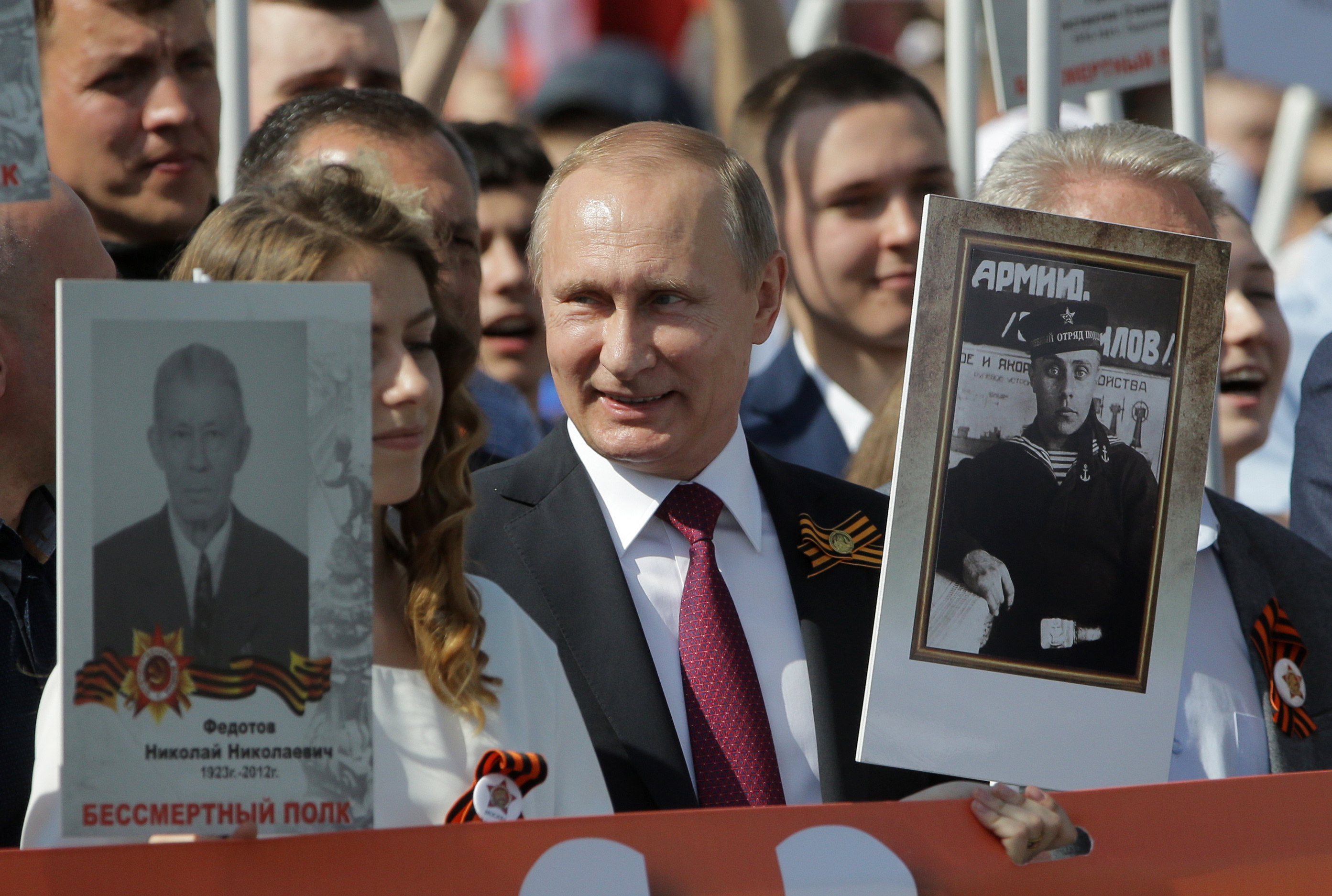
It was also written that these are "defaming our traditions of celebrating the victory of the event," but as soon as the president was held in the "regiment" column in the 15th year, although they stopped writing this.
Putin for the "Immortal Regiment" shares
And so many nonsense write so much. Причем не только анонимные авторы всякой заказухи или представители, скажем так, консервативно-патриотического направления, но и демократическая пресса, к сожалению, тоже часто заложник стереотипов. Должен об этом сказать откровенно: история 15 года с брошенными транспарантами меня в этом убедила. Иногда разговариваешь с людьми, неважно откуда позвонили – с "Лайфньюс" или с "Дойче Велле", но у всех в голове уже есть концепция того, что они хотят от тебя услышать. Для одних брошенные транспаранты – это проявление административного ресурса, который нагнал людей, а для других – заговоры Ходорковского. Я пытаюсь людям объяснить – ну не так это все, давайте на факты посмотрим. Но не слышат.
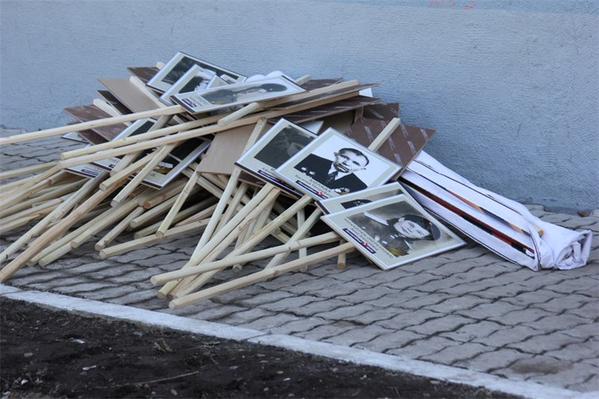
Брошенные плакаты с акции "Бессмертный полк"
– Кстати, да, та история вызвала резонанс…
– Мы расследовали ту историю с брошенными плакатами. Для нас очевидно, что административный ресурс не способен был в 15 году согнать столько людей. Конечно же, в основном люди сами пришли. Да, административный ресурс тогда уже использовал свои привычные технологии просто по инерции, рефлекторно. Мы знаем, что на некоторых станциях метро тогда стояли волонтеры в белых футболках без опознавательных знаков, которые людям, идущим на "Бессмертный полк", давали транспаранты. Говорили: вот у этого человека нет родственников, пронесите его, пожалуйста, вместе со своим. И люди несли. Вот первый человек, который нам про это написал, взял два, унес домой. Кто-то эти транспаранты оставил. Все раздать не успели. Но это была капля в море. В основном люди тогда в 15 году шли все-таки с портретами своих родных и, конечно же, совершенно добровольно.
– Сергей, а как активисты вашего движения реагируют на административное давление и появление в их городах БПР?
– Сейчас уже всем нам понятно, что эта организация, хотя обещала не мешать, а помогать, будет стремиться выдавить первоначальную историю везде, где только сможет. И мы сказали координаторам на местах: каждому из вас надо принять свое персональное человеческое решение, как вы поступите. И вот, сейчас, мы знаем, что часть людей поддерживают отношения с БПР, но полк в этом городе, например, в Курске, проходит полностью по уставу, там сохранены очень важные смыслы. Есть города, где БПР полностью вытеснил прежних наших координаторов и нашими принципами движения, к сожалению, не очень дорожит. Есть города, где все по-прежнему делается людьми, которые начинали "Бессмертный полк". Это Тула, Калуга, Новосибирск, Волгоград, Барнаул, Томск – таких городов немало. Это практически вся заграница. Там тоже в этом году предприняли атаку, чтобы выдавить наш журавлик и убедить наших организаторов работать исключительно с БПР, но там это сложнее сделать, там у людей больше свободы.
А в Крыму представители БПР ведут себя совершенно беспардонно. Там в этом году наших координаторов заставляли переписывать заявление на проведение полка от имени БПР, и администрация, в отличие от других регионов, это довольно активно поддерживает.
– А власти других регионов как себя ведут?
Вот в Севастополе люди уперлись, сказали: мы под журавликом ходили и будем ходить
– В основном региональные власти стараются дистанцироваться. Где-то потому что хорошо знают наших организаторов, где-то потому что срабатывает местный патриотизм: чего это Москва будет нас учить, мы и сами все можем сделать.
В общем, все зависит от конкретных властей, от конкретного координатора. Там, где человек крепкий, не получается просто так взять и перевернуть все в другую сторону.
Вот в Севастополе люди уперлись, сказали: мы под журавликом ходили и будем ходить. В прошлом году там было два полка. Власть организовала свой, вывела под символикой БПР, а многие люди прошли своей колонной (более многочисленной) под журавликом. Это противостояние продолжается до сего времени. На людей давят, но чем сильнее давят, тем сильнее они сопротивляются.
Я просто надеюсь, что идея "Бессмертного полка", идея личной памяти – это идея, которую совершенно исказить и изуродовать невозможно
Я не знаю, чем это завершится. Я просто надеюсь, что идея "Бессмертного полка", идея личной памяти – это идея, которую совершенно исказить и изуродовать невозможно. Как бы они ни старались собирать эти красивые колонны, школьников подтягивать, одевать детей в военную форму, какие-то квесты патриотические проводить, фейковые проекты затевать – это все не сильнее того личного отношения к своей истории, которое у каждого человека все равно есть.
– Вы не боитесь, что люди начнут уходить от "Бессмертного полка", когда увидят, что он превращается в официоз?
- Of course, I'm afraid. Боюсь разговоров, что "все это придумал Кремль", потому что многих людей это отвращает от движения. Но надеюсь, что у людей хватит разума разобраться в происходящем.
Конечно, проще объединиться ради ненависти. Гораздо сложнее объединиться ради друг друга. Ненависть – более примитивное чувство, чем любовь, поэтому ненавидеть проще, чем любить
Другое дело, что многим сегодня в стране по душе громкий пафос. Есть такой запрос, чего греха таить. Наша пропагандистская машина в этом изрядно преуспела – люди наши склонны объединяться для того, чтобы кому-то противостоять. Конечно, проще объединиться ради ненависти. Гораздо сложнее объединиться ради друг друга. Ненависть – более примитивное чувство, чем любовь, поэтому ненавидеть проще, чем любить.
Но "Бессмертный полк" не должен быть инструментом противостояния. Мой дед воевал, чтобы был мир, а не война.
Вот сейчас из Архангельска написал человек, директор музея Арктики. Курсанты "мореходки" собирались вынести портреты британских и французских моряков, которые погибли во время проводки северных конвоев с ленд-лизом. Ему говорят: не надо, сложное международное положение. Он у меня спрашивает, что делать. Я ему написал: несите. Какое, к черту, сложное международное положение, если это наши братья по оружию? Если они в те же воды легли, что и наши моряки? И может, если об этом чаще вспоминать, международное положение не будет таким сложным.
Линия обороны "Бессмертного полка" теперь проходит через каждого из нас. Внутри себя нужно понять, что ты считаешь важным, а что мишурой
Мы хотели увести "Полк" от поверхностного, лакированного отношения к Дню Победы, от карнавального празднования, которое унижает память о войне, и повернуть людей к памяти и смыслам. Но к сожалению, то, что происходило в последний год – та же Поклонская, вышедшая на парад с иконой Николая Второго, – говорит о том, что и "Бессмертный полк", увы, может стать инструментом мифологизации истории, если этому не противостоять. Линия обороны "Бессмертного полка" теперь проходит через каждого из нас. Внутри себя нужно понять, что ты считаешь важным, а что мишурой.
– Сергей, а вы не боитесь, что может случиться нечто противоположное, но схожее по смыслу, когда "Бессмертный полк" станет ареной борьбы с режимом, который все портит?
– Нет, я не думаю, что этой ареной станет "Бессмертный полк". Это, скорее, случится по другому поводу и в другом месте.
– Что должно произойти, чтобы вы, оглянувшись вокруг, сами приняли решение отойти от "Бессмертного полка"?
– Смотрите, в 15 году мы с товарищами решали как нам быть, когда стала создаваться эта контора – БПР. Мы решали, расходиться нам или нет. Была такая точка зрения, и я кстати ее поддерживал, что нам надо заявить о том, что мы распускаемся. Потому что в год юбилея Победы мы хотели рассказать историю "Бессмертного полка" максимальному числу людей и нам это удалось, и сейчас, пока смыслы еще не скомпрометированы, надо заявить, что дальше никаких организаций быть не должно. И в качестве примера себя распустить как юридическое лицо. Вот мы рассказали вам свою историю, мы свою миссию выполнили, дальше – сами.
Но мы понимали, что есть много людей, например, в маленьких городках и селах, для которых мы важны. И сайт "Бессмертного полка" очень важен. Он был, есть и остается свободной гражданской инициативой, личной памятью. И это огромная ответственность за сотни тысяч историй, которые там хранятся. Центр поиска , который мы создали, – это важная история и мы будем продолжать этим заниматься. Но мы не будем конкурировать как организация с БПР. Мы не организация, мы сообщество людей. Для нас смысл важнее формы.
Заниматься организационными моментами мы будем, наверное, все меньше и меньше. В нашем понимании, как любая традиция, "Бессмертный полк" должен стать саморегулируемым. Чтобы людям не надо было никакими колоннами ходить, чтобы 9 мая они понимали, что надо взять портрет своего ветерана, детей и пойти к Вечному огню. В Томске так и происходит. В прошлом году много людей шли в колонне, тысяч 40, но не меньше людей было на улицах, которые не встали в колонну. Они сами шли по тротуарам к Лагерному саду, где горит Вечный огонь. Они, как обычно, несли цветы, но теперь вместе с цветами несли и портреты ветеранов, своих предков. This is very important. И это лучший противовес административному давлению и всяческим фейковым и псевдопатриотическим инициативам.