
Translated material
The failure of a person
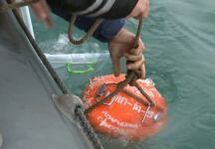
The collapse of the Tu-154 aircraft near Sochi could occur due to a violation of the spatial orientation of the aircraft commander. This was stated in the Ministry of Defense following the results of the disaster investigation, Interfax reports .
The investigation of the plane crash is completed. The commission included experts at the Ministry of Defense, the Ministry of Transport, the Interstate Aviation Committee, the Ministry of Industry and Trade and the Tupolev Aviation Concern. "During the work of the commission, experts carefully analyzed all the circumstances preceding the aviation accident, as well as the technical parameters of the Tu -154 flight from the moment of take -off from Sochi Airport," the military department said.
"According to the results of the investigation, it was established that the cause of the incident could be a violation of the spatial orientation - situational awareness of the aircraft commander, which led to his erroneous actions," the military department said.
No impact on the aircraft of “external factors”, violations when refueling the aircraft in Sochi, deviations from the rules for the seedling of passengers and “loading and centering of the transported cargo, the weight of which was 152 kg”.
Meanwhile, Kommersant, citing unnamed investigation participants, reports that before the disaster, the aircraft commander Roman Volkov was poorly oriented in space. Even on Earth, he did not immediately understand which of the two runways of the airport he should take off. After taking off the wolves, he began "emotionally, with the use of abnormitative vocabulary, to find out from the crew what kind of course they took off." However, the publication does not give quotes from a speech recorder.
According to sources, the Tu-154 began a set of heights with the desired angle of 15 degrees. However, then Volkov rejected the helm from himself, slowing down the rise. At the 53rd second of the flight, the commander ordered to remove the flaps, although the plane had not yet risen to 500 meters. As a result, from a height of 231 meters, the plane began to decline. Then Volkov abruptly tilted the plane to the left, setting him a roll of 53 degrees. This accelerated the decrease, and at the 73rd second of the Tu-154 flight, he touched the water with his left wing and fell apart.
“Having lost the visible landmarks immediately after takeoff - a well -lit zone of the airfield, a coastline - and being in a night haze over the Black Sea, the pilot’s control was in the power of somatogradation illusions. Instead of trusting instruments, as all flight instructions require, the pilot’s pilot began to focus on his own physiological sensations,” the publication leads the opinion of the sources.
The reason for such actions by Volkov, sources call him “emotional and physiological fatigue”, as well as the absence of “sustainable skills” piloting in difficult situations. It is noted that the heads of military aviation violated a number of the provisions of the instructions and sent a "non -diverse" crew, collected at the last moment from different squadrons.
In March, Kommersant reported that according to the results of the technical part of the investigation, the aircraft until the last moment was in a controlled flight under the control of Volkov. Even then, the version of his erroneous actions due to loss of orientation has become a priority.
Early on the morning of December 25, 2016, the Tu-154B-2 of the Ministry of Defense, who was traveling from Moscow to the Russian Khmeimim air base to Syria, crashed two minutes after departure from Adler airport , where he landed for refueling. On board the aircraft were 92 people - eight crew members and 84 passengers. Among them were the musicians of the ensemble. Alexandrova, who went to speak to the Russian troops, as well as journalists, military, officials of the Ministry of Defense and Elizabeth Glinka (Dr. Lisa). All of them died.