
Translated material
Colta.ru
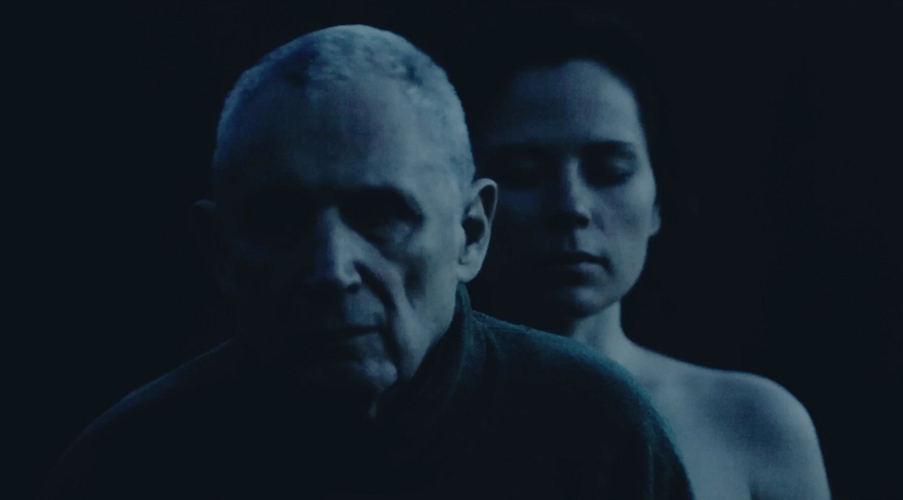
In Moscow, Beat Film Festival ends; Under the curtain in the national contest, they show “ongoing conversation” - Dmitry Mamuli and Valentina Antonova about Mamleeva. Sergei Odovnov watched this gloomy, but unbroken movie and found him with an extremely interesting failure.
The night train with a slow caterpillar crawls through a trembling screen. Forest with a black dog. A naked female body, distorted by horror, dull light, extinguishing with the advent of a human face in the frame, and, finally, missing through numerous filters, sounding like an old man’s voice from a banged zinc coffin-this is how all 52 minutes of a conversation of a metaphysicist writer Yuri Mamleev with his only worthy interlocutor-death.
The film Dmitry Mamuli and Valentina Antonova is a picture of the extinguishing universe of Mamleev, which must be acquainted with today everyone who is still far from the transition to another world. Mamleev died in 2015, and an “ongoing conversation” automatically becomes one of the last public statements of the writer and his first kinemian.
Cinema begins with a quote from the philosopher of Pyatigorsky, and is closed by a poem by the poet Kalinovsky. In this friendly and metaphysical circuit, the bogful figure of Mamleev appears, who tells us about the existence of the otherworldly world and gives a couple of tips on how to notice this dimension - not only in the verses of the “damned poets” like Rambo, the mystic of Trudl or the excited bloc, but also among ordinary citizens, in whose eyes the shadows are collected. In his text “Art and Metaphysics”, Mamleev emphasizes the need to push “to the background, the image of a lower reality,” the realism of the 19th century, the description of the living, so that the “non -covered vision of abysses is opened before us ...”
 © Nox Film
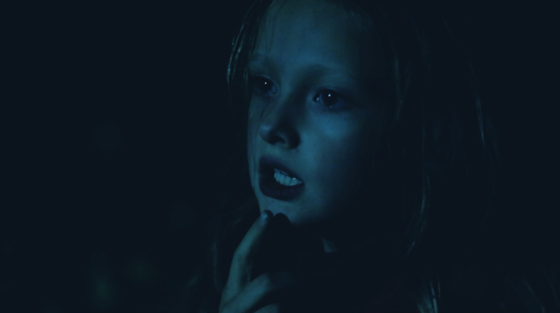
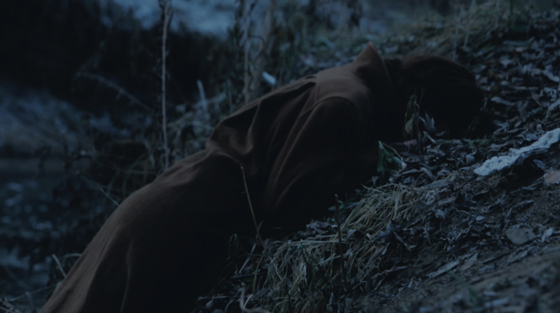
However, this is all literature, and in the film under the afterlife voice of the maestro of the Russian htony we see an elderly man surrounded by blurry characters or even their shadows (too long metaphor, albeit with a hint of software or Gogol). All of them left the borders of the books: the devil, the black dog, the man (this is Mamleev himself, after Fyodor Sonov, who was lost in life, the hero of the religious novel “Shatuna”, passes from the train to the forest).
One of the strategies of the writer Mamleev is to make philosophical and metaphysical concepts with the heroes of his works, such as, for example, nothing, a thing in oneself. Or in our case, the death that is represented by the authors of the film in the most typical and banal images, seasoned with a gloomy luster in the writer's eyes, eternal twilight and a vapor of fear by the means of playing Hill . Explaining the nature of the terrible in literature, Mamleev says that anxiety should not be born from the narrative, but from the tissue of the tongue, from friction of words. The film adaptation of this postulate requires the director of the ultimate immersion in the abyss of not even visual, but real, unusable, incomprehensible with experience and therefore anxious, refusing to represent and leaving for a pure presentation, emulation, similarity (in the opposition of illustrative homology). But the authors of the film demonstrate a catastrophic inability to leave themselves and their (and our general) experience in visuality, they work habitually with signs, not direct affects.
Moreover, Mamulia and Antonova blindly go all the way behind their protagonist-guide. For both, a banal, visible person cannot be of interest, therefore, we will not meet the completely living (and shot in focus) people in the film. Mamleev himself-both in the frame and in the pre-cell reality-flickers somewhere on the border between our world and some other, leaving the viewer mystical excitement, the flesh of his books. And the directors make an illustrative (read-“bad”) movie or an infotation based on the spiritual searches of Mamleev-for those who, by a strange coincidence, are not familiar with the work of necropolis, extremely popular in the 1990s.
“Documentary” is an epithet, the least suitable for “an ongoing conversation”: all creatures in the frame are pure fantasies, including the figure of Mamleev himself, whose eyes shine here with the electric lights of the hero Thrash-Horror.
 © Nox Film
However, one remark of Mamleev nevertheless reports the true temporality of the film-“It was a terrible world”, and at the end of the tape we really understand that everything that has seen has nothing to do with the present. A bad film about a still live writer turns into a film flaming with that terrible Mamleev world, which remained in the sixties (the time of creation of the novel “Shatuna”). In that active, existential era for the writer, his friends lived, mentioned in the film: visionary and poet Evgeny Golovin, poor and brilliant artist Vladimir Yakovlev. From the late 1950s, the South Circle-the shadow esoteric culture of the USSR gathered in the apartment of the father of metaphysical realism; Leonid Gubanov and Henry Sapgir were reading poetry there, Venedikt Erofeev looked. The main subject of discussion of the group was the fate of Genesis, which finally shuddered in the 1990s-and for a decade, the Mamleev became an almost top author. But today the infernal is located on the surface - in public networks, in the features from the TV, in the Olympics of Bosco (as in the fresh “dislike” of Zvyagintsev), and not in the interweaving of sounds and, of course, not in the dying whisper of the outgoing classic, shot on an annoyingly trembling chamber. In a sense, the failure of the “ongoing conversation” is the most important event in the history of the new Russian cinema, all this “new quiet” realism, the authors of which one after another crashed in an attempt to grab the raw total of the present. Previously, the relative novelty of formal techniques, spied on by our directors among the French, Romanians and Danes, created the illusion of the ownership of Russian cinema of Russian life. But in contact with Russian death, all this eurformalism suddenly turned out to be a natural spell that did not cause a pure reality, but protecting the authors from its sipping horror.