
Translated material
Operation "Neutralization"
Macedonia counterintelligence documents show: Russian special services are trying to block the country's entry into NATO and create a belt of neutral countries in the Balkans
A source from the Government of Macedonia, on anonymity, passed an archive from dozens of secret reports to reporters of the International Consortium Organized Crime and Corruption Reporting Project (OCCRP). The Macedonian television channel Nova TV and the Serbian edition of KRIK also participated in a joint investigation.
The transferred documents are compiled on the basis of listening to telephone conversations, outdoor observation and sources. They say how Russian officers of the SVR and GRU, together with the employees of the Russian Embassy, tried to influence the domestic policy of Macedonia and other Balkan countries in order to prevent their entry into NATO and promote the interests of Russia. New Gazeta talks about the main thing in the OCCRP investigation.
"Destructive propaganda"
Since the end of the Cold War, Macedonia has traditionally been considered a partner of the West. However, in recent years, Russia has significantly strengthened its influence in the Balkans as a whole, and in Macedonia in particular, the Macedonia counterintelligence reports said.
Russia's intelligence activity was activated after several Balkan countries announced the desire to join NATO. In April of this year, the Parliament of Montenegro voted to join the North Atlantic Alliance. And Macedonia and Bosnia and Herzegovin received the status of candidates for the entry.
For example, the documents say in the documents of the Russian Consulate in the Macedonian cities of Bitol and Ohrid operate as reconnaissance bases.
Over the past nine years, Macedonia has been “under the influence of severe and destructive propaganda, as well as the activities of intelligence services, which is carried out through the Russian Embassy,” the report said in the name of Vladimir Atanasovski, the head of the security and counterintelligence of Macedonia.
"The Russian Federation uses methods of the so -called" soft power "as part of the strategy for isolation of the Balkans from the influence of the West." “In addition, Russian foreign policy is in close interaction with the energy strategy, the purpose of which is to obtain control over the country's strategic energy resources,” the reports said.
The ultimate goal of this plan is to “make Macedonia completely dependent on Russian politics,” Macedonian counterintelligence believes.
SVR and GRU Agents
The implementation of this strategy in Macedonia is engaged in three SVR officers who receive instructions from the headquarters in Belgrade, the capital of Serbia, and four GRU employees with the headquarters in Sofia, the capital of Bulgaria. Judging by the documents, their activities are coordinated through the Russian Embassy in Skopier, the capital of Macedonia.
Macedonian counterintelligence also indicate in the reports the names of the correspondents of the State Agency of TASS and representatives of Rossotrudnichestvo as agents of Russian special services. (For security reasons, "New Gazeta" does not reveal their names.)
For many years, Russian agents have been recruiting former and current employees of the Macedonian army and police to
“To create a critical mass of people with military training and at the right political point to use them in Russian interests,” the reports say.
In addition, Russia's representatives tried to influence the editorial policy and offered the money to the Macedonian media, especially the Albanian minority supporting to promote Russian policy in the country.
Macedonian counterintelligence also attribute numerous cultural initiatives to the Russian Embassy of Russia to the methods of “soft power”. “Russia promotes the idea of pan-Slavic identity and a single Orthodox faith,” the documents say. At the initiative of the Russian embassy in Macedonia, about 30 “Friendship Associations” have been opened in recently. In addition, the embassy sponsor the construction of Orthodox churches throughout the country.
And, apparently, the efforts of the “Russian agents” were effective. For example, Macedonia did not join Western sanctions against Russia in 2014 due to the war in the southeast of Ukraine. The Macedonian authorities then stated that the sanctions would greatly hit the country's economy.
Confrontation between Russia and the West
The joint actions of Russia and Serbia, according to Macedonian counterintelligence, led to a complex political crisis in Macedonia: the confrontation of the main parties, which ended in riots in parliament. This political crisis is also intensified by ethnic disagreements with the Albanian minority: Albanians make up a quarter of the population of Macedonia, and their previous attempts to declare autonomy almost led to a civil war.
Until recently, Russia supported the former ruling nationalist party of the Macedonia of VMRO-DPMNE and its leader Nikol Nikol Gruevsky. In 2015, Gruevsky was forced to leave the post of prime minister due to accusations of illegally listening to tens of thousands of citizens of the country.
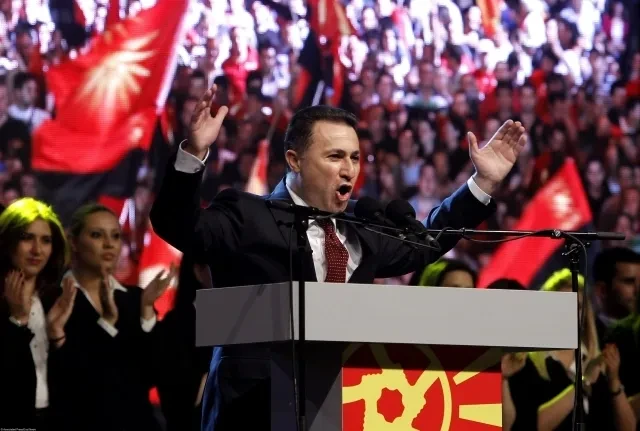
Today Gruevsky and some members of his party are under investigation on charges of exceeding official powers, money laundering and corruption.
In December 2016, extraordinary elections were held in the country, which were supposed to put an end to the political crisis. However, this did not happen. The coalition government was approved by parliament only last week, May 31. And the prime minister of the country was Zoran Zaev, the leader of the opposition party of the Social-Democratic Union of Macedonia (SDSM).
Previous attempts to form a coalition led to the assault on the parliament by nationalists supporting Gruevsky. As a result of riots on April 27 this year, Zaev and dozens of other people were injured.
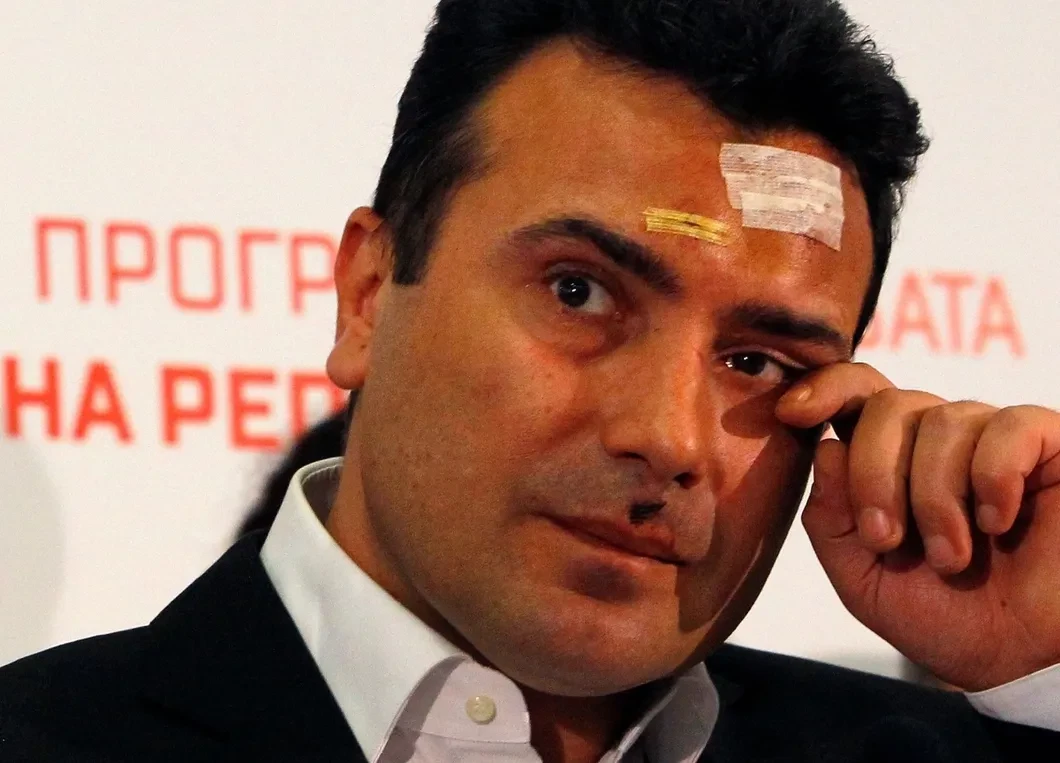
The Russian authorities accused the United States and the EU countries of organizing a change in power in Macedonia and the support of Zayev. It is curious that the right -wing American media, and even some congressmen who accused the Macedonian opposition have joined in Russia of criticism of Russia of supporting it is supported by American businessman George Soros.
One of the counterintelligence reports retells the conversation of April 7 this year between the Russian ambassador Oleg Shcherbak and an employee of the Middle Macedonia.
Judging by the document, the Russian Ambassador is recognized as a foreign colleague that the goal of Russia is to “create a strip of neutral countries in the Balkans” - Montenegro, Bosnia and Herzegovina, Macedonia and Serbia.
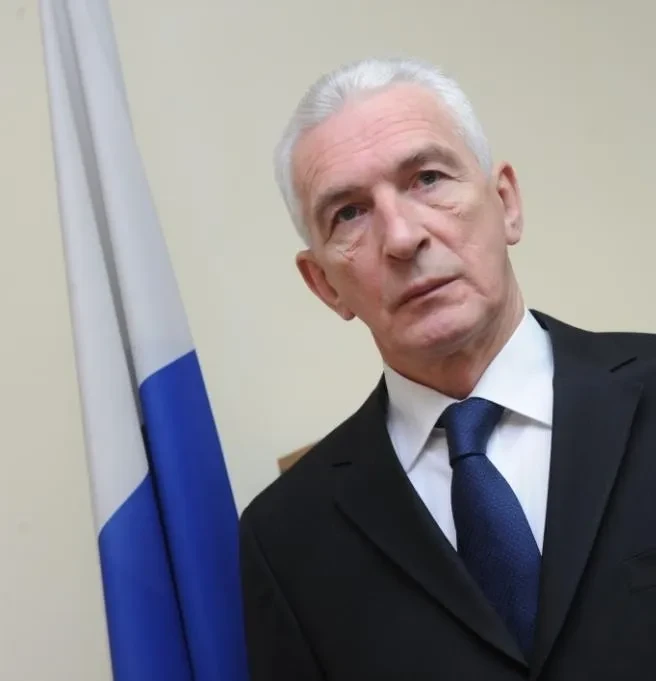
Shcherbak allegedly also expressed complaints about the insufficient support of Russian politics in the country and Russian statements about “foreign intervention” in domestic political processes in the country.
Shcherbak admitted that if the Macedonian authorities do not begin to publicly support the Kremlin, this will lead to a folding of economic and diplomatic cooperation.
Russian diplomats refused to answer OCCRP questions.
Prime Minister Zaev also did not want to separately comment on this article, but referred to his statements in April this year. “I believe that if you do not take additional measures due to the low interest of the EU and the USA in this region, Russia will have more space to promote its interests,” Zaev expressed his concern about Russia's growing influence in the Balkans.
Help Serbia
The archive of secret documents also includes a wiretapping of some Serbian intelligence officers BIA. The reports say that Serbian scouts actively helped Russian colleagues to implement their plans in Macedonia, and in particular supported the nationalists and Gruevsky.
Since 2013, the counterintelligence officers have monitored the employee of BIA Goran Zhozhevhevich, who was actively working to prevent Macedonia’s integration into Europe. Documents say that Zhovalzhevich gave instructions to the pro -Russian member of the Macedonia parliament Ivan Stravolkovich, the leader of the Democratic Party of the Serbs.
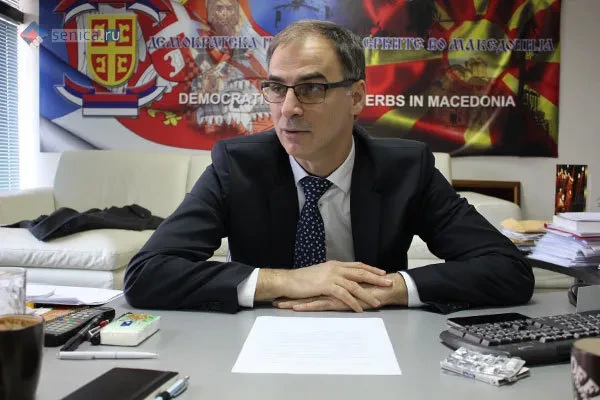
Strandlovych is really one of the main supporters of the Russian authorities in Macedonia. In September 2016, he congratulated United Russia on the victory in the State Duma elections: “The past elections became an obvious confirmation of the wise national policy, pursued by“ United Russia ”, including the preservation of Orthodox and Slavic values, which is a bright example for us. Over the past decade, Russia, led by Vladimir Putin, continued to be a consistent defender of the freedoms of peoples, international law, peace and stability on Earth ”(quote from Rossiyskaya Gazeta).
Studovlovich also repeatedly met with politicians of neighboring Montenegro, who opposed their country's membership in NATO. Among these politicians were those who called the Macedonian counterintelligence agents of Russian special services.
Secret documents also indicate that Stodelkovich agreed with the Serbian intelligence officer BIA critical publications in Serbia on Zoran Zaev. The Serbian media really actively criticized Zaev and wrote that the intervention of the West, as well as the political demands of the Albanians, could lead to war.
OCCRP journalists got through to the cost of Stolkovich.
“When you meet someone, am I asking you about this? You should be ashamed. You are insulting me, ”he answered reporters.
A Serbian intelligence officer lived to answer questions. There have been no comments on the Russian authorities and special services so far.
Sasha Tsvetkovsk, Aubrey Belford, Bilzhan Sekulovsk, Stevan Prevchinovich