
Translated material
Done by the wind
As a result of the hurricane, which swept over the Moscow region on May 29, 15 people died, according to the latest data. Was it possible to save them and how to protect themselves from the new destructive blows of the elements - the New Times sorted out
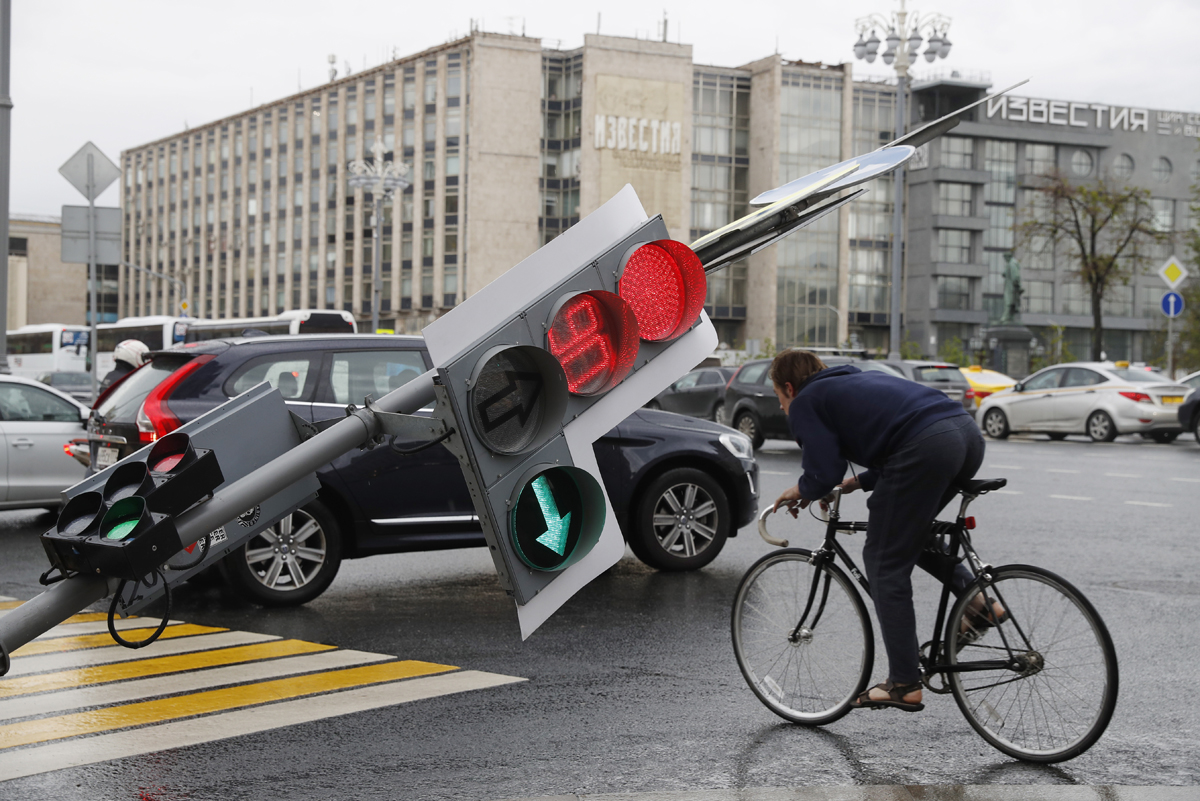
The intersection of Tverskaya street and Tver Boulevard lost a traffic light,
Moscow, May 29, 2017
In the video from the surveillance camera installed on Kirovogradskaya Street, there is a bus stop. A strong gust of wind overtures it, he falls on a man who did not have time to bounce. The deceased was 65 years old, his name was Nikolai Kotov.
A large old tree falls on the gazebo on the Andreevskaya embankment. When the blockage is disassembled, the bodies of two people will find the bodies in the ruins of the gazebo. This is 28-year-old Stanislav Smirnov, the head of the lighting workshop of the theater "At the Nikitsky Gate", and 20-year-old Alina Solovyova.
The company of students runs along the 7th Parkovaya Street, fleeing the rain and wind. A tree falls on the 20-year-old Daria Antonov, literally cutting the girl in two. There is no one to provide emergency assistance, but it is no longer needed ...
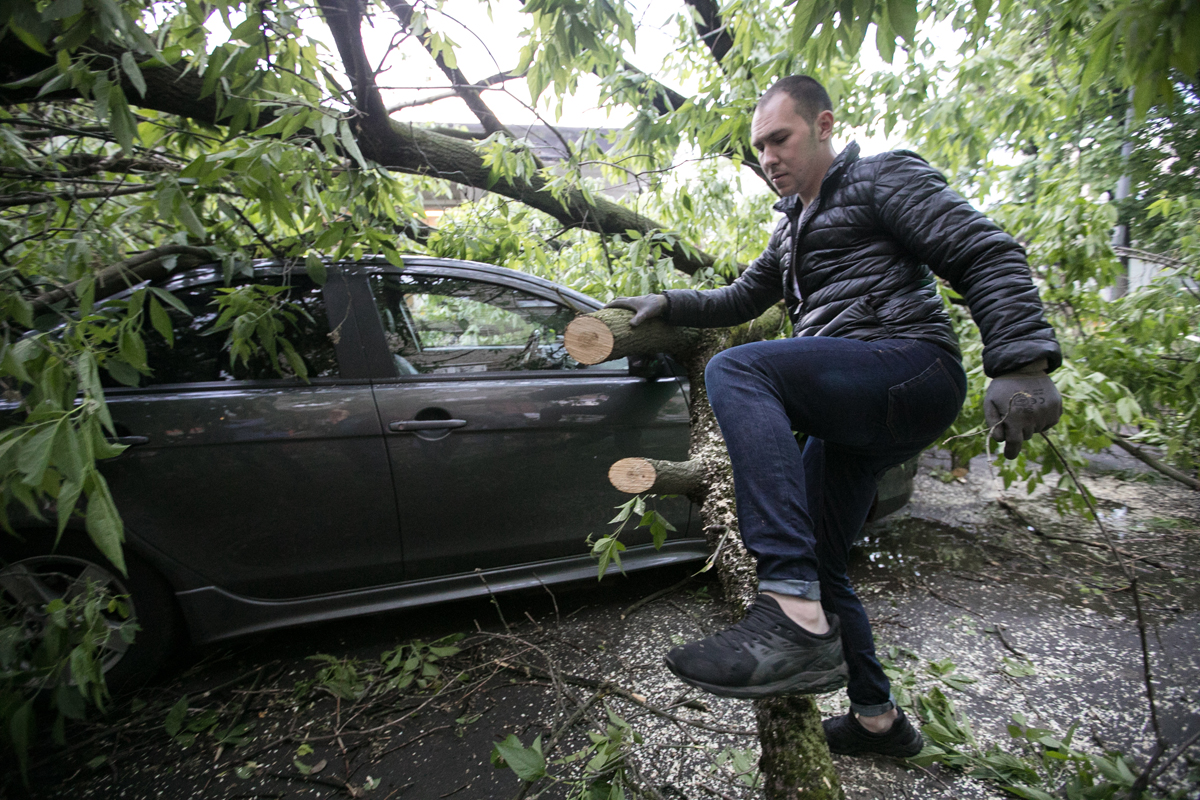
Only on May 29, in Moscow and the region, according to the latest data, 15 people were killed, the number of wounded is an order of magnitude larger, and the total number of victims, according to the RF IC, was about 200 people.
How to escape
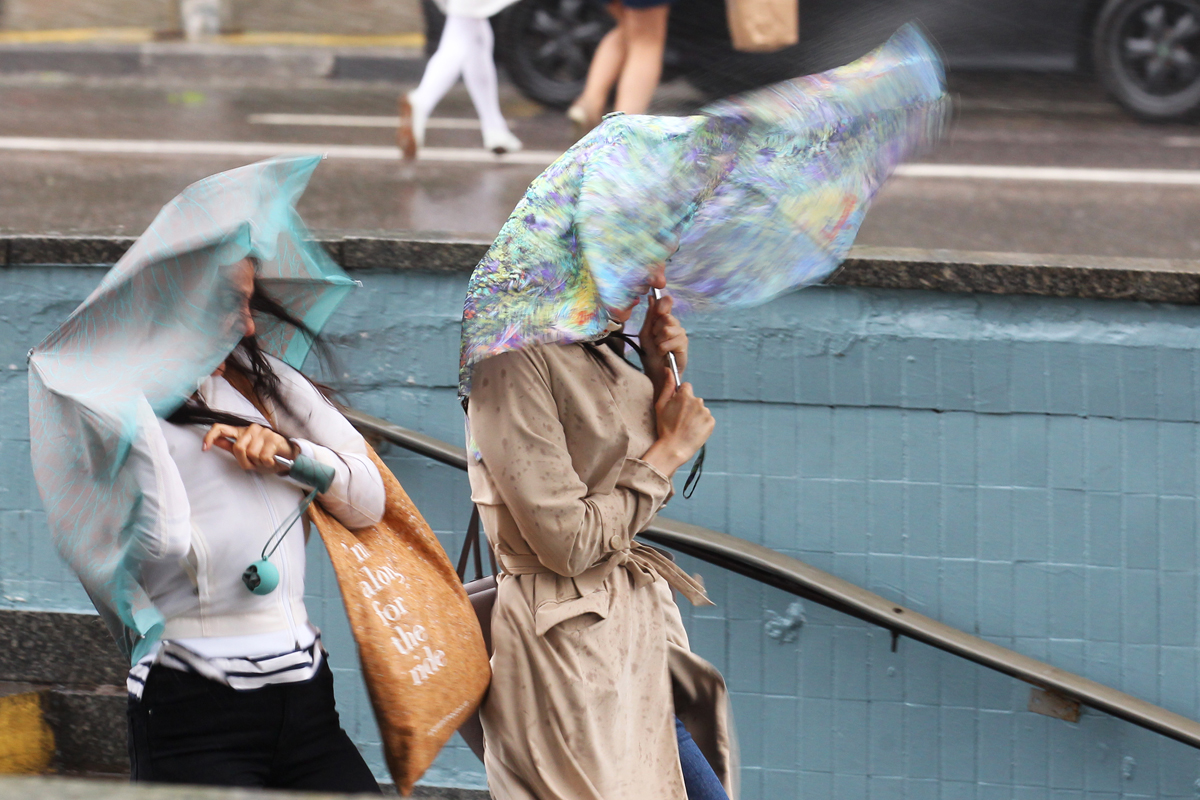
Residents of countries where tornadoes and hurricanes happen more often than in Moscow, know: these natural disasters are dangerous precisely because trees and man -made objects turn into “amazing elements”. On the website of the National Meteorological Service of the United States, the rules of conduct at a hurricane*are published, the first and most important of which reads: immediately take refuge in asylum. Moreover, the lower this shelter is located and the more walls are between you and a hurricane, the better. Those who are outside the capital buildings cannot reach asylum, you need to lie down in the nearest recess in the ground and cover your head with your hands. It is unreasonable to be on the street during a storm warning, it is dangerous under the overpasses and bridges: the wind in such places intensifies.
On the website of the National Meteorological Service of the United States, the rules of conduct at a hurricane are published, the first and most important of which reads: immediately hide in the shelter. Moreover, the lower this shelter is located and the more walls are between you and the hurricane, the better
An important nuance: warnings are produced about tornado or hurricane, which residents of the "storm hazardous" areas hear. And having heard, they observe the above rules that are known to everyone. These are key elements that - as the tragedy shows on May 29 - in Moscow has not yet been worked out by those who are called to own them on duty or by virtue of professional duties.
What predicted
The first stage in the fight against a hurricane is an early forecast of weather forecasters. Such a natural phenomenon - in certain areas of the capital, according to the mayor of Sergei Sobyanin, which, however, did not confirm a single source, the gusts of wind reached 32 meters per second (m/s) - should not go unnoticed by the hydrometeorological center. And the forecast really was - true, with more modest numbers: up to 22 m/s.
“In the forecast, information about the wind of 17–22 m/s was released - this is a very strong wind for Moscow, which is rare,” Roman Wilfand, head of the Russian Hydrometeorological Center, told reporters. - 25 m/s is a threshold value, but 22 m/s is already critical for trees, the wind speed really was about 22 m/s, and only “four points” was recorded above 25 m/s. ”
It turns out that meteorologists managed to warn: the wind in Moscow will be very strong and, possibly, will roll the trees. Although the degree of catastrophies - the hurricane on May 29 was, according to Wilfand, it was not possible to predict a record.
Why not notified
The next instance, which was supposed to act immediately after the publication of the forecast, is the structure of the Ministry of Emergencies. It is their job responsibilities that includes a notification of citizens and city services in front of a hurricane, and during and after it - rescue and restoration work.
In the area of responsibility of the department for emergency situations and civil defense (in Moscow, this is the Main Directorate of the Ministry of Emergencies) are the same two key factors of prevention: publication of instructions for survival and notification of people on all possible communication channels. Instructions on how to behave correctly during a hurricane, is available on all regional sites of the Ministry of Emergencies. However, it is possible to find its text only with the help of a search engine-a clearly noticeable link from the main management page (as on the US Hydrometeorological Center web portal). The instruction itself is too long and not enough fascinating reading to read to the end.
As for storm warning, then there are several communication channels at the disposal of the structures of the Ministry of Emergencies. The operational duty center in crisis situations (TsUKS) transfers information about the impending hurricane, firstly, communication operators-for organizing the unification of the population, and secondly, municipalities-to immediately prepare equipment and workers to eliminate the consequences of the elements.
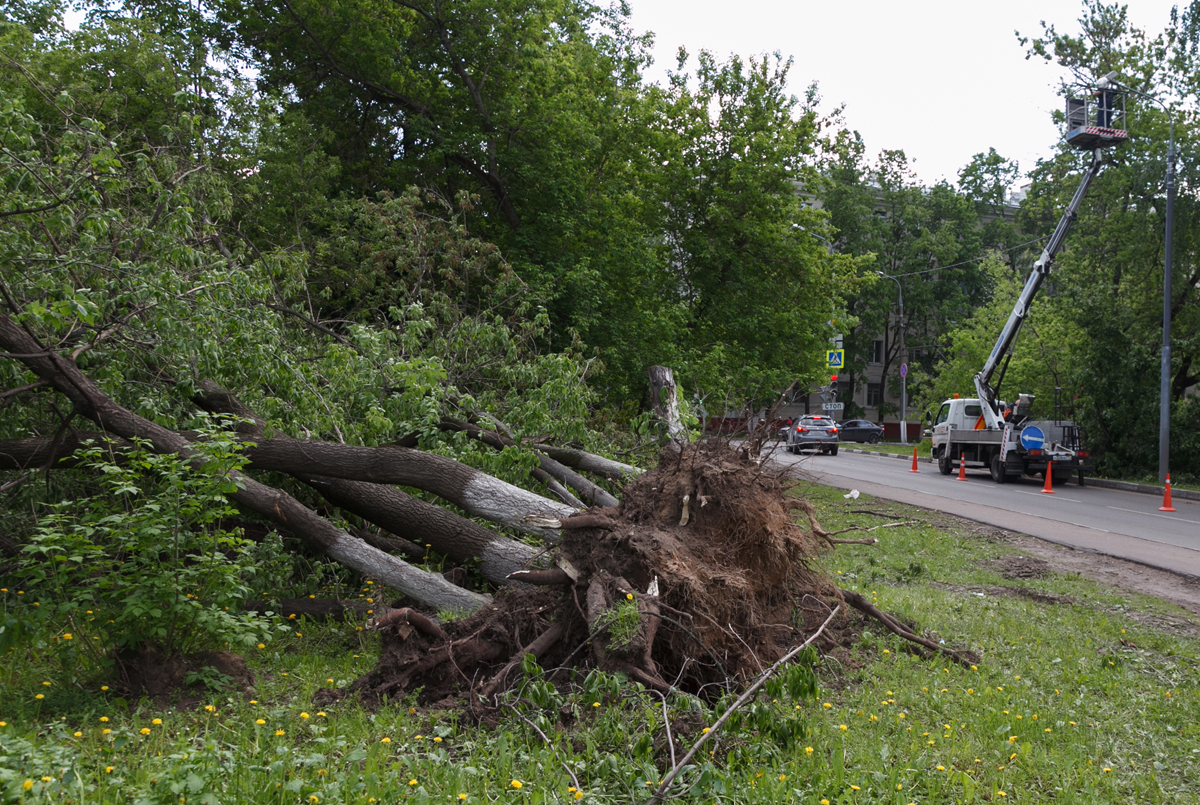
“The municipal authorities and local governments,” an employee of the Central Department Store explains in a conversation with NT, “in such cases, emergency recovery brigades are ready, enhance control over the functioning of the life support systems, organize work to inform the population about security measures during bad weather.”
On the day of hurricane in the capital, only subscribers of the Megafon cellular network massively received SMS with a storm warning. Representatives of the other two largest operators - MTS and Beeline - said that the notification passed through their channels. However, not all subscribers of these networks drew attention to the storm warning.
“The structures of the Ministry of Emergencies can inform subscribers without the participation of the operator-with the help of a special platform and content provider,” explains Dmit -ia Solodovnikov press secretary, MTS. “The parameters of this newsletter are also determined by the Ministry of Emergencies.”
Such a scheme, we note, can be vulnerable: messages of content providers are easy to block on many models of smartphones. Therefore, many MTS subscribers simply did not see the mailing list with a storm warning.
Beeline chose a different warning method - through service messages. According to the head of the press service of the operator Anna Aibasheva, the request for alert came from the Ministry of Emergencies in the afternoon (in other words, either immediately before the hurricane or during it). Service messages, as a rule, are accepted by the phone - however, on most models they are not more noticeable, but much less than standard SMS. So a significant part of Beeline subscribers also did not receive warning.
Finally, the Tele2 operator did not send alert at all. According to the company representative Konstantin Prosshin, “a notification of customers is done only in the case of an emergency”, which did not happen.
The regional and municipal authorities have more possibilities for notifying: a commission for the prevention and elimination of emergency situations - and they exist in the city hall and in prefectures - they are pleased to decide on the inclusion of loudspeakers on the streets and in the subway. Or, for example, to attract police forces to notify the population. This was not done in Moscow.
Lessons for the future
The director of the Russian Hydrometeorological Center Roman Wilfand insists in a conversation with NT: there are no reliable weather forecasts for two weeks. According to him, those methods that professionals have today - and they include satellite observation, computer modeling, and traditional weathermen - allow with a high degree of reliability to predict the weather for the next 48–72 hours, and with an average degree for the next 10-14 days.
In other words, meteorologists with a properly debugged population warning system can give a signal about the upcoming hurricane in at least a few hours (and a maximum of a few days). The case of the Ministry of Emergencies and municipalities is to notify the population, organize the elimination of the consequences. And also - and this is no less important - to make the urban environment more resistant to such blows.
Recall that the main “amazing factor” that claimed the lives of several people in Moscow became trees. For landing in the city, both the selection of tree breeds and the correct handling with them are important, says Yaroslav the Oblash, director of the experimental forestry of Moscow State University of Forest. In particular, many types of trees that grow in Moscow, and primarily poplar, require observation and, possibly, replacement every 40-50 years. At about the same frequency, the replacement of trees in forestry is made.
Overturned pavilions of bus stops - there were about a dozen of them in Moscow - it was necessary to strengthen anchor elements in the ground
The technology for the installation and operation of urban structures is even more important. Thus, the overturned pavilions of bus stops - there were about a dozen of them in Moscow - it was necessary to strengthen the anchor elements in the ground, said NT Ilkhom Abilov, an employee of the capital's GBU “Housing”. According to him, now the personnel of the “Housing”, as well as other improvement organizations, checks and strengthens the pavilions and other small city objects.
Along with stops, elements of road arrangement - signs and traffic lights were also affected. So, on Novoshchukinskaya Street, that in the north-west of the capital, after a hurricane, the sign of a pedestrian crossing lay on the ground, although only one thing was damaged from several dozen trees around it. The metropolitan center of traffic organization (Central Department Store) sent a 71 brigade to correct the consequences of a natural disaster. That's just about whether the standards and technologies for the installation of city objects will be revised in connection with the risk of new hurricanes in Moscow, has not yet been reported.
Meanwhile, since the beginning of 2017, the metropolitan weather has already set several dozen records, and therefore, abnormal weather phenomena have become everyday. So - the risks for citizens are growing.
* http://www.weather.gov/bmx/sps_torsafetyrules.
Photo: Artem Geodakyan/TASS, Vasily Kuzmichenok/TASS, Roman Balaev/TASS,
Alexey Belkin/TASS