
Translated material
Memory culture
On May 30, the exposition of the works of Anselm Kifer, at the same time the brightest and most gloomy painter of the 20th century, opened in the Hermitage.

Making a kifer exhibition right now for the Hermitage is appropriate than ever. Among other things, this is an opportunity to recover after the next hype associated with the exhibition of Belgian Jan Fabra and complaints about the museum of zoo defenders, singer Elena Vaengi and deputy Vitaly Milonov. The German kifer will not bring a new scandal: the audience, as practice shows, is not annoyed on acute topics, but on unusual techniques. The provoking high -profile discussions of the exposition were compiled from objects, sculptures and stuffed animals. Kififer is a painter, and even a figurative: any Cossack will clearly understand that the picture is drawn: a tunnel, a barn, a runway, an abandoned factory. And it will leave if not satisfied, then it is definitely without an impulse to write a complaint to the prosecutor's office.
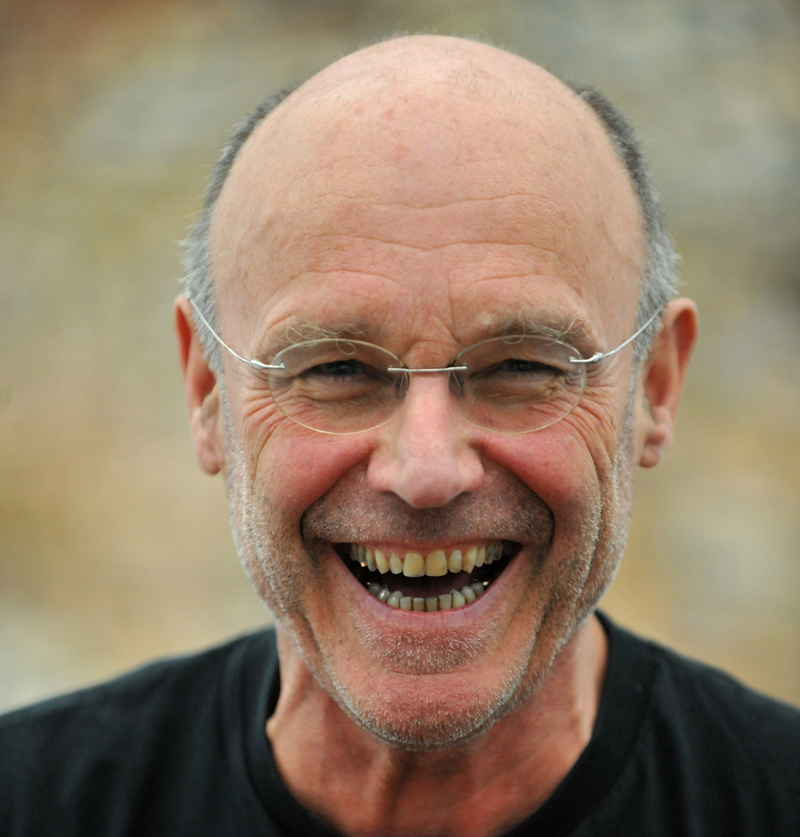
Kifer to the Hermitage was brought not as part of a scandal or search for a common language with contemporary art. This is the "Aria of the Overseas guest" as part of a large project dedicated to the centenary of the October Revolution - a series of exhibitions dedicated to this anniversary. And the works are exhibited - in the Winter Palace, exactly in those halls where the Russian pre -Soviet history of Russia ended 100 years ago.
Why exactly kifer acts here as Special Guest, of course. Who, if not him? The scale of the artist’s figure is such that he has long earned the personal exposition in the Hermitage - his work was exhibited several years ago, at the group exhibition of German art of the 20th century. Along with George Baselitsa, Sigmar Polke and Gerhard Richter, the artist is the core of the most powerful generation of German painters (and wider-cultural figures) of the 1970s. Each of them received Nobel in the field of art - the Imperial Prize of Japan (from our compatriots, for example, it was awarded only Sofu Gubaidulin, Mstislav Rostropovich, Ilya and Emilia Kabakov). The question “why kifer” cannot arise - rather “why only now”. The Louvre, say, had long bought his paintings for his collection - from the only living authors.
Painter ruin
It is also clear why the kifers are exposed as part of an exhibition series for a centenary of a fatal turn in Russian history. The artist has long been fixed by the reputation of a figure, closely related to the memory of disasters of the twentieth century. He was born two months before the end of World War II in Europe. Like all his Western German peers, he grew up with the awareness of guilt before humanity, with the rejection of the generation of parents-seniority, everywhere meeting traces of the world experienced by the world. He walked along the streets of cities full of wastelands on the site of destroyed buildings. He found out that the country where he was born is infinitely guilty of the world for the hell into which she knocked him over. Each of the artists (in the broadest sense of the word) of this generation learned to talk about this trauma in his own way: Georg Baselitz deforms the human body, Gerhard Richter is looking for points of contacting photography and painting, Werner Herzog experiences the boundaries and capabilities of the human psyche, Gunter Grass and Vinfrid Maximilian Zebald tell private stories about victims about the victims historical cataclysm.
Kifer is a painter, and even a figurative: any Cossack will clearly understand what is drawn in the picture, and will leave if not satisfied, then it is definitely without an impulse to write a complaint to the prosecutor's office
Kififer, on the other hand, works with the legacy of world disasters directly: writes ruins, death, abandoned spaces left at home. He, perhaps, is the only modern landscape painter. Only the nature that he fixes is much more dramatic than the Shishkin groves and the Aivazovsky naval battles. Its material is not a momentary action and not a war, but what it does with the space in which it unfolds. The artist is studying traces that disasters leave, writes ruins and battlefields. Its technique is severely laid on canvas, it is textured: it looks impressive in the video - the artist simply chopping a dried canvas, knocks whole pieces of soil from him.

More than an ally
But the Hermitage exhibition has the second hero, no less successfully chosen,-the Futurist poet (the revolutionary), the “chairman of the globe” Velimir Khlebnikov. His person is no less familiar to the kifer than you and I. For the first time, the artist turned to Khlebnikov’s work 12 years ago, when he was preparing an exhibition for the White Cube London Gallery. Now he returned to such a kind of “cooperation”.
Do not wait at the exhibition of flying: there are neither quotes nor "poetic images." Kifer does not write Bobeobi on the canvas. Let him say that Khlebnikov’s poetry “leads” him when creating paintings, not verses are important for him, but the figure of the poet. The Hunna, born in the Kalmyk steppes, a reformer of the language, master of "Zaumi", a cultural terrorist, a sacred madman. It is clear: the poems of the “chairman of the globe” are unlikely to be transferred (although there are experiments - “winging with gold and gold” from the “grasshopper” is translated into English as “Wingletting with the Goldenscrawl”). Kififer for his project is borrined not by texts or even an image, but by the poet’s ideas. In particular, his theory of cyclical history - repeated every 317 years of deadly military battles. The names of the paintings are sent to this theory: the artist rhymes the battles with Chesme and the expansion of the Normans in France, and that, in turn, with the landing of allies in Normandy.
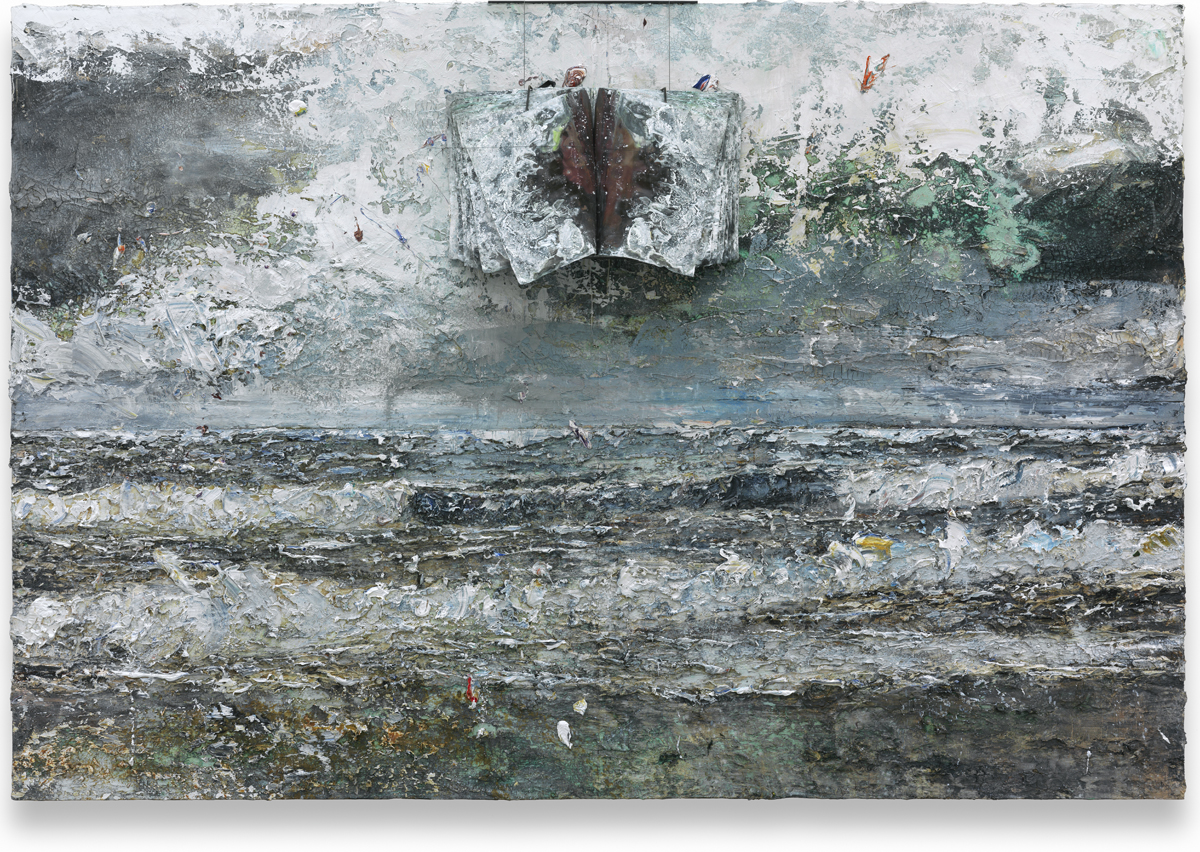
But “Kififer-Khlebnikov” is not a dry experiment to verify the poetical and mathematical idea by practice. The figure of theorist here is more interesting than the theory as such: Khlebnikov is trying to subordinate the element of war and violence to logic. Find at least some explanation of universal disasters. To contrast the Tolstoy statement that any war is like a fall of a comet, the idea of the predetermination of events. Khlebnikov for a kifer is something more than just an ally or co -author. He is a universal artist, powerless in the face of the elements. He can explain it, but cannot prevent it. Also, the kiper: it can capture the consequences of disasters of the 20th century, but is not even able to warn against their repetition.
The third meaning
In the context of the centenary of the 1917 revolution and the halls of the winter work of Kifer, inspired by Khlebnikov’s ideas, acquire a third meaning. The most deep. A kind of technocratic piranesi, a painter of the ruins, a kififer is traditionally interpreted as a poster, the creator of memorials of the 20th century - Nazism, bombing of German cities, the Holocaust. His works are perceived as the documentation of their direct consequences: empty military airfields, museumified concentration camps overgrown with grass factories.
Any anniversary once again indicates that there is no such art - a memory culture in Russia, and its deficiency is felt very acute. The tragedies of the 20th century in one of the main places of their actions remained unreflected. In part, because the country is large: the first thing that crashes into consciousness east of the Volga region is the absence of any memory of the Second World War. She was not there. The war in Siberia is Kolchak and Kappel, not the Holocaust and the blockade. Partly - and this is much more important - there is no memory culture because the disasters very quickly talked into ready -made, clear answers to complex questions. Events that changed the course of history turned into common places, topos of local films, series and books. The revolution is the attack of the Huns: the coming boor burst into professorship apartments. Repressions - the Kremlin highlander treacherously mowed everyone for an unknown purpose. The war is a St. George ribbon and a sticker “on Berlin!” Artistic images with which revolution, wars, repressions are connected can be listed on the fingers of one hand. The memory of the blockade remained in the form of an unbearably terrible “Hermitage series” of drawings of architect Alexander Nikolsky - pencil species of an extinct city and empty museum halls. The images of repression and fear have to be searched for in the “alarm” of Petrov-Vodkin. Seriously perceiving Plastov’s agitation “The Nazist flew” as the memory of the Great Patriotic War would not occur to the faithful adherent of Shilov and Glazunov.
Unless the corporater Elena Kovina works with memory: on the Biennale "Manifesto" in St. Petersburg, she ate 100 grams of bread for 24 hours-the daily norm of a resident of the besieged Leningrad
As a result, they do not talk about disasters and relevant artists. Of course, you can count a conversation about totalitarianism in the work of Ilya Kabakov, Viktor Pivovarov or Eric Bulatov, but it will be too a stretch, taking into account the artistic irony. Unless the shareholder Elena Kovina works with memory: on the Biennal "Manifesto" in St. Petersburg, she ate 100 grams of bread for 24 hours-the daily norm of a resident of the besieged Leningrad. More examples of artistic understanding of a bitter collective experience cannot be found.
All this means that the work of the kifer in the halls of the winter can become exactly the tragedies and hopes of the 20th century, which is not in Russia and is not expected in Russia. Kiferovsky canvases fill this vacuum. Those who see them, maybe for the first time feel the entire fatality of a disaster called "Twentieth century."