
Translated material
Plebiscite time
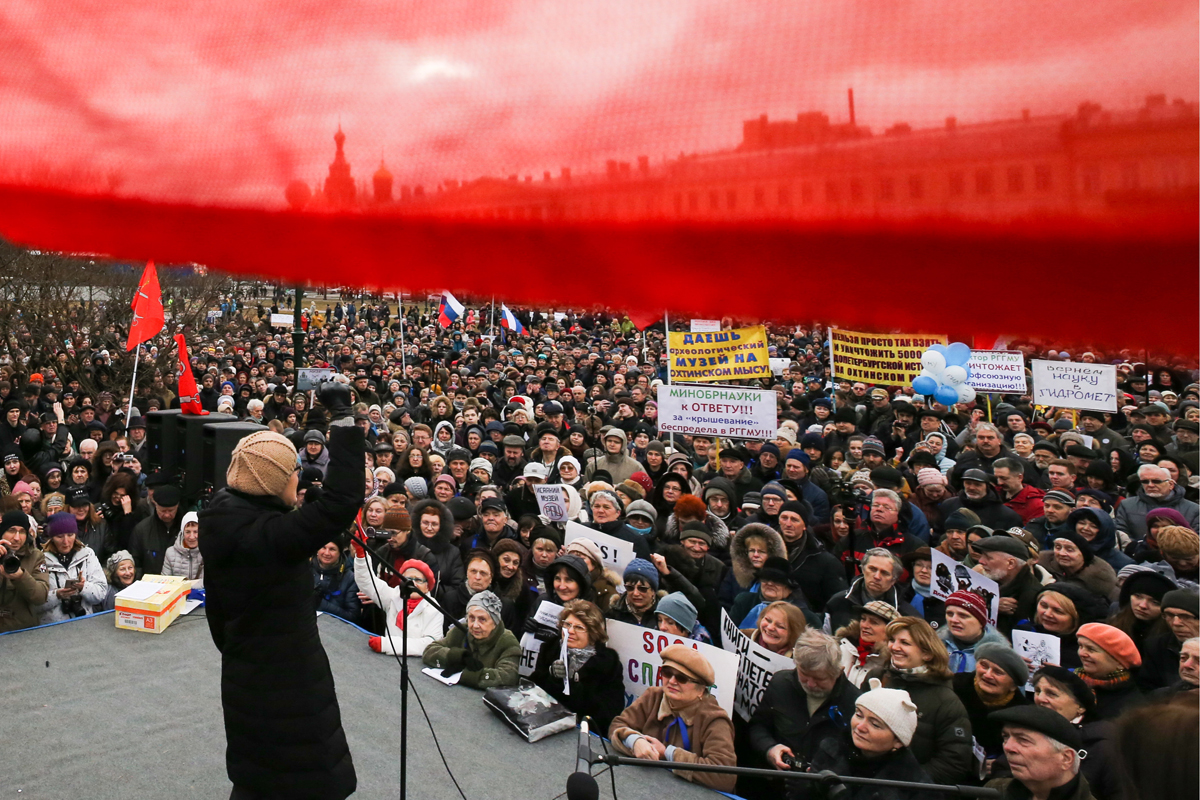
In Moscow, opponents of the demolition of five -story buildings decided to organize a plebiscite. Despite the fact that a rally against renovation gathered about 20 thousand people and protests in different forms do not subside, the city hall or the Kremlin does not intend to deviate from their plans: the State Duma plans to adopt federal law in June in June.
Referendum on renovation
An application for a plebiscite - as an alternative to voting on the website “Active Citizen” - was submitted by the head of the Moscow branch of the Green Alliance party, the municipal deputy of the district of Dorogomilovo Zoya Shargatova. “Are you for the Renovation of the Housing Fund in the city of Moscow in accordance with the Law of Moscow dated 17.05.2017 No. 14“ On additional guarantees of housing and property rights of individuals and legal entities in the implementation of the renovation of the housing stock in the city of Moscow ”?” - They plan to ask the green questions to Muscovites, and it is it that is indicated in the application submitted by them in the Mosgorisbirk. They would like to hold a referendum on September 10 - simultaneously with the elections of municipal deputies in the capital.
It is not easy to launch a referendum procedure, but it is possible: for example, in Moscow, for this, you need to collect an initiative group of 300 people, conduct its meeting, formulate the issue and send documents for registration of the group in the Mosgorizbirkom, which should consider them within 15 days. The election officer may refuse activists, and if there are no obstacles in registration, the documents are transferred to the Moscow City Duma. Deputies must decide whether the legislation complies with the issue of the referendum. In case of their consent, the initiative group is registered and begins to collect signatures. Within 30 days from the day after registration, they should receive autographs of 2% of Muscovites - a little more than 143 thousand people. The election commander checks the signatures and may refuse the group if 10% of the signatures are invalidated.

The requirements do not look impossible, but referendums in Russia are organized with great difficulty, even if an urgent and topical topic is made for discussion. In Moscow, plebiscites have not passed since 1993. The closest to the vote were the Communists in 2015 and the Socialist -Revolutionaries in 2014. In Fair Russia, they wanted to discuss with the townspeople the introduction of paid parking lots, in the Communist Party - the installation of the monument to Dzerzhinsky. The Socialist -Revolutionaries refused the venture. “We began to understand that among our signatures there is clearly a Trojan horse. Moreover, the size of this horse is absolutely unknown, ”admitted the leader of the SR Sergey Mironov, according to whom there were many inaccurate autographs in the sheets with signatures. The Communists in their signatures were sure, but also did not give them out, explaining this by saving budget funds for a referendum.
In Moscow, opponents of the demolition of five -story buildings decided to organize a plebiscite - as an alternative to voting on the Active Citizen website. The application for plebiscite was submitted by the Moscow branch of the Green Alliance party
Questions of faith
The transfer of the Isaacievsky Cathedral of the Orthodox Church excited the whole of St. Petersburg. For a long time, local authorities resisted the requests of the Patriarchate, but at the beginning of this year they surrendered. In response in February and March, several thousands of promotions were held in the city. Officials assured that they would have listened to the townspeople, the “sources” of the federal media in the presidential administration assured that the decision to transfer the Isaac Church is not coming from the Kremlin and they do not support this idea there. In parallel, the transfer of the Cathedral of the Church was prepared. In March, the initiative group, which included six deputies of the Legislative Assembly of St. Petersburg, including Yablochik, Boris Vishnevsky, the representative of the growth party Maxim Reznik and the leader of the Socialist Revolutionaries faction, Alexei Kovalev, submitted documents to the horiz being, he did not find violations and transferred to the Legislative Assembly. Further on the city parliament did not go. United Russia said that the issue of referendum does not comply with the law: issues of local importance are put forward to the city plebiscite, and the transfer of Isaac is a federal issue. At the meeting of the Legislative Assembly, the issue was never considered, although by law the parliamentarians should have done this in 20 days (the election was approved on March 28).
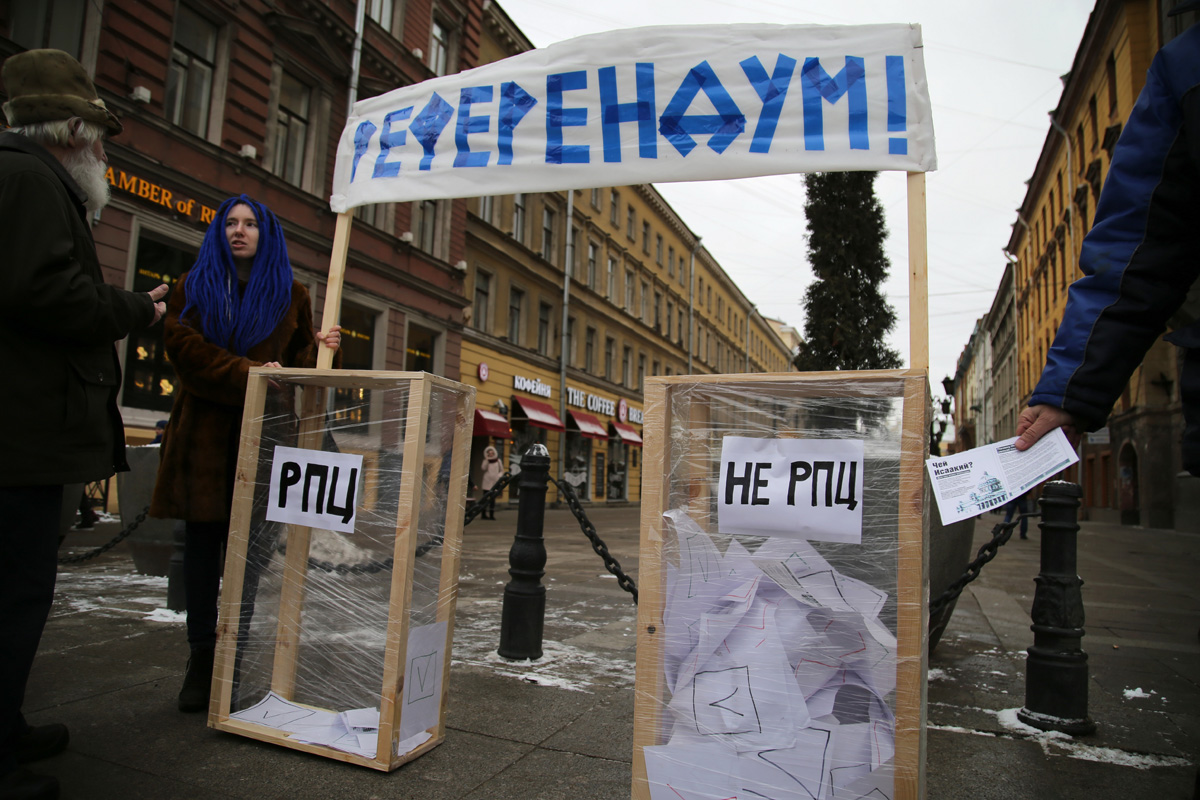

“The procedure has not been completed to the end. United Russia violated all the terms of consideration of the application, we went to court, but he made a flagrant decision - it states that the court cannot intervene in the work of another branch of power. This is a monstrous position: why then do you need a court? He must watch compliance with the laws with all branches of power! ” - Outwards in a conversation with NT Socialist -Revolutionary Aleksey Kovalev.
While the United Russia is pulling a bagpipe, a group of conservative citizens applied for a referendum on the recall of deputies who submitted an application for a referendum. The NT source in the Legislative Assembly believes that the leadership of the city and United Russia are trying to bring the situation to the point of absurdity. He also called the appointment of the new director of the museum in the Isaac's Cathedral Irada Vydenko as an element of the same strategy. The author of books for children and adults replaced Nikolai Burov in this post. “Sergey put her on the bed, in pillows, seized his foot in an expensive pedicure and began to kiss every finger, from a slightly curved little finger to a neat large; Olga even resisted a little, embarrassed. After endless caresses, they cheerfully splashed in the bathtub, and everything was repeated again: the windowsill, lips, screams, moans, delight, delight, ”is an excerpt from the novel by Vodenko“ Littleness ”(by the way, I illustrated Roman Nikas Safronov). The deputy expressed confidence that after such an appointment, it would be easier to return the Cathedral of the church: “As a result, either in the Patriarchate or in Smolny they say - in the museum a nest of debauchery, and everyone will quickly convey.” However, Vodenko stayed for the only day - after the storm, which was caused by her appointment on social networks, Governor Georgy Poltavchenko ordered the search for a new candidate for the post of director of the museum.

Regions are asking for words
On the topics of other referenda, you can make an encyclopedia of regional problems. In Taimyr, activists applied for a plebiscite about separation from the Krasnoyarsk Territory. Until 2007, this territory was considered a separate subject-the Dolgan-Nenets Autonomous Okrug. As part of the reform to enlargement of the districts, the region was attached to the Krasnoyarsk Territory, and it became a district. Now people believe that due to enlargement, their life has become worse. The local election man rejected the application, but the organizers are already preparing a new one. In the Asbestos of the Sverdlovsk region, a stumbling block became a fragmentation factory - it is going to build a national antimony company, half of which is owned by Igor Rotenberg. In Irkutsk, the Communists want to return direct elections of mayors, Parnassus also submits similar applications in many other regions.
“A referendum is a constitutional instrument of direct democracy, that is, decisions adopted on it have compulsory power for the authorities. The authorities are not needed by such a folk lever, so they make legislative and administrative obstacles, as a result of which it became almost impossible to conduct a referendum on the initiative from below, ”Grigory Melkonyans, co -chairman of the Voice movement, told NT. According to him, it is not so important for the authorities, “all -Russian, regional or local referendum” people want to conduct. “Statistics speak for itself. After 1993, when they adopted the Constitution, federal referenda was not held. The initiatives of ecologists and communists failed. Regional referendums were carried out only until 2007, and then on issues of unification of the regions. If we take the local level, then there is also an impenetrable wall, ”the expert complains. At the same time, pro -government referendums (they relate to the introduction of the self -establishment of citizens in the municipalities or cutting of municipal territories) are organized with a bang: “And the question is correctly formulated, and the documents are correctly executed, and the money for conducting is sought.”
“Interest in referendum means that people do not believe in state power, state institutions do not suit them, they want to express their will themselves”
True, according to the Melkonian, people are in no hurry to participate in the referenda that the power holds - so that the vote is recognized as being held, at least half of the inhabitants of the territory should take part in it. “Since the authorities usually bring unpopular issues to the referendum, the turnout is catastrophically small. Falsification technologies are used, ”says Melkonian. As an example, he cites annual referendums in self -taxation in Tatarstan, which simply help the authorities to patch budget holes.
According to political scientist Alexei Makarkin, a kind of fashion for referendums appeared after political life began to come out of hibernation. “There is a revival of social life. The euphoria of 2014 was asleep, hopes for import substitution went away, but the period of fatigue begins to pass. People are looking for exits, and the referendum seems to them a good form - it excludes a frontal clash with the authorities, which also always said that he is listening to the will of the people, ”said NT Makarkin. However, he states that the authorities have complete control over when, how, whether the referendum will be carried out at all. “It is elementary to refuse an objectionable referendum, you can find fault with signatures or generally formulating questions,” the political scientist summarizes.
Socialist -Revolutionary Aleksey Kovalev is expressed more harshly: “Interest in referendum means that people do not believe in state power, state institutions do not suit them, they want to express their will themselves. If they refuse to express this will, they will express it on the street. ”
Photo: Pavel Karavashkin/Interpress/TASS, Znak.com, Petr Kovalev/TASS, Maxim Polyakov/Kommersant