
Translated material
The abduction of Europe
70 years ago, on June 5, 1947, US Secretary of State George Katlett Marshall made an initiative to provide economic assistance unprecedented in scale? European countries. So appeared the "Marshall Plan", which saved Western Europe from the arms of communism, raised it from the ruins and eventually led to the unification
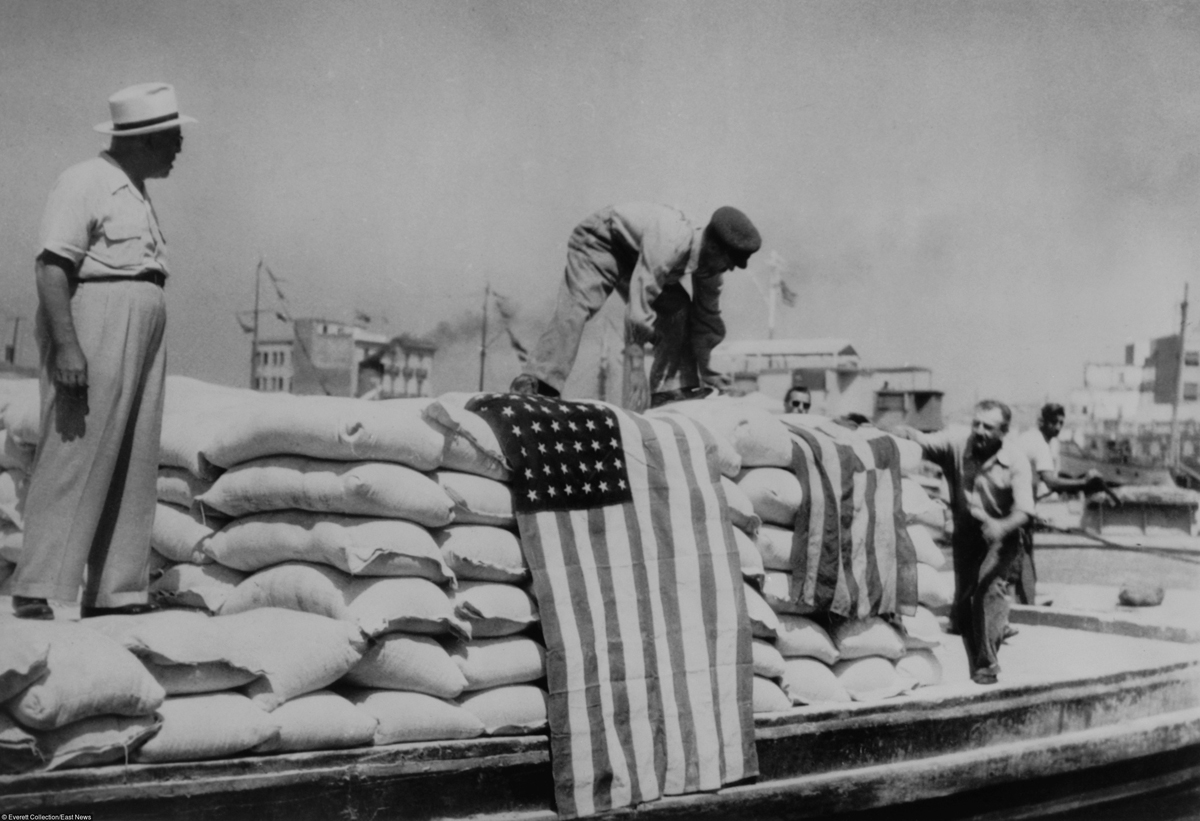
Winston Churchill considered the plan “Marshall Plan” the “most disinterested act in history”. Stalin saw in him the expansion of American imperialism, in Europe "matured for communism". Bill Clinton called him "the beginning of the path that led to an economic miracle." Henry Kissinger is one of the most striking examples of the crisis. One way or another, the “Marshall Plan” became the economic shield of Europe, which, along with the American “deterrence doctrine”, prevented its decay.
On the edge
Post -war Europe lay in ruins. About 5 million units of housing were destroyed only in West Germany. Not only German cities were destroyed, but also to Rotterdam, Antwerp, Havr, Milan, and the transport infrastructure was paralyzed. 12 million ethnic Germans expelled from Eastern Europe, who wandered along the roads (of which more than 2 million were killed). In Greece there was nothing to plow on. In Italy, many cities ruled mafiosi. The foreign exchange and financial system practically did not function: there was no money not only for restoring the economy-there was nothing to pay for food supply. In the winter of 1946-1947, a real hunger broke out in the northwest of the continent-the cards did not save. Social tension increased, threatening unpredictable consequences: against the backdrop of a lack of products, strikes and mass riots passed. The “class struggle”, incited by the Communists, began to resemble February 1917 in Russia.
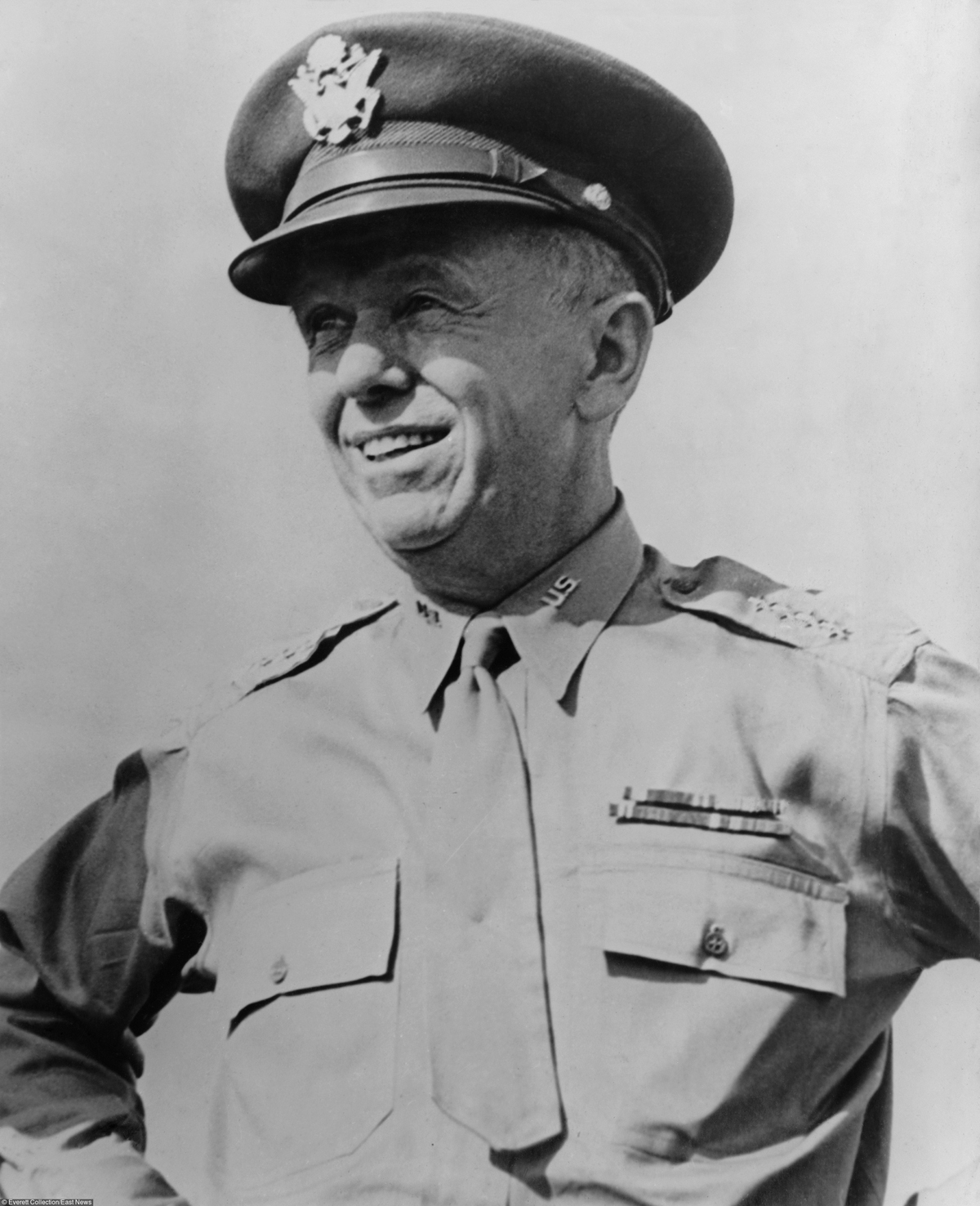
At the same time, the Soviet Union did everything so that in central and eastern Europe, pro -Soviet forces would be in power. He made the territorial claims of Turkey and demanded changes in the status of straits, including the right to create a naval base in Dardanella. In Greece, the partisan movement led by the Communists gained power, fueled by the supply of weapons from Albania, Yugoslavia and Bulgaria, where the Communists were already in power. At a meeting in London, foreign ministers of countries, regular members of the Security Council of the UN USSR, raised the question of his protectorate over Tripolitania (part of Libya) to ensure the Soviet presence in the Mediterranean.
In France and Italy, the Communist Party became the largest political forces. The Communists were part of the governments in almost half of the European countries. After the withdrawal from Europe, the main part of the US USSR turned into dominant military force on the continent.
Turn
On February 22, 1946, the US State Department received an unusual encryption from the embassy in Moscow. The volume was unusual - 8 thousand words. It was unusual that it was not the ambassador signed, but his adviser - George Kennan. Finally, there was an unusual tone where, instead of allied rhetoric, the analysis of the situation dominated and tough conclusions were made.
Kennan wrote that America could no longer hope for “political intimacy” with the Soviet system. It should consider the USSR not as a partner, but as an opponent. “Soviet power,” the diplomat claimed, “is impermeable for the logic of the mind, but is very sensitive to the logic of power.” Therefore, it is necessary to “restrain Soviet pressure” with the use of “counter -signs” - military, economic and ideological - in various “constantly moving geographical and political points”.
Soviet intelligence, which has taken deep roots not only at the US Embassy, but also in the State Department and even the White House, naturally, intercepted the telegram and reported its content to Stalin. In fact, it was Kennan's Epistle, and not uttered in two weeks, quite “vegetarian” speech by Churchill in Fulton, was the beginning of the Cold War. I wonder if Churchill was familiar with this telegram?
In the United States, a large -scale reassessment of Roosevelt's heritage has begun. They realized that weakened Europe will sooner or later fall into the arms of communism, and to be precise - the Stalinist dictatorship. Helping ruined Europe means saving it. And here no differences were made between winners and defeated. It was necessary to help Britain and France, and Western Germany and Italy.
The American “Marshall Plan” was later called “an action dictated by an extremely enlightened understanding of its own interests”
On March 12, 1947, the “Doctrine Truman” was announced in contacting Congress. The US President made the initiative to “protect democracy” anywhere in the world and first asked $ 400 million to stabilize the situation in Turkey and Greece, which was threatened by “loss of freedom”. However, the political and military units of this doctrine would be insolvent without economic. On June 5, 1947, at the graduation ceremony at Harvard University (Boston, Massachusetts), US Secretary of State, Hero of War, George Katlett Marshall, in his 14-minute speech, came to the initiative to provide an unprecedented economic assistance to European countries. And on April 4, 1948, the implementation of this initiative, called European Recovery Program, began - “The Marshall Plan program” began.
“Wars are generated by poverty and oppression,” General Marshall once said. He believed that his plan is, in fact, the struggle for peace.
And give and take
It was about $ 12.4 billion allocated to Europe in the form of loans, gratuitous loans, long -term leasing, supply of industrial equipment, fuel, food, drugs, direct assistance in the implementation of infrastructure projects, restoration of enterprises, and housing construction. (In 2015 prices, it is over $ 150 billion).
The main share of assistance was received by the UK (approximately $ 2.8 billion), France ($ 2.5 billion), Italy ($ 1.3 billion), West Germany ($ 1.3 billion) and the Netherlands ($ 1 billion). In different years and to varying degrees, Ireland, Iceland, Luxembourg, Belgium, Austria, Portugal, Switzerland, Sweden, Norway, Denmark, Greece, Turkey and the free territory of Trieste participated. Even Yugoslavia.
The plan was determined by the obligatory conduct of structural reforms, freedom of entrepreneurship, budgetary equilibrium, promotion of private investment, rejection of nationalization of industry, and free access of American goods with unilateral decrease in customs tariffs.
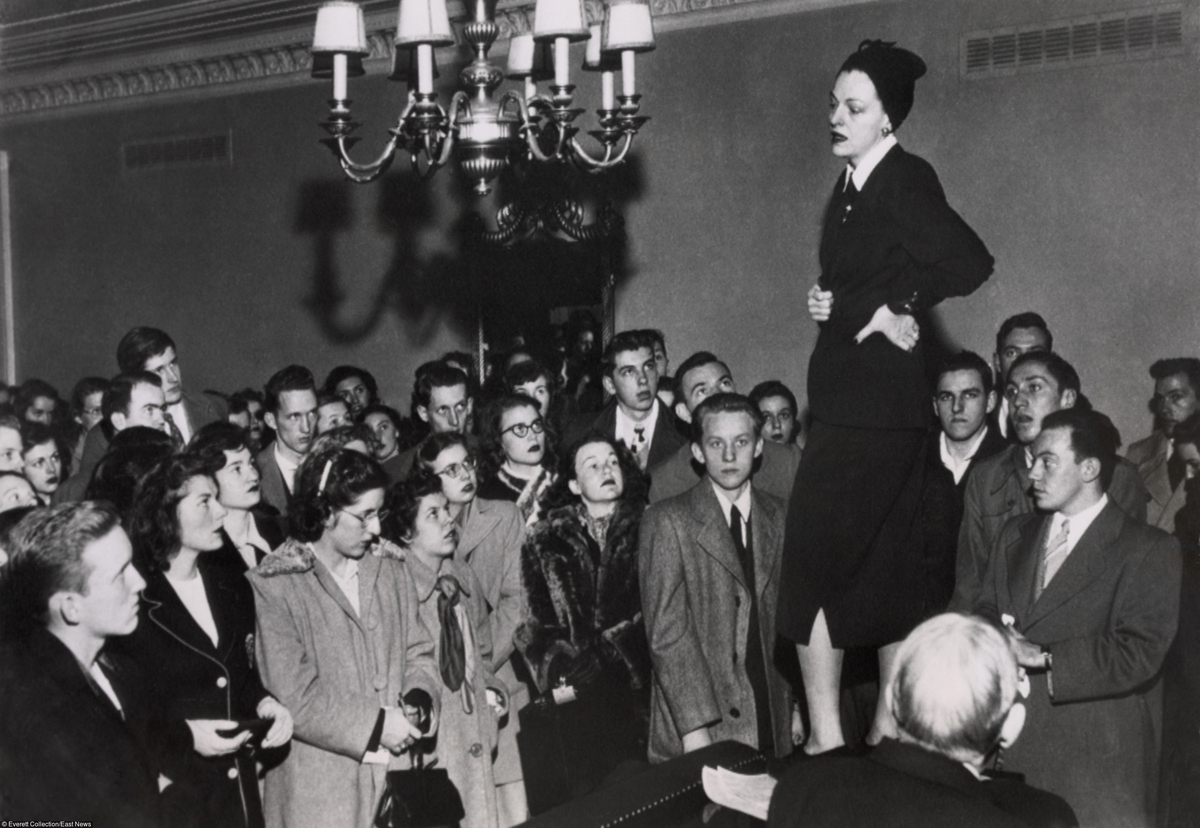
“We would have lost more if we had not helped Europe,” said Theodore Gaiger economic adviser to the US State Department. That is why the Marshall Plan was later called "an action dictated by an extremely enlightened understanding of their own interests."
The United States needed sales markets. Deliveries to Europe become the vital need of American business, automatically turning into investments into their own development: funds go to the purchase of American products, and not to plug other people's budget holes. The United States is intensified from the excess of agricultural goods - and now the UK is not entitled to purchase wheat even in Canada, its dominion. A ban on trade with the east is introduced - and France has no right to import Polish coal of $ 12 per ton, but should purchase an American one for $ 20.
All settlements are made in dollars. In general, the dollar for many years becomes the main reserve currency.
By 1952, that is, by the end of the program, industrial production in reicits increased by 25–40%, and agricultural-by 20% and higher. American infusions provided approximately 11% of GDP of Great Britain, 12% - France, almost 22% - West Germany and a little more than 33% - Italy.
The Marshall Plan was not a panacea, but only an impetus, a catalyst for the Renaissance of Europe. She made the main efforts herself. So, the Federal Republic of Germany received $ 1.3 billion according to the plan, but due to growth she continued to pay reparations exceeding help. The Marshall Plan only prompted the process of self -organization.
Chapter
According to the Marshall Plan, the help was proposed to the whole of Europe. Including the so -called countries of folk democracy and even the USSR, which, however, did not fall under its action for a purely formal reason - due to the declared lack of budget deficit. The USSR was ready to accept this help on certain conditions if it resembled a landlord. However, the Americans insisted on “resource control”, which did not suit Stalin at all, who wanted to use funds at his discretion. Nevertheless, at first he did not object to the USSR satellites to arrive in Paris, where on July 12, 1947, a conference of alleged recipients of assistance was opened - to develop the conditions for each country and to produce a kind of “reconnaissance by battle”. But on the night of July 9, the leader gave up.
They persisted only in Prague - the Communists did not have a majority in the Czechoslovak government. And then the Czech comrades were called to Moscow, where the leader arranged for them a uniform. He was especially outraged by the fact that if Czechoslovakia was adopted by the “Marshal Plan”, she was supposed to coordinate the list of uranium supplies to the USSR within the framework of “monitoring resources and determining the needs”.
Foreign Minister Jan Masarik, the son of the first president of Czechoslovakia, commented on what was happening: “I went to Moscow as a free minister, and returned as a Stalinist farm!” In March 1948, Masarik fell out of the window of his Prague apartment. Later, Czechoslovak President Edward Benesh resigned. The path to the dictatorship was open.
Having finally fixed the section of Europe, the Soviet Union adopted not only political, but also economic responsibility for the entire “Eastern Bloc”. At the height of the famine of 1946-1947, 350 thousand tons of grain were sent to Romania, almost 900 thousand - to Poland, 600 thousand - to Czechoslovakia. At the same time, about 100 million people were starving in the USSR itself.
In fact, the USSR drove itself into a trap that former allies noted, not without gloating. The refusal of Moscow only facilitated the passage of the Marshall Plan through Congress, which otherwise would most likely not approve it. And Stalin would have retained the initiative in all fields.
In Litgazet, Truman was called the Hanjoy, a Gnusov Voice, Ku-Klux-Klanstsy, Clerk with Wall Street. Dipskandal flared up, but the USSR Foreign Ministry replied that they could not order Soviet newspapers that to publish
The second half of 1947 became a turning point in the definition of the main enemy. On October 5, 1947, the Cominform was formed, and his 9th propaganda authority was formed by the reorganized Swinformburo under the leadership of the future secretary of the CPSU Central Committee Boris Ponomarev. And the “Marshall plan”, and the personality of Truman and the United States as a whole have become the main goals of ideological attacks in the country and abroad.
In the Literary Newspaper, which turned into a general political publication on July 31, 1947, a pamphlet of Boris Gorbatov appears, where Truman was called the “man in short pants”, “Hanjoy”, “Breeder with a nasal voice”, “Ku-Klks-Clan”, “Clerk with Wall Street”. Dipskandal flared up, but the USSR Foreign Ministry replied that they could not order Soviet newspapers to publish.
But the magazine "Crocodile" - about "Marshall's plan":
Europe Marshall helped so
That as a result of that help
Now Europe, God sees,
It is just about to stand out.
Unity tool
The Marshall Plan has become one of the most successful economic programs in history, since almost all of its goals were achieved. Industry industries, which seemed to have lost efficiency, were quickly restructured. The economy of Europe has recovered from the consequences of the war faster than expected. European countries were able to pay on external debts. The influence of the Communists and the USSR was weakened. The middle class was restored and strengthened - a guarantor of political stability.
In his speech at Harvard, Marshall said that "help should be a healing medicine, and not an analgesic." The Marshall Plan and worked on this principle: the recipient countries began to act in cooperation with each other, and not against each other, as before.
It was the “Marshall plan”, in fact, formed the basis of European integration, starting from the “Coal and Steel Association” formed in 1950 and ending with the European Union. Actually, Europe for this is grateful to America.