
Translated material
Altruism by calculation
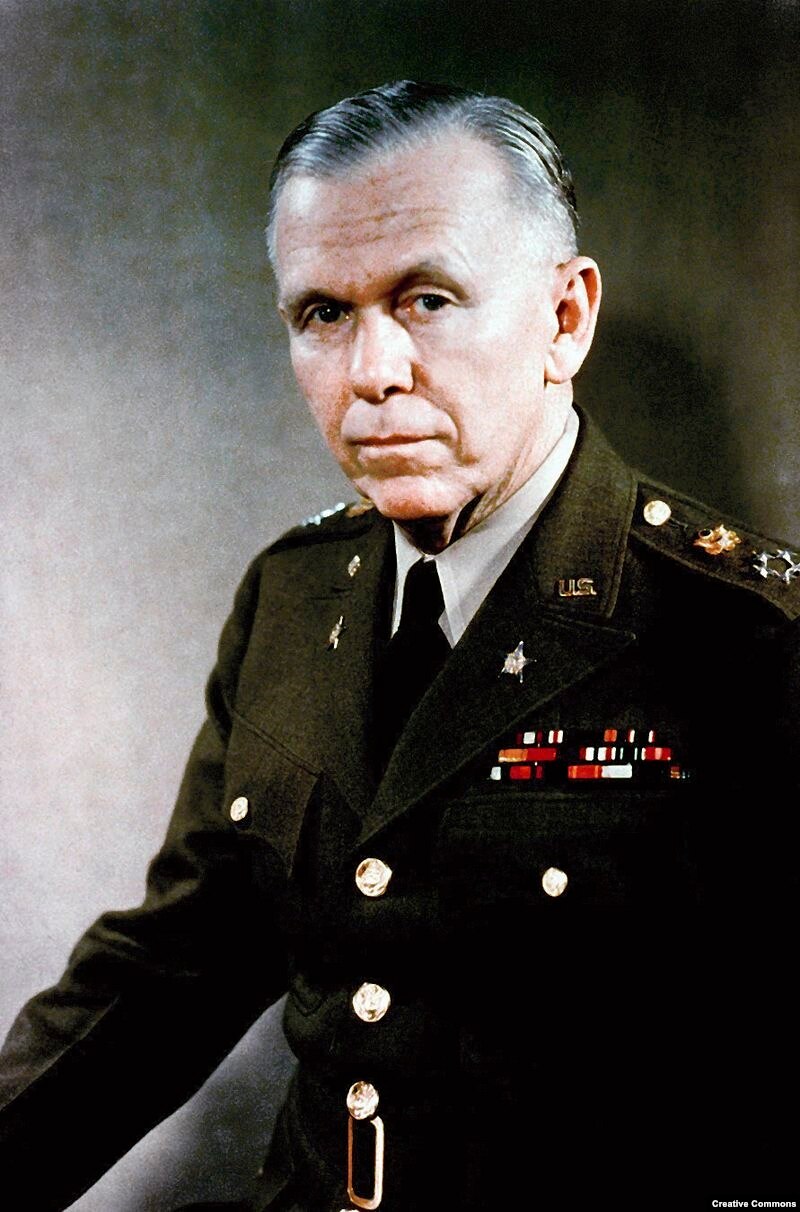
“The United States must do everything that is in their power to help restore the health of the global economy, without which neither political stability nor a strong world is impossible. Our policy is not directed against any country, but against hunger, poverty, despair and chaos. Our goal is a revival of the world economy, which would create political and economic conditions for the existence of free institutions.”
These words said exactly 70 years ago, in early June 1947, US Secretary of State George Marshall . His speech to the graduates of Harvard University launched the “European Recovery Program program”, which went down in history as “Marshall's Plan”. Since then, this name has become, in a sense, a household name, denoting this form of helping the successful economic transformation of other countries, which brings success to both recipients of this assistance and donors.
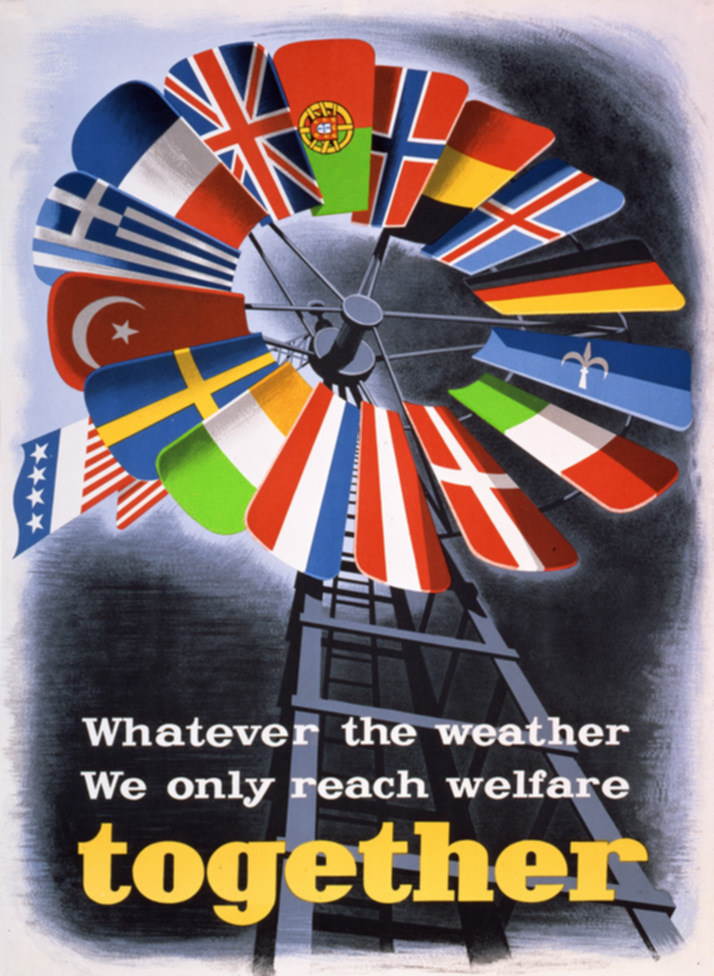
Officially, participation in the “Marshall Plan” was also proposed by the Soviet Union and Eastern European countries, which in the late 1940s fell under the increasing political influence of Moscow. Stalin, however, refused the American project - moreover, he forbade the Eastern European allies to participate in it. The Czechoslovak Minister of Foreign Affairs Jan Masarik , who, together with the other leaders of the country, was called “to the carpet” for the Kremlin for this purpose, attributed a bitter phrase: “I went to Moscow with a free man, and returned to the Stalinist lackey.” Be that as it may, and Czechoslovakia and Poland, who initially agreed to join the “Marshall Plan”, abandoned this intention under pressure from the USSR.
More than 40 years later, at the end of the Cold War, there was a lot of conversations about the possibility of a new “Marshall Plan” that would help the Russia's difficult situation and other former Soviet republics transform their economy and political system. However, this did not happen.
About the “Marshall Plan” for Europe and the failed-for Russia, in an interview with Radio, Freedom is told by the-American historian Ivan Kurill .
- In your opinion, what were the main motives of the then US leadership, which made Washington come up with the Marshall plan? What was there more - altruism or sound calculation? It is clear that the revival of the economy of post -war Europe ultimately affected the American economy.
- Of course, there was a calculation and taking into account the experience of the First World War. Everyone remembered that Europe, which turned out to be weakened after the First World War, then became a nutrient medium for the appearance of authoritarian regimes. The 1920s never led Europe to prosperity. The economic crisis then created nutritious soil for dictatorships. One of the main tasks of those who planned the “Marshall Plan” was to prevent the authoritarianism of a kind to grow up again in Europe. Moreover, at this time they already spoke not so much about the danger of the revival of Nazism as about the danger of the spread of communism, given the increased influence of the Communist Parties in many European countries, including Western. Thanks to the great role that the Communists played during the war in anti -fascist resistance in Italy, for example, or in France, all this was quite real.
Of course, from the United States there was a political calculation to a greater extent than economic
Here, of course, there was a political calculation on the part of the United States, I think, much more than economic. Economic calculations were probably added already in the process of working out parts. Of course, American companies wanted to lobby for their participation in the restoration of Europe. One way or another, this program helped European countries to recover, probably, faster than it would be without it. In any case, it is characteristic that since then in the world the requirements are very often heard to create a new “Marshall plan” for someone else. They said that Russia needed such a plan in the 90s, they talk about a separate “Marshall plan” for Ukraine, its study has been going on in recent years, in other regions of the world the “Marshall plan” is also constantly referred to. That is, one way or another, the overall result of this plan is usually evaluated positively.
- Participation in the Marshall Plan was also proposed to the Soviet Union. What made Stalin refuse and prohibit participating in it with his Eastern European satellites? He felt what you said about, this anti-communist orientation of the plan, or were there any other considerations there too?
- It was possible not to feel, it was already clear. After all, to recipients, within the framework of the Marshall Plan, political requirements were also presented, including the holding of free elections. It is clear that such requirements were not ready to fulfill the Soviet authorities and pro -Soviet governments in Eastern Europe. There were, of course, exceptions confirming the rule. Finland, which depended at that moment on the Soviet Union, abandoned the “Marshall Plan”. On the contrary, at a later stage, she received assistance through the programs related to the Marshall Plan, Yugoslavia - this happened after the gap between Tito and Stalin occurred. As a result, if you look at the geography of the recipients of the “Marshall Plan”, then it turned out if they were not fully coincided with the western sphere of influence, then very significant-by 95% somewhere. And in those countries that began to receive help according to the Marshall Plan, the influence of the Communists was weakened. This was one of the goals of the plan. It is impossible to talk about him only as economic assistance, he also had political tasks. Indeed, in the same 1947, the doctrine of the restraint of communism appeared, the so -called doctrine of Truman . All this lay within the framework of the idea of the world in which communism sets in, and democratic countries are defending. Not that Stalin was right or wrong, but in his logic it was clear why Eastern Europe was not entering this plan.
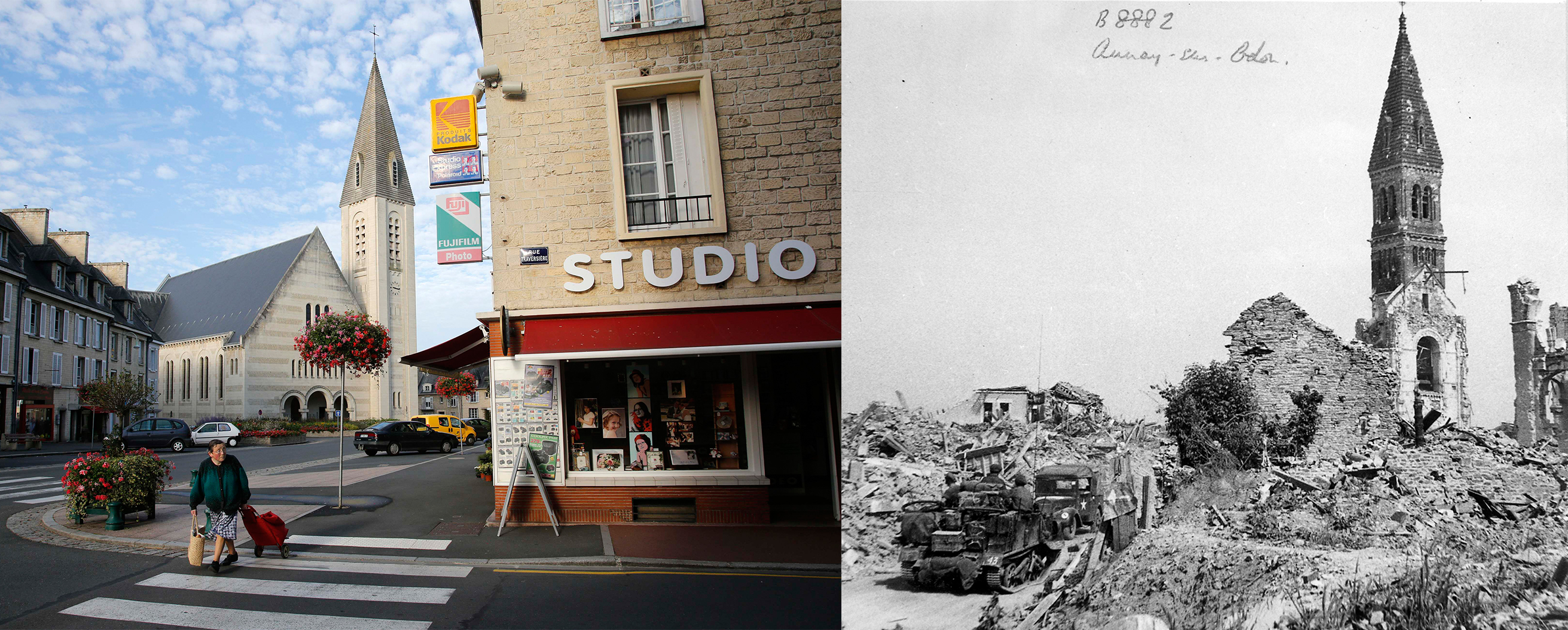
- That is, we can say that partly the criticism of the “Marshall Plan”, with which Molotov acted on behalf of the USSR, calling this plan an instrument of American domination in Europe, at least partially justified?
- Criticism of Molotov looked purely ideological. It turned out formally that Molotov rejected the proposal of the Americans. Now many historians claim that the Americans did not hope that the Soviet Union would join the Marshall Plan. It is difficult for me to give unambiguous assessments. Then a situation arose when both sides began to suspect the worst of the opponent’s actions.
- The former allies grew into mutual distrust.
- You can say so. The US State Department understood that Stalin would refuse, and understood that if suddenly theoretically, Stalin would not refuse, it would be very difficult to conduct a decision to send large funds to the Soviet Union through Congress. The supply of a large number of goods, and even more so extensive lending to the Soviet Union in 1947, already seemed incredible. Namely, they had to be carried out according to the Marshall Plan. But in the end, the matter did not reach the Congress, because Stalin refused to participate at the first stage. Both sides sighed in relief then: they say, there will be no internal problems because of this.
I went to Moscow with a free man, and returned to the Stalinist footman
- Is it possible to say in this regard that the implementation of the “Marshall Plan” in Western Europe forced the Kremlin to accelerate the Sovietization and community of Eastern Europe? Because 1947 is still not quite stringent regimes in Eastern Europe, still multi-party systems are preserved and so on. We can say that Stalin decided to tighten the nuts in connection with such an American offensive in Europe, which he considered the Marshall Plan?
- There are historians who say that Czechoslovakia was ready to participate in the Marshall Plan, maybe Poland. Indeed, information about this, which came to Moscow, forced the Soviet Union more rigidly establish its control over these countries. Most likely this was really one of the factors, but not the only one, accelerating the formation of pro -Soviet regimes in Eastern Europe.
-You already mentioned at the beginning of our conversation that in the 90s you often talked about the “Marshall plan” for Russia, sometimes for other post-Soviet countries. In your opinion, why, although the West then provided a certain, sometimes significant financial and humanitarian aid, nothing of the kind of “Marshall plan” has appeared for Russia? Maybe if such a project had been implemented, then the course of the post -Soviet history of Russia would be somewhat different?
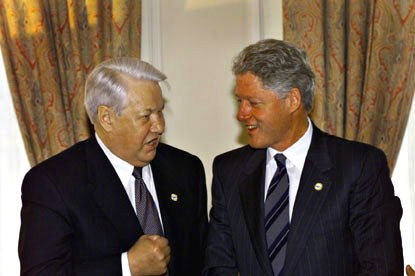
- This is a very attractive reasoning. I myself would repeat it in some form with pleasure. But, probably, this was unrealistic in the state, taking into account how the American leadership saw the situation. If you purely theoretically imagine such a help option, then it could probably change the situation in post -Soviet Russia. Because the then Russia, in my opinion, was more plastic in the 90s. We experienced such a crisis of identity in which more integration into world structures, more cooperation, probably could affect the course of events within the country. I do not see the inevitability of what happened in Russia today. The 90s were the time when it could be influenced. I remember these reasoning in Russia itself in the early 90s, that we are experiencing very difficult times and, probably, the greatest help of the West could play a role. Although there is also the point of view of opponents who say that with that structure of the authorities, the money would still go there. I would like to be a retro -optimist and think that this could affect Russia. But, returning to the position of realism, looking at the world of the beginning of the 90s through the eyes of an American politician, we will see that there was no need for such a plan. Unlike the situation after the Second World War, when there were fears about the arrival of the communist dictatorship, the situation in the 90s seemed different. The main stronghold of authoritarianism is defeated, no danger that could have threatened the United States in the future, seemed to be not, and no one even stuttered in the USA that some voluminous help needed. Maybe it was the myopia of American politicians, but, reasoning purely realistically, it is clear why the “Marshall plan for Russia” did not appear.