
Translated material
Freedom and death

The professor of the Moscow Orthodox Institute of St. John the Theologian Vladimir Varava
Yakov Krotov: Our guest is a wonderful tanatologist Vladimir Varava , a philosopher, professor of the Moscow Orthodox Institute named after St. John the Theologian and the author of several books, including a book whose name I really like in the Serbian translation, "Ethics of the Failure of Death", that is, "Ethics of the Non -Confusion of Death."
Tanatologist - from the Greek "Tanatos", that is, death, the god of death. And my first question: after all, most people about Christianity have a rather funeral idea - the bureau of ritual services?
Vladimir Varava: To put it mildly, yes.
Tanatologist - from the Greek "tanatos", that is, death, the god of death
Yakov Krotov: But historians know that "Memento Mori" is a pagan expression, the expression of the Stoics, which the same age and contemporary of the Savior Seneca loved. Is it necessary to be a Christian to remember death all the time? Why did you think about death?
Vladimir Varava: Probably, “Memento Mori” is such a point of the closest coincidence of pagan ethics, philosophy and ethics of stoicism and Christianity - of course, with the obvious primacy of philosophy as such. "Memento Mori" is a credo of ancient philosophy, which, I believe, was accepted by Christianity and filled with its content. The fact is that “Memento Mori” is an understandable philosophical maxim, and it is not so much a call to think about death, because it is impossible to think about death ... “Tanatology” is a science -shaped term that contains internal contradictions.
Death is indescribable, this is the only thing that is not subject to analysis, therefore, tanatology is pretentious and insolvent. It is preferable to just talk about death. Death, from Plato, is reflection on dying, over the limb.
Yakov Krotov: Here you say - Christianity perceives pagan asceticism, puts it in the basis of a monastic Christian act - first in the East, then in the West. But this is a memorial on death, in fact, asceticism itself is not a Christian phenomenon.
Vladimir Varava: Yes, it is pre -Christian.
Yakov Krotov: What is asceticism, from the point of view of a normal person who lives between beer and restaurant? After all, asceticism is self -death.
Vladimir Varava: Christianity inherits not just pagan asceticism, but the tradition of platonic asceticism. Platon belongs to all these well -known expressions that philosophers only think about death, and philosophy is dying, the body is the coffin of the soul. To see, see the truth, it is necessary to eliminate what interferes: sensual, that is, the bodily state. And Christianity is largely Christian Platonism, the inheritance of this tradition.
Yakov Krotov: Is this not Gnosticism?
"Memento Mori" is a credo of ancient philosophy, which was adopted by Christianity and is filled with its content
Vladimir Varava: The Gnostic element is also here.
Yakov Krotov: If you go to the bookstore, then there is a regiment of Christian literature, but the Gnostic literature regiment is perhaps no less. Maybe this is because it is easier for people to think about themselves in the concepts of knowledge and death than in the concepts of faith and resurrection?
Vladimir Varava: Probably yes. There is a very big difference between knowledge and faith. After all, tanatology is inherently very similar to theology, and vice versa, because the subject of theology is the invisible god as the beginning of the visible world, the creator of the visible world, and therefore, a religious consciousness needs a faith in the invisible God. Philosophy is also a faith in death as an invisible cause of dying. A corpse, a dead man, a dead man is the result of the action of death, and death in itself is as invisible, as incomprehensible as God in theology. Here is a coincidence.
But for some reason, it so happened that most believers are more willing to believe in the invisible God, which understand the invisible death or the fact that death is metaphysical. And philosophy is actually a belief in death as an invisible cause of the dying of the body. There is such a theological, philosophical term - apophatic. This is the comprehension of the invisible, incomprehensible, but really existing.
Yakov Krotov: Through the denial of the possibility.
Vladimir Varava: Yes. And therefore, how negative theology denies God through all visible manifestations, so philosophy denies all visible images of death as human images that do not correspond to the subject. There has never been, no, and will not have death experience - this is such a fundamental contradiction, a mystery and a product of human existence.
Yakov Krotov: If there is an author who is circulating, like an vulture, on the issue of death, then this is an ecclesiastes (“all the vanity sticks”), Solomon, relatively speaking, that is, a double -headed eagle in a crown, which makes circles and thinks: why is all this if everything is dying? This is the memory of death, not in Latin or Greek, but in the biblical version. After all, faith on Sunday comes to the elected people quite late, consider that after captivity - it already has the prophets. In Ecclesiastes, there is no other question there: where does the human soul rise-where the soul of animals, or nevertheless to God? But faith on Sunday is impossible without this not to twist over death.
Vladimir Varava: Well, yes: “And only by faith in the Resurrection of a kind of index given,” says Pasternak, as if describing the phenomenology of faith. This is a circle over the death of an ecclesiastes - it, perhaps, is not so much over death, but at all over the vanity of the eternal repetition of the same one.
Yakov Krotov: So death is the eternal repetition of the same. He who was at the same funeral was at everyone, including their own.
Vladimir Varava: What is the fundamental difference between a philosophical approach and religious? Still, an ecclesiastes is a more book that is interesting to philosophers of the existential type. Here Dostoevsky and Ecclesiastes are those things that struck me at the dawn of foggy youth. Ecclesiaste initially answered some questions inherent in death, which became a problem, a mystery, a tragedy.
Yakov Krotov: Do everyone should go through the fear of death? Here you write about children. I know a lot of people's stories about how they came to faith, and they say that the first impulse is five, six, seven years old: how will I die, how can it be?
Vladimir Varava: Indeed, on the border of six to seven years, self-awareness, ego, erotic beginning is awakened, and death is perceived ...
Yakov Krotov: As in a servant - from what time to profess a child?
Christianity inherits not just pagan asceticism, but the tradition of Platonic asceticism
Vladimir Varava: Yes, from the age of seven.
Yakov Krotov: When passions awaken.
Vladimir Varava: Yes, it means that he is already sinful, crafty, hypocritical ...
Yakov Krotov: So, the transition from love as something that your parents give to you, to the fact that you can love yourself, is associated with anxiety about nothingness.
Vladimir Varava: Yes. I have my own theory about this. When the ego awakens on the border of six to seven years, death begins to be perceived in the first person. Before that, “he died”, “she died” (grandparents) - not like a tragedy. And when death is perceived in the first person, then the fear of death, horror, this is the first despair, the first children's tragedy. Everyone probably knows well the state of children's frustration, children's depression, when you suddenly understand that you will die too. Until that moment, you could kill ants or someone else, and there was absolutely no morality and conscience. And at the age of seven, an understanding of death suddenly awakens. Then there is a fear of the death of parents, but at first - a selfish fear.
Yakov Krotov: That is, not only the ego is awakened, but also the idea of something else: what I do to another, I do to myself.
Vladimir Varava: Of course, and this becomes conscious. Then the moral consciousness begins to develop, and the fear of death in the first face passes into fear for another. The worst person is not his own death ...
Yakov Krotov: That is, a person cannot compassion if he has not learned to be himself?
Vladimir Varava: If he did not receive this burn of consciousness by death. Maybe he is not the first, but the first burn that a person receives at the dawn of the Metaphysics of Childhood itself, probably in some kind of trusting period, is the first meeting with the world, surprise to the world, the philosophical experience of questioning, this is the first dumbfounding-that there is the world, there is being, and not nothing.
Yakov Krotov: A child is born with the ability to speak, but a person will not speak if there are no speakers around him. But speakers, parents, relatively speaking, awaken in us the ability to speak not that an animal, but limited, is a temporary language. But what you are talking about is the awakening of the second language, a philosophical language that cannot be common, it is not from parents, not from the environment. That is, each person, having experienced this burn, begins to construct his jargon, and then he becomes quite a man. And then he compares this language with others.
There has never been, no, and will not have death experience in death
Vladimir Varava: Yes, this awakens the deep metaphysical archetype, which is in a person and does not depend on the environment.
Yakov Krotov: Maybe the first language is called the language of necessity? After all, without this you will not survive among people ...
Vladimir Varava: Yes, he is instrumental, worker.
Yakov Krotov: And the second language is the language of freedom, philosophy.
Vladimir Varava: The language of metaphysics, with the help of which a person identifies the experience of his mortality and freedom, including human dignity.
Yakov Krotov: Suppose I believed in God, told myself that I was a believer. In what language I speak this, and how can I understand my experience of God and the fact that He coincides with the experience of my godfather?
Vladimir Varava: Almost nothing. Probably, to some extent, this is a miracle, because a radical, tough hermeneutics teaches that understanding is impossible, each person is in his hermetically closed semantic universe, and translation is a matter of understanding.
A philosophical question arises: what does another person understand when I communicate with him? Social practice says that he seems to understand me, but there are constant conflicts, constant misunderstanding ... What would happen if I looked at the world of another person?
Yakov Krotov: If I looked at my bride through the eyes of her mother, I would not marry her! We see completely different people - the eyes of her brother, her classmates and so on. But I got married. If everything goes more or less normally, then the synchronization of languages occurs.
Vladimir Varava: There is probably some experience of deep trusting understanding.
Yakov Krotov: Understanding is a fertile process, it is grace, including for atheists.
When the ego awakens on the border of six to seven years, death begins to be perceived in the first person
Vladimir Varava: Yes, it cannot be scientifically explained, but indeed, there is understanding. Here are two people face death, they have a common grief, and this is the strongest language of general understanding - loss. “Only death collects us,” says Brodsky. The language of death is a universal language, while the moral qualities of people awaken.
Yakov Krotov: On the one hand, of course, people united by grief are capable of even such a wild act as coming to the temple. And they cause moral suffering to the priest, because he understands that they came and left, and this has nothing to do with faith. Father Alexander Men said that behind the wedding and funeral service, the shortest, brightest sermons should be said, because there will be no second chance. But even this is not a chance.
Then the question is: why does this shock not unite? People will disperse from the commemoration and will again be at enmity with each other. And the shock unites the resurrection - forgive everyone for the sake of the resurrection.
Vladimir Varava: So Yankelevich subtly noticed that death is a metaphysics for people who never think about anything in their lives, but death arouses metaphysics in them. Schopenhauer said: "If not for death, then people would not philosophize at all." Death is the Musaget of philosophy.
Yakov Krotov: So far, death does not connect us ...
Vladimir Varava: This is well said!
Death helps understanding, because it breaks the armor of selfishness
Yakov Krotov: Death helps understanding, because it hacks the armor of egoism. At some point, I suddenly understand that my quarrel with my brother is nonsense and nonsense, because my father died. And then it may close. Ecclesiastes do not have this, but this is in the book Proverbs. In the Old Testament, especially in the most ancient part, the same motive again and again brings out that the righteous dies righteous. And then it pulls the entire Christian Middle Ages. After all, the "brothers of the Karamazovs" begins with this - the elder is blown up. If he is a saint, he must fragrant! And the death of Christ, let's say directly, far from fragrant.
We have a short video interview with Lutheran bishop, father Pavel Begichev .
Pavel Begichev: Resurrection is a cure for death, which acts, it is when there is such a diagnosis - mortality. If there was no diagnosis of mortality, there would be no need to humanize the Savior, suffer on the cross and resurrect. But since there is mortality, this requires resurrection.
Resurrection is a cure for death, which must be taken strictly as prescribed by a doctor and strictly at a certain time, and precisely after death, as stated in the Scripture. This is still a consequence of our disease, that is, we must finish to the end in order to transform. In the end, to Christ, in order to defeat our death, I had to die.
This is also evidenced by the rich symbolism of gospel speech. If the grain that falls into the ground does not die, then he will not bear the fetus. The apostle Paul said: "Not all of us will die, but all will change." People who have lived before the coming of Christ will not see death. And, by the way, Christ who believes all believes that we will not see death, we will die only for the people of this world.
Resurrection is a cure for death that acts, it is when there is such a diagnosis - mortality
But the man himself, who believes in Jesus Christ, does not notice death, he passes ... Actually, he has already passed from death to life. I think that it is necessary to go through death, because Christ went through it, and we were commanded to follow the traces of Him.
There is a belief that a real Christian does not see death, so he dies gently, around him the fragrance and singing of angels
There is a belief that a real Christian does not see death, so he dies gently, around him the fragrance and singing of angels. And it happens that the believer dies heavily, difficult, with pain, with a scream. We pray that our death is painless and worthy, going to bed, we ask: "The night is calm and the end of the worthy will give us the Lord Almighty." The very presence of this prayer indicates that everything happens, and it is not necessary to perceive this as some kind of special curse. Well, such a fate ...
Vladimir Varava: wonderful Christian words!
Yakov Krotov: Only the end is a little pagan - about fate.
Vladimir Varava: Anyway, a religious understanding of death, religious tanatology is very reminiscent of a scientific attitude to death and the attitude to the death of ordinary people. The philosophical attitude to death is radically different. Scientific and ordinary thinking perceive death as a certain final event of life, a physical phenomenon that ends the earthly, visible path of a person’s life, and nothing begins behind him if you are a materialist, an atheist (which, by the way, is not verified, because you cannot prove the state of nothingness), or other being.
Such an understanding of death - as the end of physical life - forms a very definite view of the nature of death. This is not a philosophical belief in invisible death, but faith in subsequent afterlife, life after death. Philosophy hooks the problem itself. As Wittgenstein said, if we do not understand the meaning in this life, then the eternal life will do nothing to us.
We do not know the nature of death. Death refers us to life itself, to being itself. If there is death to which no one was able to touch, then the world in which we live, whether I know him, whether I live correctly? That is, death has an ethical meaning for life, death hints that life is not quite the way I perceive it in ordinary scientific or religious experience.
Scientific and ordinary thinking perceive death as a certain final event of life
Philosophy says that death is not a watershed of this and that being, but a hint of the strangeness of being itself. And we begin the process again, again we begin the dawn of philosophical surprise, return to life, in which there is not only death and end, but such a strange life. Parmenid: "There is being, but nothing." Heidegger: "Why is something - nothing?" And when Pasternak says that “only a faith in the resurrection is a kind of index given”, here, probably, we are still talking about some spiritual meanings of this act, rather than some kind of epistemology. Here is the difference between the philosophical and theological, theological, religious approach.
Death is an event for life itself, for the importance of life. Perhaps life is not life, and death is not death, and God is not God, and the world is not the world, and man is not man. Philosophy everything turns upside down, re -builds a different order. В поле критического анализа философии попадают все традиционные устои, все конструкты, в том числе и религиозные. Философия заново осмысливает религиозный опыт. Вот такое у нее богохульное, дерзкое, претенциозное дело.
Люди, объединенные горем, способны даже на такой дикий поступок, как приход в храм
Яков Кротов: Я от лица Церкви смело говорю: встретишь религиозную конструкцию – уничтожишь ее, и сделаешь богоугодное дело. Собственно, это то, что делал Господь, изгоняя торгующих из храма. А вот то, о чем говорил владыка Павел, что праведник умирает правильно, а не праведник умирает нехорошо, это ведь имеет свой аналог в науке, когда ученый говорит, что смерть – непременный элемент бытия, что жизнь без смерти – это нечто наподобие огромной раковой опухоли, которая будет уродливо разрастаться. Во всяком случае, смерть – это всего-навсего атрибут жизни.
Владимир Варава: Да, это такая натуралистическая концепция - Мечников и так далее. Позитивистская парадигма в этом плане работает, но она тоже исходит из презумпции какого-то знания, предположения – что будет, если будет... Мы не знаем, что было бы, если бы порядок мира был иным. Позитивистская научная точка зрения вполне понятна: смерть выполняет такую служебную, гигиеническую роль во вселенной, способствует продолжению рода, подчищает, убирает.
Значение смерти метафизически совершенно непонятно. Толстой говорил: "Глупо, что мы рождаемся, глупо, что мы умираем". Значение смерти непонятно для человека, и это большая мучительная трагедия, это тайна человеческого бытия. В данном случае религиозные концепты в какой-то степени являются метафизическим утешением. Философия - не терапия, она не утешает, а заново вопрошает. И здесь точка совпадения религии и философии, потому что это заново и заново вопрошание о смысле бытия, и религия все время заново поднимает вопросы о бытии, о понимании смерти. Смерть для философии – это тайна и трагедия.
Яков Кротов: Ну, можно подумать, для веры это сплошная радость…
Владимир Варава: По крайней мере, это знание. Это вера через призму знания, та вера, которая становится уже убежденностью, знанием. Чистая вера – это состояние, практически немыслимое в нашей жизни. Это абсолютная безосновность, подвешенность, трагическая непостижимость…
Яков Кротов: Но почему опять трагизм?
Владимир Варава: Трагизм не в литературном смысле, трагедия не как жанр, а вот понимание удела человеческого бытия не может не быть трагичным по существу. И в этом как бы смысл человеческого бытия - понимание своего бытия как трагедии.
Яков Кротов: Лучшее, что выработало богословие, - это объяснение, что человек смертен, и что изгнание из рая – наказание за гордыню. Отсечение себя от Бога заключалось не в том, что Бог пригласил смерть – вот, пожалуйста, тебе Адам и Ева, распоряжайся ими, как хочешь. Бессмертие, или, лучше сказать, вечная жизнь, – это бонус, который благодатен. Ты с Богом – ты с вечной жизнью, ты от Него отвернулся и пошел к этой яблоне, к этой гадюке – ты вышел из бонуса, и пеняй на себя. В этом смысле смерть – нечто, природное человеку.
А воскресение подводит не к бессмертию, а к возвращению к Богу. То есть Бог воскрешает не путем изничтожения каких-то зловредных микробов, а Бог воскрешает, давая себя и этим преодолевая смерть. Причем, если вдруг Адам и Ева, введенные в рай, еще раз согрешат, это может опять повториться – они опять выйдут из этого облака и сияния вечной жизни. И значит, смерть – совершенно нормальное явление, и ничего трагического тут нет. Мне кажется, есть какая-то тонкая разница между вечной жизнью и бессмертием - ну, как между раем и адом.
Владимир Варава: Безусловно.
Яков Кротов: Потому что и ад – это бессмертие.
Смерть отсылает нас к самой жизни, к самому бытию
Владимир Варава: Да, бессмертие – это растиражированная конечная жизнь, эмпирическое продление, и это ужасно, невыносимо. Против такого бессмертия и выступают и материалисты.
Яков Кротов: А Федоров? Его же все время били: ну, воскресишь ты Ивана Грозного, и что ты с ним будешь делать, и что он с тобой будет делать?
Владимир Варава: Да, здесь аргументы Федорова подсекает Владимир Соловьев, который говорит об этой дурной бесконечности непреображенного бессмертия. Он говорит, что невозможно представить ни Шекспира, который пишет свои драмы, ни Ньютона, ни Александра Великого, а просто эта непреображенная жизнь не имеет никакого смысла.
Вечность и бессмертие – это, конечно, онтологически разные состояния. Вечность – это состояние, которое может быть по ту сторону жизни и смерти. Вечность – это миг, понимаемый как абсолютное бытие, как истина, как полнота бытия, которая достижима не обязательно после смерти, а в этот момент, здесь и сейчас. Поэтому стяжание истины – это обретение вечности, а за истину я могу умереть.
Истина – то, за что я должен умереть, больше нет смысла существовать. Если я откладываю истину по ту сторону, значит, я не обрел ее в этой жизни, значит, моя жизнь пуста, и смерть, и воскрешение мне не поможет.
Яков Кротов: Здесь вы подходите к вопросу о свободе. Цинизм – враг номер один свободы, это отрицание свободы. А второй враг – это сказать, что свобода есть, но она такая зеленая, оранжевая, и она слишком много хочет, она хочет, чтобы я умер. Родина или смерть, христианские мученики, то есть для того, чтобы быть свободным, ты должен быть готов умереть. This is very unpleasant.
На самом деле знание о смерти делает человека несвободным
Владимир Варава: Да, но тут еще возможны другие соотношения смерти и свободы. На самом деле знание о смерти делает человека несвободным, ведь когда человек знает нечто, то это воспринимается как определенная детерминанта. Вот он знает, что с ним будет, и он уже ведет себя сообразно этим условиям. Он живет в мире с заведомым порядком, законом, и неважно, духовный это закон, если это религия, или материалистический, если это наука. Он должен играть сообразно этим правилам, подчиняться им, как человек в государстве подчиняется законам.
А философия освобождает человека от подчиненности знаниям, показывая, что на самом деле здесь мы сталкиваемся с фундаментальным неведением, незнанием, неполнотой знаний. И это не только незнание смертного часа, но и незнание самой сущности. Это освобождает человека, потому что дает ему надежду, которая по ту сторону всех возможных человеческих проектов и представлений.
Вот у Мандельштама есть гениальная строчка: "Мы смерти ждем, как сказочного волка". В этих словах есть идея того, что со смертью связана какая-то надежда освобождения. Это какое-то чудесное чудо, детская ностальгия по чему-то невероятному.
Яков Кротов: Я думаю, что это детская ностальгия по воскресению. "Сказка сказок" – она формально о смерти в самых разных обликах, включая смерть Пушкина и все прочее. И вот умершее детство - меня нет... Это как раз тот самый ожог смерти, который не рубцуется, а, наоборот, освобождает душу.
Владимир Варава: Правильно! Более того, человек - до тех пор человек, пока он не лечит этот ожог никакими земными, человеческими средствами. Он должен держать его в обнажении, чтобы чувствовать боль.
Лучшее, что выработало богословие, - это объяснение, что человек смертен, и что изгнание из рая – наказание за гордыню
Яков Кротов: А в какой момент философия делает то, что регулярно должна делать религия, во всяком случае, проповедник? Надо же иногда и вздрючивать, когда человек говорит: "Я - всего лишь человек, я не могу идти до конца. Я могу идти только в пивную, а вы от меня хотите, чтобы я клал живот на алтарь". И я ему сурово говорю: "Господь Иисус Христос пошел на Голгофу, а если бы он свернул пиво пить, где бы мы сейчас были?" А он мне отвечает: "Ну, а где бы мы были? Все рано умрем".
Вот владыка Павел говорил про воскресение как лекарство от смерти, а атеист спросит: "Какая связь? Если вы готовы веровать в воскресение, я готов допустить, что воскресение было, но какое отношение это имеет к нам? Вы, верующие, умираете, и мы, неверующие, тоже умираем". Есть ведь разница?
Владимир Варава: Вот это и есть свобода человеческая. Философия ищет смысл бытия и смысл смерти. Никто не принуждает человека философствовать, вот в чем дело. Но то, о чем вы говорили, в большей степени имеет отношение к педагогике. То есть религия в большей степени педагогична, нежели философия. Педагогика имплантирована в религию.
И вот, возвращаясь к моменту грехопадения, использованию смерти как, может быть, инструмента наказания, нельзя забывать и о теологической тайне смерти: Бог смерти не создал. Вот в чем вопрос: а чья же смерть? Если она не человечья, если она не природна, с точки зрения философии, потому что смерть – это не биологическое событие, а духовное явление, и Бог смерти не создал, то откуда смерть, где бытие смерти?
Яков Кротов: Но тогда этот вопрос совпадает с вопросом о свободе: откуда взялась свобода?
Владимир Варава: Вот свобода и смерть – это те вещи, о которых нельзя ничего говорить.
Яков Кротов: И это говорит человек, написавший, как минимум, три книжки! (смеются) Вы сказали, что смерть взрывает эгоизм, люди объединяются вокруг умершего, пусть и на краткий миг. Это фигура речи или реальность? Смерть другого и воскресение другого – это факт его физиологии, или это факт и моей физиологии? Физически смерть другого – моя смерть?
Философия ищет смысл бытия и смысл смерти
Владимир Варава: Природа человека такова, что этико-психологические предпосылки для объединения людей в трауре вокруг горя более достоверны и естественны, нежели объединение людей на фоне идеи воскрешения. Я вспоминаю Набокова , он говорил в одном из романов: "Если я вдруг увижу умершего человека где-то там вот сейчас, то я в ужасе оттолкнусь от него на веки вечные и крикну самым страшным…" Смерть близкого – это трагедия, которую нужно пережить как вечную утрату, как некую невозвратность. Иначе это получается как бы игра жмурки, в прятки. Господь не играет с нами в прятки. Он вообще не играет.
Яков Кротов: Я историк, и у меня в голове на первом месте один Набоков – отец Владимира Набокова , который формально повторил подвиг Христа: заслонил собой Милюкова от выстрела, спас чужую жизнь. Спрашивается: его жизнь имеет отношение к жизни других людей, которых он спас? Ответ: ну, конечно! Но если смерть другого может иметь отношение к моей жизни, то и воскресение другого?..
Владимир Варава: Поэтому мы и говорим о состоянии веры и надежды. Психологически это очень трудное состояние. Почему человек справляется с утратой? Потому что он воспринимает это как вечную потерю, как некий удел в своей жизни. Это очень серьезно – потерять человека и смириться с этой потерей. Если ему будет предложен вариант – возобновить эту игру, то тогда как бы отменяется весь тот честный трагизм, который он пережил в скорби, трауре и потере. И, значит, это было не по-настоящему?
Яков Кротов: Не соглашусь. Это, может быть, в теории, а на практике - мне интуитивно кажется, что вера в воскресение не отменяет трагизма смерти. Оттого, что мои любимые люди когда-нибудь воскреснут, не отменяется кошмар того, что они уже смертны.
Владимир Варава: Мы отрицаем того же Федорова за какой-то буквализм в идее, в его проекте воскрешения мертвых, но ведь это мало чем отличается от христианского представления о воскрешении. И для атеиста, скептика федоровское воскрешение или ваше – это одно и то же: и там, и там речь идет о невозможных и, более того, ненужных вещах.
Яков Кротов: На уровне массового религиозного сознания, боюсь, вы правы, потому что мало кто представляет себе воскресение из мертвых как воскресение преображенных. Каждый хочет сохраниться.
Владимир Варава: Я никоим образом не хочу нарушить святость этой традиции, но мне кажется, что на уровне коллективного бессознательного пасхальная радость – это еще о чем-то другом. Это радость о бытии, философская радость людей. Вот как в смерти, говорит Янкелевич, люди становятся философами, и в Пасхе тоже становятся философами, удивляются чуду наличного бытия, тому, что мир вообще есть, - вот психологические мотивы всеобщего ликования.
Есть животная радость воскресения, а есть человеческая радость воскресения
Яков Кротов: Ну, наверное, это так и есть - на 99%. Как говорил тот же Владимир Соловьев, вино на 90% состоит из воды, но становится вином благодаря оставшимся 10%. А пасхальная радость, возбуждение на 99% состоят из того, что описали вы: «слава тебе Господи, все-таки крематорий – не точка в жизни». Но христианство является христианством на какой-то вот тот один процент, который присутствует на этом фоне животной радости. Есть животная радость воскресения, а есть человеческая радость воскресения.
Владимир Варава: Я согласен.
Яков Кротов: Когда Бог говорит: "Авраам, в тебе благословятся все народы", Он имеет в виду Авраама как тело, печень, почки и так далее или Авраама как уникальную личность? Конечно, второе! Значит, мы - не клоны Авраама, а каждый из нас так же уникален, как Авраам.
Владимир Варава: И возможно, пасхальная радость людей, которые не являются уж очень сильно религиозными и не являются философами-метафизиками, это просто пробуждение какого-то метафизического восторга от того, что есть нечто иное, бытие не сводится только к тому социальному, рутинному, скучному, одномерному, унылому, пошлому повторению одного и того же, что заканчивается смертью. Мне кажется, Пасха – это внедрение вечности во времени. Это разрыв, прорыв вечности во времени, когда все становятся метафизиками на один день, на один час, на одну минуту.
Яков Кротов: А вот эти слова – "простимся воскресением" - у нас часто понимают, что это – "простим все", а там все-таки – "простим всех". Вы говорили о прощении, связанном с предстоянием у гроба, и есть прощение, связанное с предстоянием воскресения. Это же разные виды прощения, может быть, даже полярные – прощение от ужаса и прощение от благодати, прощение от дефицитарности и прощение от полноты, и это не моя полнота, а полнота бытия. Причем смерть это не отменяет, и в раю, видимо, будет смерть.
Владимир Варава: Такая народная этимология прощения – это то, что проще.
Яков Кротов: Нет, прощение – это от слова "освободить", "опростать", "развязать". Это простота по Пастернаку, то есть апофеоз сложности.
Все наши житейские проблемы – по большей части проблемы смертного человека
Владимир Варава: Да, и вдруг в какой-то момент прозрение себя каким-то другим. Все наши житейские проблемы – по большей части проблемы смертного человека. И когда мы обращаемся, мы сбрасываем узы смертности, прозреваем, чувствуем себя ангелами.
Яков Кротов: Вы знаете, почему было принято решение о том, что нельзя отпевать Толстого? 1903 год, Льву Николаевичу 72 года. Он дышит на ладан, тяжело болен. Отпевать или не отпевать? И они пишут: не отпевать, потому что лев поставил себя вне нашего зверинца, убежал из клетки… И это на самом деле вопрос о смерти, о том, как массовое религиозное сознание… Ведь это масса отлучила. Но когда Толстой ушел, он ушел, как может уйти только человек. Высокоразвитые животные, по многим наблюдениям, перед смертью ищут другого, умирают в присутствии другого. Уход Толстого из дома - и он знал, что это перед смертью - это, конечно, сугубо монашеский подвиг, подвиг следования за Христом. Он ушел не из дома, он ушел ко Христу. Он выполнил этим уходом всю Нагорную проповедь, возлюбил Христа больше детей, больше жены, больше всего. Сколько людей, в том числе - Иван Ильич, "человек в футляре", герои "Мертвых душ" Гоголя умирают до смерти! А толстовский уход тогда – это, конечно, своего рода Пасха.
Владимир Варава: Я согласен с вами, это действительно подвиг, не оцененный, не осмысленный акт и жест Толстого.
Яков Кротов: То есть это смерть победившая. Значит, возможна такая?
Владимир Варава: Да, при жизни преодолевший смерть… У Розанова есть такая замечательная фраза: "Во Христе мир прогорк". Вот для Толстого мир прогорк настолько, что он стал истинным христианином и ушел в небесную обитель, в тайну.
-
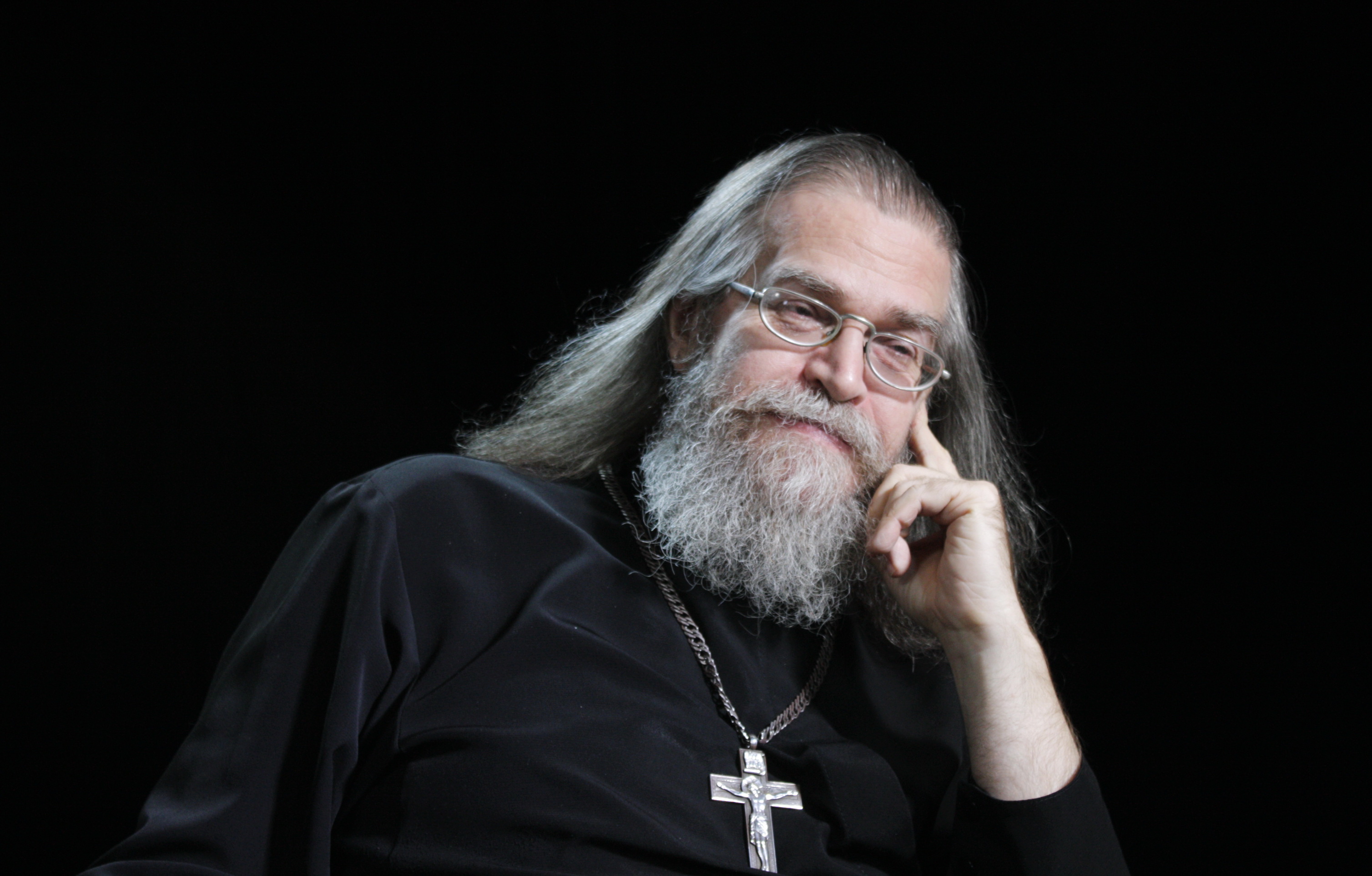

Yakov Krotov
Historian and priest, leading Radio Freedom Radio "Between Vera and Belief"
ykrotov@yahoo.com