
Translated material
Teachers of Marina Azizyan
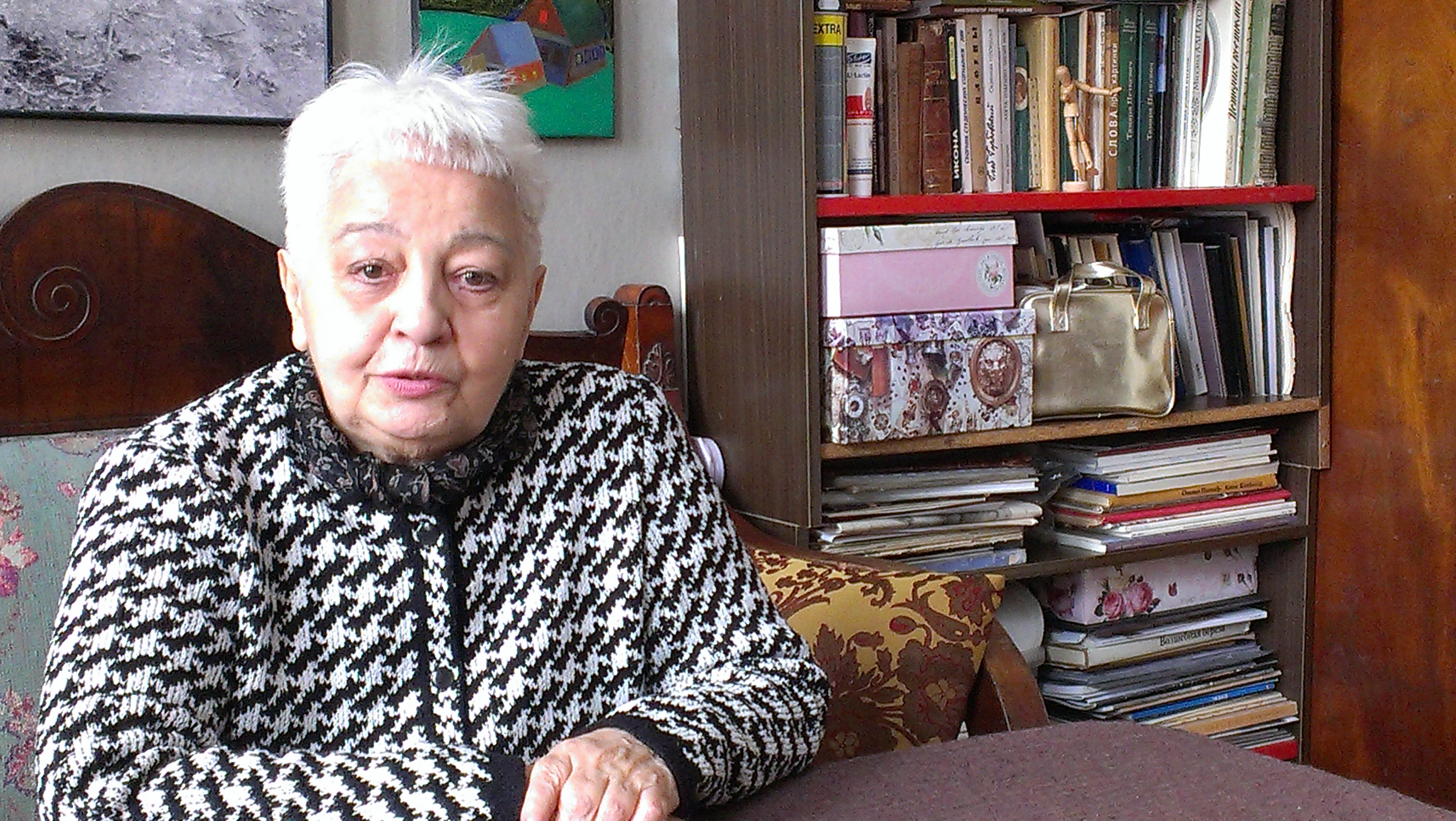
Ivan Tolstoy: Teacher. Spiritual leaders, intellectual guru, cultural mentors. The people who made us. Today, my interlocutor is a St. Petersburg theater artist, director and curator of exhibitions Marina Azizyan. I recognized this name at home, in the family. My dad, talking about his friends and friends, often mentioned Marina about conversations in various companies and guests.
I do not forget one morning. It was in 1968. I was at home alone. The phone rang: the female voice asked my father. I said that dad is not at home. - "Who am I talking to?" I said: "With Vanya." - "Then tell your dad that Marina Azizyan called. Nikolai Pavlovich Akimov died."
It is impossible to split this in memory. Akimov was a friend and idol of my father. The name of the caller was imprinted in my ten -year memory forever.
After half a century, we are sitting opposite each other.
Ivan Tolstoy: Someone considers his parents as his teacher, someone is the first teacher, someone-yard boys or girls, and someone else. Someone believes that he did not have teachers and he himself came to him, as he had a life, deepening into it. And how was it in your case?
Marina Azizyan: While I was small and studied, I rejected all the teachers. Only over the years began to understand how lucky I was. I went to school in 1945. We studied at the rector’s house, where the block was born, because at the school, in which I later studied, there were still a lot of things after the bombing. And I got to the school very peculiar, where the director, nicknamed Pike, was hated by everyone. I can’t say that I hated someone, no, but the nickname Schuk gave the basis of her to be afraid-he could bite. It turned out later that her two sons were shot before her eyes during the war. Our school is also wonderful, built by the German woman on his own money on the 5th line, there was an amphitheater in the physical office. And this director scored to the state (again, only then I began to understand what happened) all the Jews who were kicked out of science: Joseph Abramovich Solovychik, Aron Ruvimovich Mayzelis, Lidia Lvovna Bianchi, sister of Bianchi-writer and so on. Almost all teachers were Jews. There were amazingly talented people. Until the 7th grade, we, the children of the war, desperately loved the “Young Guard”, it was a favorite book, my mother could not tear me out by the ears, offering to read Pushkin. And in the 7th grade, Aron Ruvimovich Mayzelis, an algebra teacher, came to us with a class teacher. He then became a very famous teacher in the city, in a special mathematical school he prepared the guys at the Olympics, the guys won. He lived a long life. It seemed to me that this is one of my first teachers. He was my class teacher. And the school was female. Seeing the girls who want to be similar to Ulyana Gromov or Zoya Kosmodemyanskaya, he left us after the lessons, and the first thing he read to us was the story of the "Amam" Stefan Zweig. This is an amazing pedagogical move! Suddenly, imagine, tear off from Fadeev and offer Stefan Zweig! The next was the "enchanted soul" of Romain Rollan. He opened the windows in different spaces. And then, suddenly, suddenly - the correspondence of the Mahatma Gandhi and Leo Tolstoy!
Ivan Tolstoy: Soviet school!
Marina Azizyan: He fascinated me. He was lean, very ugly, with an eternal runny nose, with his nose shot down aside. He lived up to ninety years. Then, already in old age, he came to my exhibitions at the Akhmatova Museum. We often talked with him on the phone. "How do you live, Aron Ruvimovich?" - "Well, how can I tell you? Put on a stool, threw a loop, but forgot to knock out a stool from under their feet." In general, it was probably hard, old age was given to him. Lidia Lvovna Bianchi was remembered by the fact that she loved the Oberiuts. This is incredible!
Ivan Tolstoy: It's time to love the Oberiuts!
Marina Azizyan: I graduated from school in 1955, you have not yet been born. Lidia Lvovna was a large woman, with bass, she walked in a jacket. She had a kind of fat on her forehead, she came with neatly combed hair. She had a jacket in dog hair, she loved the dog. And she read to us very cool Mayakovsky, just amazing. She preferred Mayakovsky Pushkin. Here is such a turn. She read to us the verses of someone from the Oberiuts, perhaps Vedvedensky. When Stalin died, we were gathered in the gym, the teacher was pronounced mourning speeches, the hall roared, and not a single tear could have appeared in any way. And I saw that teachers are standing and carefully monitor our condition. Well, do not squeeze out in any way. But when Lydia Lvovna Bianchi came out and said: “Children, a wreath of your fives will be the best wreath at your father’s grave,” I had a smile on my young face. Here is such a person.
Ivan Tolstoy: Marina, why did you not like Comrade Stalin at fifteen?
Marina Azizyan: Who told you that I did not love him?
Ivan Tolstoy: Why weren't they felt? Cold heart?
Marina Azizyan: You see, I did not consider him his own father. Because my father fought with me. Secondly, my stepfather was a Jew, and he had amazing literature at home, he had Mikhoels at home, I read something then. I had nothing to do with Stalin as something ... Although, when he died, I did not understand what would happen. These crowds dressed in black people who stood near the reproducers on the streets will be remembered. The neighbor sobbed (we had a communal apartment). Turning away to the wall, sobbed for three days.
Ivan Tolstoy: Was the communal here?
Marina Azizyan: Yes. Of course, I walked the streets, looked at people, and many people came to the classroom. And someone (there were mourning days, we did not go to school) quite calmly arranged dancing houses. They flooded from the Komsomol for this. In 1954, I went to dad in Yerevan. And dad went to write Stalin in a coffin. You know that sessions for artists were scheduled, there should have been a posthumous exhibition, and at night the artists wrote Stalin in a coffin.
Ivan Tolstoy: Exhibition of gifts, exhibition in the coffin ...
Marina Azizyan: And dad was driving from Yerevan, sometimes on the roof of the train, he was passionately eager. In the summer of 1955 I arrived. I am sitting in his workshop, and next to him on the easel there is a small study. I say: "Dad, what are you so gloomy? What are you drawn there?" - "This is Joseph Vissarionovich in the coffin." So he told me that he went to write Stalin, there were sessions. I say: "And what are you looking at him now?" He said: "I want to write a large canvas." I don’t know what size. In general, they did not live. Then, after Stalin's exposure, he also violently pulled out his portraits from all publications, crossed out ... This is a story. The exhibition did not take place. But it would be very interesting to collect such an exhibition.
Ivan Tolstoy: quite a macabral.
Marina Azizyan: I would love to be a curator on her.
Ivan Tolstoy: When you graduated from school, where did you go?
Marina Azizyan: I had a direction, oddly enough, to the Institute of Lesgaft, because I was an athlete.
Ivan Tolstoy: In what sport?
Marina Azizyan: bicycle, skates. But at the same time, I really wanted to be an artist. Therefore, I decided to go to the theater institute. And I saw the beauties there. These beauties, descending into the restroom, were exposed and showed each other's breasts. I decided that I could not, unfortunately, I won’t go to the actress. I walked around the institute and thought to look for some kind of lesson, related to the theater. I was in the theater a lot, in the Bryantsevsky Youth Theater, I watched all the performances. And just Nikolai Pavlovich Akimov gained a course. But I did not know who it was, I never went to the comedy Theater, I did not even know his name. But I painted, I went to the Palace of Pioneers, I was a girl. But there was a colloquium on this day. Everyone was very nervous, fussed. At this time, Seryozha Yursky entered the institute, Alisa Brunovna Freindlich was already studying there for a course of older, Lesha German entered with me, they both were 17 years old. And I brought the drawings that showed, they began to ask me about the performances ... And for some reason it was inconvenient for me to tell about Tuzov performances-a kindergarten! And from the words of my mother, I began to retell the play "Hamlet", which staged Kozintsev in Alexandrinka. Well, there is a retelling, someone felt and said: “And what else except the sails? (This mother said that there were some black sails fluttered, the artist of Altman)“ Maybe you read something about the theater? ”And here I was lucky that my stepfather was a writer and I read Meyerhold. I said: I read only Meyerhold.”
Ivan Tolstoy: He was probably not rehabilitated yet?
Marina Azizyan: Absolutely! How? Before that, a large man with a gray beard asked a lot of questions, and I looked at him properly, thinking that this was just Akimov. And he poured everything with questions. Finally, after I said that I had read Meyerhold, some blue-eyed old man (it seemed to me that he was an old man) with a very expressive nose, like Pinocchio, looked at me, then at the commission and said: "Stop tormenting the girl." I think Meyerhold helped. I can’t say that Akimov taught me to draw or lay space in the theater. Firstly, I was perfectly shocked, because my ears heard such a brilliant speech that I, with all my respect for school teachers ... They were smart and interesting in my own way, but listening to Nikolai Pavlovich ... I was surprised by fellow students who missed his classes. And at one point he said: "That's it, I don’t come to you anymore. For the sake of one Asian, who always has something to show, I will not, she herself comes to my theater." I studied with him, but I watched him, went to the theater at a rehearsal, went to the layout. Then I was sent to Chelyabinsk by distribution. The terrible theater.
Ivan Tolstoy: Did you study in which years?
Marina Azizyan: 1955–59. In general, Nikolai Pavlovich believed that four years are quite enough, and even better - three years, and even better - to study for two years, and then practice in the theater. But the first tasks that he gave us, of course, was completely different. For example, come up with an animal of a new design. But not just come up with decoratively, but how it walks, how it eats, how it defecates. He also assumed a certain constructive model of this new animal.
Ivan Tolstoy: What was his manner of speaking and communicating? He was funny, serious, he raised, he was a provocateur? Was there anything resonance in him? The texts are not visible, but in live communication?
Marina Azizyan: Reannerism - no, but when we brought work, the analysis of work ... You see, he did not destroy the person at all, but sometimes his humor was very convincing. Sometimes he raised, sometimes he said: "I expected more from you." Or: "Listen, the old woman, but is it better for you to go into the saleswomen of soda water, huh? It was a time when I began to get married and abandoned everything. And there was a case when he lived in Kirpichny Lane, I was visiting him, it was after graduating from the institute, and he wrote my portrait. I was always very afraid of him, I was timid, even when I had to call him, insert a finger and wind up his number. And he called to write a portrait. And I, posing, look at the walls. Have you been there? On the brick?
Ivan Tolstoy: On the brick - no, I was only in the "noble nest".
Marina Azizyan: his workshop - these were two rooms in a communal apartment, and the apartment was below. And his neighbor was an artist Zarubina. He had two small rooms, very strange, I could not understand what was the matter, and then I realized, he even told me. I say: "Why do you have all the items on the wall are circled in dark green paint?" He says: "You see, the old woman, I do an perch endlessly. And in order to stop with this business, I put the candle in the middle of the room and captured all the shadows from objects on the walls, so now you can’t move anything." I loved to sit at his rehearsals. You know, then it was customary to love Tovstonogov. And now I often hear, say, in large theatrical reviews - Akimov seemed to be not. It seemed to me that directing was just in the theater with Akimov, and not in the theater at Tovstonogov. There was such a moment when Tovstonogov made an “optimistic tragedy” in the Alexandrinsky Theater, and Nikolai Pavlovich convicted the artist Bosulaev in plagiarism, and Tovstonogovov with him. It was a production, in my opinion, Tairov had the first. They took the composition of the stage and presented the then viewer. But Nikolai Pavlovich said somewhere that it was plagiarism, there was a division for a while from the Tovstonogov. But still these are two knights of the theater that somehow existed. It is very important that the city has two powerful units. If there are three, then this is the heyday of theatrical art. I noticed that the directors are praised from their colleagues. I have not heard this. Maybe one of the Western ones, it is better-from another area of activity, better-a filmmaker, but to praise the director, I did not hear. Nikolai Pavlovich once went to Armenia, where he had never been, asked me for some phones in order to see something interesting. I gave him the telephone of Saryan, the phone of the wonderful architect Israel, Minas Avetisyan was still alive. Nikolay Pavlovich arrives. "Well, how?" - "I am so delighted! I met such a director!" There was no talk of any mountains, about any beauty of architecture. "This is a phenomenal director! This is a completely new word in art!" He just met Parajanov, who showed him the film tests "Grenade Color." He completely thought about him.
This is my teacher, who continues to be my teacher. I gave him all the debts, I made eight exhibitions of Nikolai Pavlovich. The first exhibition was breaking through very hard, because artists of socialist realism, who were refueling the Union of Artists, did not consider Akimov an artist. So it is customary not to consider Akimov an artist, and in our Russian Museum you will not find a single portrait of Akimov. Akimov left behind about 800 portraits - pastel and drawings. But, in addition, a tremendous number of photos of people, of good quality. I made an exhibition where I put up his photos. And then, you see, some things that no one have ever seen are revealed. Let's say he participated in the competition for the design of Boris Godunov. Only drawings remained. I have been living longer for ten years. He was a very highly disciplined person in his organization. He somehow managed to combine the teacher, chief director, artist, writer, lover of women. And at the same time he did everything cool. I just know about some of his very beautiful novels. He would be good in the company with Pushkin, because he clearly had such optimism with a pessimistic conviction in relation to the situation in which he lived, the structure of power. He always said: "I am considered an anti -Soviet, but I believe that our constitution is the best in the world, we just need to observe it." He still had in mind the Stalinist constitution, but we lived on it for a long time.
Ivan Tolstoy: And who were the friends of Nikolai Pavlovich? He was not inside the profession, but bosom?
Marina Azizyan: He had a bosom friend Mark Etkind, your father, he was friends with Lozinsky, he was friends with Schwartz. But some strange was his attitude to Akhmatova’s poetry. This is not his poetry, he loved Pushkin. Here are the majestic intonations of the Akhmatovsky:
"You dictated
Pages of hell? "
Answers: "I".
This was not his taste. Although I love greatness too.
There were traitors. Actually, why did he begin to teach? The Academy of Arts was prepared by artists who wrote huge sketches, scenery, such easel works. Neither a layout nor technology, they had nothing. And Nikolai Pavlovich, having suffered in the theater with technologists, decided to create such a faculty, where both artists and technologists will study in the same course. That is, so that artists from the very beginning with technologists learn to speak the same language. The faculty exists to this day. But then it was at the peak of the Academy of Arts, so the academics were excited in earnest and periodically sent some commissions there. Once Nikolai Pavlovich called me and, which never happened to him, told me forty minutes. So that my teacher calls and talked on the phone for so long-it was something amazing! He went abroad, and at that time they created a commission that should come to check it. He asked to give a list of this commission and said: "Well, there is not a single friend of my friend right there. I beg you very much - insert a couple of my friends." And he asked Sofya Markovna Yunovich, with whom he was friendly at that time. But when he returned from abroad, he found out that Sofya Markovna signed this paper among all that Akimov was not so teaching, formalism flourishes there. He was terribly upset, called Sofya Markovna, asked: "How so? I asked you as a friend." “They used my signature,” she said. What is Akimov’s question: "Was they used torture?" That was. But still, the faculty survived. Then, one fine moment, when once again he went to the hospital with a heart attack, he called me to his place and said: "Old woman, I want to offer you to become a teacher, to gain a course." - "How? I do not know anything, I do not know how to do it." He said the phrase that reconciled me, and I agreed: "We will come up with tasks and compete - who is more interesting." And I immediately became interested. И пока он был жив, он очень меня, как педагога, поддерживал, потому что я давала непривычные в ту пору даже для самого Николая Павловича задания. Скажем, "Болеро" Равеля. Известная всем музыка. Написать литературный сценарий, определить жанр – балет, мюзикл, цирковое представление или чтение стихов на этом фоне. Они должны были сдать литературный материал, заявку такую. Сделать эскизы декораций, макет, эскизы костюмов и сделать распределение ролей. И я разрешила пользоваться мировыми знаменитостями. И мои бывшие студенты до сих пор вспоминают это время, что это было лучшее время. Они почувствовали себя хозяевами постановки, авторство почувствовали, а это очень важно в работе художника. И современность доказала, что это очень важно.
Иван Толстой: Марина, какие были особенности у Николая Павловича Акимова? Был ли он собирателем чего-то, был ли он транжирой, любил ли он комиссионные магазины? Как он относился к вещности вещей?
Марина Азизян: С большим почтением. Кроме того что он был художник, он очень остроумный конструктор был. После его смерти Елена Владимировна Юнгер убедила меня взять его мольберт. Это уникальный мольберт! Это мольберт, который может быть горизонтальным планшетом, подиумом для макета, может быть вертикальным для рисования эскизов. Изумительно сделанный, из хорошего дерева, с бронзовыми частями, с винтиками – можно было наклон делать. До сих пор работает изумительно. Это было куплено в комиссионном магазине, там, где были долгое время кассы "Аэрофлота", на углу Гоголя и Невского. Это был огромный комиссионный магазин. И там дешево продавались в ту пору антикварные вещи. Он любил не просто так красивые вещи, он любил, чтобы она функционально нужна была ему. У него всегда были шикарные инструменты, он любил придумывать способы. Он изобрел способ, как натягивать бумагу на подрамник. Раньше же наклеивали бумагу на подрамник. А всегда, когда наклеиваешь бумагу, углы дают морщину. "Старуха, приходи, посмотришь". What did he do? Он по периметру деревянного планшета набил гвозди остриями вверх, а бумагу накалывал сверху в несколько рядов. Эта колючка царапала руки. Очень остроумно, но неудобно. В театре, наверное, уже начиналась другая эстетика, и один из последних его эскизов, который почему-то пропал, это был эскиз "Евгения Онегина". Он хотел его делать. И магический кристалл у него был нарисован. Совершенно другое представление о сценографии было. Кто-то увел этот эскиз. Была странная история. Было много его эскизов в макетной, в ящике у Сологуба, макетчика, и эти эскизы все исчезли, перекочевали.
Иван Толстой: И не всплыли до сих пор?
Марина Азизян: Всплывают иногда. Там было много их, поэтому надолго хватит.
Иван Толстой: Любил ли он говорить о книгах, о литературе, о писателях?
Марина Азизян: Еще как! У него была такая фраза, которая запомнилась: "Вряд ли я смогу вас научить быть художниками, но я вас научу пользоваться библиотекой и постараюсь сделать из вас интеллигентных людей". Что значит "пользоваться библиотекой"? Не обязательно, оформляя спектакль, идти и смотреть картины художников того времени. Это может быть стихотворение, это могут быть какие-то походы в параллельные миры искусства. У меня вообще такое ощущение, что друзей он подбирал по качеству речи. Ему неважно было, был это знаменитый человек или нет. И не обязательно это какая-то красота устной речи. Он как-то позвонил, спросил, что я делаю. "Рисую". – "Руки в ноги и приезжай в театр, я тебя сейчас познакомлю с чем-то интересным". Я приехала в театр, вошла в зрительный зал, там шла репетиция. Тогда еще был оркестр в театре. Во всех театрах были оркестры, живые люди играли, и в ТЮЗе я застала оркестр, в БДТ был оркестр, в Александринке – само собой, и в Театре Комедии. Николай Павлович сидит на своем режиссерском месте. Я чуть за ним встала и вижу – что-то прыгает в оркестре, что-то в кепке. Это был Олег Каравайчук. Способ составлять, соединять слова у Олега Каравайчука был настолько своеобразен и лишен всяческих мусорных выражений! Я думаю, что любовался этим Николай Павлович. Он написал его портрет. Рассказывает мне: "Знаешь, он вертелся, когда позировал, а я ему сказал так: – Хочешь, чтобы был портрет, тогда сиди смирно". Посидел смирно.
Иосиф Абрамович Соловейчик в школе нам преподавал физику. Я ничего не могла поделать с собой, но я не понимала ничего – ни как электричество возникает, ни как оно бежит по проводам, ни что такое ускорение... И мы сидим в нашем, амфитеатром построенном, кабинете физики, я сижу с лицом, на котором ни одной мысли, кроме недоумения, а Иосиф Абрамович рассказывает про ускорение. Stops. У него было лицо очень национальное – печальные еврейские глаза, немножко книзу опущены уголки глаз, бровки домиком, черные усы вертикальной полоской, как тогда было в моде, Гитлер не исключение. И у него была челюсть нижняя немножечко вперед. Красавцем его нельзя было назвать, но он был очень талантливый человек. Его выгнали из науки. И, увидев мое тупое лицо, он спросил: "Азизян, вы поняли, наконец, что такое ускорение?" - "Understood". – "И что это такое?" – "Это когда что-то такое бежит, бежит, потом быстрее". – "Азизян, вот вы легли спать, и вас через каждые полчаса кто-то будит. Вы же не наберете ускорение!" Семь и двенадцать метров в секунду, кажется, ускорение. И я запомнила эту цифру навсегда, потому что он научил меня метафоре, сам не ведая того. Я нашла его фотографии в интернете. Кто-то ему дал покататься или подарили мотоцикл с коляской. И этот замечательный смешной человек катался на этом мотоцикле. Часто я его встречала на углу, где теперь кафе, там была пышечная. Наверное, он работал в нескольких школах, чтобы прожить. Он зашел в "Пышку" и сказал: "Азизян, мы за вами очень следим. За вами и за Мариной Нееловой". Марина Неелова тоже училась в нашей школе. Это очень грустно, что поздно я начала ими интересоваться, понимаете? Единственное, во что я хочу верить, а на самом деле я не верю, что мы все там где-нибудь увидимся. Вот если бы повезло увидеться, то в первую очередь я хотела бы с Ароном Рувимовичем поговорить, с Лидией Бианки. Кто к ним ходил в гости? Сейчас живут здесь, на Васильевском, родственники. Мне очень интересно было бы узнать, какие у Николая Павловича были отношения с обэриутами. Он ходил, уже после смерти Филонова, к его сестре смотреть живопись. Он очень меня уговаривал выйти замуж за физика (имелся к виду Коля Москвин, сын Надежды Николаевны Кошеверовой) и писать, живописью заниматься. Учился на год старше меня замечательный художник Олег Целков. Он жил в это время, уже окончив институт, в Пушкине. Звонит Акимов: "Поедем в Пушкин, посмотрим, что там пишет Целков? Все своих красивых уродов?" Он же взял Олега к себе после того, как его выгнали из Академии художеств, когда он написал натюрморт с унитазом. Олег немножко чувствовал свою избалованность отношением Акимова к себе и в какой-то момент перестал заниматься. Живописью занимался. И Николай Павлович его выгнал.
Иван Толстой: А он его в театр взял сперва?
Марина Азизян: Нет, это еще было в институте.
Иван Толстой: На факультет взял.
Marina Azizyan: Yes. Но потом все-таки дал ему защитить диплом. Он человек-то был очень добрый.
Иван Толстой: Марина, вы так много и так рано начали преподавать с подачи Николая Павловича. А если вопрос об учителях обратить в обратную сторону, в противоположную? Вот вы, как учитель, у вас были какие-то представления, чему вы хотите научить? Какие-то принципы, какие-то внутренние тезисы и сверхзадачи были? Вы вообще считаете, что кого-то чему-то можно научить?
Марина Азизян: Вот Кочергин сейчас сделал книжку о том, как надо учить. Так вот, я не знаю, как надо учить. Мне кажется, что с каждым студентом изобретается своя система. Я не верю в систему, в правила, которые годятся для всех. Я училась рисовать не только у Николая Павловича, и я думаю, что просто рисовать я уже научилась после института. Хотя я никогда не забуду, как во Дворце пионеров меня посадили на шестьдесят часов рисовать чучело утки. Я нарисовала чучело утки и ушла. За шестьдесят часов – чучело утки!
Иван Толстой: Возненавидеть можно.
Марина Азизян: Но много учителей возникает в жизни, потому что мне так повезло. Меня рекомендовал Николай Павлович на работу на студию "Ленфильм", к своей бывшей жене Надежде Николаевне Кошеверовой. Там мне повезло встречаться с Николаем Робертовичем Эрдманом, он был сценаристом первого фильма, который я делала, – "Каин XVIII". Чему научил меня Николай Робертович? Он приходит на студию, никто него не встречает. Я захожу в группу, он сидит с довольно мрачным лицом. Я говорю: "Николай Робертович, в чем дело, что случилось?" Приехал, никто его не встретил, гостиницы нет, а он – астматик. А я молоденькая была, недурна собой, я говорю: "Николай Робертович, такой прекрасный город. Может быть, утешимся? Пойдемте, погуляем?" – "Да что тут красивого?" – "Ну, хотя бы Казанский собор!" – завопила я. "Казанский собор? Да это чернильница! Открой крышку и вставь перо!". Он научил некоторому способу… Я спорщица была великая, мне казалось, что тут-то я придумала лучше, чем Надежда Николаевна предлагает, и я упрямилась, стояла на своем. А Николай Робертович научил меня: "А ты попробуй делать так, как она хочет, но только схитри, по-своему сделай". Надежда Николаевна и его поправляла, просила передать какие-то реплики, неудобно говорить актеру. Снимались там Гарин, Любимов, Жаров, Сухаревская, Рина Зеленая. Представляете, какой букет? Эраст Павлович Гарин – это же чудо было! Я была художником по костюмам, а художником был Доррер. Замечательный художник! Николай Робертович Гарин и Любимов меня брали все время в свою компанию. "Армяне, – говорил Эраст Павлович, выходя со студии, – куда бы вы хотели пойти погулять?" Я говорю: "В зоопарк". Near. Они покупали бутылку коньяка, мы садились на лавочке в зоопарке. Тогда еще был слон. И пошел дождик. А Гарина узнают. Мы сидим на скамеечке и из горлышка попиваем коньячок понемножку. А дождик падает. Эраст Павлович говорит: "Армяне, возьмите кепку, у меня все равно кремация скоро". Напротив нас слон печально ударял хоботом в закрытые ворота, чтобы войти, спрятаться от дождя, но слон так стоял, что у него между ног была видна Петропавловская крепость. Представляете, какая это была картина? И я сидела с великими людьми. В то время Любимов мог говорить только о театре, который он создает. Им так это все уже надоело слушать! Тем не менее, он создал этот театр.
Николай Робертович приносил Кошеверовой на следующий день то, что она просила исправить. Он писал печатными буквами на малюсеньких листиках бумаги 2х10 сантиметров – "Новая реплика". Это мне очень понравилось – шариковой ручкой, печатными буквами. Повезло, я снималась в массовке и работала художником по тканям у Козинцева на "Дон Кихоте". Но Козинцев решил, что я артистка. Видит, какая-то девочка. Он попросил одеть меня, я там снималась в каком-то эпизоде, в сцене постоялого двора. А потом, когда я приходила на студию, его ассистенты меня хватали за шкирку и вели в гримерную гримироваться, потому что "Григорий Михайлович сказал, что у вас большое будущее". Таким образом я, слава богу, не стала актрисой, хотя меня переманивали еще в институте на актерский факультет. И печальная участь артистов. Мне очень жалко с годами, когда переходит из одного амплуа в другое. Ой, как это тяжело, как это страшно!
Иван Толстой: Марина, вы помните смерть Николая Павловича?
Марина Азизян: Очень хорошо.
Иван Толстой: Как это все было?
Марина Азизян: Перед отъездом в Москву он мне позвонил и сказал: "Вот я приеду из Москвы, придешь сваришь борщ?" Он очень любил мой борщ. "Сварю". И Елена Владимировна любила. Я их иногда баловала, пекла им тортик. Я была впущена в дом, но не настолько, чтобы сказать, что я…. Пожалуй, после смерти Николая Павловича я стала бывать чаще с Еленой Владимировной и с семьей, которая пережила много горя.
Это было настолько неожиданно, потому что буквально за два дня до этого я с ним разговаривала. Они поехали на гастроли в Москву. Кто-то позвонил и сказал, что Николай Павлович умер. Уже панихида состоялась в Москве, и его должны были привезти сюда. Я поехала на аэродром встретить Елену Владимировну. Там какая-то кучка народа собралась, даже был директор челябинского театра, в котором я когда-то работала. Из художников был его ученик Игорь Тюльпанов, которой сейчас живет в Америке. Больше никого не было из художников. Для меня это была очень серьезная потеря после смерти деда. Это было очень ощутимо. В театре была панихида, но мои ребята-студенты не могли попасть в зал, они были на улице. Потом, в конце концов, прорвались. В зале были речи руководящих работников… У него же был проект театра. Макет этого театра стоял у него в кабинете. И руководящие работники сказали: "Мы построим театр по твоему проекту. Спи спокойно, дорогой товарищ!" Я помню Никиту Алексеевича на похоронах, который сказал, что закатилось солнце. Для него это закатилось солнце. Я не помню, что он дальше говорил, я не настолько близко стояла, я где-то стояла недалеко от Елены Владимировны, ее как бы тянуло в эту яму, ее держали. Народу было такое количество на Невском, что Невский стоял. Вообще, когда его везли на кладбище, Невский стоял. До памятника Екатерины стояла толпа. И как только он умер, я пошла в Союз художников и дала заявку на его выставку. И с этой заявкой восемь лет я боролась, чтобы сделать выставку. Был еще такой врач Григорий Михайлович Левитин, мы с ним вдвоем это делали. Но он меня все время посылал на встречу с Моисеенко, с Аникушиным. Но не считали его художником, понимаете. А я взяла на афишу его портрет с линзой. Моисеенко на меня топал ногами и говорил: "Что вы делаете? У нас же Союз художников, а не Союз фотографов!" Но в этот момент оказался в кабинете Борис Александрович Смирнов, стекольщик и художник изумительный. Он сказал: "Ну что вы! Это же был очень универсальный человек, ему не чужд был интерес к технике. Это очень характеризует его! Вы посмотрите в эту линзу – там отражается и девушка, которая фотографирует его". Моисеенко был замечательный человек. Все-таки сказал: "Да ладно, в конце концов, пусть будет эта афиша!" Напечатали афишу. Я прихожу в Фонд и говорю: "А где афиша?" – "А мы повесим после открытия выставки". Они боялись наплыва народа. Мой сын сел на мопед, взял ведерко с клеем, тогда не было такого засилья этих огромных баннеров, были афиши 60 на 80, в основном, на тумбах. Он развез по всем учебным заведениям, расклеил на улицах. И очередь была в раздевалку до Исаакиевской площади. Но восемь лет прошло! Потому что они теряли каталог, чего только не делали. На двух этажах была замечательная выставка.