
Translated material
Dialogue on Broadway
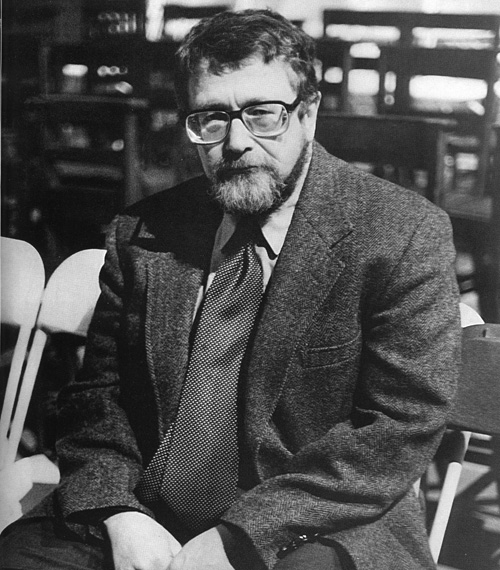
Alexander Genis: Today, the dialogue on Broadway will be unusual: Solomon Volkov and I will devote this whole release to the anniversary of the wonderful poet, our friend Lev Losev. Unfortunately, he did not live up to 80 years, but his work is becoming more and more significant every year.
Solomon Volkov: more and more significant.
Alexander Genis: This is striking, but right before our eyes we see how Losev’s reputation grows and how the number of people who love him warmly worship him. A certificate of this is a book that has just been published, collected by two professors - Mikhail Gronas and Barry Sherr, I know both of them. These are people who work at the Slavic department at the Dartmut College. Barry Sherr is his old friend who found Losev, in my opinion, he was even at Losev at the university. And Gronas is a relatively young man who came, let's say, to replace Losev. They released a large, 450 pages of a collection dedicated to Losev. There are you, Solomon, there are me, many of our common friends: Aryev, Efimov, younger - Ilya Vinnitsky, professor of Princeton University, Gronas himself and many others.
The book is called unusual, namely: “Lifshits. Losev. Loseff. ”Already forces this to give a comment because there is a very interesting story behind this. The fact is that Losev was born like Alexei Lifshitz. His father was a famous poet, so as not to be confused with his father, he came up with a pseudonym Lev Losev, and in America he became a Loseff. And I asked him: why are two“ f ”, then it is very similar to“ r ”, it doesn’t work out“ r ”, it doesn’t work out“ r ”. “Losev”, and “Luser”.
As for the names of Lifshits and Losev, it was also not easy with this. In the New American, where I met Losev, he began to print prose or poems with us. Prose, articles are very sharp, a feuilleton type of note, he signed “Alexei Lifshits”, and poems, including poems, for example, about Afghanistan, this was one of Losev’s first poems, he signed “Leo Losev”. At some point, a letter came to the editorial office, which we printed, where the reader demanded that the author signed either a lion or Alexei, because it is completely impossible to understand who it is. Losev sent a response to the editor, where he said: there is nothing unusual in this, because it is so accepted in Russian literature. Tolstoy was also signed by Aleksey or Leo. Thus, he satisfied the complaint of readers.
We called Losev Lesha. When Losev introduced himself, he said that I was so confused with the names of Alexei and Leo that I came up with the universal name of Lesha. Everyone always called him Lesha. There is no familiarity here, I was with him on "you", although we were friends for more than 30 years. So Lesha is a normal legitimate name.
The most interesting thing in this book is the materials of Losev himself. I thought that I read everything, I followed his every step, but it turned out that this was not so. The compilers of this collection managed to find amazingly interesting materials. For example, Losev’s diaries for 1974-75. Very amazing texts, this is the same diary, it is written for himself, while the recordings are such accurate thoughts, so finished and deep that it is immediately clear what character Losev had.
He really had the character of a professor who was simultaneously a bohemian hooligan - this is a very strange combination. I always told Losev that he was Dr. Jackill and Mr. Hyde, he really liked it, by the way. In these diaries there are a lot of interesting things about Hess, about Thomas Mann, about Goethe, but the most interesting is the disease. The fact is that Losev suffered a heart attack at a young age, 33 years old. He was forced to lie in the hospital for a month. Can you imagine how terrible it was? The diaries have a very interesting discussion about the disease, which, in my opinion, helps everyone. He says that the disease is part of you, it is you. You cannot deny the disease, because you deny yourself. As soon as you conclude peace with your illness, it will cease to be so terrible.
Another very interesting material that I liked extremely - this is an interview with Mikhail Yudson. Mikhail Yudson is an Israeli writer who wrote a striking book “Staircase on the Cupil”. I do not know how to describe it, because most of all she looks like a Venochka Erofeev, but this is such a disheveled Venochka Erofeev. Venechka Erofeev possessed iron discipline, and this book is unusually funny, very acute, but it is difficult to read, nevertheless, it is extremely talented. Yudson took a huge detailed interview from Losev, which I never read either. In particular, Losev speaks there - unexpectedly for the professor that he really likes the Russian gangster. He says that the resources of Russian speech were very alive. And all these “showdowns”, “answer for the bazaar”, “lawlessness” are wonderful words that he really liked. Long before I saw this in the press, he told me that he really likes the expression “responsible for the bazaar”, for example. And we have a Russian Bazaar newspaper in New York, and when I learned this expression from Losev, he offered the newspaper the slogan. Where the "proletarians of all countries, connect," I proposed to put "Filter the bazaar." But they did not agree.
In short, in this book there is everything that explains why Losev is so good. Then the time came to remember you, because we saw how Losev began, we saw how he took place. And it was an amazing sight.
Solomon Volkov: I recall how Losev’s poem was first read. This was in the collection “Part of Speech”, in the first issue, which you, in my opinion, were recruited and edited.
Alexander Genis: Turned out.
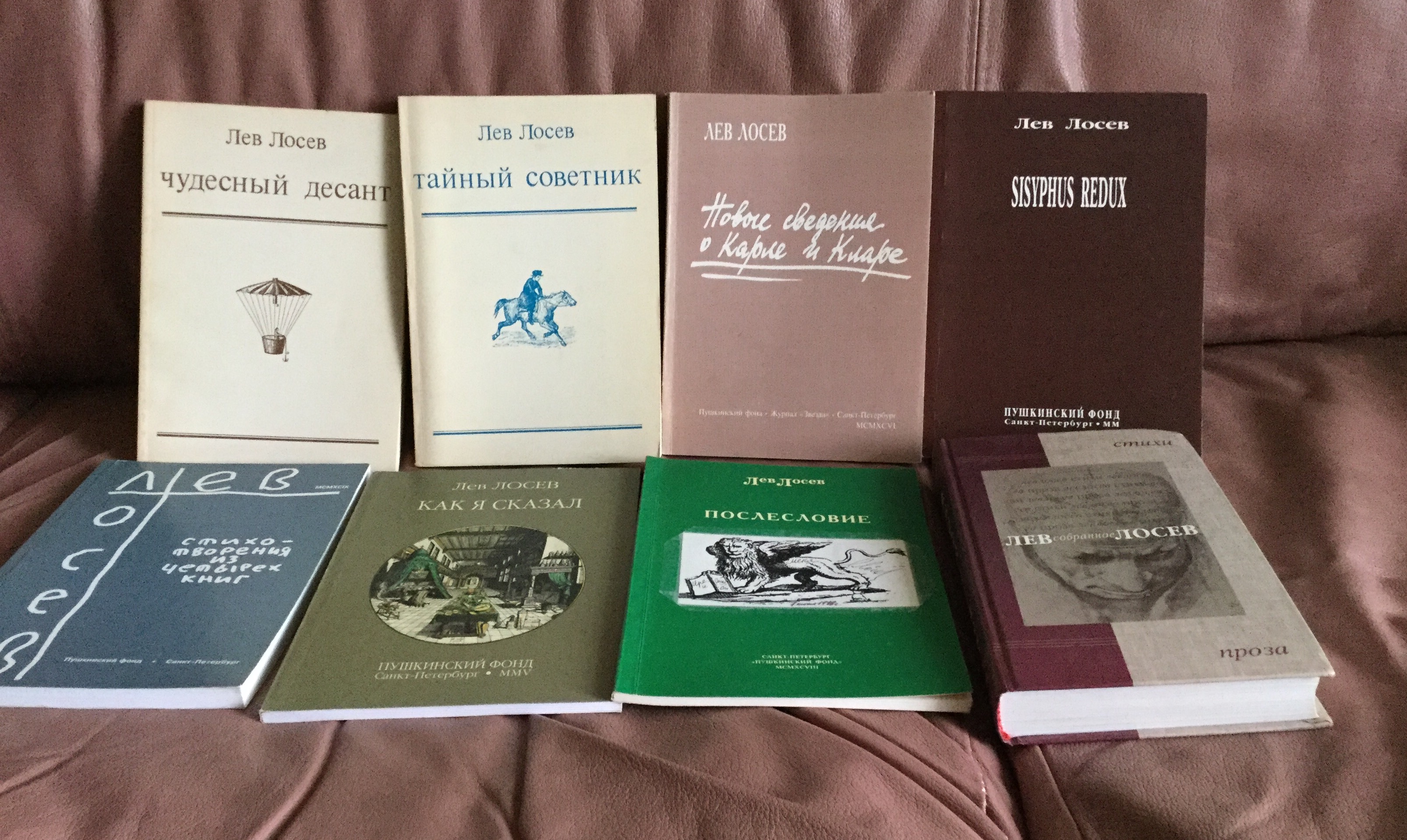
Solomon Volkov: The case was in 1980, the Losev cycle “Memory of Vodka” was printed there, by the way, he was signed by Alexey Losev. That is, he combined Alexei and Losev in verses. Since then, I have not met such a signature as a poem since the poet, really he shared this business. Then this cycle was already struck by me: suddenly there was a completely new, unexpected voice. It is so rare. There is some kind of poetry, you know that there is such a grandiose figure as Brodsky on the one hand, and on the other hand you read, then in 1980 you could still read the verses of Levitansky or Samoilov. You can imagine where it flows, on what rusls, on what sleeves modern poetry flows. And suddenly Losev’s poems - it was something completely unexpected, as if a completely new fresh stream, unusually close from the very beginning, made its way. Immediately I felt his poems as our voice, relatively speaking, strata, people who live in America who are engaged in Russian culture in America. Brodsky is a grandiose figure, but he did not write about it, and Losev immediately wrote about it. And as an example of the poem that immediately struck me, also one of his first poems, “in a tavern under the car”, it is dedicated to Boris Mikhailovich Paramonov, in it, there is no line, piercing Losev’s intonation, super -truthful, you understand that there is some kind of thought behind each line, you fully understand this thought, because it is about you too.
And I have no fluff or pen,
And, besides my homeland, I do not trade anything,
but they do not take the lying one
They, you see, do not need this good.
Even lice does not survive on me,
Do not tolerate the smell of alcohol
and I have half a half, but what
The people are: "Forests, dance."
I make a thickness of a fat.
one forward and two back, like Lenin,
I bend the old knees with a bang,
And the crowd giggles restrained.
A liquid soup is prepared on Deribasovskaya,
The car pushes the clove into the hole,
what a pleasant edge, a lifetime,
The lights tremble, shave there, a darling.
Ek, body, we dancing you and I
that we are welcome for the ballets.
The car got stitched:
"On the pavement ... a stern ... a stern ... a table ..."
You know, here is not a line, Losev’s paradox. "And besides the homeland, I do not trade in anything." He opens himself: Ah, you trading the homeland. And this is simply a realistic description of what all emigrants in the field of culture are doing here: they talked about their homeland, about their native culture. But it turns out double meaning. This poem is such a difference, because it is also said about suicide, and how the American audience perceives you. And all this is the absolute truth.
But how did you meet Losev’s poems for the first time?
Alexander Genis: I will say how I fell in love with Losev’s poems. I perfectly remember the publication with which it began, it entered this book, Losev said that the best that he heard about his verses belonged to Brodsky. He said that, of course, we can assume that Losev looks like Vyazemsky, but this is not true: Losev does not look like anyone. And so this Losev was proud of his life.
Imagine his situation: he lived next to the genius, he was friends with a genius, and he knew his place very well. He did everything in his life so as not to confuse these places. The main thing is that he himself told me about this, the main thing in his poetry was not to write like Brodsky. He has no verses that would resemble Brodsky.
Solomon Volkov: That's right.
Alexander Genis: And it was a strong and powerful thing. He himself said that the Brodsky genius, and a genius is not quite a person. Losev said that the genius from the word “genes”, he is a superman, he has other genes, cannot be compared. “I am normal,” he repeated a hundred times. Normality was a motto. But this normality made it ...
Solomon Volkov: a great poet.
Alexander Genis: I would call him the second poet of Russia. Imagine how many it is, in our generation he was the second poet.
Solomon Volkov: You know, he is the second poet can be Russia, but he is the first poet of emigration - this is his difference from Brodsky.
Alexander Genis: I completely agree with you, because the Brodsky poet is for humanity, and Losev is for us. The same thing as Solzhenitsyn and Dovlatov, for example. Dovlatov is ours, and Losev was ours. They wary, but together lived their American years, two of these people. Poems that struck me for life and who opened my eyes to Losev’s poetry, are the following:
And finally, stop the "cemetery".
A beggar, pouting like a bustard,
In a Moscow jacket sits at the gate.
I give him money - he does not take.
How can I say, I am placed in an alley
A monument in the form of a table and benches,
with a mug, half -liter, screwed with an egg,
Following my grandfather and father.
Listen, we both impleased with you
Both promised to return here
You already check on the list, I'm yours,
You really respect you.
No, he says, you have a place in the alley,
There are no fences, concrete likes,
photo in oval, lilac of the bush,
There is no column and there is no cross.
Like I'm Mr. some kind of twister
does not allow a cannon shot,
Under the visor, mocking, takes,
Whatever I give - does not take anything.
In my opinion, these verses make you cry. Because this is just, as you said correctly, an emigrant emotion, this is the same ocean that divided us with the Motherland, if it is appropriate to say this word. The point is that Losev is a political poet. After all, he was very acutely experiencing political problems. In fact, we were in different camps, he was a passionate fan of Solzhenitsyn, he was published in the “continent”, he loved Maksimov, and I loved Sinyavsky, I was in a completely different party.
Solomon Volkov: In the opposite camp.
Alexander Genis: It is amazing how we managed to be friends for so many years. Because he voted for the Republicans, and I am for the Democrats, he loved Petrushevskaya most of the new writers, I could not stand it, but he hated Sorokin. This went on all these years. But we had a lot in common to be friends.
Preparing for this program, I took out all the collections that he gave me, and wrote off from there initiation. Losev felt like a professional poet when he finally decided to become a poet, and this happened at the age of 37, when other poets were already dying, he always remembered that he was a poet, and very highly honored this title. We acted together more than once, Losev, when he read philological reports, did it sitting when it was time to read his poems, he always got up. Each book that he gave us was with a poetic dedication, sometimes funny and always courteous, he always recalled not only me, but my whole family. The first book, the inscription is this: "The genius himself gave this book to the geniuses." Another book “Privy Advisor”: “This volume like Dani is sweet Ira, Sasha, Dana. Let the handsome Herodotus will divide these leaflets. ” Herodotus is our cat, then he was still alive. And here is another inscription: "I would send you to eat a pit in a bat, but I am sending new information about Karl and Clara." After all, Losev was a big cook, of course, this united us, because we always fed each other with delicious things. When I came to him in Dartmut, they usually served the local New Hampshire lamb. And with Yuz Aleshkovsky, he always ate a goose, from the bones he collected a necklace in memory of all the geese eaten. I recalled this again, because he gave me the “collected”, a book of 2000, where there was such an inscription: “The crews of Leshka were collected here, everything, so to speak, his know-how, but for some reason on the cover of a southwide in the form of a prisoner of Dachau.” On the cover, the publishers placed the drawing of the Donatello school - some kind of exhausted person who is really very similar to Aleshkovsky. And all this is very characteristic of Losev, who has always and everything treated with irony.
For me, Losev was a man at the same time as our circle, but it always seemed to me that he was a native of the 18th century, it always seemed to me that he was from some past time.
(Music)
Alexander Genis: Solomon, what is your contribution to this anniversary collection?
Solomon Volkov: I wrote a small work dedicated to one of Losev’s poems, the poem is called “door” in “Collections”, it has a subtitle “photo of Marianne Volkova”. Marianne took a huge number of photos of Joseph Brodsky, Losev, when he came to us, loved to consider these photos very much.
Alexander Genis: We released a book of these photos together.
Solomon Volkov: I just wanted to remind this, we participated together in the issue of the book “Portrait of the Poet. Joseph Brodsky ”, published by Galina Sokolovskaya, publisher, in New York in 1992. Losev wrote a preface for this book, and you wrote a text about Brodsky. And there are more than 200 photos of Brodsky work Marianne. Losev, by the way, when he came to us, always resisted Marianna's attempts to make his portrait, but he examined the photographs of Brodsky with great interest. This is curious, because usually people love to consider their photos. Brodsky, for example, was completely uninteresting to watch other people's photos, and he examined his own with great pleasure, saying “we are all a little daffodil.” Loseva terribly intrigued Brodsky in photographs, in general in these conversations with him at our table, I had the opportunity to observe his interest in the images of other poets. He, as I understand it, had an idea that the death of the poet is largely formed by his portrait appearance, the way he looked in portraits, in photographs - all this affects the posthumous poetic myth. He here developed the idea of Yuri Tynyanov, Tynyanov has very insightful reasoning in this regard: as a portrait of the poet affects the formation of his posthumous image. And you know, I had the opportunity to think that Losev himself was dissatisfied with his face, his body. If you read his poems, then we can see how much he and often says that he is fat. Say, in the poem that I read, which says that he makes "a thickness of a fat one, one forward and two back, like Lenin, I bend the old knees with a bang."
Alexander Genis: Losev was a categorically unsportsmaning person. Here is one of the memories that entered this collection. There, one American professor, Slavist, says: “We had a good bicycle path, I invited him to ride a bicycle. To which Losev said not just “no”, he said: “No, no, no!”
Solomon Volkov: At Losev, you already mentioned this, it was an extremely curious bifurcation of Dr. Jekyll and Mr. Hayd, on such a bohemian drunkard on the one hand - this is the appearance in verses, and, probably, something was visible in his youth, I did not know him at all.
Alexander Genis: Eyewitnesses, for example, Igor Efimov, and I drank it more than once about this. Interestingly, its first cycle was called “memory of vodka”, it was translated into English. In the publication, he was called this: "The poet of the Norkin stream." But he was horrified because students finally found out who this very professor is. He was afraid that it would prevent him from a university career.
Solomon Volkov: I was a little guilty of this, because I am his panegyrir vodka, the words from his famous essay “Tulups We”, which you, I know, really like it, I, too, from there I took a quote “I owe all the good vodka in me”. In my "History of Culture of St. Petersburg", which appeared here in America in 1995, I quoted this business, the book came out in English, reached the Dartmut College, students enthusiastically presented this quote to Losev, said: Ah, in fact you are what. Losev was not at all like.
Возвращаясь к портретам Бродского работы Марианны, одним из этих портретов являлась цветная фотография: Бродский на фоне своей знаменитой двери с обратной стороны входной, где были пришпилены десятки открыток, которые он получал. (Почему и как он их пришпиливал — это особая тема и сюжет). Это был такой разноцветный ковер из открыток. И вот Лосев, сидя у нас, долго смотрел на эту фотографию, а потом прислал нам книжечку свою, она называлась «Как я сказал», это 2004 год, в нее вложен был еще машинописный экземпляр этого стихотворения, там было более дескриптивное название «Иосиф на фоне двери фотографии Марианны Волковой», а в сборнике называлось «Дверь». Вот это стихотворение, крайне для Лосева необычное, оно нетипично. Я не знаю другого такого стихотворения в творчестве Лосева. Я прочту его и станет понятно, почему. Итак, «Дверь. Фото Марианны Волковой».
Пришпилен рисунок: кто-то в бурнусе
из пускавшихся в раскаленные зоны,
то ли Данте, то ли Лоуренс Аравийский.
Открытки: «Прибой бьется о скалы»,
«Хребет Хиндукуш», «Гильгамеш и Энкиду»,
«Пирамиды в Гизе» (нет, все же Данте),
«Понте Веккьо» (или это Риальто?),
«Дверная ручка» — нет, ручка не на открытке.
Здесь живет Никто.
Недоверчив к двери,
замка на звонок просто так не откроет,
сперва поглядит в смотровую дырку
да и отойдет от греха подальше.
Но настанет день — он повыдернет кнопки,
торопливо заполнит все открытки,
надпишет на каждой: «К Николе Морскому»,
подпишется размашисто: «Твой Гильгамеш»,
рванет на себя дверную ручку,
а за дверью — Вожатый в белом бурнусе,
а за ним — каналы, мосты, пирамиды,
и бьется, и бьется прибой о скалы,
оседает, шипя, на снега Гиндукуша.
Во-первых, здесь нет рифмы — это верлибр. Во-вторых, это стихотворение тоже крайне нетипично для Лосева, оно выражено в крайне квазисимволистской стилистики. Здесь есть Никто — это, конечно, восходит к Анненскому, чей сборник выходил под именем Никто. Здесь Вожатый в белом бурнусе — это, конечно же, смерть. Это - какая-то сюрреалистическая картина, явная перекличка с символистской поэзией начала ХХ века.
Александр Генис: Лосев был суммой поэзии. Когда вышел его первый сборник, я написал рецензию на него и назвал «Сыр из головы». Блюдо есть такое — прессованное мясо. Я там написал, что Лосев спрессовал русскую поэзию, русскую культуру и втиснул ее в стихи. Лосев хмыкнул, но одобрил эту рецензию, хотя название ему показалось хулиганским. Чем дальше Лосев работал в русской поэзии, тем с большим уважением он относился к своему творчеству. Он был очень скромным человеком, я бы сказал, сдержанным, но при этом с большим достоинством. Одно из последних его стихотворений посвящено современному литературному процессу. Мне кажется, оно характерно для того, чтобы мы могли понять, как он относился к стихам и к своим, и к чужим. Потому что Лосев поэт и смешной, и ироничный, поэт, который любит посмеиваться над собой, но за этим стоит твердая убежденность в том, что поэзия важна. Вот стихи, называется «Отказ от приглашения».
На склоне дней мне пишется трудней.
Всё реже звук, зато всё твёрже мера.
И не пристало мне на склоне дней
собою подпирать милицанера.
Не для того я побывал в аду,
над ремеслом спины не разгибая,
чтоб увидать с собой в одном ряду
косноязычащего раздолбая.
Вы что, какой там, к черту, фестиваль!
Нас в русском языке от cилы десять.
Какое дело нам, что станет шваль
кривлять язык и сглупу куролесить.
Конечно, знатоки поэзии сразу угадают автора «Милиционера» - Дмитрия Александровича Пригова. Очень жесткое и очень суровое стихотворение, которое показывает, как Лосев относился к нынешнему литературному процессу, к стёбу и к себе.
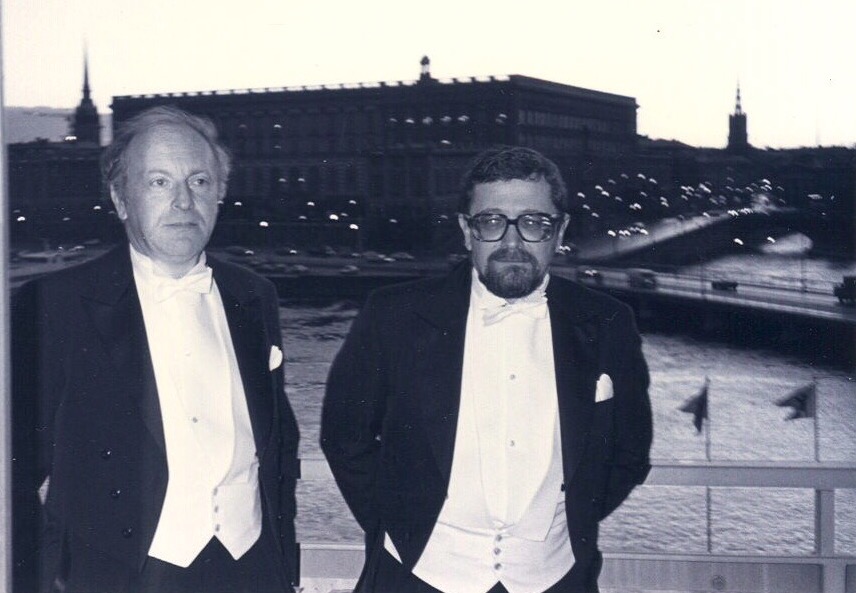
Соломон Волков: Возвращаясь опять-таки к тому, что вы говорили и о чем он написал в стихотворении «Дверь», я хочу провести некоторую параллель между Лосевым и Бродским с точки зрения Лосева - как он себя воспринимал рядом с Бродским. Тут не зря упоминается «Гильгамеш и Энкиду». Лосев нам говорил, что для него импульсом для написания этого стихотворения было то, что он на фотографии разглядел одну открытку, где изображались Гильгамеш — это герой шумеро-аккадского эпоса, и Энкиду, его слуга. В этом эпосе о Гильгамеше есть разные версии, одна шумерская, другая аккадская. В одной из этих версий Энкиду - лишь слуга Гильгамеша, а в другой — это его спутник и побратим. Вот этот аспект был очень важен для Лосева, это мерцание такое. Иначе как полное поклонение перед Бродским отношение Лосева охарактеризовать нельзя. Но одновременно он ощущал в себе большие поэтические силы, ясное дело, и он понимал, что не просто слуга, а что в какой-то степени и побратим. Это ощущение кровной связи, мне кажется, выражено с колоссальной силой в стихотворении «Дверь». Оно определяет место Лосева в русской поэзии и то, как он сам себя ощущал, и как мы будем ощущать его в том числе как автора наилучшей на сегодняшний момент, я думаю, надолго, на долгое время вперед биографии Иосифа Бродского. По отношению к ним мы можем вспомнить фразу из булгаковского романа «Мастер и Маргарита»: «Где помянут одного, помянут немедленно и другого».
Александр Генис: Вечный спутник. Соломон, нам пора завершать нашу передачу, которая могла бы быть длиною в сутки. Лосев и музыка.
Соломон Волков: Я буду краток и прочту просто фрагмент из замечательного стихотворения Лосева, которое называется опять-таки «Бродского два».
Александр Генис: Но это не тот Бродский.
Solomon Volkov: That's the point. Это адрес Ленинградской филармонии. Удивительным образом в этом стихотворении воссоздана атмосфера посещения нами, ленинградской молодежи этого священного для нас, конечно, здания. Я прочту буквально несколько строк, посвященных конкретным музыкальным впечатлениям молодого Лосева.
Белая ночь. Ночь белая.
Пластрон в вырезе фрака.
Черные ля-бемоли, влюбленные в белые си.
Улыбка Рихтера беглая
из белесого мрака
в черной лодке такси.
Улиц клавиатура.
По нотному стану проспекта
мы разбредались группами,
как аккорды Шопена.
Все прочее — литература,
поскольку песенка спета.
Мы стали глухими и грубыми
потом, постепенно.
И завершим мы тем самым опусом, о котором и говорится в этом стихотворении Лосева. Richter plays Chopin.
(Music)