
Translated material
The question of faith
The text continues the project on the Ecology "Variable" .
The reality of global warming is proved by numerous studies and calculations, however, to most people it seems to be something too abstract and distant. Because of this, people's belief that global warming really occurs, hesitates, and, as psychologists show, they are affected by a variety of factors: from news on TV to temperature outside the window.
Weather outside the window
“Knowledge of the global climate change, as we suspect, consists of a contradictory mixture of poorly connected political beliefs, social and situational factors and scientific data,” American psychologists believe .
They observed how, after unusually strong snowfalls that fell on the east coast of the United States in 2010, news editions began to doubt the reality of global warming. Then the scientists decided to check how the weather phenomena and global warming in the heads of people are related.
Psychologists interviewed the inhabitants of America and Australia, whether they believe in global warming, how much it bothers them and whether it seems to them that the survey day was colder or warmer than it is usually at such a time of year. They found that if it seemed to the respondents that the weather on the day of the survey was some kind of too warm, they were more inclined to believe the data on global warming, they were more worried about this and donated more money to charitable organizations in this area.
These conclusions are clarified by the work of British scientists who investigated, as they affected the perception of global warming the public in Europe in Europe in the late 2000s. It turned out that most of the British saw in unusual colds confirmation that the climate on the planet is changing. Scientists associate this conventive conclusion with the fact that the British media began to talk more about “climate change” than about “global warming”. Accordingly, people began to perceive strange, unusual weather as a sign that something is really happening with the climate.
The influence of the media
The media is an important and influential source of information about climatic research, because they translate the complex texts of these studies from expert into human language: as the study of the reports of the intergovernmental group of experts on changing the climate , it is even more difficult to read them than publications in scientific journals.
However, journalists also cover the problems of climate change in different ways. For example, the Fox News channel is known for its critical attitude to the problem of global warming. Professor Stanford John Crosnik checked how the viewing of this channel’s news on the attitude of people to global warming, and came to the conclusion that the constant audience of the Fox News channel does not believe in global warming, does not trust scientists and is convinced that the restrictions of greenhouse gas emissions will not affect the US economy.
If it seemed to the respondents that the weather on the day of the survey was some kind of too warm, they were more likely to believe the data on global warming and donated more money to charitable organizations in this area.
True, as the researcher himself notes , it is impossible to say with confidence that this Fox News news form the attitude of the audience to global warming, and, on the contrary, people with certain beliefs are more likely to watch Fox News close to them in spirit.
However, as Krosnik found out , even when the message is generally true, it is easy to spoil the incorrect serving. His experiments showed that when the scientist from the description of the scientific data itself goes to calls to demand from the government to combat global warming, trust in him immediately falls together with faith in the reality of climate change as a whole.
From words to deed
Even if people manage to convince that the climate is changing, this does not mean that they will change their behavior because of this and will save electricity. American scientists who have studied this problem believe that people simply do not believe that their modest contribution can change something.
In particular, they conducted such an experiment: they gave subjects to read articles that either emphasized the significance of an individual contribution to the fight against global warming, or, conversely, underestimated it, representing actions available to an ordinary person, as insignificant and useless. Scientists have found that after reading articles of the second type, subjects began to spend more electricity than at the beginning of the study, assuring that saving it is still useless.
Tips for psychologists
Thinking what to do with all this, psychologists give the following recommendations.
Firstly, they note, statistical information and mathematical calculations for most people do not say anything, much more important for them personal experience. Therefore, for example, the problem of terrorism worries everyone, because such events greatly affect emotions, although the real chance to be a victim of the attack is low . On the contrary, global warming occurs unnoticed, and its consequences are difficult to observe directly.
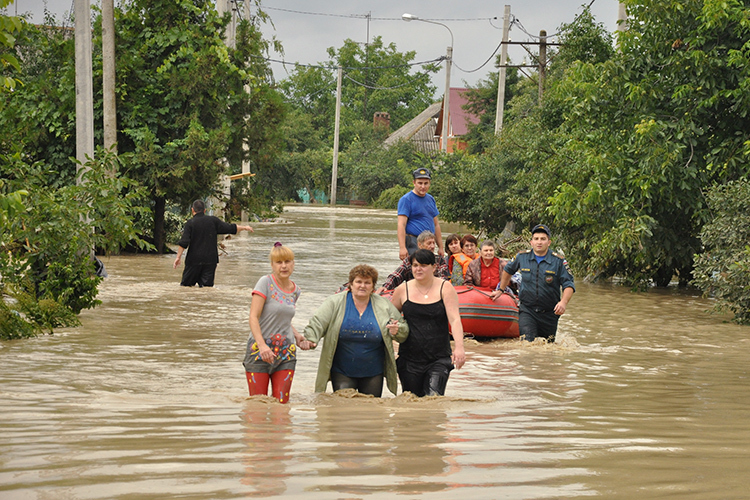
Indeed, the melting ice of the Arctic are far from most of us, and the connection of real disasters, such as the flood in Crimean in 2012 or extremely hot summer of 2010, is not obvious with global warming, although the calculations associate these weather phenomena with an increase in temperature on the planet.
Therefore, researchers advise paying more attention to such methods of presentation that will relate to personal experience and human experiences.
Secondly, they remind that a person is a social being. For example, people trust global warming information more, if we emphasize that the vast majority of scientists agree in this matter. Another example: when people know what the average energy consumption is among their neighbors, they tend to use electricity in about the same volumes. So if the community in which a person lives approves environmentally friendly behavior, he is likely to behave appropriately.
Thirdly, people tend to perceive the risks associated with global warming, like abstract, distant problems in time, which, most likely, will touch someone else somewhere. Therefore, psychologists recommend talking not only about global risks, such as increasing sea level or temperature on average, but also about local ones, those that will occur in a particular area, while emphasizing that the process of climate change is taking place now.
Fourth: usually, researchers write, the fight against warming is portrayed as a need to abandon some benefits now (for example, save electricity) in order to avoid even greater troubles in the future. This is a bad way to motivate people is to try to talk not so much about losses in the future as about the benefits of actions in the present.
Finally, their fifth consideration: it is wrong to believe that money is a good motivation (for example, in the case of saving electricity to save money), and incentives such as the well -being of others and environmental safety do not mean anything to people. To change the behavior of people, both types of motivation must be combined, appealing not only to pressing benefits, but also to improve the living conditions of mankind as a whole.
What polls show
In America, according to Gallup polls, the number of people who are confident that the climate is changing and the reason for this is human activity is growing in recent years. However, in Russia, the results of similar surveys look worse: we have the number of such people, on the contrary, falls. According to the Public Opinion, in 2014 there are fewer people than in 2008, he heard about global warming, believes that it really happens, and believes that it will adversely affect people's lives. So we have the problems of filing and perception of information about climate changes are still relevant.