
Translated material
The person who came up with the country
Memory of Helmut Kolya
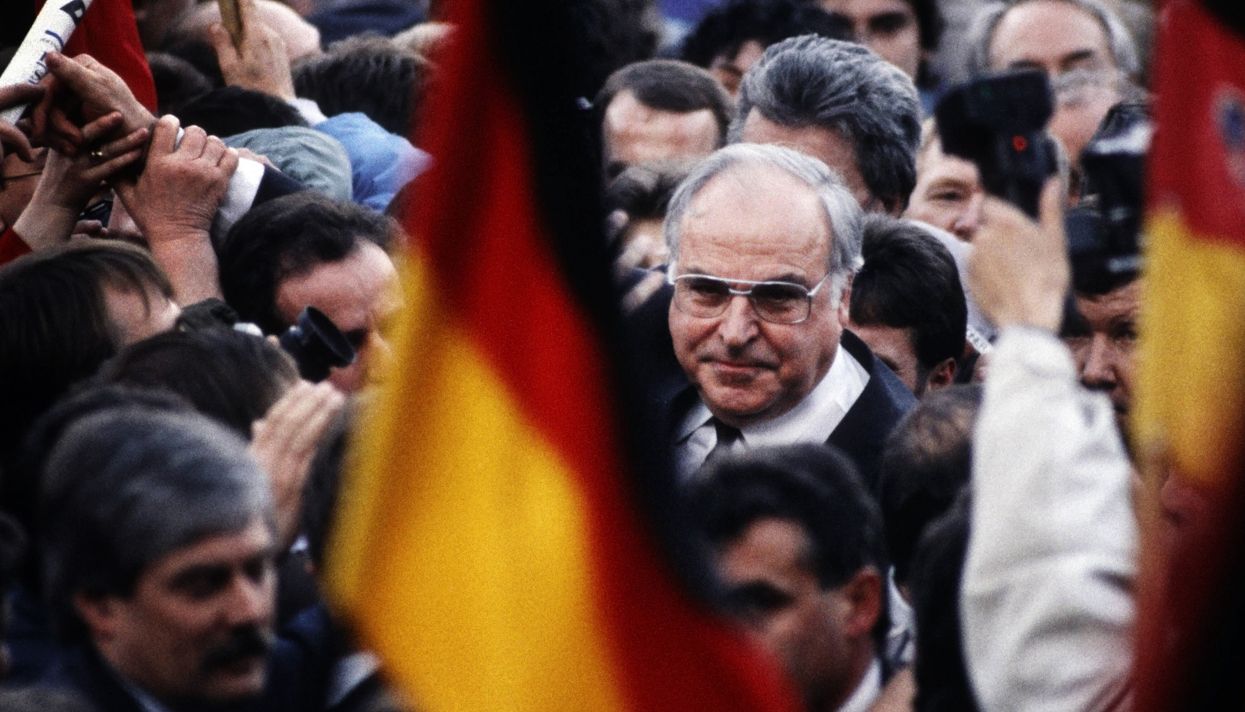
On June 16, Helmut Kohl died in his house in Ludwigskhafen at the 88th year of his life. He died in the same city, in which he was born, in the villa, in which he lived since 1971 - as if there were no shocks in his life, no high posts, and his country did not experience wars and disasters, section and associations.
To die in your bed is a great success, if you meet your 15th birthday on April 3, 1945 in the Hitler Youth training camp, where you are being prepared for the last battle with the upcoming Russian troops. Already at the end of April, Helmut Kohl with three comrades under the bombing of the Allies left the camp without money, documents and food. In order to overcome 500 kilometers along the Southern Germany immersed in chaos, it took them two months. In June, teenagers went to the Rhine near the city of Manhaim - on the other side, behind the destroyed bridge, in the French zone of occupation, there was a house. But a few more days passed before the Americans missed the boys to the French side.
“I survived the war with all its horrors and atrocities, and at the age of 15 - and the end of the war,” wrote Kol, constantly returning to this topic in his memoirs. In the end, if you look for the absolute political maximum of Kolya, it will sound like this: "Avoid war at all costs." And this means not to quarrel with the strong, not to crush on the weak.
Then everything was very fast. Already at the age of 16 (in 1946), Kohl entered the newly formed Christian Democratic Union. The next thirty years of the political career, he will invariably be the highest (193 centimeters) and the youngest politician in his post. At 29, the youngest deputy of the land parliament in the land of the Rhineland-Palatz. At 39 - the head of the earth. Four years later - the head of the most important and influential party of Germany and candidate for chancellors.
In the sixties and seventies, the political style of Kolya was developed, which led to such triumphal results in the late eighties. The bet is not on intellect and innovative political technologies (the scientific achievements of the Doctor of Sciences Kolya Envorty, but he graduated from the unit in mathematics), not on charisma and oratory (there is also nothing outstanding), but to pragmatism and a branched network of personal contacts and relationships. Calling stars from the sky, understandable and gloomy, especially convincing in the role of the offended - then he was not shy in expressions! - Kohl inspired authority with one appearance. Even his irritated growl on his colleagues sounded soothing - Boris Yeltsin became famous in the same years.
Having reasonably giving the “unknown” Bavarz from the partner XSS, Franza Joseph Strauss with a bang, to fail in the Bundestag elections in 1980 (in 2002, the Angel Merkel with Edmund Shtyber), Kohl was satisfied with the role of the leader of the opposition. He did not even put his candidacy for these elections: to help Bavarz - and destroy him. Instead, he waited until the growing contradictions between the victorious Social Democratic Chancellor Helmut Schmidt and his coalition partners, “free democrats”, would not reach the highest point. This happened in 1982: “Free Democrats” ruined the coalition, the chancellor became a long -ready for this Kohl. He was a little over 50 - still a young man.
It will not be a big exaggeration to say that Germany won more than other countries from the end of the communist era. The talent and merit of Kolya consisted in the fact that in the late eighties he saw opened - he quickly understood this - only for a few years the “window of opportunities” and took advantage of it one hundred percent. The world, enthusiastically observing the “club of friends”, into which the four of the world leaders suddenly turned - Bush, Gorbachev, Mitterand and Kohl - and did not notice how Germany united. With hundreds of options, how the future state of Germany and the GDR might look like the future could look like that it would be just that - the complete absorption of one part of the other. Already in 1991, Kohl triumphantly won the first elections of the Unified Germany, and only traffic lights with “walking men” remain the only contribution of the “anti -fascist German state” to the united Germany.
The unification of Germany, perhaps, turned out only because it was not an end in itself; For Kolya, it was only a step in building a single European space. Combated - we went on. What are we have there? General currency? As kings mint a coin with their profile, and Kohl - with no less hobby - participated in the creation of the euro. The German Chancellor dominated the forums of the European Union, growled into the microphone outside of his turn; It was he who felt for that sentimentally exiled tone of conversations about the future of Europe, which dominates today. Kohl invented and pushed the unification of Germany not as a national project, but as a project of European integration. Now it seems non -alternative - how else. But this seems to be non -alternative only because the Germans live in a country invented by Kole and in many ways - in the European Union invented by a column.
The German “Eurofilia”, German pragmatism, adjacent to sudden wide gestures, especially in migration policies (here you can compare two million Russian Germans who came to Kolya in the nineties of the former USSR, and a million refugees who were let into Merkel into the country), the lack of sharp steps in domestic politics, stability as unconditional value, finally, German idealism and German sentimental sentimental sentimental. Sensitivity to other people's suffering is all this. In 2017, Angel Merkel, which all the nineties called the “girl of Kolya”, has every chance of becoming a chancellor again in a coalition with “free democrats” - wait, but this is if it came up with them to be friends in 1982.
The last years of the reign of Kolya were overshadowed by the scandal around the “ Black Cash desk ” of the HDS - Kohl did not give up secret donors, left with the feeling that he had been betrayed, trampled, did not understand. His already heavy character has completely spoiled. Angel Merkel publicly renounced him in the press. In 2001, my beloved wife committed suicide.
The last moment associated with the column is perhaps the Shakespearean greatness: in 2004, an earthquake occurred in the Indian Ocean. It caused the tsunami, more than 200 thousand people died. Helmut Kohl watched a huge wave from the hotel's balcony on Sri Lanka. “A giant wave rose, a huge destructive force. People shouted, tried to run away from her. In one second, whole houses disappeared - the sea took everything with him, ”he recalled later. The tall old man stands on the balcony, watches the wave swallows at home and people. A few days later a helicopter flew and saved it. He married again and died in his bed in the city where he was born.
Dmitry Vacedin , Berlin