
Translated material
Oil demand. Waiting for a peak
The world trends of energy demand remain unchanged for several years, says the statistics of the oil company BP. According to the company, only the demand for oil and renewable energy sources are growing.
According to Statdani BP, the growth rate of global consumption of primary energy resources is the minimum of the third year. At the same time, oil remains the most popular resource (it accounts for up to a third of the total volume), the share of coal is reduced (in the global energy balance in 2016 it decreased to a minimum since 2004), and the renewable energy has grown with record pace.
As for oil, the demand for it, due to low prices, in 2016 grew by 1.6%. At the same time, gas consumption growth has slowed up to 1.5% with an average ten -year value of 2.3%. These data in different regions differ: as the Kommersant newspaper notes, the most consumption increased in the EU - by 7.1%.
Coal mining in the world as a whole decreased by 6.1% (while its consumption decreased only 1.7%), and in general, the share of coal in the global energy balance reached 28.1% (the lowest level since 2014). But the volume of electricity obtained due to wind, sun, geothermal power plants, as well as by burning biomass and waste around the world, increased by 14.1%. This provided record growth in absolute terms (52.9 million tons of oil equivalent).
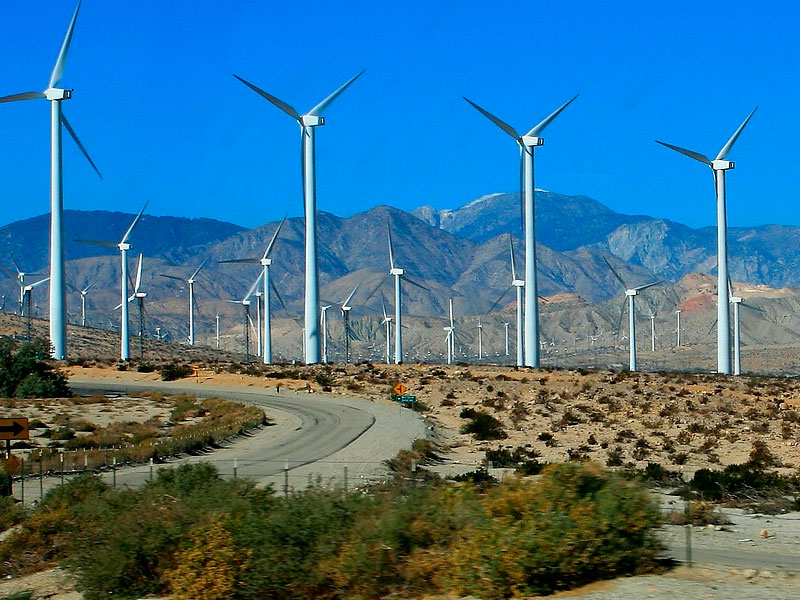 Windle electric generators / pixabay.com
According to the publication, in 2016, Russia retained the status of the largest supplier of oil and gas to world markets. Its share in the oil world market amounted to 13.2% (most of the oil is exported to Europe - up to 267 million tons, and in China - only 55 million tons). In the global gas market, Russia now accounts for a little less than one fifth of the total market volume (18.9%).
Oil production in Russia in 2016 increased by 2.2%, reaching the most important for the post -Soviet period (11.2 million barrels per day), gas production increased by 0.5%. However, energy consumption in the country decreased by 1.4%, and the energy intensity of GDP decreased by 1.2%. Currently, as well as according to the results of 2015, Russia takes fourth place in the world in energy consumption (the first three - China, the USA and India).
The Deputy Director for the Energy of the Institute of Energy and Finance Alexei Belogoryev agreed to comment for “Polit.ru” in the field of world demand for energy resources.
“As for the demand for oil, in the last three years we have been observing the so -called deferred demand. During the period of high oil prices, which began at least in 2004-2005 and ended only in 2014 (and from 2011 to 2014 the prices were very high, they were in historical maximums) consumption was artificially restrained. It was restrained precisely by the price factor, and as soon as the prices decreased, consumption increased. This is the deferred demand of those consumers who, purely for financial reasons, chose other types of energy carriers for some time or saved on a run of cars, etc.
That is, it is a natural market reaction. It is all the more natural in countries such as the United States, where a decrease in world oil prices directly affects oil prices for gas stations. In fact, there are not so many such countries, since all kinds of excise taxes and fees play a large role in the price of fuel - this is also characteristic of Russia, and for Europe. Therefore, in the same Russia, a decrease in oil prices was much more modest than a decrease in oil prices. But in a number of countries, as in the USA or in China, the situation was different, and there is the greatest surge in oil demand.
Accordingly, if the prices remain at the current level, the delayed demand factor will play the role for about three more years. At this time, the growth of oil consumption will continue. In general, the trend that almost all oil agencies celebrate-that the share of oil in the global fuel and energy balance of primary energy is gradually decreasing-it will remain. But this trend does not mean that oil consumption is also reduced; It does not even mean that oil consumption does not grow. The total increase in energy consumption is so buried that against this background there is an increase in the consumption of all energy carriers. It is simply an increase in consumption of renewable energy carriers that is the fastest, and with oil and coal this process is slightly slower, but in general, this process is still characteristic of everyone.
So it’s too early to talk about achieving some peak of oil demand. The peak of demand for it will be passed when some revolutionary changes in the consumption of energy resources in transport will occur. It is difficult to say for sure when this happens. There are the most joyful grades - that by 2025 this can happen. Some experts believe that by that time the batteries and other components of electric vehicles will be so cheaper, unmanned technologies will advance so far that there will be a multiple growth of sales of electric vehicles and hybrid vehicles.
But this is the most optimistic assessment. More cautious experts talk about 2035-2036, even more-about 2045-2050. Here, the scatter of assessments is very large, and this is due to the fact that some technologies (for example, the same autopilotation) are still being developed, and there are many technological uncertainties that are difficult to calculate, evaluate. So these forecasts are still being built at the hypothesis level. But the fact that such a peak of demand for oil will nevertheless take place in the coming decades-relatively speaking, in the thirties and sidelines-is quite obvious. Since it is obvious that consumer preferences are changing quite sharply.
Here the point is not that gas or renewable energy is supplanted by oil and coal, but that the source of energy that is in demand by the consumer is electricity. And the life of a person to an increasingly much extent in the coming decades will be increasingly focused on electricity consumption as the most convenient source of energy. And on the basis of what electricity will be produced for the consumer himself is a secondary issue and can interest him purely in terms of accessibility, reliability of supply and environmental consequences of burning a particular type of fuel.
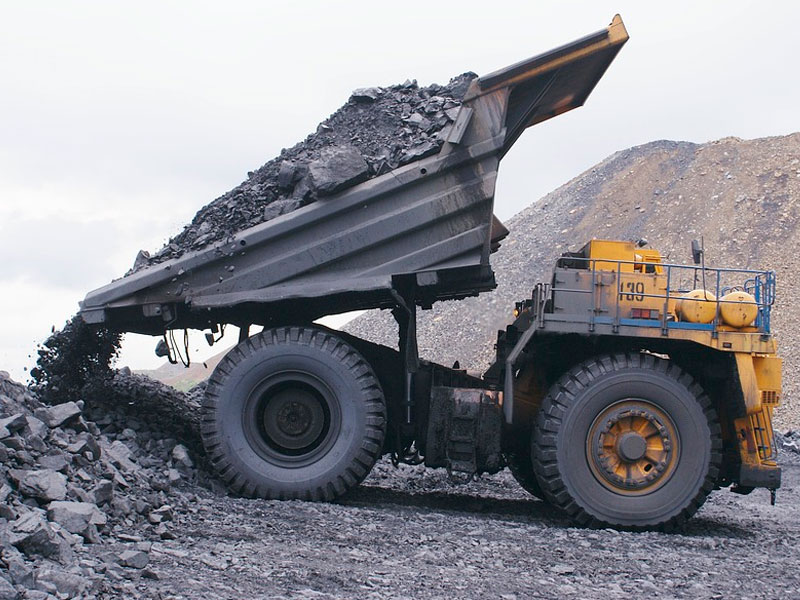
 Shakhtar after shift / pixabay.com
At the same time, in different countries and different conditions, the structure of electrogenation will still be different-since all countries today are oriented to satisfy their needs in electricity due to their own resources, even if it is quite expensive. This is comparable to the programs for supporting agricultural manufacturers, which are in many countries where agriculture, in fact, is unprofitable compared to imports. That is, there are direct parallels: food security and energy security have some common features.
So countries who have a lot of coal are the same China, India, many developing countries, and in Europe Poland, will continue to consume a lot of coal and will increase its consumption (especially if we talk about Asian countries). And those countries that are rich in oil, in spite of any energy efficiency programs, will continue to increase oil consumption. Actually, the main oil manufacturers, OPEC countries, according to all forecasts will be among the key consumers of oil, in which the demand for it will grow quickly in the coming decades. Accordingly, those who have many gas reserves will produce even more gas. And those who do not have minerals will be forced to develop wind energy, for example, as happens in Europe.
In a word, the picture will be very diversified. But the fact that the direct consumption of primary energy will be replaced by electricity consumption is a completely obvious trend that will be visible clearly. In this context, the fate of oil products, as well as domestic gas, looks quite pessimistic in the next 25-30 years. But if we talk about the near future, say, ten years, there are no big risks from the point of view of reducing the consumption of Russian oil, ”said Alexei Belogoryev.