
Translated material
Union with reservations
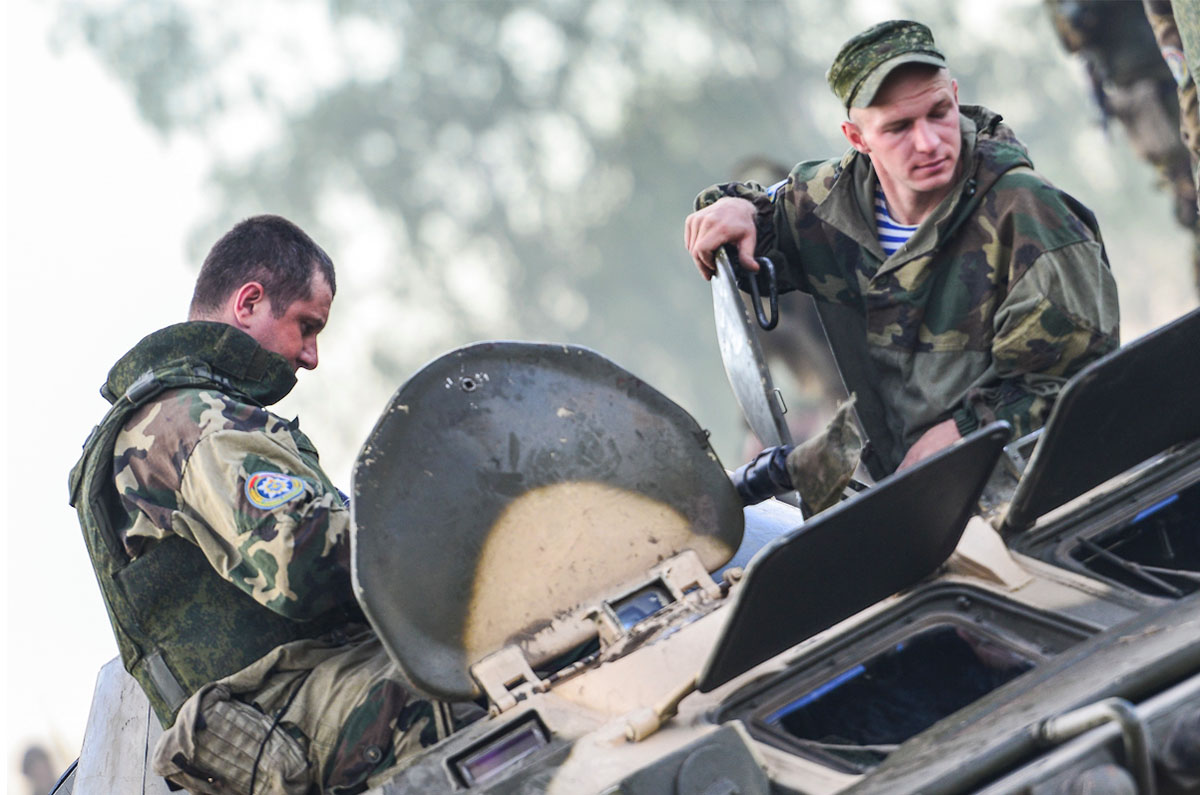
On the territory of Belarus, exercises with the participation of Russian paratroopers took place three times: units of the Ivanovo Division of the Airborne Forces, “Blue Berets” from the Pskov landing and heter, who, together with special forces from Belarus and Serbia, participated in the maneuvers “Slavic Brotherhood-2017”, finally, paratroopers from the Tula division of the Airborne Forces. Plus - the exercises of the parts of the electronic warfare (EP). All these maneuvers took place in preparation for the strategic maneuvers of the West-2017, which were planned for September, which, according to the Minister of Defense of Belarus, General Andrei Ravkov, will cover the giant space "from the Kola direction in the Arctic zone, and ending with Belarus."
President of Belarus Alexander Lukashenko has a favorite rhetorical technique: in case of any hint of conflict with Moscow in the economic sphere, immediately indicate an invaluable significance of his country as a strategically important fortified advanced strip of defense of Russia. “Together with the Russian people, Russians, we will protect our common fatherland in the non -western direction important for Russia ... We will die in this western direction, protecting Belarus and Russia,” Lukashenko said in October 2016 at a meeting with deputies of the Belarusian parliament. Naturally, with this approach to remind Minsk of overdue payments for the prostrate price of hydrocarbons, it seems not ethically, if not - finely. So in the spring of 2017, at the time of the next exacerbation of relations with Moscow on the basis of mutual calculations for oil and gas, Lukashenko, as it were, by chance remarked: “Contrary to the opinions of individual“ experts ”, no one is going to turn off cooperation with Russia in the military field due to the disagreements in other areas.”
Meanwhile, Russian-Belarusian relations in the military sphere, generously paid by economic preferences, are by no means uncloud. This is primarily evidenced by the difficulties with which the joint military programs with Minsk fundamentally important for Moscow are implemented.
Not a single air defense system
Back in 1996, Moscow and Minsk jointly decided to create a single regional system (ERS) of the Air Defense. It would seem that nothing should have prevented the quick implementation of the idea, especially since after the collapse of the USSR, a separate air defense army remained in Belarus: several air regiments and air defense formations.
Since then, a huge number of working documents on the creation of such a system have been accepted and digested. Nevertheless, the transition to the real combination of the air defense of Minsk slowed down in every possible way. The first agreement, which provided for real steps in this direction, was signed only in 2009. Having absorbed the unified air defense system, 5 aircraft, 10 anti -aircraft and 5 radio units deployed in the Kaliningrad region, other Western regions of Russia and the Republic of Belarus. The coordination of the system’s actions was supposed to be carried out from the central command post of the Commander-in-Chief of the Russian Air Force (now-aerospace forces).
However, at the insistence of Minsk, the combined command of the entire system was supposed to be formed only in the so -called “threatened period”, that is, on the eve of a possible war. Moreover, the question immediately arose about what, in fact, will be the commander of the air defense system: Minsk decisively did not want to transfer control over his generals to the Russian side. As a result, it was decided that the commanders of the Air Force and Air Defense of Russia and Belarus - on a rotational basis would command the air defense system. But!
In August 2013, the commander of the Air Force and the Air Defense Forces of the Republic of Belarus, Major General Oleg Dvillev, was appointed to this position. Almost four years have passed, but Russia seems to have considered it a good not to remind Minsk about rotation.
Back in 1996, Moscow and Minsk jointly decided to create a single regional air defense system. Nevertheless, the transition to the real combination of the air defense of Minsk slowed down in every possible way. In addition, Minsk decisively did not want to transfer control of his generals to the Russian side
However, the air defense ERS did not work even after the achievement of these compromises. In mid-2015, the chief of the General Staff-the First Deputy Commander-in-Chief of the Aerospace Forces (VKS) Lieutenant General Pavel Kurachenko-promised that the Armed Forces of Russia and Belarus would begin to carry combat duty only at the end of 2016. According to him, "the ministers of the defense approved a list of military administration bodies, control points, associations, formations and military units allocated to the Unified Regional Air Defense System, as well as the provision on the commander and command post of the Unified Regional Air Defense System." Kurachenko also assured that the instructions for organizing and carrying out combat duty in the ERS Air Defense ERS are at the stage of approval by the heads of military departments of the Russian Federation and the Republic of Belarus.
However, even in March 2017, the official Minsk continued to look for opportunities in order to make the implementation of agreements as difficult as possible. Alexander Lukashenko continued to amend and additions to the 2009 agreement. Moreover, after presidential editing, the concept of “threatened period” was replaced by the “period of the immediate threat of aggression”-in this case, it is about such a military-political situation, when Russia or Belarus may be attacked by “any state or group of states”. Therefore, before proceeding with the formation of the combined conmival of the ERC Air Defense, Moscow and Minsk have to come to a consensus on whether or not a “period of the immediate threat of aggression” has come or not.
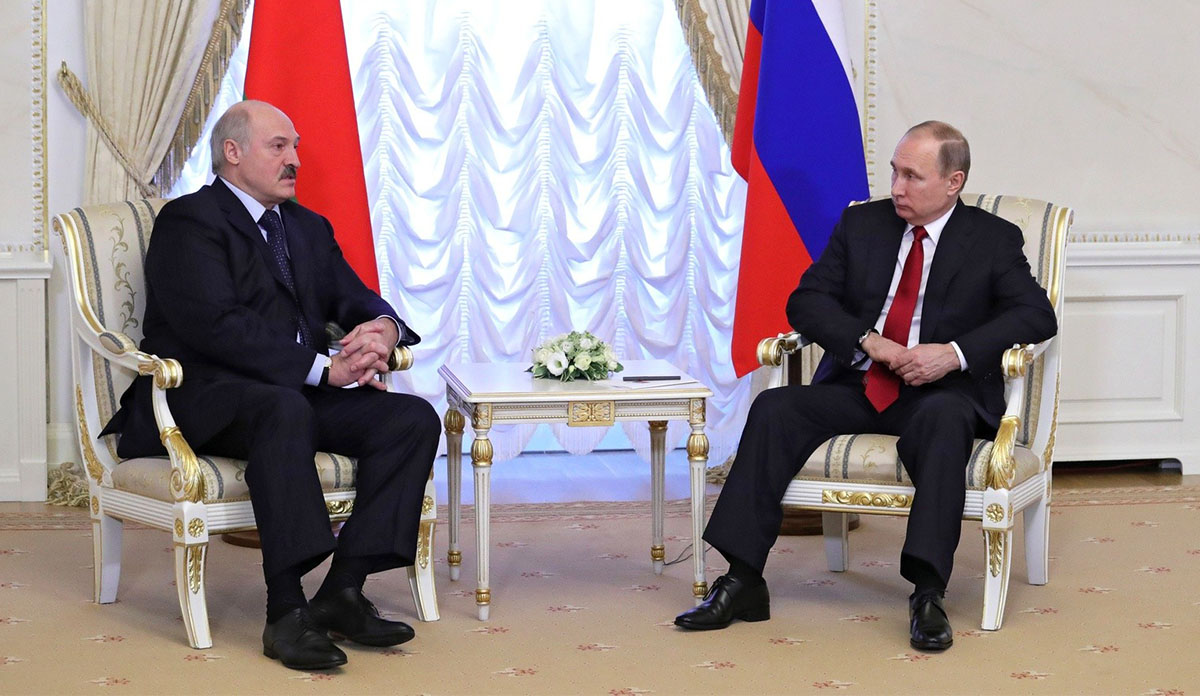
What does Lukashenko do not want
It is easy to guess that the "period of the immediate threat of aggression" is elementary shorter than just a "threatened period." But why is this so important for the Belarusian president who made an appropriate amendment to the agreement? The fact is that in the conditions of a military confrontation with the West ERC Air Defense, actually provides a useless zone at the advanced boundaries. The anti-aircraft missile systems (air defense systems) of the S-300 Air Force and Air Defense of Belarus can, if necessary, hit targets over the territories of Poland, Lithuania and Latvia. And the S-400 air defense system in the Kaliningrad region and the Belarusian S-300, blocking the zones of each other's defeat, significantly limit the possibilities of air access to the NATO Air Force to the Baltic states and transfer of reserves. In a situation where the North Atlantic Alliance is preparing to contain Russian aggression, the appearance of such a useless zone turns into a serious military factor. Meanwhile, the documents of the Warsaw Summit of NATO (2016) indicate that the Alliance will not tolerate the existence of such a zone. It is easy to assume that NATO’s answer will be reduced to ensuring opportunities for the destruction of Russian-Belarusian air defense systems. As a result, the Belarusian territory will inevitably be under the sight of American cruise missiles. And Lukashenko clearly wants to avoid this.
The disappeared base
Realizing that Mashstaba military cooperation with Moscow threatens to lead to a direct conflict with the West, Lukashenko refused an ambitious project to create a Russian air base in Belarusian territory. In the case of the Avibase project, the third military military facilities of the Russian Federation in Belarus, along with the station of warning about the missile attack and the Center for Communications of the Navy.
Plans to create an airbase arose even before the Ukrainian crisis. Initially, its deployment was considered as a response to patrolling by NATO fighters of the airspace of the Baltic countries. “We begin to consider the plan for the creation of a Russian aviation base in Belarus with fighter aircraft,” said Russian Minister of Defense Sergei Shoigu during a meeting with Alexander Lukashenko in April 2013. - We hope that in 2015 an aviation regiment will appear here. And in 2013, we will create an aviation commandant’s office and put the first duty link of combat fighters. ”
Soon these plans were specified. In June 2013, the Commander-in-Chief of the Russian Air Force, Viktor Bondarev, said that the Russian air base in Belarus would be located in the city of Lida. According to him, a group of Russian experts previously got acquainted with the condition of more than two dozen Belarusian military airfields. As a result, an airfield was selected, located 35 km from the border with Lithuania and 120 km from Poland: during the USSR, a fighter-bombing and bomber regiment were located there. Initially, the airfield was supposed to place multifunctional Su-27CM3 fighters.
Russia, said Bondarev, the Commander -in -Chief of the Air Force, “is obliged to form and have its own air base, which will become an important element of the first strategic echelon of the defense of the Union State, ensuring the cover of the airspace of Belarus.”
The rhetoric of Shoigu, Bondarev, and other officials created the absolute impression that the issue of the base has already been resolved. And Russian experts immediately began to make plans for further deployment. So, for example, the vice-president of the Russian Academy of Geopolitical Problems Vladimir Anokhin told reporters that a whole mixed aircraft division-a regiment of front-line bombers, regiment of fighter fighter fighters and a regiment of fighters should be placed at the new air base. From a military point of view, there should be bomber aircraft with powerful carriers and cover fighters, Anokhin noted.
Further - more. Four Su-27 fighters arrived as an advanced detachment at the airfield in Baranovichi. And in September 2015, Russian President Vladimir Putin ordered to sign an agreement on the creation of the Russian air base in Belarus, entrusting the Russian Ministry of Defense and the Foreign Ministry to negotiate with Minsk. However, less than a month after that, Lukashenko violated all the agreements, his position suddenly changed radically: “As the head of state, I do not see the point of being drawn into the“ game of muscles ”of our Western and Eastern neighbors. Not time, and it is not necessary. "
In April 2016, the Belarusian Foreign Ministry categorically stated that the issue of creating a Russian air base in the Belarusian territory was finally closed. And Lukashenko had new counterates: if, they say, Moscow is so concerned about its safety, then let it provide Belarus with modern airplanes and air defense systems.
In September 2015, Vladimir Putin ordered to sign an agreement on the creation of the Russian air base in Belarus. However, less than a month after that, Lukashenko violated all the agreements, his position suddenly changed radically: “As the head of state, I do not see the point of being drawn into the“ game of muscles ”of our Western and Eastern neighbors. Not time, and it is not necessary "
The conclusion suggests itself: despite the constant statements about the Russian-Belarusian battle, Minsk, does everything possible to avoid the real deployment of Russian troops on its territory. In addition to the period of joint exercises, which, thank God, do not last long.
Other materials on this topic:
“Russia - Belarus: Friendship on the verge of war”, No. 4 (434) dated 02/13/17