
Translated material
Without the right to housing
The authorities of Moscow are increasingly refusing citizens in the right to get social housing
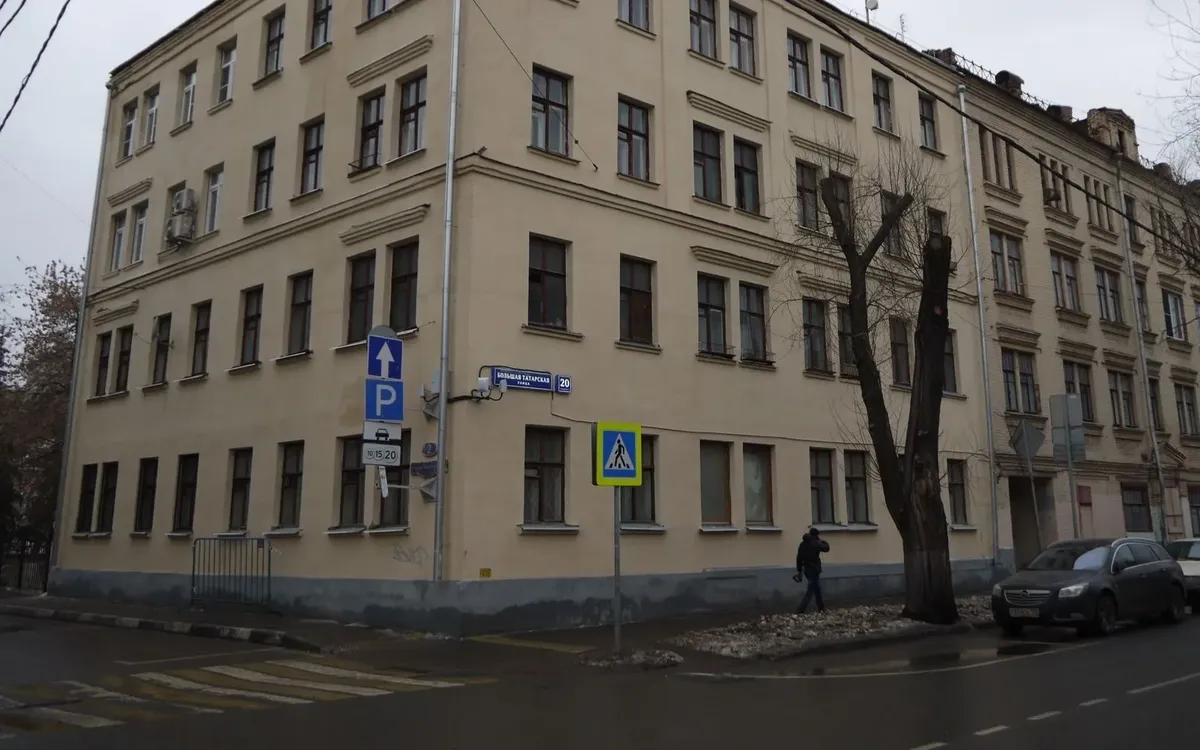
The history of litigation of a large family of Tatyana Company began in January 2013. Then the Muscovite Tatyana received a gift room in a communal room in the city center, where she moved with her husband and three children. Having learned that no one lives in the other rooms in the apartment, the family decided to take the opportunity that is provided for by the Housing Code - according to the law, the rooms in the communal room under a social rental contract may be provided to those who live in the same apartment to the poor. However, unexpectedly for companies, the capital's authorities refused.
The New Gazeta understood why additional restrictions on the right of citizens to receive social housing are introduced in Moscow.
The former 1905 -apartment building in the Zamoskvoretsky district of Moscow, where the company's family moved, turned out to be with history. “Before the revolution, there were steel factories in this area,” says Tatyana, sitting in the kitchen of a communal apartment, while her young children sleep in the room. - There were workers' rooms here. Of the amenities - only a washbasin and a toilet. Our neighbors still do not have a bathroom. In 1917, the owner of profitable houses was shot, all property was taken away, and his daughters were given this very apartment. ”
From the history of the house, Tatyana proceeds to her history of lawsuit with the Department of Urban Property of Moscow (DGI). “In 1962, the apartment was compacted. She became a communal apartment. One room was given to my grandparents who moved from the barracks. ”
However, since the 1970s, Tatyana's relatives began to live in a separate apartment, and the room received in the communal apartment was closed to the castle.
It was in this room that later the family of Tatyana, a husband and three minor children, moved for almost half a century. Prior to this, the company lived in the same room in the apartment with his mother and stepfather in Otradnoye. Joint accommodation with relatives was tense - the relationship did not work out. “The opportunity to live separately from parents in the center of Moscow, where there is its own bathroom, its own kitchen, is a separate room - for us it is much better. Even the guardianship authorities of the Municipalities Otradnoye and Zamoskvorechye were approved, ”Tatyana recalls.
Having moved to a communal apartment, the family found that in fact, no one lives in two other rooms. “When we entered, it turned out that these rooms have been empty for more than 10 years, since 2001,” said Tatyana.
The fact is that, according to the Housing Code of Russia (part 1 and 2 of article 59), several groups of citizens can apply for free rooms in a communal apartment. First of all, those who are recognized as those in need of improving housing conditions and are registered, the so -called waiting lists. If the waiting list in a communal apartment do not live, the right to receive free rooms under a social rental contract goes to those who meet two conditions: it is poor and provided with a total area of a living space for one family member less than normal.
It was to this category of citizens that the family of companies attributed themselves to themselves: they live in a place in a room of 16 square meters. meters (at the norm in Moscow - 10 or more sq. Meters per person), and in May 2013 the Department of Housing Policy and Housing Fund (since 2014 - the Department of Urban Property of Moscow) recognized all members of the family in the purposes established by the already mentioned part 2 of Art. 59 LCD.
After that, Tatyana and three of her minor children turned to the same department - with a statement to provide their family with two empty rooms in a communal apartment under a social rental agreement. “But it turned out that Moscow is a separate country and its laws,” says Tatyana’s lawyer and Father, Igor But. The company's family was refused.
When the companies began to find out why they were refused the right to receive rooms prescribed in the LCD, it turned out that the Moscow authorities in 2006 introduced additional conditions (the Law of June 14, 2006 N 29 “On ensuring the right of residents of the city of Moscow to residential premises”) to receive free rooms, not provided for in part 2 of article 59 of the residential complex. Namely: the family should not worsen their living conditions for five years, and all family members must be spelled out in Moscow for at least 10 years.
Referring to the 29th Law of Moscow, the Department explained the refusal of the company to the company’s family in the right to get rooms by the fact that, firstly, they worsened their housing conditions by moving to a communal room from a room in the apartment of Tatyana’s mother, and secondly, because Tatyana’s husband was registered in Moscow for less than 10 years.
At the same time, the department, which a few weeks ago, recognized his family as poor, that is, unable to purchase his own housing, the company proposed “redeem two free rooms at market value” (the document is at the disposal of the editorial office).
The trials began. The first of them was independently: Tatyana tried to prove that the conditions of refusal were unreasonable, that her family did not worsen, but improved living conditions, moving into a separate housing from the sleeping area to the center. The company's case has passed all the courts - from the district Zamoskvoretsky court to the Supreme Court of Russia. “All the judges had one question -“ Are you registered with accounting? ”, The father of Tatyana Igor Buyut, who represented the interests of the family in the courts, recalls. - The explanations that they will queue in order to get rooms, they do not need that they were recognized as poor for the purposes established by paragraph 2 of Article 59 of the LCD, were useless. It turns out that “low -humidity” in Moscow does not have any significance for the exercise of such rights. That is, formally, the city gives such a status, but then does not use it. ”
In 2015, the companies turned to the lawyers of the Institute of Law and Public Policy for help, who turned to the Moscow City Court with a claim to recognize the invalid part 2 of Art. 38 of Law No. 29. “We disputed the Moscow law for compliance with federal law,” said Grigory Weipan, head of the judicial practice of the Institute. - The same provisions of Law No. 29 earlier, in 2007, by the Moscow City Court and the Supreme Court were already recognized as not contradicting the Housing Code. But these trials concerned Moscow to introduce additional conditions for the "waiting list". When contacting the Moscow City Court, our thesis was that these same restrictions cannot be introduced for special categories of citizens, which the federal law protects especially, and the cases by which everything has already been regulated by the LCD. Communalities- just such a case (see article 59 LCD). However, the courts in this process simply repeated their legal positions in 2007, which concerned the waiting list. "
Lawyers of the institute see in the company of the company's family a systemic problem of legislative regulation. “The Russian region, the city of Moscow, destroys the regulation of housing rights established by federal law, introducing restrictions on housing that the residential complex is not provided and which contradict its logic. And the courts, up to the Supreme Court, justify this by the freedom of discretion of the subject of the Federation in the regulation of housing issues, ”Grigory Weipan comments on the situation.
The fact is that the regulation of the housing rights of citizens in Russia is carried out simultaneously at the federal and regional levels.
“Housing law norms can indeed be regulated not only by the Housing Code. At the subject level, their laws can also be adopted, ”lawyer Yevgeny Antonov said in an interview with Novaya Gazeta. “However, the situation in Moscow can be described as a legalized scam: when Moscow puts a special framework for its inhabitants.”
The problem is that with the adoption in 2006 of Moscow, entire groups of the population turned out to be “cut off” from federal rights. “And if the Moscow legislator comes up with that in the city of Moscow to submit an application for a passport, you need to bring a certificate of living here for at least 10 years? - argues Grigory Weipan. - Or to get a pension in Moscow, you need to provide a certificate of lack of income over the past five years? Obviously, such restrictions are unconstitutional. The restriction faced by Tatyana Company faced is essentially not different from these examples. ”
An example is an example of another communal apartment in the center of Moscow. In 1994, two women issued two rooms in a communal apartment without determining shares. A few months later, one of them died, none of the heirs accepted her property. The second owner of two rooms died nine years later. In 2004, the Basmanny Court recognized her sister Olga Mayorova’s right to ½ share in each of the two rooms, in the order of inheritance, and the second lobes remained in suspended state.
After 20 years, the city in the person of DGI declared its rights to square meters in a communal apartment, or rather, half of one of the rooms. Olga Mayorova filed a counterclaim to DGI about recognizing property right due to the prescription of ownership. “The courts made a decision in favor of the department, despite the fact that the department was not interested in the fate of the rooms for 20 years and despite the fact that Mayorova, due to acquisitive prescription, acquired the right to this real estate,” said Evgeny Antonov.
As it became known to Novaya Gazeta, in the near future this case will be considered by the Supreme Court of Russia.
To answer the question - why does Moscow have such a policy of disposing of the housing stock, find out the number of empty residential premises, and how it is revealed, we turned to the DGI. However, the department for three months did not answer the questions that interest us.
According to open data for 2016, the city owned about 400 thousand apartments and rooms. However, it is likely that many empty square meters of Moscow are not included in this statistics.
“Perhaps the city itself does not know that housing has been freed,” says Evgeny Antonov. —The apartment can be in a limited state. Suppose a person did not have time to prescribe relatives during his lifetime, they buried him and actually live in an apartment. But legally, this room is considered free. When will information reach the city? This area is very hidden. ”
As the head of the Presidential Council for the Development of Civil Society and Human Rights, the Ministry of Construction of Russia on the exercise of the right of citizens to affordable housing Evgeny Bobrov, told Novaya Gazeta, attempts to solve the problem of unused square meters in the capital were made earlier: “There are many monstrously empty housing in Moscow, and the HRC repeatedly proposed to create a mechanism for its inclusion in property circulation. This would reduce the semi-criminal-dealer market, would make it possible to create the necessary rental housing fund. But the DGI, like the Federal Property Management Agency, is manifested in complete security, without conscientiously using empty housing. It comes to the point that in the former departmental dormitories for years, unused municipal housing is 1/3 - 2/3 of apartments/rooms in the house. ”
However, residents of communal apartments are not the only category of citizens whom the Moscow law “cut off” from the benefits laid down by federal law. There are similar situations in the field of land relations. For example, federal legislation involves the issuance of land plots to large families, but in Moscow it does not work. “The problem is that federal legislation gives the right to receive a site, but the procedure for issuing it is established by the region,” explained Evgeny Antonov. - In the Moscow region, a law has been adopted, which describes the procedure for issuing plots to many children. And Moscow simply did not adopt such a law. That is, there is a right, but there are no rules for its implementation. It turns out that the Land Code in Moscow does not work regarding the provision of plots to large families. ”
In a similar situation, rehabilitated citizens and their relatives, who are entitled to receive housing after returning to the place from where they were repressed. However, in Moscow there are precedents when the category of citizens described in the law “On the rehabilitation of victims of political repressions”, faced the fact that DGI refuses to provide housing with reference to the same norms of Law No. 29 adopted in 2006.
According to lawyers, even the waiting listed from the problems are not insured. There are frequent cases-Muscovites who are waiting for housing, DGI removes from the queue due to the purchase of garden houses that are unsuitable for housing, but in technical documents are indicated as “residential building” or “residential building”. For example, in 2015, the department rented a family of Galina Kovaleva from the queue, who has been a four in a communal room and awaiting new housing since 1998. The reason is that the son of Galina Kovaleva in 2004 bought a house in the Moscow Region of the 1920 building, without a bathroom, with a lack of ventilation and vapor barrier, etc. The family was able to restore their place in line only after going to court and conducting an examination that proved that the house was unsuitable for permanent residence. DGI attempts to appeal the decision in the Moscow City Court were unsuccessful.
“The city authorities explain their approach by the attentive selection of recipients of such expensive social assistance as residential premises in Moscow,” says MGD deputy Andrei Klychkov. “However, the requirements are now only tightened, for example, by amendments to the law“ On ensuring the right of residents of the city of Moscow to residential premises ”, officials at the end of 2016 simply eliminated the line of the city in need of the acquisition of residential premises, and no longer allocate additional resources in the form of residential premises and subsidies.”
According to the deputy of the MGD, the Moscow authorities made an unspoken decision-"to narrow the circle of recipients of social housing to veterans of the Great Patriotic War, orphans and immigrants from emergency houses."
However, as it became known to Novaya Gazeta, recently the city began to save even in such a category as orphans. According to the statistics, which was brought by the Executive Director of the Center “Complicity in Fate” Alexei Golovan, from 1999 to 2013, orphans had practically no problems with receiving housing in Moscow. “If in the year the refusal to provide housing disputed 1-2 people, it was an event. Now the claims are in dozens, ”said Alexei Golovan.
According to him, only since the beginning of 2017, more than 60 claims were received with a demand to provide preferential housing for orphans. The defendants in these matters are the city interdepartmental commission for resolving housing issues of orphans and the city property of Moscow.
According to the expert, the reason for the narrowing of the conditions for obtaining social housing is in the new policy of the capital. “If earlier the city considered it necessary to fulfill social duties to vulnerable categories, then the current leadership believes that there are other priorities. The city refuses unprotected citizens in those guarantees established by law, ”said Alexei Golovan.
As a confirmation of the transition to a new policy, the expert recalled the reorganization of the 2014 department. Recall that then the Department of Housing Policy and the Moscow Housing Fund, which was in the social sphere complex along with education, healthcare, social protection, was united with the Department of Urban Property-that is, he transferred to the complex of economic policy and property and earthly relations of Moscow.
“Housing has ceased to be a social category and has become a way of making money for the city,” said Alexei Golovan. - DGI aims to effectively manage real estate. And without providing housing, the Department fulfills its task - saves, that is, earns money. ”
A similar opinion is shared by MGD deputy Andrei Klychkov: “Millions of square meters of housing, built annually at the expense of the city budget go for sale at commercial prices.”
In this case, it becomes clear why the city is ready not to give out orphans, to sue half the room in a communal apartment, to refuse a poor large family to provide rooms. When the priority is given to the savings of urban property, on the account - every square meter.
Meanwhile, the large family of Tatyana company continues to live at 16 square meters. meters, the issue of improving the conditions for them remains open. Lawyers agree on - now only the Constitutional Court of Russia can say whether the restrictive standards of housing rights that are declared in the Constitution in accordance with Moscow meets or not.
Lawyers are sure that the solution of the Constitutional Court will not only help solve the problem of one family and thousands of other Muscovites, but will determine those “boundaries of the permitted” that the subject of Russia can be guided by, adopting their own laws. “This is not only the problem of thousands of citizens who live in communal apartments and cannot achieve improvement of their living conditions without any intelligible explanations from the state,” says Grigory Vipan. - This is the question of how limits the subjects can decide for themselves, whose rights and how to limit. According to the Constitution (part 3 of article 55), rights and freedoms can be limited only by federal law. КС не раз говорил, что если субъекты регулируют права и свободы своими законами, то это может быть лишь конкретизация федерального регулирования, но не создание новых ограничений».
Как стало известно «Новой газете», Татьяна Компаниец намерена обращаться в Конституционный суд России. Какое решение вынесет суд по её делу, а значит и по проблемам тысяч москвичей, оказавшихся вне зоны действия Жилищного кодекса, будет известно позже.
Daria Burlakova