
Translated material
Hug and cry
Immersive Spanish Theater Kamchatka tells the story of migrants who have found a house
Spectators go into space in small groups. We - the first group of five people - are glued to the chest a construction tape with a serial number. I get "161700". “So the cheese is marked with or prisoners,” the Bolshevik factory, glued in the lobby of the factory, smile. Immediately the girl makes a selfie. I look over my shoulder: lips, chest and sticker on it fit into the frame.
A group of professional dramatic actors, clowns, mums and puppeteers, united in Spain in the Kamcnatka Theater, until the last kept the scene of the performance secret. The cheese was never done here - the “supplier of his imperial majesty” produced cakes, cakes and the famous cooking “anniversary”. Now it is a fashionable modern space with cafes and offices behind glass windows and steel doors. Only red and white brick masonry around the entire perimeter resembles the Bolshevik.
Ten minutes before that, my friend and I, theatrical critic, F. fled in the rain. “Imagine,” I said, “I have to wander around the house for four and a half hours!” “But they will stroke you there on the head and hug,” the critic comforted. “And also,” I continued, “must kiss!” And all this without words! " “Well, you see,” it seems that my friend even envied me.
The performance in the SITE-Specific genre, it is also an immersion performance or a performance performance with which the theater arrived, creates the effect of complete presence, immersing the viewer into the plot of the production. Actors can blindfold you, take your hand and take it to another room, or they can suddenly hug or just look into your eyes for a long time. Their language is a universal language of gestures and views. Sometimes items come to the rescue of artists, for example, old suitcases. There is a script and drama in every performance, but at the same time not a single idea is unlike another. The actors of Kamcnatka themselves call what they do, "a performance-installation."
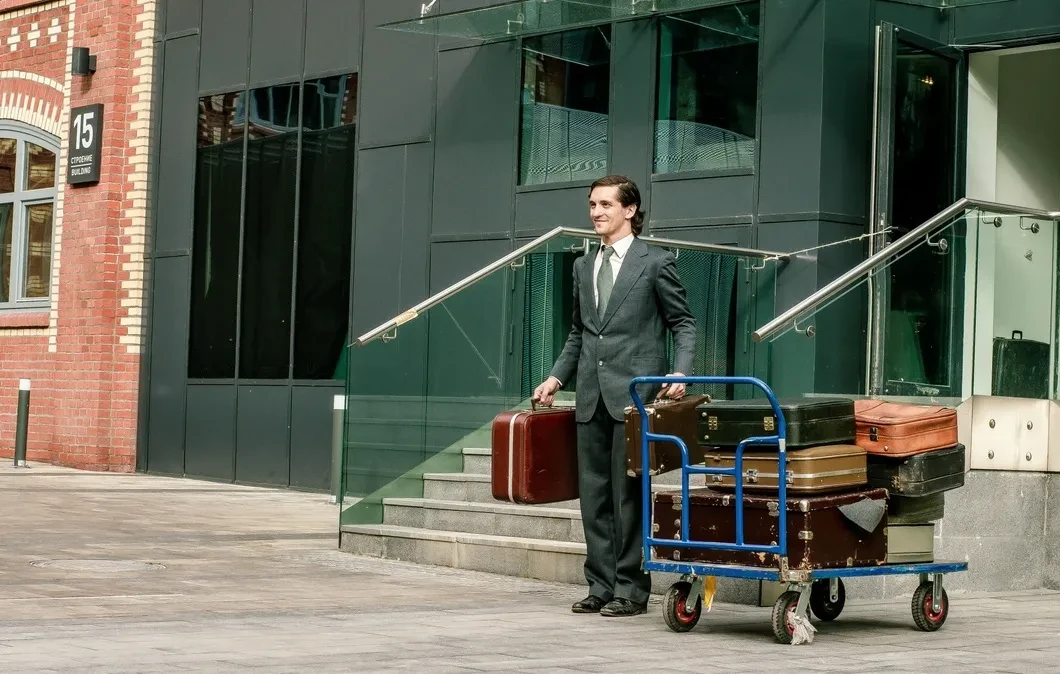
The handsome man in an elegant suit and with a suitcase in his hand makes a gesture - come to me. Our numbered group is slowly approaching. The stranger puts a suitcase on the floor and holds out his hands to the nearest girl. Removes a bag, a jacket, a scarf from her shoulder ... "I hope this is all that will be removed from us today?" - My neighbor says a little excitedly. Then it turns out that it was not “all”.
We pass through the courtyard, another girl is already waved from the porch - also with a suitcase in his hand. Above her head on a glass visor is another. "Look!" - We raise our heads: from the windows, smiling joyfully, a few more people wave.
The "hallway" is abundantly forced by suitcases, on the hanger - several dozen coats of different styles and flowers. In the next room, the hero seems to be a little lost at our appearance. But after a moment, it invites to suppress lemon juice with it. Lemons here are everywhere: in baskets suspended to the ceiling, in the form of ready -made juice in bottles. Someone rushes right away. But my attention is attracted by the beds behind the Spaniard. Natural such beds. Long rows of black mounds sprinkled directly onto the brick floor. They are crowned with parsley, dill, mint, there are even tomatoes. Someone notices and begins to water the "garden", but I am distracted again-something boils on the window! I look: some kind of grass floats inside, but it smells delicious. The Spaniard holds out a half - a spill. And only at the very end I notice a corral with chicken, peacefully pacing around the tubs with lemons, and to the left of it the “forest”: felled trees turned upside down.
The Spanish Theater brought us the second part of the refugee trilogy - “refuge”. The first part ("Escape") was shown in Moscow last summer. This is the story of refugees who left their house. The authors do not specify who they talk about. In each country, viewers themselves decide who in front of them: who fled from the war or have lost their house for any other reason. In the second part, migrants gain a house. In each country, the performance is, as it were, created again, taking into account its history and customs. The task of viewers and actors is to find contact points, a common language. “Refugees” are in charge of the house, but are not ready to abandon their traditions. Will they be able to live with us? And we? Can we accept them as they are?
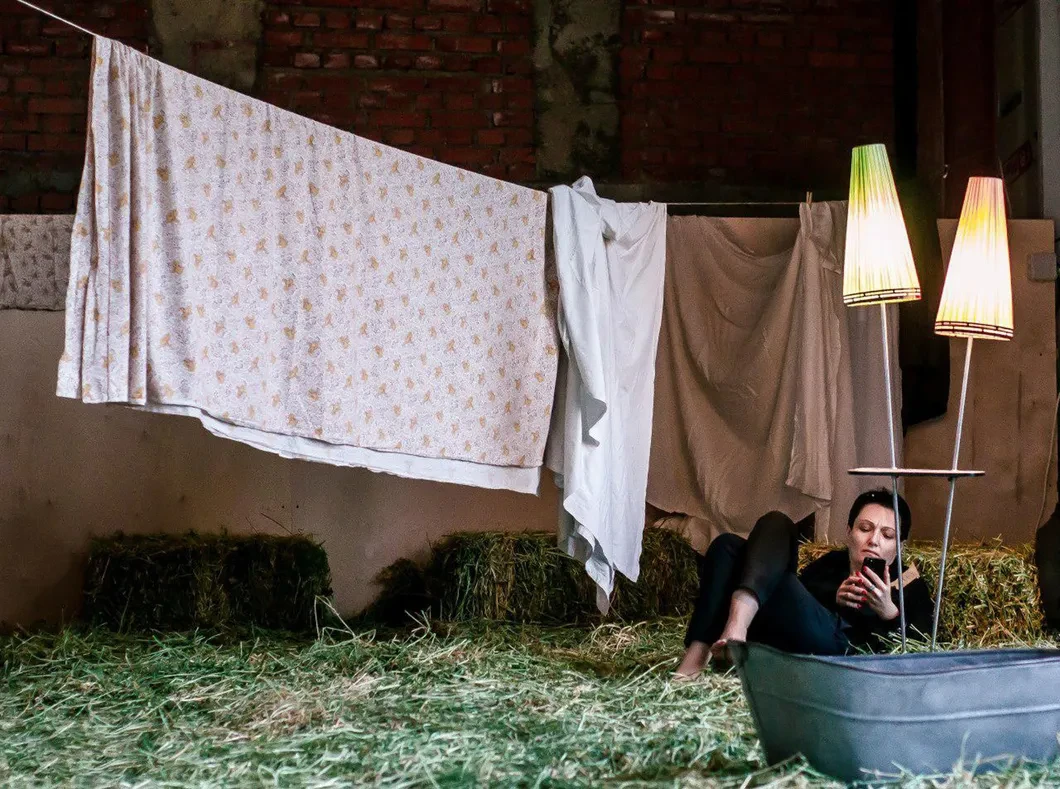
Everything is very in Russian here, even in advance. Aluminum dishes in the kitchen, spices and seasonings in jars on the ground floor, a living room with Soviet lampshades, carpets and furniture - on the second. Somewhere between the second and third-Soviet refrigerators with fans inside. On the top floor of a stack with hay, Soviet bathroom and aluminum basins, separately - sandbox and two pairs of swing. The zones separate the sheets - white and in a flower. In the "game" - lotto, checkers, dominoes, harmony and wooden soldiers.
"Shelter" is the most difficult performance in preparation. To collect it, the whole team, including actors, producer and technical assistant, arrives in the city ten days before the performance. Actors participate in the construction of scenery, selection of props. By the way, it is collected by announcing a cry on Facebook.
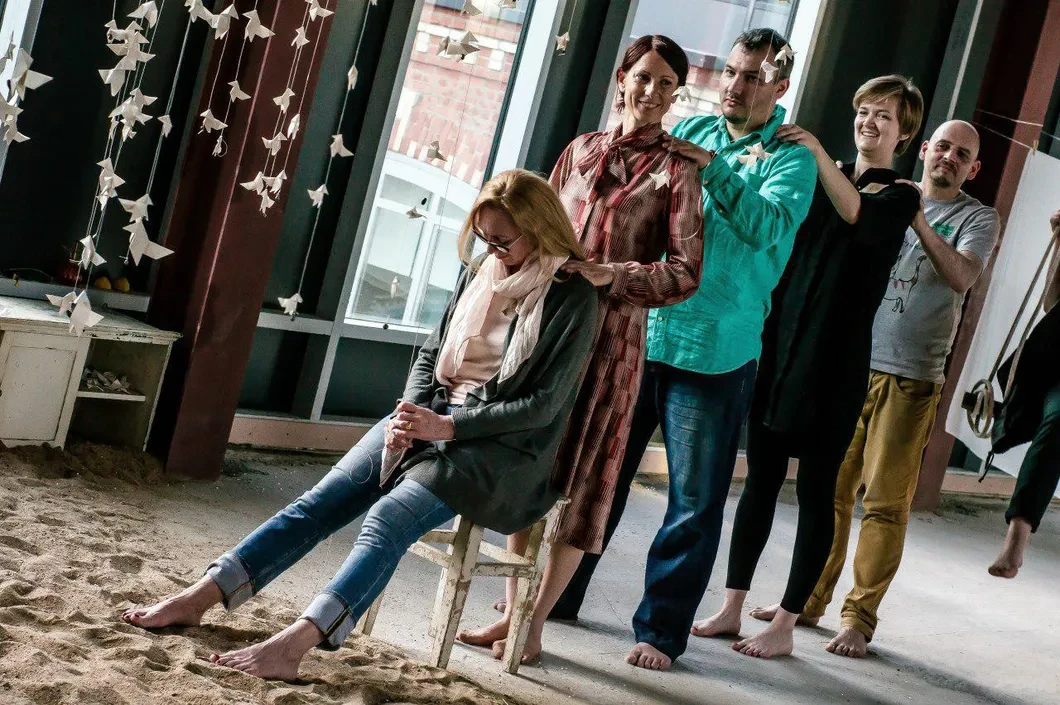
Having built the “castle” in the “desert” and was pleasing in cool sand, I fall on a white sheet next to some girl. The "owner of the house" sets in motion the "music of the wind" over our heads (the symbol of happiness - white paper cranes obediently circle) and spray with water from the dispenser on top. I close my eyes: after a hard working week and running around in Moscow, it acts soothingly. “It will be necessary to carry sand with you to work, pour under the heels,” says my neighbor on the sheet blissfully. “And in general, there should be a director in every office in every office.” Silent music plays: “Silver Rain” conveys Chopin. On the second floor behind the velvet curtains of red, there is a pateophone. Vinyl records - on nails in the walls. They dance there.
The performance is built on the purest improvisation of the actor and a specific viewer, the director of Kamchatka explained. The scene drama is built on the behavior of a particular person. And the actors also use what is happening outside. They take any situation on the street, in the room and turn into part of the performance.
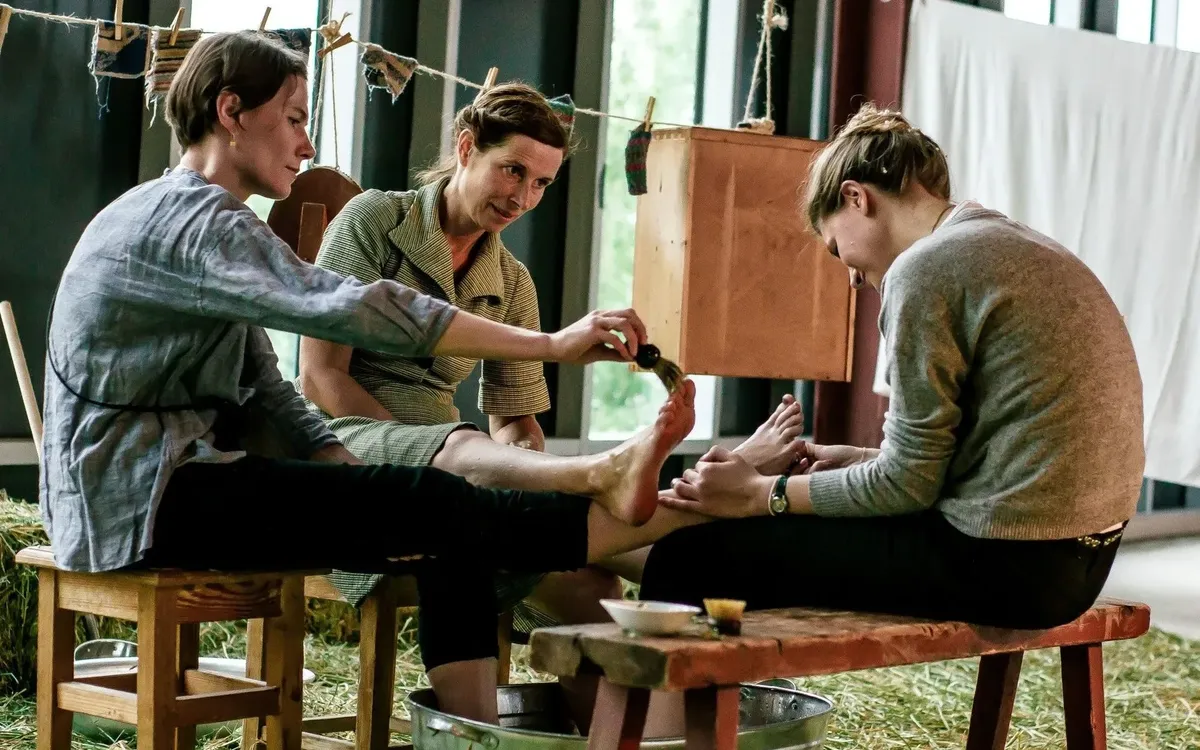
“Well, butterfly?! We’ll fall, like in a Russian bath? " - In order to entertain myself and the audience, I overturn with hooting on the crossed bare legs of the people unfamiliar people, a half -headman with water. Spectators and artists turn. Behind the white curtains, something like a Russian field with a bath in the middle: a floor-covered with hay, a stack around the perimeter, a ceramic bathtub in the middle and several baskets with stools. Having perched onto the edge of the bath and rinsing my legs in it, I hold them out to my neighbor - go a brush with a brush and fucking dry, my friend. An awkwardness and even squeamishness pass instantly. The "Mistress" brings a plate with pieces of lemon. "Eh, there is not enough vodka!" I hold out dreamily.
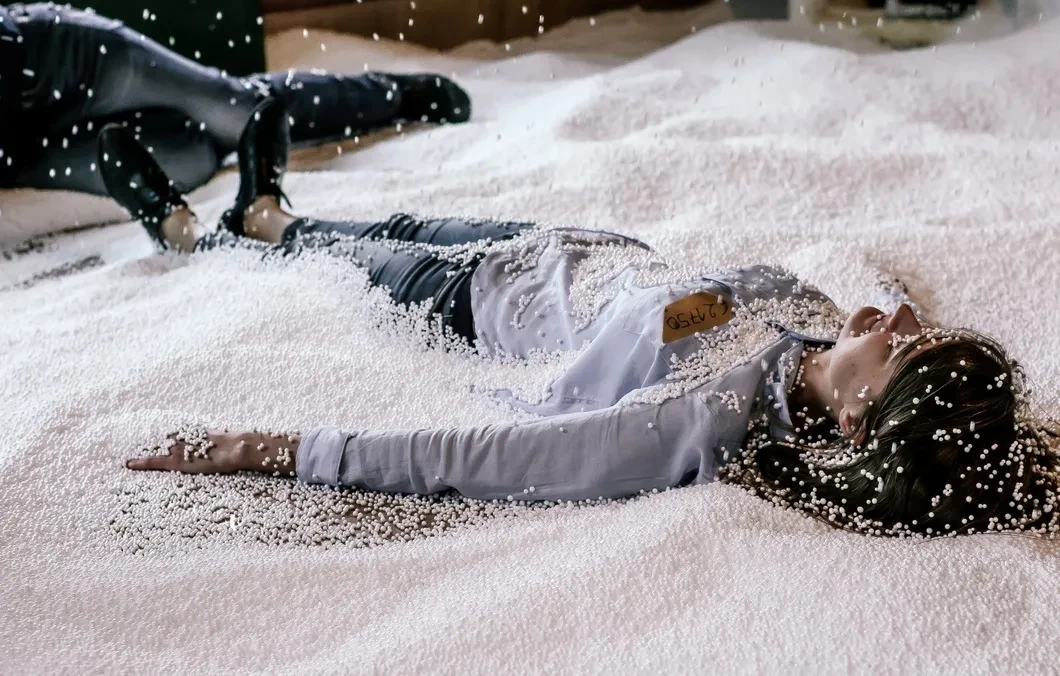
“Have you been to this room yet? Run soon! She is the best! " - in passing the spectator throws on the stairs. In the "Frost", as I called this room to myself, natural Soviet refrigerators are placed in the corners. From the open “mouths”, “Languages”-giants are teased, they brazenly spit “Russian snow”-small foam balls. The metropolitan bomond burns his bodies in expensive suits and jewelry - delight! Suddenly, everyone is covered with “snow” at once.
At this moment, large black eyes arise to the right of me, very close. “I only realized here that you can not do what they offer you, do not take what they give,” they say and again go “underground”. I impatiently dig my eyes: "What, what?" My eyes explain: “They gave me a watering can, I took it. Then they gave me a shovel. I took it again. And when they gave me a kettle, I refused. It turned out that I could not take it. And then it dawned on me: you can also part with all the shit in life that you come across. ”
In Japan, the actors said, at all could not understand what Kamchatka was doing, there is no word “improvisation” - what the whole performance is being kept on. In one of the small towns, Mexico had to revise the whole image of “refugees”: among the poor local population, the actors in their shabby coats and jackets looked not like migrants, but as very rich people.
In Russia, a pipe broke into the house. Yulia and I spun the pestephon and I, when something flowed on us from above. "We ran to watch!" - at the same time we exclaimed with her. We climbed the third floor. And there the pipe of the Bolshevik factory turned into a small fountain. If this was not provided for by the authors (and according to the actors it was clear that they were confused), then this scene would have to be invented as the completion of the Moscow version of the performance. Then they broke the swing. To complete the picture, there was not enough flooring and demolition of the entire structure with the obligatory vote of the inhabitants.
In total, there are 12 artists in the team, together they have already traveled 37 countries and showed more than 450 performances. They were gathered around him by director Adrian Schwarzstein, who led the workshop through the street theater. One of them is dedicated to the topic of migration. The artists say: one of the important questions that they raise in the play, how to make sure that, living in another country, you remember about your roots. The very name of the theater was chosen as a symbol of something “very distant”: in Europe, few people know what Kamchatka is.
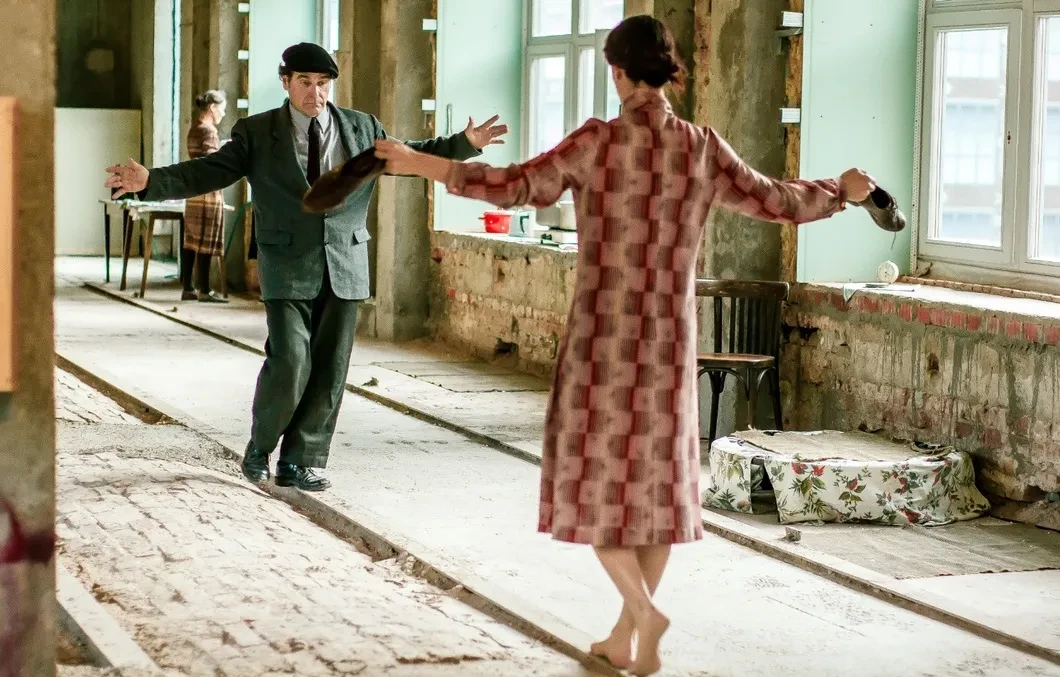
“When we play migrants on other people's streets,” the artists said, “we feel our heroes as innocent, good -natured, open people who came with a pure picture of the world. Our task is to understand this city, culture, make friends with the audience. Through this innocence, we reveal their best feelings in the audience, the most human that is in all of us. This house is invented, it really is not, and it is difficult for the audience in it, because they should fight their prejudices, understand that other people can live differently. Our performances are about freedom, including internal. ”
The idea is simple, but much still remains incomprehensible. Let's say why the audience is “planted” on the sand? What should they feel? What in Russia migrants have to sit in it? What is difficult for them to preserve their national identity while sitting on it? It was announced that the actors would tell the audience their story without words. But what, say, is the story of a migrant, tossing balls of foam, to the joy of adults and children? Why is he doing this? How was it here? These snow -white balls are a symbol of the Russian winter, and he moved to Siberia and thus forced to earn a living?
... Already going to leave, I notice the playwright D. She is already barefoot. I begin to show: here is a room of memories, look how you can play with light - Dernie for this rope with a key. The playwright actively takes pictures on the smartphone, rewarding what he saw approving "Cool!" And conspiratorially throws his friend L., who just came to the performance: “Be sure to knock on the closet!” After half an hour of such fermentation, the playwright D. already my legs in a basin, scent each other with a brush and joyfully blame them. Thus, with the playwright D. closer to each other, we go to “you” and go to the nearest cafe to drink. “I drink the last days all the time. And tomorrow a rehearsal, ”the playwright D. complains and continues after the sip:“ And where were you? ” At Tuminas in Vakhtangov? Come on these old people. Come to us better, look at something youth. The choreographer and I recently came up with a new method. There, then ... "