
Translated material
Long box
What is Russia to expect from new American sanctions and why their mitigation or cancellation may have to wait a decade
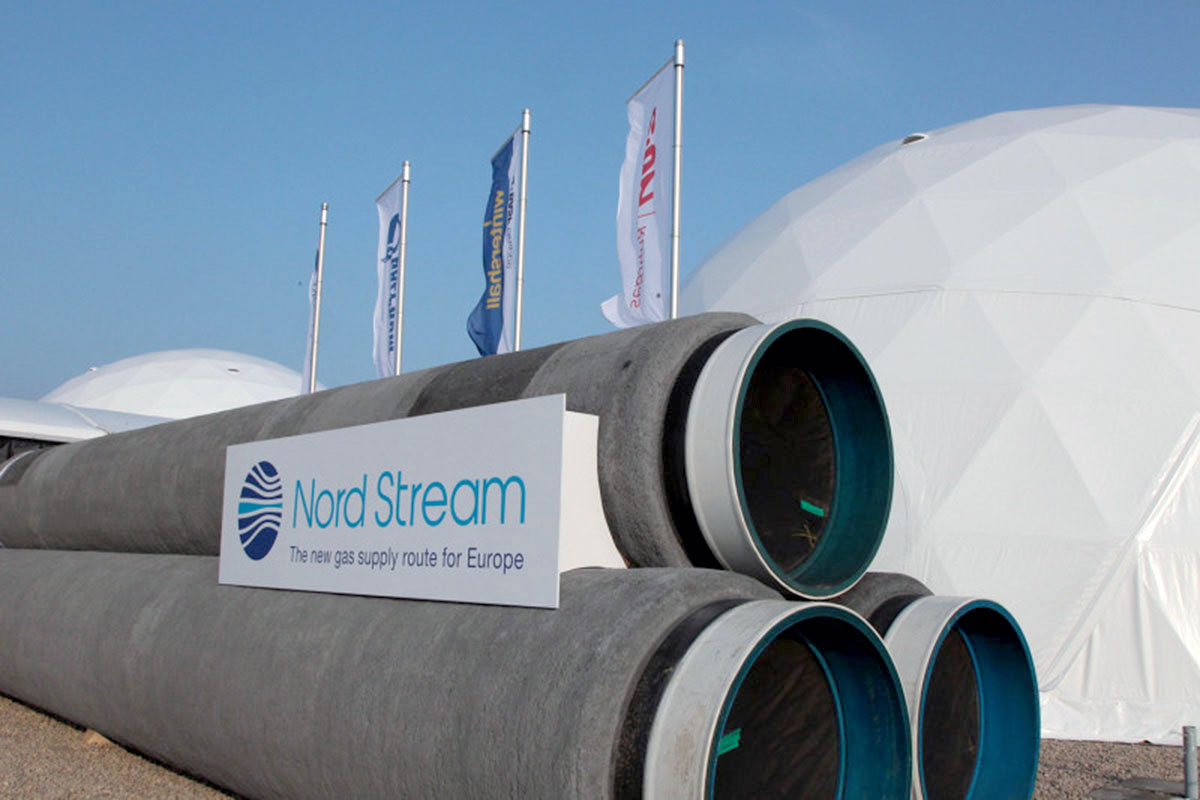
In early May 2017, in the office of Matthias Varnig, the executive director of the North Stream-2 project, according to which the second gas pipe of 1200 km will be held from Russia to Germany on the bottom of the Baltic Sea, a call from the chairman of the board of directors of the Gerhard Schreder project. Varniga, ex-employee of the Ministry of State Security of the GDR (Stasi) and Schrief, a modest lawyer from Hanover, who later became the Chancellor of the Federal Republic of Germany, in the past knitting nothing, and nothing could be binded by virtue of their biographies. Now they are connected not only by involvement in projects to provide Europe with Russian gas, but also by personal friendship with Vladimir Putin, and the Russian president met Barnig in 1991, long before the Schroeder became the German chancellor: Varnig opened the Dresdner Bank representation in St. Petersburg, and Putin, as we recall, the German Drezdan knew not heavily. Now Putin and Varnig, according to the German newspaper Die Welt, are seen in Moscow about once a month. Putin and Schroeder communicate on the phone even more often. But now all three, in addition to common friendship, were also connected by general concern-the fate of Northern Stream-2.
Stream in the fog
After the US Senate on June 14 almost unanimously approved the bill on the new package of sanctions against the Russian Federation, the cutting of which is aimed at the banking and energy spheres, the general project with Gazprom becomes an extra burden for 200 companies from 17 countries, despite the fact that the project has already been approved by the European network of system transportation systems (ENTSOG). Schroeder told Barnig that the introduction of new US sanctions against Russia, apparently, is a matter of time, and this requires response. No further than April 24, 2017, Gazprom signed with five international giant companies, Royal Dutsh Shell, OMV, Engie, Uniper and Whintershall, the financing of the project with a total value of € 9.9 billion-partners pledged 50% of the required funds (the contribution of each of the companies-€ 950 million), The total amount of contract obligations has already exceeded € 4 billion. And a year before Gazprom, which the second half of financing falls, foreign partners promised to attract loans under the project on favorable terms, instead of creating a joint venture: Nord Stream-2 AG, which is a shareholder of Gazprom, must receive 6% per annum until 2019. American sanctions confuse cards to everyone.
The bill, which after the Senate should be approved by the House of Representatives and sign the US President, provides for the possibility of sanctions against companies or persons intending to invest more than $ 5 million per year or $ 1 million in the construction of Russian export pipelines, or provide these projects with services and technology. “Five million is nothing. Gazprom has one kilometer of the pipeline costs six million, ”explains Mikhail Krutikhin, an analyst, partner of Rusenergy.
Even information support for Gazprom projects may now be punishable. “The Nord Stream-2 leadership has come to the conclusion about the need to speed up the passage of funds until the American bill has become a full law,” a source in the council of project directors, familiar with the situation, told NT. “Shell has already translated her share.”
In early June, a new agreement was concluded: in case of non-capacity or lack of funds, partners will provide a Nord Stream-2 loan of up to € 6.65 billion at a rate of 5.75–6.75% per annum. “It was also an insured in case of tough American sanctions,” comments NT source.
“The Nord Stream-2 leadership came to the conclusion about the need to speed up the passage of funds until the American bill has become a full law”
The question, however, is how the Partner companies of Gazprom will behave, such as the Danish Blue Water, which was required to ensure the supply of 200 thousand pipes for the project. In addition, the American package also provides for the so -called “secondary sanctions”, which can be in the black list to any foreign company that cooperates with Russian counterparties, including, of course, Chinese banks, many of which have corses in the United States. They are not mentioned in vain, because in the West it will become even more difficult to borrow money from large Russian state -owned banks and companies - the same Gazprom will now be able to take a loan for a maximum of 30 days, and Gazprombank or Vneshephonbank will only be 14, so many will try to turn eyes to the east. And there they will also think tightly ...
The blow to the ruble
The American sanctions package in his current version is still softer than what was discussed in the Capitol in the spring. According to journalist Gregori White from the Bloomberg agency, the initial option included restrictions on the purchase of Russian federal loan bonds by foreign investors. “Given that a third of such papers is among foreigners, it would be a tough blow to Russian state financials,” White said.
However, the current version with a 14-day maximum term for refunds is also not sugar and can add, first of all, on the well-being of the Russian national currency. Financial sanctions narrow the possibilities for using speculative technologies to support the ruble, the so -called Carry Trade. “We borrow in dollars, we transfer them to rubles, and when the ruble is strengthened, we get the percentage of ruble yields on dollars, and we return these dollars,” explains Igor Nikolaev, the head of the Department of Strategic Analysis of the FBC company. “In the case of sanctions, the ruble that was supported through Carry Trade operations will lose the soil underfoot, and there is the possibility of the next collapse of the Russian currency.” According to Nikolaev, those banks that will begin to occupy in Asia know well that it is always more expensive and more complicated. Borrowings in the domestic market are deprived of the economy of investment resources.
“Perhaps our banks and companies will be more expensive, and include all the costs in the project,” suggested the interlocutor NT. “But in any case, this will warm up inflation and spur rising prices - both for manufacturers and for consumers.”
“In the case of sanctions, the ruble that was supported through Carry Trade operations will lose the soil underfoot, and there is a chance of the next collapse of the Russian currency”
However, there is another point of view. For example, the head of the analytical department of the BCF Bank Maxim Osadchiy believes that in fact, small banks were mainly hit by an American blow, which will be cut off from operations with non -cash dollars and money transfers using Western Union, plus their assets in the United States, the volume of which is most likely not significant. “The blow to the banking sector of Russia is weak and is more likely a symbolic character,” Speaks summarize.
Sanctions as a law
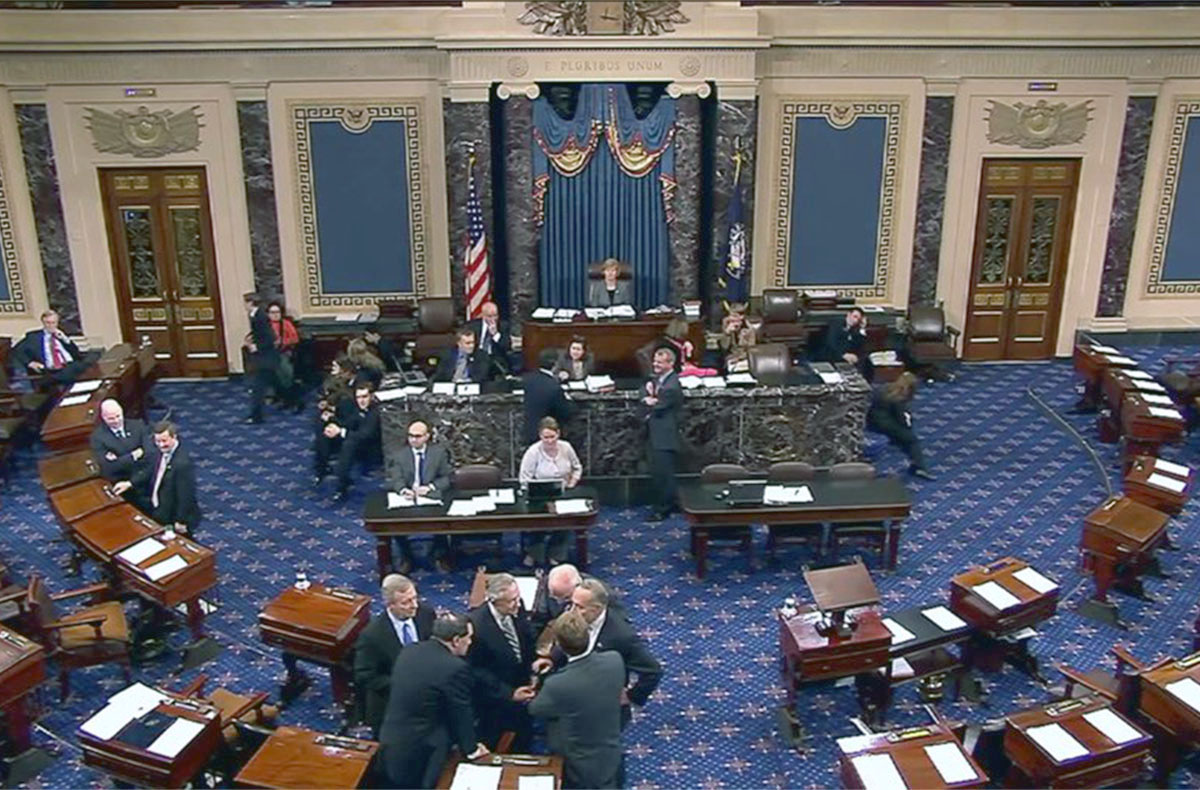
The Senate bill on sanctions against Russia was adopted almost without debate. This was facilitated by the fact that the bill was drawn up as an amendment to the bill “On Combating the destabilizing activity of Iran”, and there is a consensus regarding Iran in the Senate. Only two out of a hundred senators voted against. One of them, a former presidential candidate Bernie Sanders, explained his “no” by the fact that he does not want to jeopardize a nuclear deal with Iran. He fully supports sanctions against Russia.
One of the authors of the bill, Democrat Ben Cardin, in his speech emphasized the fundamental difference between the presidential decrees that were introduced by the current sanctions and the law: “Most of these sanctions ( which were approved by the Senate. - NT) is mandatory. This is not “the president can” - this is the “president must”.
The head of the executive branch will not be able, at his own discretion, to cancel or soften the regime of sanctions as a whole or in relation to specific defendants from the list. The amendment provides for the president such an opportunity for reasons of national security, but only with the consent of the congress. This is exactly what the case was corrected by Jackson -Vannik, who did not operate against Russia, starting in 1989, and was canceled in law only in exchange for the “Magnitsky Law”.
“Most of these sanctions are mandatory. This is not a "president can" - this is "the president must"
It is the mandatory nature of the sanctions that the Trump administration does not like. On the eve of the vote, the Secretary of State Rex Tillerson defended the budget application of his department in the Senate Committee on Foreign Affairs. To the question about his attitude to the amendment, he replied: “We would like to have more flexibility and increase the temperature only when it is necessary, without depriving ourselves to maintain a constructive dialogue ( with Moscow. - V.A.)”. But the chairman of the committee, Republican Bob Corker, considered this objection to the insolvent: with the president, he believes, there are enough tools for the policies of the whip and the gingerbread in relation to Russia.
In addition to legalizing sanctions, the bill significantly expands the criteria for their application - this is a comprehensive list of claims of the free world to Russia. It is not only about involvement in the seizure of Crimea and events in the southeast of Ukraine, but also about participation in corruption schemes for the privatization of state property, supply of weapons to the Bashar Assad regime, corruption, business relations with Russian intelligence and defense industry, serious human rights violations, attempts to circumvent the regime of sanctions and, finally, “malicious Cabyractivity in favor of the Russian Government ".
The amendment also covers almost all the most active sectors of the economy: this, in addition to the financial sector and oil and gas production (and transportation of Russian oil and gas) - metallurgy, railway and sea transportation.
In addition to legalizing sanctions, the bill significantly expands the criteria for their application. This is not only involvement in the seizure of Crimea and events in the southeast of Ukraine, but also participation in corruption schemes for privatization of state property, supply of weapons to the Bashar Assad regime, corruption, business relations with Russian intelligence and defense industry, serious violations of human rights, attempts to circumvent the regime of sanctions, and, finally, “malicious Caberactivity in favor of the Russian government”
Now the word behind the lower ward, but there the thing was slowed down, apparently, until the fall.
Voices against
The White House refrained from public comments, while the amendment was considered and accepted in the Senate. According to one of the Cosponsor amendments, the Senator-Democrat Sherrod Brown, none of the presidential apparatus called the upper house members and did not persuade them to vote against, and they were just calling to the lower, trying to slow down the procedure. The first deputy secretary of the White House Sarah Khakabi-Sanders called into question the feasibility of amendment: “We believe that the regime of sanctions, which is at the disposal of the executive branch at present, is the best tool in order to force Russia to fulfill its obligations.”
The speaker of the House of Representatives Paul Ryan was silent for a long time and only on the eighth day after the decision of the Senate stated that he supported sanctions. However, he did it exactly at the moment when a way was found to reject the amendment. The secretary of the chamber according to the procedure Thomas Wikham suddenly discovered that the amendment violates the Constitution, which says: "All Billy on the receipts of state revenues proceed from the House of Representatives."
This provision has its own historical roots: states with a large population, having a proportional representation in the lower house (unlike the Senate, where the norm of representation does not depend on the number of voters), it was no coincidence that the order of federal finances were left behind this chamber. “The power of the wallet,” wrote one of the authors of the Constitution, James Madison, “let's say directly, can be considered as the most powerful weapon, which any constitution can give into the hands of the direct representatives of the people in order to take any trouble and introduce any fair and good measure.”
The Secretary of the Lower Chamber according to the procedure Thomas Wickham suddenly discovered that the Senate amendment violates the Constitution, which says: "All Billy on the receipts of state revenues proceed from the House of Representatives"
Without additional clarifications, but they are not yet, it is difficult to understand what the relationship of sanctions is to state income. Apparently, it means the missed benefit of American companies and, accordingly, tax revenues from this benefit. However, the chairmen of relevant committees instantly seized on this opportunity to fail and promise to work hard to solve the “problems”.
According to the supporters of the amendment, this purely procedural issue is resolved in a matter of minutes. But the opponents have another calculation of the amendment - to tighten the case to the summer holidays, which begin in August. Then in September it will be possible to start work on your own option of amendment, accept it, then appoint a conciliation commission, which will lead the two editions to the common denominator, after which the agreed text will be put on voting in each ward.
"Pocket veto"
President Trump has the right to veto. The Senate is enough for the qualified majority of two -thirds to overcome him, and the House of Representatives is hardly. But there is a more elegant way to bury the amendment. On American political jargon, it is called "pocket veto." The Constitution says that the president must within 10 days (not counting the weekend and festive) or sign the law, or return it to Congress with his objections. If he did not sign and did not return, the law is considered to enter into force. However, if this deadline falls on the vacation, the bill does not become law, and both chambers must begin all over again.
The first “pocket veto” was used in 1812 by James Madison. Nixon and Carter, Reagan and Bush Sr., were refrained from its application, each twice used it, Bill Clinton-three times. Of course, this is a trick, and quite indecent. But she saves the president of unpleasant explanations.
The US Constitution says that the president must within 10 days (not counting the weekend and festive) or sign the law, or return it to Congress with his objections. Otherwise, the bill becomes law. But if this deadline falls on the vacation, the bill does not become law, and the wards will have to start all over again
How the US new sanctions will work and what will they turn to Russia
| Financial sector |
| What are they going to introduce |
| Who will suffer and why |
| Energy |
| What are they going to introduce |
| Who will suffer and why |
| The economy as a whole |
| The financing of small and medium -sized businesses is sharply complicated, most real transactions on trade financing are practically leveled. As a result, inflation and prices will increase. In addition, since Congress intends to impose sanctions with a special law, the possibility of mitigation or cancellation in the future strives for zero |
Anastasia Torop participated in the preparation of the material