
Translated material
Makhachkala: Citizens are fighting out of town
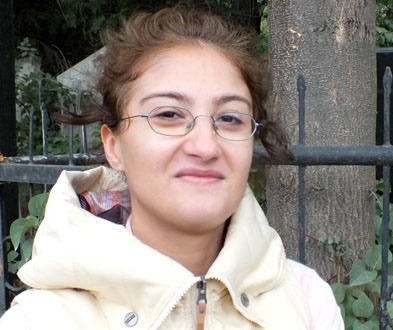
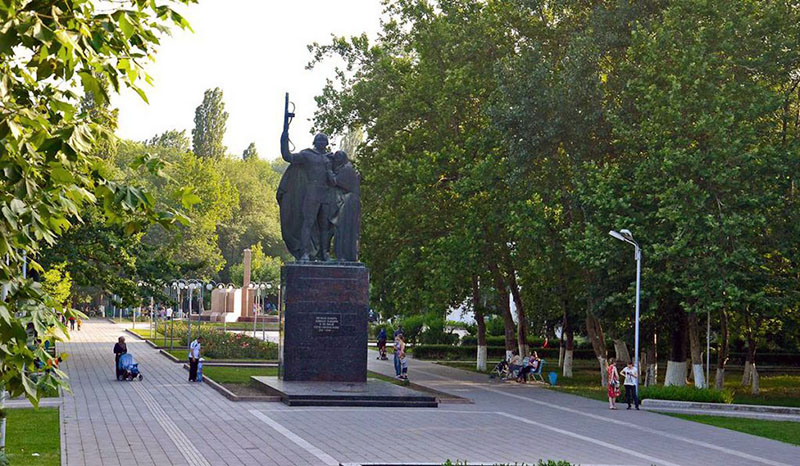
Makhachkalinka Yana Martirosova works as an excursor guide and, by her own admission, never considered herself capable of a civil protest. Changes in her life came in early 2017, when she found out that the Makhachkala authorities decided to build the Park Museum “Russia-My History” in the territory of the Lenin Komsomol park, the oldest-it was founded back in 1887-and, in fact, the only in the city center. Not only civil activists stood to protect the small scrap of the earth and the 65 trees growing on it, but also ordinary Makhachkalins, housewives and pensioners. While some caring citizens guarded the territory from development, others argued with the museum designers and local deputies.
“It is unlikely that I myself would have to arrange protests or went to the court to challenge the decision of the authorities - unfortunately, not so subsidized,” Yana Martirosova admits. “But when I saw that many townspeople had stood up to the park, I realized that I could not sit at home.”
Repelled the park
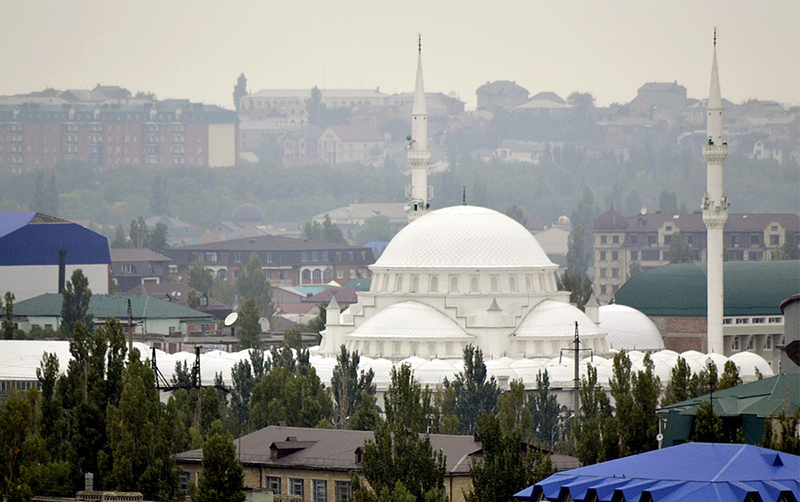
Makhachkala is a city with a population of more than half a million people, stretched along the coast of the Caspian Sea by more than 70 km. In 2001–2003 and in 2011, the capital of Dagestan occupied prizes in the All-Russian contest “The most landscaped city of Russia”, and in 2003 even became a winner. In recent years, a large-scale reconstruction of the historical part of the city, entrance highways and infrastructure of life support has been carried out here, alleys, boulevards, squares and embankment, defeated a new, fifth Ak-Göl with a town of attractions. However, in the capital of the republic, not everything is as rosy as the reports of the city authorities are drawn. In Makhachkala, do not push up due to cafes, banquet halls and shops, while in the capital, while there are only five green zones in the capital. The prevailing practice of development leads to the fact that the city turns into stone jungle, the locals say: in the sake of building the next shopping and entertainment center, all trees growing on this site go under an ax.
“Perhaps about 15 years ago, Makhachkala was not so densely built up, and people did not worry about new construction projects,” explains the indignation of the townspeople Jan Martirosov. - And now, when we can neither pass through the streets or park, and even the last green spaces are deprived of us, - people simply burst in patience. Our city is only 160 years old, there are not so many history here, but here - the latter is deprived of the last. ”
“The funniest, officials talked with us as if we had only interests with them: they say, if we are not building a museum in the park, the project will be given to Chechnya,” says Civilian activist Svetlana Anokhina. “But this is not important for us, but why they decided to build something without consulting with us, citizens.”
In the battle for the park that lasted ten days, people defeated officials: the head of the republic Ramazan Abdulatipov said that the museum would be built in another place - on Imam Shamil Avenue.
According to the lawyer and civil activist Arsen Magomedov, this victory inspired many Makhachkala residents: if they were able to defend the park, then it will be possible to protect other interests of citizens. “Success in the case with the park, of course, was very much inspired by people,” confirms Yana Martirosova.
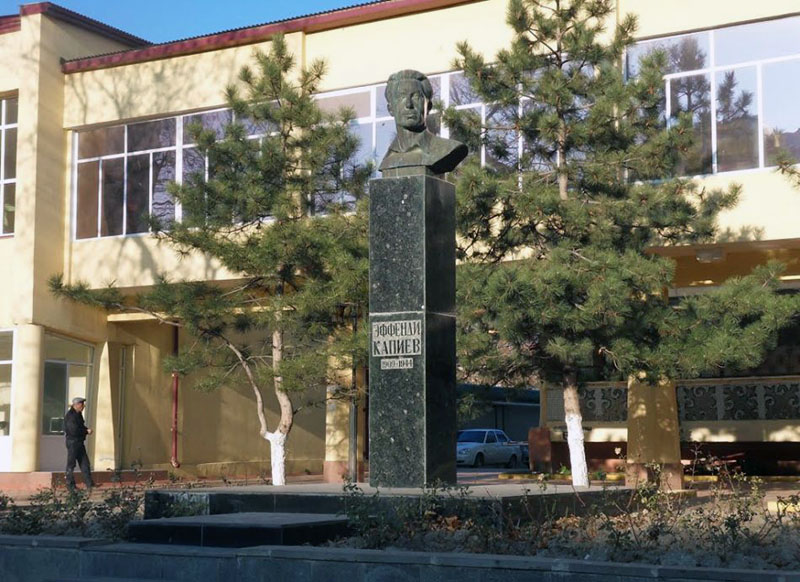
In May, for example, the initiative group of the Makhachkala residents sent an appeal to the city’s prosecutor’s office regarding the illegal, in their opinion, point development on Gamzatov Avenue in the center of the capital, due to which the monument to the Dagestan writer Effendi Kapieva was under threat of demolition. And now the inhabitants of Makhachkala have defended another city park-Ak-Göl-on the shore of the lake of the same name, collect signatures under the petition demanding to stop building a new commercial object here.
“I admit that it was unlikely that I would have become a protest or went to the court to challenge the decision of the authorities - unfortunately, it was not so subsidized. But when I saw that many townspeople stood up to defense of the park, I joined them with joy "
Standed the beach
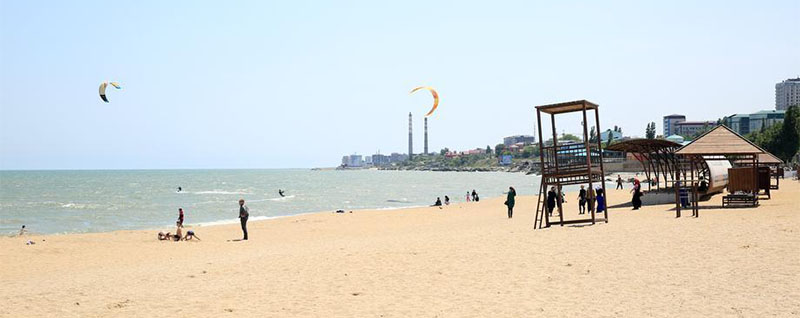
In early March, people began the struggle for the city beach in Kaspiysk-a satellite city 16 km south of Makhachkala: they were also preparing to start commercial development on its territory. Activists wrote a complaint to the prosecutor’s office, the republican authorities reported the situation.
“When it became known that half of the beach will be built up with the unknown, then I had the feeling that it was personally robbing me,” the local activist Anya Gadzhieva shares. - Yes, and people are already tired of enduring. In the 1990s they suffered, in the 2000s suffered, watching how everyone around was destroyed ... And then they encroached on something that was dear to us, and people could not stand it. ”
The activity of the townspeople led to the fact that the Kaspiisk administration ordered the elimination of all “unauthorized” trading stalls on the embankment, and the beach itself was cleaned from the embankment, which was already prepared for future construction. In the recreation area, they even installed awnings for vacationers, promise to arrange dry closets.
Reaction reaction
However, the Dagestanians rebel not only against the advance of the authorities and merchants on their habitat, the Makhachkala residents are not silent, and when the local propagandists in a loyal fiber cross the foul. So, in August 2015, in the capital, on the initiative of the assistant to one of the city deputies, garbage tanks appeared with portraits of Adolf Hitler, Petro Poroshenko, the logo of the reality show “Dom-2” and the symbol of the dollar-they say, all this is one field of berries. Later, in one of the city squares, with the presentation of the same “creative”, benches were installed with photographs of Russian opposition on seats and inscriptions on the backs: “Feel our love”, “Sit down, a passerby, rest on the traitors of the country” and “Sit down, passerby, rest on Charlie lovers ( I mean the French satirical weekly weekly weekly week “Charlie Ebdo”, on the editor of which in January 2015, an armed attack was committed. And this spring, under the zebra of a pedestrian crossing on one of the central streets of Makhachkala, the image of Alexei Navalny turned out to be - as if behind a prison bars, and under it a call: “Do not drive!”
The creative finds of the deputy’s assistant quickly dispersed through social networks, but instead of likes they gathered a collection of complaints to the city administration. “Creative” was cleaned from the streets of Makhachkala.
“In the 1990s they suffered, in the 2000s suffered, watching how everyone around was destroyed, and muttered under their breath. And then they attacked something that was dear to us, and people could not stand it. "
Judged by themselves
The sincerity of the motives of people who decided to openly go against the authorities does not fit in official minds. Now, if they act for money, then everything is clear. According to this simple logic, Dagestan activists are accused of corruption, the desire to earn money in conflicts and in personal selfish interests.
“They once told me: you sue developers to pay you,” the activist Arsen Magomedov gives an example. “That is, we are considered extortions.”
“Not so long ago, a person from the city administration asked me: do you know all activists who roof it all? - says Svetlana Anokhina. “There, upstairs, they do not understand that the current protests are not a single outbreak of discontent or outrage of citizens, do not understand that people are tired of enduring the arbitrariness of the authorities and inaction of the law enforcement agencies.”
“They once told me: you sue developers to pay you. That is, we are considered extortionists "
When the struggle for the park named after the Lenin Komsomol began, Yana Martirosov admits, she herself was pessimistic, "there was no confidence that we would win." But then I realized that silence is the worst of all that I should at least express my dissatisfaction with public: “I found that a huge number of people think the same way.”
But Dagestan is not only not all of Russia, this is not even the whole of the Caucasus, notes the Caucasus Wede, a senior researcher at the Center for Problems of the Caucasus and Regional Security of MGIMO Vadim Mukhanov: “Dagestan stands out against the general background, and this is largely due to its ethno -social features. It is still difficult to imagine unauthorized social activity in Chechnya or Ingushetia. ”
Meanwhile, in the capital of Dagestan, people have already felt their strength and are unlikely to stop there, Yana Martirosov believes: “We realized: if the leadership of the city and republic pays attention to us only when we start to make noise, then we will have to make noise.”