
Translated material
Eternal President
The New Times asked political scientists only one question: why does Vladimir Putin not leave?
Abbas Gallamov:
Putin has a sense of mission, which he must fulfill to the end: to make Russia as strong as the United States. It seems to him that no one else can cope with this task like him.
Alexey Makarkin:
Why would he leave? Let's go from the nasty. His ratings are high, higher than 80%-all sociological services, including the Levada Center, speak of this. Thus, there is support for the population. The elites, at least, as we see it in the “direct line” of the president, not the first time, but they obey. When he said - to close the landfill, they decided to close in 2019, when he said a second time - they closed the next day. That is, the elites obey clear and unambiguous instructions. Plus there was the experience of transferring power to Medvedev in 2008. What is the result? Medvedev became a locomotive for 4 years, during which time he became friends with Obama, who decided to deceive Medvedev and achieved success, - ended with the murder of Muammar Gaddafi in Libya in well -known circumstances (tore off). In line was Assad, who so far managed to save. So, even absolutely his own, absolutely understandable, ready to leave in which case (which he did), Dmitry Anatolyevich turned out to be not perfect. Now the presidential term is increased - this is 6 years. If you leave, then you will leave forever, it is extremely difficult to return. Here is such a whole set of understandable arguments for the continuation of the presidency, and I do not see the arguments at all to leave.
Dmitry Oreshkin:
The first reason is not his own master, he is a representative of a particular corporation, behind him is a structure called “Burne” (bureaucracy and business). Bureaucracy are those who are close to Putin. They gain access to non -employed monopoly business sectors as long as they support Putin. They have a privileged position, access to raw materials, defense and other sectors of the economy. If he leaves, their positions remain unprotected, because they cannot withstand economic competition, they need administrative support. Therefore, Putin is not a clan, but a corporation. He, like Brezhnev, is simply not released by people who perfectly understand that with the advent of a new person there will be a redundancy of interests and new conflicts will arise. A new person will begin to promote someone new to the same monopoly advantages. Therefore, those who control the situation now do not want to lose this situation. These are simple considerations of commercial interests and maintaining stability. The redistribution of the spheres of influences in the economy may be accompanied by conflicts. This is not Putin’s personal choice, but the choice of the system.
Putin’s psychology is so arranged that he can only believe in force. As soon as he loses the opportunity to fulfill the function of the arbiter-under the undergraduate, act on the principle of “share and reign”, he begins to feel weak and defenseless
The second is his personal items: he cannot part with the authorities, he has psychological security problems: he does not believe anyone. Boris Yeltsin was a strong and confident man, and therefore was not afraid to abandon the authorities. Yeltsin depended on Putin, who could deceive him, put on trial or do something else, which Putin did not make his honor and almost impeccably fulfilled his obligations to the previous president. Putin himself does not believe that they will do the same with him. Putin’s psychology is so arranged that he can only believe in force. As soon as he loses the opportunity to fulfill the function of an arbitrator, act on the principle of “divide and reign”, he begins to feel weak and defenseless, with which everyone can do anything. This reflects his worldview: nothing else is important, only strength is important. Since he understands the situation, so he behaves. He understands that the law cannot stop anyone if a person has a real force. The law in his view does not mean anything that we saw on the example of Crimea. Having parted with force and money, he cannot count on some guarantees of immunity, therefore he will hold on to power for systemic reasons and personal.
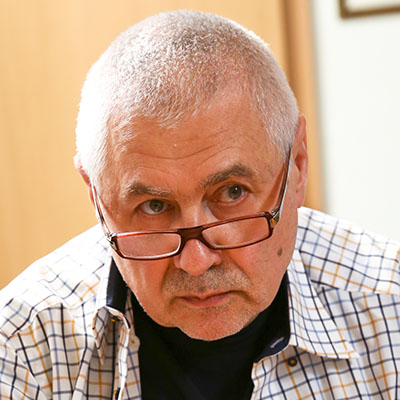
Gleb Pavlovsky:
We do not know whether Putin will be advanced for the next term, and I think that it would be reasonable to not advance on his part, because he has no program for the next few years for the country, except himself, but a person cannot be a program. He has not yet expressed his intention to participate in the elections, on the contrary, he leaves the answer. However, the probability of his departure from power is small, since he is not free in his actions, being a hostage to the circle of close friends in the Kremlin and around him - businessmen, higher officials who need him more than he needs them himself. They need him to stay in the Kremlin to lead the country on his behalf. I think that one way or another they will force him to advance - the probability of this is more than 80%. But he has not yet decided, and we do not know what is happening in his head.
Recorded Anastasia Torop
See also: " Campaign from three letters "