
Translated material
20 years of gloomy world
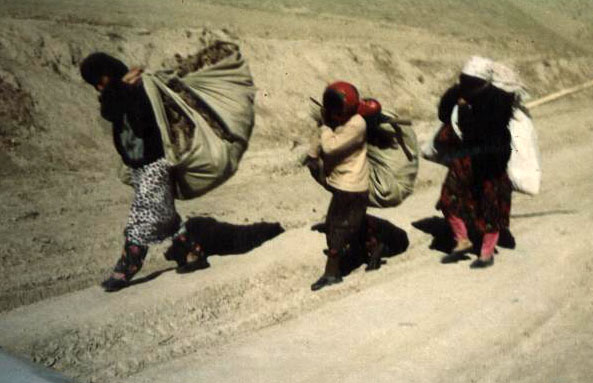
On June 27, 2017, Tajikistan celebrates the 20th anniversary of the signing of a peace agreement that put an end to the civil war -one of the most bloody in the territory of the former USSR. Since then, Tajikistan has not become a happy state, contrary to the statements of its permanent President Emomali Rahmon, who has been in power from the first days of the outbreak of the war, which lasted from 1992 to 1997. Human rights activists and many leaders of democratic countries call his regime monstrously corrupt, and Rahmon himself - a dictator that destroys political opponents and suppress any dissent under the slogans of the fight against radical Islamism. Which in Tajikistan, however, is also more noticeable every day.
As a result of the civil war, from 100 to 150 thousand people, numerous crimes against humanity and war crimes were committed in Tajikistan, according to various sources, over a million people became refugees. The country's economy caused severe damage, and the industrial and social infrastructure was destroyed. After many years of battles, when the advantage periodically found himself on the side of a particular group, in 1997, in Moscow, with the mediation of the UN, a final peace agreement was concluded, under which Emomali Rahmon and the head of the United Tajik opposition Said Abdullo Nuri were signed.
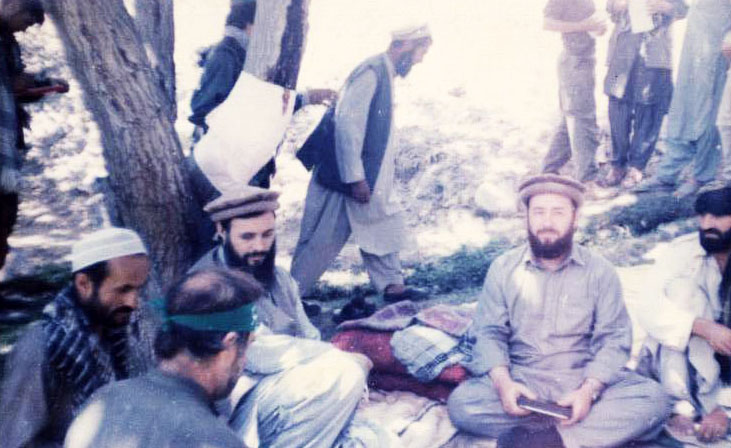
The reasons why the war began in Tajikistan almost immediately after gaining independence. However, the general deaf dissatisfaction of the impoverished population and clan-class discord, conflicts within the political and intellectual Tajik tops that matured for many decades and reached their peak in the last years of the Soviet Union, in the era of economic decline and total universal deficit, became primary. When the recent Tajik communist elite and former officers of the local Ministry of Internal Affairs and the KGB who created criminal communities were divided into clan-territorial groups and began to fight for power with each other with the help of weapons, no other power that could withstand them, did not appear in Tajikistan. The war was five years, with the direct or veiled intervention of Iran, Russia, Uzbekistan, Saudi Arabia and other foreign states.
About some of its details and results, about what the modern Tajikistan is under the rule of Emomali Rahmon and how shaky is the regime in Dushanbe, in an interview with Radio, the political scientist and journalist , a connoisseur of Central Asia Arkady Dubnov :
- What is good today and what is bad about that war?
-Firstly, it is not known how many people died. The numbers are called a variety of different ones - from 60 thousand dead to 150 thousand. Not to mention hundreds of thousands, or millions, people who have lost shelter and became refugees or internal immigrants in Tajikistan itself. Also, in the present Tajikistan, the regime of Emomali Rahmon does a lot to forget, about the time and efforts that in the 90s of the last century, not only the Tajik government and the opposition, but also the countries were settles of settlement, primarily Russia, Iran and Uzbekistan. In Tajikistan, a new mythology is created, which can be called one proposal: President Emomali Rahmon - the founder of peace and unity in Tajikistan, the "leader of the nation." This is the main idea of who was supposedly the main character then. Whatever the slightest degree is true.
- Modern Tajikistan, such as we know him, could be different if not for this war? Or could it not be?
-This country, in Soviet times, on the one hand, although it was called the "Asian Switzerland" because of the amazing natural beauties and a very benevolent mentality of the population, on the other hand, it had long suffered from extreme poverty, even by the standards of the USSR, and its whole economy, and almost just my whole life had a subsidized character. We must not forget about the long-standing level of the frustration of the Tajik ethnic group due to various kinds of historical injustices that fell on the share of Tajiks in the 20s of the last century, when the Soviet regime was established in Central Asia , when, in particular, the administrative-territorial borders between Tajikistan and Uzbekistan were shared. And many ancient centers of Tajik culture, such as Samarkand and Bukhara, went under the administrative department of Uzbekistan. This still responds with pain, remains a national injury, although mature and wise politicians try not to raise such a topic.
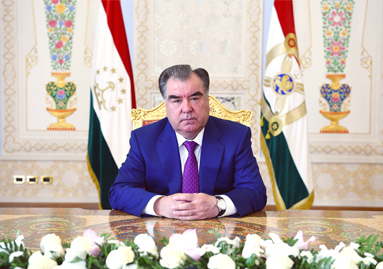
-Emomali Rahmon, officially the president of the country since 1994, the sovereign ruler since 1997, having the title of the “leader of the nation”, is the main winner in that war. He is a dictator, he is accused of corruption. But does he hold power tightly? Does something threaten him now?
- This is a big illusion that he holds power tightly! The stronger he clamps the bolts in the scrapings of this power, the higher the likelihood that the thread will break. He controls the country, creating a regime of family administration, where only the closest members of his family are related to power and the distribution of resources, and even then not all, and his environment. And not even just members of his clan from the southern city of Kulyab, but a very narrow circle of immigrants from his native village Dangar. Rahmon really did not spare efforts to deal with opponents, and not only from the opposition, but even with their closest associates, with those who were with him at the time of the Civil War and the first years of establishing peace. Many of them are in prison, many are no longer alive.
Rahmon really did not spare effort to deal with opponents
And so far it controls very brutal methods. As soon as an influential and authoritative, popular politician who is ready to challenge him and has a chance of success appears, urgent measures are immediately taken to hide him in prison for the most unthinkable accusations. As it was done several years ago in relation to Zayd Saidov, one of the former representatives of the Tajik opposition , who fell into the country's leadership in a 30 percent quota, reserved opposition for a peace agreement. He was the Minister of Economics. And he was sentenced to 28 years in prison as soon as he announced that he was creating his party and was ready to go to the presidential election. This happened in 2013.
- Today how stable does the Tajik state look like for you? Not personally the regime of Rachmon, but the whole country as a whole? In what direction does it move and how many problems do she have, including with neighbors?
- Outwardly, the Tajik regime looks relatively stable, in any case, we do not know anything about what is happening there. We still do not see any visible evidence that something threatens him, in any case, from the inside. But, believe me, the situation is heating up - as the situation worsened in Afghanistan, due to the fact that there are a huge number of dissatisfied people who are still scared by these reprisals and persecutions within Tajikistan. Especially after 2015, after the so -called “rebellion” of General Nazarzod, when the Islamic Renaissance of Tajikistan was actually destroyed, the only legal party on a religious basis throughout the CIS. More than three thousand Tajiks have left the country only in the last two years in search of political asylum in Europe. Moreover, these are all people who relate, or were close to the relatives and countrymen of this general Nazarzod.
Now the danger is due to the fact that the young generation is increasingly looking for justice under radical Islamist slogans
The generation of Tajiks has grown, who are deprived of the traumatic memory of this civil war. This popular injury helped Emomali Rahmon in propaganda, he explained to the people for a long time that "the opposition has no right to opposite the authorities, because this could lead to new bloodshed, they say, you remember what suffering we transferred to the civil war." So, over a quarter of a century, a generation of people has grown on which this propaganda does not act very much. They are greatly moved by the desire to find some kind of justice again-and now the danger is due to the fact that the young generation is increasingly looking for justice under radical Islamic slogans.
-Such groups as the “Islamic state”, “al-Qaeda”, many other, the Taliban who act nearby-did they include Tajikistan in their plans?
-All that we know about all kinds of threats from Afghanistan is in some cases documented, and in some-it is in the nature of targeted pressure on power in Kabul. In particular, in relations with the Taliban, Russia is accused of Russia , which under this pretext wants to return and strengthen its influence in Central Asia. In recent years, I have been very intensively engaged in the region, primarily Afghanistan, and I confirm: yes, in the northern Afghanistan, in particular in the provinces adjacent to Tajikistan, today are increasingly concentrated groups of militants, who used to be attributed to al-Qaeda, or the Islamic Movement of Uzbekistan, or Taliban today, but today is big Some of them are organized and swore allegiance to the banners of the "Islamic state." Firstly, for financial reasons-militants for whom war is the main means of earnings, under the banners of ISIS they receive many times more money. Secondly, in groups such as the Islamic State, consisting largely of the natives of different states of Central Asia, the main goal-setting, motivation is the struggle for the establishment of Islamic rule, a caliphate in Central Asia. This is their complete difference from the Taliban, focused only on taking power in Afghanistan itself, without expansion beyond its borders.
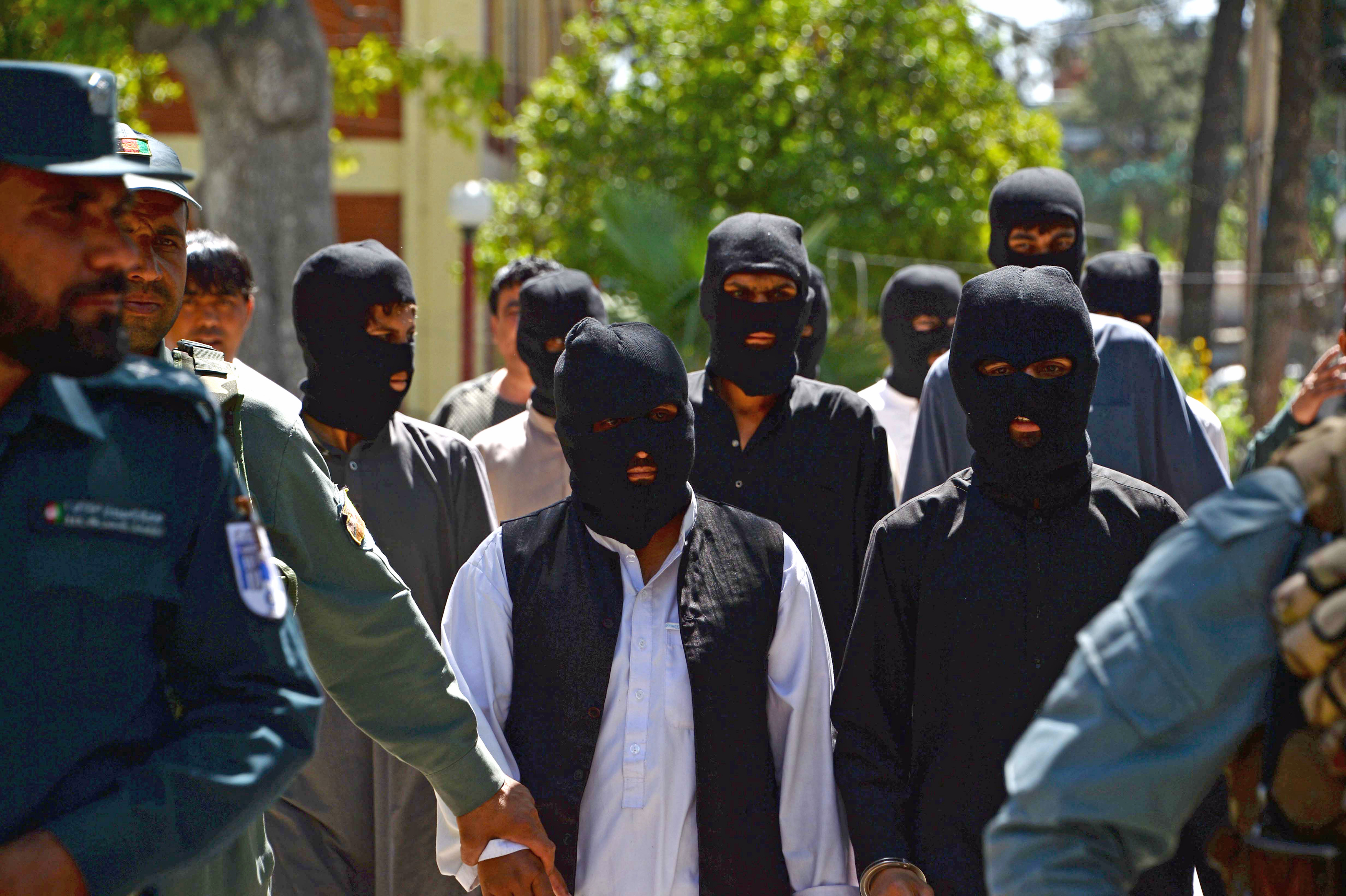
Tajikistan has really become vulnerable for a long time-if only because the Tajik-Afghan border almost 1,400 kilometers is very difficult to control due to the natural relief and length. And also by virtue of Dushanbe refusal, for example, to cooperate with the same Russia that removed its border guards from this border many years ago at the request of the Tajik authorities. So there is a danger: all this together can lead to a certain synergistic explosion, which will be used by the opponents of Rahmon to overthrow it, or even for a new chaos in Tajikistan. With further confiltration of conflict, for example, to Kyrgyzstan.
- Let's get back to the historical date. The civil war in Tajikistan was very confusing. Was it still a war between clans and clans, between areas and elites, or a religious factor and then played a very large role?
- I think that the religious factor in that war began to play a noticeable role not immediately, but over time when the regional opposition, which represented individual regions of Tajikistan, in particular Garm or Mountain Badakhshan, had to run along with the civilian population. And they found refuge in Afghanistan, and the leaders of the opposition in Iran. And in order to have some support in their resistance to the regime in Dushanbe, the opposition had to show loyalty to those who sheltered them-and in those years these were countries of a radical-Islamic nature. Therefore, it is not surprising that over time, the influence of the leaders of the opposition (and at the same time leaders of the Islamic party) increased. At the same time, I must say that such a leader as Said Abdullo Nuri, “Ustod Nuri”, the deceased, the leader of the Islamic Renaissance of Tajikistan, was never a radical Islamist, and he could never be accused of some kind of plans to build a caliphate.
The religious factor in that war began to play a noticeable role not immediately, but over time
As the former deputy Minister of Foreign Minister Anatoly Adamishin, who was settled in Tajikistan, noted in the mid-1990s, "the opposition used the Islamic factor more than the Islamic factor used the opposition." So the “Islamic factor” of the Tajik opposition, which I personally call the “Islamic-democratic”, is largely exaggerated by those who today in Dushanbe seeks to explain their persecution of all dissent by the struggle against international terrorism, ” Arkady Dubnov believes.
-

Alexander GOSTEV
The editor of the RS information service, international observer, author and editor of the heading and podcast "Atlas of the World"
Gosteva@rferl.org