
Translated material
June 12: violations in police branches
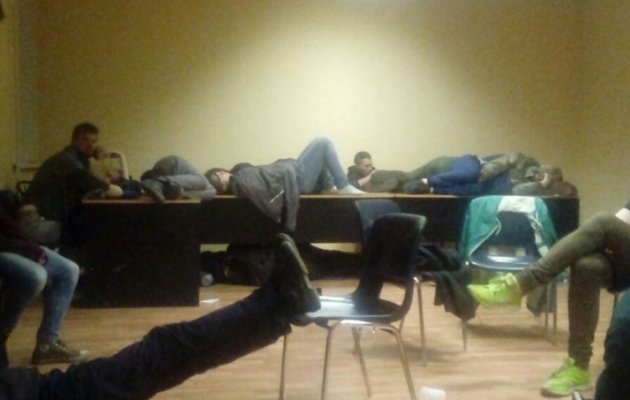
On June 12, at least 1769 people were detained on protests in 31 city. During the conversation with the detainees, the hotline operators of the OTD-Info recorded a massive violation of the rights of the detainees by the police. At the moment, we have checked most of the messages about the violations directly in the police, and we can confidently talk about at least 109 serious violations of the law in 46 police branches, including 59 violations recorded in St. Petersburg and 33 violations in Moscow.
The 12 branches of the police recorded a violation of the right to defense - lawyers and defenders were not allowed into the branches.
At least 10 departments, the conditions of detainees did not comply with Russian legislation, in 14 cases the detainees were not provided at all, or was not provided in accordance with the regulations established by the Russian government, 4 departments violated the right to medical care (refusal to call an ambulance or to transfer drugs).
At least 6 branches of the detainees were threatened by police officers or people in civilian clothes, and in 5 cases, they insulted the detainees. In 6 departments they forced dactyloscopy. In 5 departments - they took mobile phones.
In 15 departments, procedural violations were recorded in the execution of protocols. In at least 6 cases, police officers refused to give the detained copies of the protocols.
The detainees from 6 departments complained of the OVD-info at an unreasonably long time in the car in the car-up to 6 hours.
Of the 6 more departments - for violation of the procedural period of detention.
It should be noted that this is only a small part of the violations: we publish only those cases about which the detainees themselves reported on June 12-13 to the hotline of the OMD-info and confirmed to us in the following days during the rechecking.
We continue to collect and analyze violations in police branches on June 12-14. If you were detained and your rights were violated in the police department, please inform us of this by filling out a simple questionnaire .
Provisions violated in relation to the detainees on June 12
Prepared by Denis Sedov, lawyer of the human rights center "Memorial"
Part 2 of Art. 48 of the Constitution : each detainee, detained, the accused of committing a crime has the right to use the help of a lawyer (defender) from the moment of detention, detention or charges.
Decree of the Government of the Russian Federation of April 16, 2012 N 301 “On approval of the Regulation on the conditions of maintenance, food and medical care procedure for detained persons in the territorial bodies of the Ministry of Internal Affairs of the Russian Federation”:
- detained persons in special rooms are located on benches (sofas).
- The persons detained for a period of more than 3 hours are provided at night at night, bedding and bedding.
- The withdrawal of detained persons from a special premises for the departure of natural needs is carried out at their request alternately accompanied by police officers.
- detainees for more than 3 hours of a person are provided with nutrition for a diet for suspects and accused of committing crimes under the investigative insulators of the federal penalty service, in the temporary detentional insulators of the suspects and accused of internal affairs bodies of the Russian Federation and the border bodies of the Federal Security Service, persons subjected to administrative arrest, for peacetime, approved by the Decree of the Government of the Russian Federation of 11 of 11 of 11 of 11 of 11 April 2005 N 205 “On the minimum nutrition and material support of convicts for deprivation of liberty, as well as on the norms of the nutrition and financial support of suspects and accused of committing crimes under the investigative insulators of the federal service of the execution of sentences, in the temporary maintenance of the suspects and accused of the internal affairs bodies of the Russian Federation and the border bodies of the Federal Service of the Federal Security Service, Persons subjected to administrative arrest in peacetime. ” (As amended by the Decree of the Government of Russia dated November 26, 2013 N 1069).
- In the event that the provision of hot food is impossible, the persons detained for a period of more than 3 hours are provided with dietary diets established in accordance with the Decree of the Government of the Russian Federation of April 11, 2005 N 205.
- The norm of sanitary square in a special room intended for the placement of detained persons is 4 square meters per person.
- In the heating season in special rooms, a temperature of at least 18 degrees Celsius is maintained.
- The organization of medical assistance to the detained person is carried out by police officers immediately at the request of this person.
Clause "F" Art. 9 of the Federal Law “On State Dactyloscopic Registration in the Russian Federation” dated July 25, 1998 N 128-ФЗ : citizens of the Russian Federation, foreign citizens and stateless persons are subject to mandatory state fingerprint registration: suspects of crimes accused of committing crimes convicted of committing administrative arrest; Having committed an administrative offense, if they establish their identity in a different way.
Art. 27.10 Code of Administrative Offenses : During the detention, it is allowed to withdraw only things that were the guns of committing or objects of an administrative offense.
Part 6 of Art. 28.2 Code of Administrative Offenses: an individual or legal representative of a legal entity in respect of whom an administrative case has been instituted, as well as the victim, a copy of the protocol on an administrative offense is awarded on receipt.
Part 7 of Art. 5 of the Federal Law “On Police” : the police are obliged to provide each citizen with the opportunity to familiarize themselves with documents and materials directly affecting his rights and freedom, unless otherwise provided by federal law.
Part 2 of Art. 28.2 Code of Administrative Offenses: The protocol on an administrative offense indicates the date and place of its preparation, position, surname and initials of the person who compiled the protocol, information about the person in respect of whom the case of an administrative offense, names, names, patronymic, addresses of the place of residence of witnesses and victims are instituted, if there are witnesses and victims, place, place and event of an administrative event. The offense, an article by this Code or the Law of a constituent entity of the Russian Federation, providing for administrative liability for this administrative offense, an explanation of an individual or legal representative of a legal entity in respect of which the case has been instituted, other information necessary for resolving the case).
Part 2 of Art. 27.2 Code of Administrative Offenses : delivery must be carried out in a long time.
Part 4 of Art. 27.5 Administrative Code : The period of administrative detention of a person is calculated from the moment of delivery in accordance with Article 27.2.
All violations of the dying of theDijaavtosak (time) Nestimatics of the lawyer Passportadrogoge-Protokolovka telephone number of the content of the Contracopy of the time of the DACTILoscopy, the detention of the detention all cities of the Sancti-Petersburgmoskvakalingradgravgravsky. Novgorodgatchwordivosto -stroke Tagil
Cruelment
Saint Petersburg
OP 33
The cameras were filled with pepper gas due to the fact that gas, in violation of the law, was applied to one of the non-political detainees.
Beating
Moscow
Presnensky
The detainee from the support group that came to the police department was detained, beaten and defeated him.
Medicine
Saint Petersburg
OP 55
They did not let the medicine be taken.
OP 64
They did not give the medicine.
OP 28
The detainee informed the police that he had a disability of the third group, a chronic disease, asked not to remove the jacket, because in one night he could get sick in the cold. But the police ignored these requests. In the cell - 6 people, three mattresses, one blanket and a strong smell of urine. All the people in the cell became bad by morning - a runny nose appeared. It was very cold at night. The police called an ambulance only after human rights activists who talked about the detainee’s disease contacted the police department. I went to the hospital with two police officers. At first they put it in the ward, then they laid a lining in the corridor so that it would be more convenient for the police to follow him. Then they again moved to another place in the corridor, because the police were still inconvenient here. At the same time, the hospital was full of free places in the wards. In a medical discharge, doctors first wrote only that the patient considers himself sick, and only under pressure from the will they inscribed real medical data (pneumonia) there.
OP 33
Refusal to call an ambulance for people suffocating from gas, including for a person suffering from asthma.
Time in Avtosak
Moscow
Ryazan
About an hour and a half were kept in a car carrier in front of the entrance to the police department.
Butyrsky
They did not let out 5-6 hours out of the car carrier.
Kaliningrad
Western LU Ministry of Internal Affairs of Russia in transport
Stood in a car gut for about four hours
Saint Petersburg
OP 74
For three hours they kept on the bus.
OP 28
About 5 hours they drove around the city in Avtosak.
OP 23
They kept two hours in front of the department in Gazelle, did not release to the toilet.
The lack of a lawyer
Moscow
Marfino
They did not let the lawyer 2.5 hours.
Ryazan
The admission of a lawyer was delayed as much as possible.
Strogino
We expelled Vera Makarov and defender Sergei Zlovech from the ATS of the lawyer. This coincided with the arrival of the employees of the Investigative Committee.
South Tushino
They did not let a lawyer.
Saint Petersburg
OP 14
They did not let lawyers.
OP 18
They did not let a lawyer.
OP 74
They did not let lawyers and public defenders.
OP 12
The defender was not allowed.
OP 51
They did not let the defenders.
OP 29
They did not miss the defender, although the detainees on the phone said that they needed a defender. Some police woman said that the detainees had just been and they told her that they did not need a defender-although they said on the phone that no one had come to them. Two girls from among the detainees individually brought out a man in civilian clothes from the Department of Internal Affairs. At the same time, neither the girls, nor the defender, nor to anyone else explained anything. The defender, assuming that the girls were being taken to court, tried to transfer the petition for the transfer of the meeting. A man who brought the detainees tried in every possible way to prevent this, and then he called for help from other police officers.
OP 60
They did not let a lawyer.
OP 15
They did not let a lawyer.
Moving the passport
Blagoveshchensk
Ministry of Internal Affairs of the Blagoveshchensk
A passport was taken from one of the detainees by force.
Veliky Novgorod
OP 1
From all detainees, aggressively and without explanation, they demanded to give a passport.
Other
Moscow
Lublin
The minor was not allowed the father.
Blagoveshchensk
Ministry of Internal Affairs of the Blagoveshchensk
Unknown in civilian clothes called "clowns." Then he gave the detained picture in his hands, and immediately told another policeman to photograph him. But the detainee quickly removed the pictures from his hands - Alexei Navalny was depicted on them. Then this man said: "Why did you leave your leader?"
Gatchina
Internal Affairs Directorate of the Gatchinsky district
They tried to interrogate in the criminal case on the events of March 27. (Arson of the car).
Protocols
Moscow
Falcon
The protocols made the same ones to everyone, they remained unrested empty lines.
South Tushino
The protocols were not the employees who detained.
Lublin
The detainee protocol does not spell out who detained him, when and under what circumstances. The protocol sheets are not fastened.
Pokrovskoye-Streshnevo
They tried to force them to write an obligation to turn out to be in the Department of Internal Affairs the next day to draw up a protocol.
Kosino-Ukhtomsky
They wrote in the protocols things that did not correspond to what was happening on Tverskaya. The protocols were copied several times. One of the police officers said: "You have an offense - a rally."
Schukino
One of the detainees drew up a protocol of 20.2 h. 8 Code of Administrative Offenses for repeated violations at rallies, although the previous administrative punishment has not yet entered into force.
Saint Petersburg
OP 59
Not those police officers who detained.
OP 28
The protocols were drawn up for a carbon copy, only the surnames are different.
OP 24
The protocols appeared only two days later, before the court.
OP 74
The time of detention was distorted for three hours.
OP 14
More than six hours, including in cells, without drawing up a protocol.
OP 51
They did not give out protocols.
OP 23
The content of more than three hours without protocols.
OP 18
They offered to sign protocols where there was no place for comments. They threatened that if they did not sign, they would leave it for the night. .
Kaliningrad
Western LU Ministry of Internal Affairs of Russia in transport
Police detention reports were completely the same.
Moving phones
Saint Petersburg
OP 15
By force, all the phones, from one of the detainees, in search of the phone, even removed their panties. The names of the detainees with phones to the OP were transferred from a police hotline - where the detainees complained.
OP 59
During the survey, the “especially emotional policeman” pulled the phone out of the hands of the detainee, took him to the duty unit and threw him somewhere with a loud knock. Then it turned out that the phone became unusable.
Moscow
Kosino-Ukhtomsky
They tried to rewrite the IEMI mobile phones of the detainees. They did not let them talk on mobile.
Vladivostok
OP 4
Did not allow using the phone
Blagoveshchensk
Ministry of Internal Affairs of the Blagoveshchensk
Two unknown people in a civilian scream and with obscene expressions demanded to turn off the phones.
Insult
Saint Petersburg
OP 55
The detainees rose in civilian clothes, as it turned out - employees of the EE center.
OP 74
The detainee was crushed by people in civilian clothes, photographing her and her passport.
Moscow
Schukino
The district police officer, drawing up protocols, released sebaceous jokes like “smoke? Smoking women end only with cancer, ”suggested undressing and staying alone.
Blagoveshchensk
Ministry of Internal Affairs "Annunciation"
A minor detainee was tried to humiliated by an ATS employee, asked her why she was a piercing.
Conditions
Saint Petersburg
OP 12
The four left for the night were held in the corridor, in the light, there was no place to lie there, they sat all night.
OP 35
We spent the night in the waiting room, where there were only two chairs. Bed linen was not given. It was very cold and bad. As a result, the detainees did not sleep - the first night in the department was uncomfortable, and on the night of June 13 to 14 there were courts, then people were returned to the department, and they were dactyloscopited, only on the afternoon of June 14 were the detainees in the cells in a special receiver.
OP 74
They put a fact, they lay something in the cells in the cells, or sleep without sleeping places in the assembly hall.
OP 59
They did not give out sleeping supplies.
OP 24
The conditions of the detention were extremely bad, 20 people in the room, they did not give out bedding, only ⅔ detainees could sleep.
OP 18
There were no sleeping places.
OP 64
40 detained by 20 square meters, very cold, only chairs made of furniture, there is nowhere to sleep and nothing.
OP 33
17 people after spraying the gas were transferred to the basement, where there were only chairs and “ribbed beds”, on which it was impossible to sleep.
OP 15
Three people were kept in the cells, no laundry. A foam was provided to put on a bench inside the camera. There was a constant smell of urine in the cameras.
Moscow
Alekseevsky
Three people were left to sleep on the street, since there was not enough space in the police department.
Threats
Saint Petersburg
OP 35
The head of the department threatened to add three days and “sew” something because the detainee called an ambulance. Those who did not sign the protocols, the police threatened the consequences.
OP 28
In 28, OP was divorced according to the operator who performed the survey. The investigator shouted all the time for all 15-20 minutes, expressed fragrantly, insulted, threatened. When they shifted weapons from the safe, he said: "I will shoot him here now." He threw a passport, tried to enter some comments on his explanations. They drove a photo - one policeman held him himself, one - a number with a number, and one photographed. During the inspection, the interrogated policeman was very interested in whether the detained conversation on the voice recorder had not written down.
Blagoveshchensk
Ministry of Internal Affairs of the Blagoveshchensk
The police promised the detainees that they would force them to flee 5 kilometers and push them up.
Ministry of Internal Affairs "Annunciation"
The minor and her parents were threatened with a fine of 10 thousand, registering the commission on minors, the opportunity to apply punishment to parents - because they are poorly fulfilling their parental duties.
Moscow
Cherries
Threatened with physical reprisal for asking questions during the issuance of the protocol.
Novogireevo
To one of the detainees, police officers said: "We have a order to close someone for 10 days."
Food
Saint Petersburg
OP 35
Not fed. Volunteers brought food - the police seized part of the food and left it.
OP 24
They didn’t give food, all the food was from human rights activists. On the second day, the ATS officers did not accept the delay for the detainees for an hour and a half, arguing that they already had a lot of food (in fact, there was a lot of water and very little food).
OP 64
They did not give hot food.
OP 59
Employees refused to feed the detainees.
OP 14
They did not give food.
OP 49
They did not provide hot meals.
OP 74
Only Doshirak was given two days.
OP 54
They did not give food and water.
OP 12
They fed once in 28 hours.
OP 28
To the requests to feed the police answered: “There is someone to feed you. You understand who I'm talking about. "
OP 15
When they asked to eat, they said "either noodles (quick cooking) or nothing." Когда просил воду, помощник дежурного по отделу сказала: «Научитесь просить воду». Полиция долго не передавала передачи от родственников.
Благовещенск
МО МВД Благовещенский
Задержанным не давали воды.
Moscow
Войковский
Майор Лисицын отказался передать воду и еду задержанным.
Airport
Не принимали воду и еду, ссылаясь на приказ начальства.
Копии протокола
Saint Petersburg
ОП 15
Не выдали протокол.
ОП 64
Выдавали почти через сутки после задержания.
ОП 55
Не выдали.
Moscow
Южное Тушино
Не выдавали копии протокола.
Люблино
Задержанному отказали в выдаче копии протокола.
Falcon
Не выдали копии, сами протоколы дали бегло прочитать.
Превышение времени
Saint Petersburg
ОП 86
Более четырех часов без оформления.
85 отдел Петродворцового района
Восемь человек сутки ждали протоколов. Затягивали регистрацию задержанных.
Moscow
Косино-Ухтомский
Держали более трех часов.
Donskoy
Удержание более трех часов.
Дактилоскопия
Moscow
Donskoy
Требовали фотографироваться и сдавать отпечатки пальцев.
Alekseevsky
Задержанного немца Траутвайна принуждали к дактилоскопии, ссылаясь на то, что он якобы незаконно находится в России — неправильно пробив его по базе. Отказали ему в возможности передать ключи от квартиры знакомым, чтобы они привезли его регистрацию.
Рязанский
Принуждали к дактилоскопии, ссылаясь на то, что так быстрее отпустят.
Щукино
Дактилоскопию не требовали, но при этом со всех пытались собрать заявления об отказе от дактилоскопии.
Выхино
Угрожали держать 48 часов за отказ сдать отпечатки пальцев.
Saint Petersburg
ОП 64
Брали отпечатки пальцев и фотографировали.
Длительность задержания
Saint Petersburg
ОП 64
Более 6 часов без оформления.
ОП 15
Держали полтора дня несмотря на то, что есть маленький ребенок.
ОП 14
В результате держали 10 часов.
Moscow
Черемушки
Задержали в ОВД таким образом, чтобы не попал на метро.
Рязанский
Старались задержать людей в ОВД, чтобы они не попали на метро.
Нижний Тагил
ОП 16
Изначально задержанного доставили в Межмуниципальное Управление МВД России Нижнетагильское, и только затем — в ОП 16. Время доставления в ОП 16 полицейские хотели зафиксировать как момент задержания — чтобы соблюсти сроки.