
Translated material
In Northern Ireland, abortion is prohibited. Now her residents will be able to terminate pregnancy in the UK for free
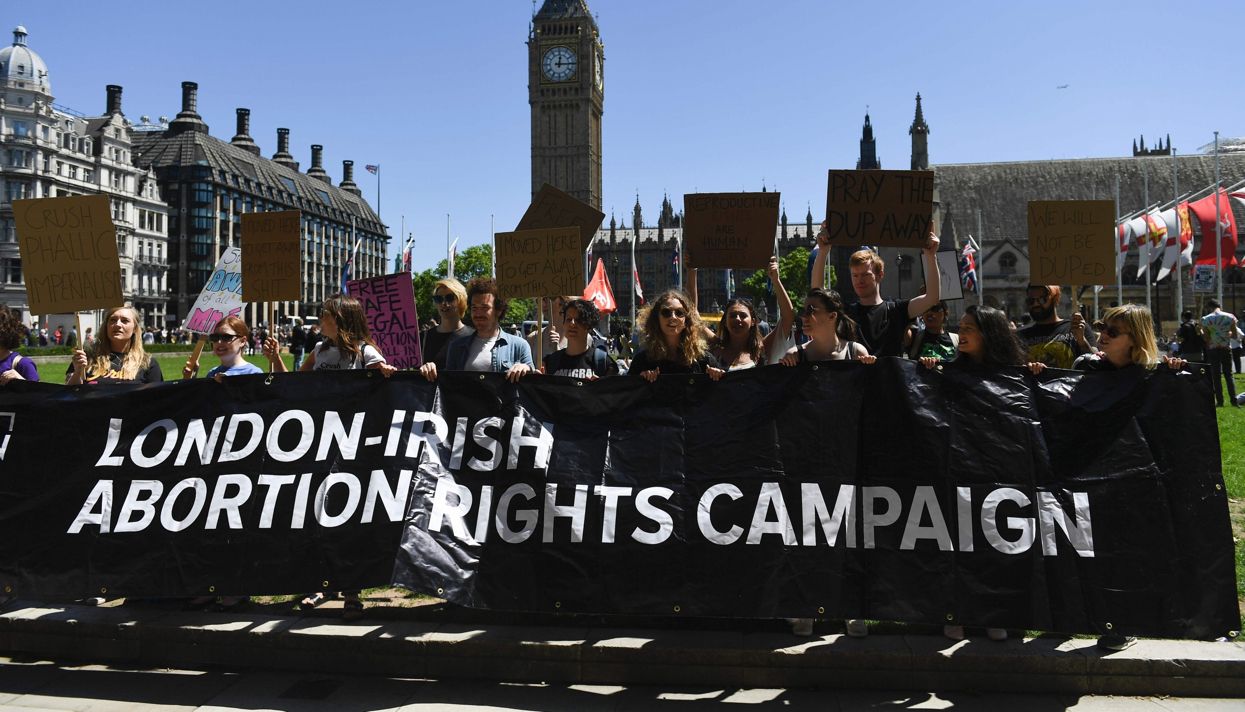
The Government of Great Britain will finance abortion to women from Northern Ireland - there, artificial termination of pregnancy is prohibited by law; There are no exceptions even for those women who became pregnant as a result of rape or incest. To have an abortion, the Irish go to private clinics to the neighboring island, before they had to pay about one and a half thousand pounds for this procedure. Medusa tells the details of this story.
How will the British parliament help women from Northern Ireland?
The queen about the financing of abortion for women from Northern Ireland was the amendment to the throne speech of the queen was introduced by the Labor, however, some representatives of the conservatives supported it - and as a result, after the parliamentary elections, the conservatives decided to allow this legislative initiative to avoid intra -party schism.
The author of the amendment is a deputy from the Labor Stell Crisisi. After the meeting of the parliament at which the amendment was adopted, she thanked her colleagues for supporting her call "to help North Irish women get an equal access to abortion."
The Minister of Finance of Great Britain Philip Hammond said at a meeting in the House of Commons that budget funds for financing abortion for women from Northern Ireland will be transferred to medical institutions ready to provide such services, in the form of state grants.
And what, in Northern Ireland, an abortion is outlawed?
The law on abortions, which has been in force in the UK since 1967, does not apply to Northern Ireland - there is a term of pregnancy is a criminal offense and is regulated by the law “On Crimes against the Personality” (the maximum punishment for such a crime is a life imprisonment).
To have an abortion, North Irish women need to prove that pregnancy threatens their lives, and abortion is the only opportunity to save it, or go to England, Scotland or Wales and terminate the pregnancy there.
Didn't they try to appeal the ban on court?
In 2015, the Supreme Court of the Belfast (the capital of Northern Ireland) has submitted an application for incompatibility of the British Law on Human Rights in 1998 and the legislation of Northern Ireland related to abortion. In particular, it was about the fact that the law on abortion does not take into account the cases in which a woman became pregnant as a result of rape either incest and mortal abnormalities of the fetus, which contradicts the European Convention on Human Rights. As a result, the judge admitted that the contradiction exists, but this did not entail the abolition of abortion.
On June 29, 2017, it became known that the three appeal instances of Northern Ireland again refused to legalize abortion for women who became pregnant as a result of rape, and in the case of deadly diseases of the fetus.
How many women are going to have an abortion from Northern Ireland to the UK?
According to the British Health Department, in 2016, more than 700 women from Northern Ireland made abortion in English private clinics, and the cost of the procedure is about one and a half thousand pounds. Now the services will be provided free of charge.
Where else are reproductive rights prohibited or limited?
A complete ban on abortion-without any exceptions-acts in Nicaragua, Salvador, Chile, Malta, the Philippines and the Vatican (according to 2011 data , 32 women had citizenship of the Vatican; in total there were about 600 citizens in the Vatican). In many countries of Asia, Europe and Latin America (including in Israel, Poland, Spain, Luxembourg), abortions are allowed only in the presence of certain conditions: if a woman is pregnant as a result of rape, if an anomalies are recorded or if pregnancy threatens the physical or mental health of a woman.
In the fall of 2016, in Poland, they tried to tighten the legislation related to abortion and completely ban them - with the exception of cases in which there is a threat of mother’s life. The initiative provoked many thousands of protests throughout the country - “Czarny Poniedziałek” (“Black Monday”) - as a result of which the draft law was rejected.
In Russia, abortions are included in the compulsory medical insurance program - that is, they are fully permitted and financed by the state. But in recent years, the campaign against abortion has been carried out at the legislative and public levels; There are regions in which there are no gynecologists who agree to conduct an appropriate operation.
Sasha Sulim