
Translated material
The eastern flank requires change
NATO finally launched battalion-tactical groups in Poland and the Baltic states. This was impatiently expected to the Ministry of Defense of the Russian Federation
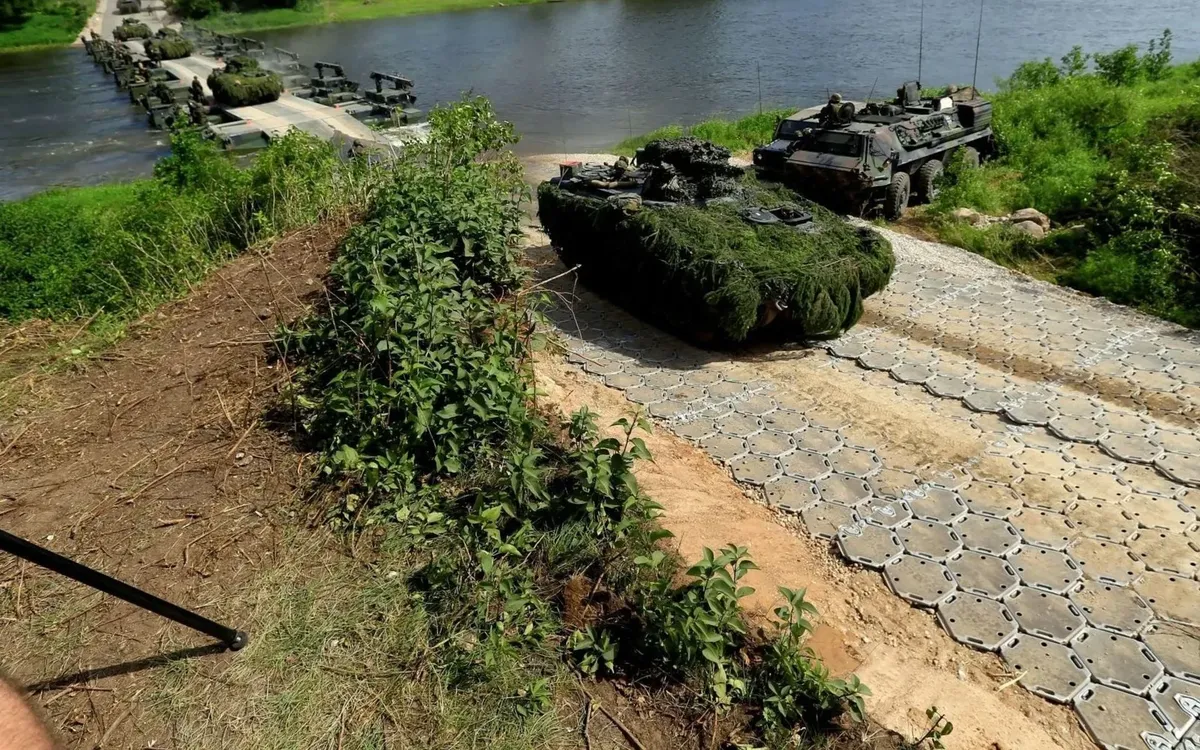
NATO finally managed to fulfill the decision of last year’s summit in Warsaw and completely place four combined multinational battalions in Poland and in the three Baltic republics with the total number of “more than four thousand people”.
Last year they wanted to turn around in the fall, but coalition affairs are not quickly done, and there are already 29 countries in NATO with Montenegro already with Montenegro. As a result, the last contingent from Canada for the fourth under -formed battalion arrived in Latvia only at the end of June. It took a lot of time for the formation of four battalion tactical groups (or BTG, as in the Russian army) it took a lot, but the result of efforts was enchanting - four BTGs included contingents from 15 different countries: Canada, Albania, Spain, Italy, Poland, Slovenia, Germany, Belgium, Holland, Luxembourg, Britain, Denmark, France and Romania.
The main purpose of this variegated army, according to the Secretary General of the Alliance, Jens Stoltenberg, is a demonstration of "real transatlantic solidarity." However, to conduct any serious offensive military operations, and even more so to threaten the Russian Federation, these BTGs are incapable. Firstly, because they are not collected in a fist, but scattered on a wide front of a thousand kilometers. Secondly, so that each consolidated BTG could act aggressively as a whole, it is necessary that all governments that have provided contingents give it good, and it is impossible to know in advance how much time such political agreement may last. The multinational BTG in essence resembles symbolic peacekeeping contingents, albeit with heavy weapons, deployed in the Baltic region. As it should be peacekeepers, they can defend themselves if they are attacked, and most importantly -
To restrain the Russian armed forces with its multinational presence so that any conflict will be immediately with many peoples: pan -European and transatlantic.
Russia, however, does not seem to be invading Poland or the Baltic states. Some do not want to attack, others cannot, and as a result, there is no real threat to anyone from the deployment of four multinational BTGs.
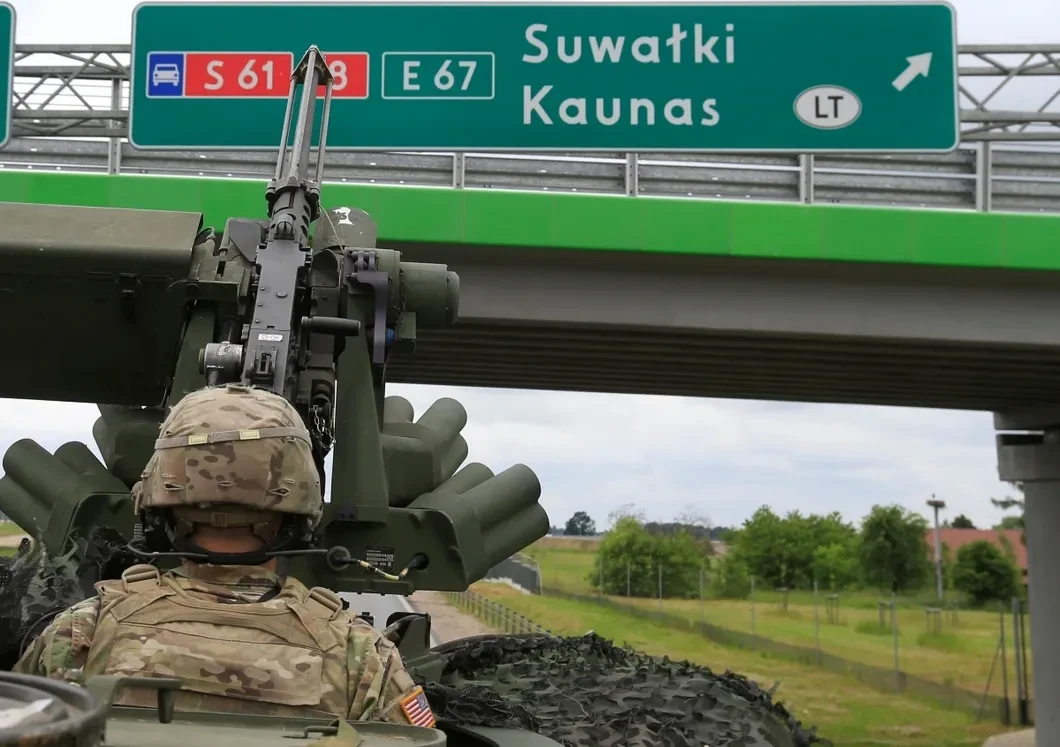
Of course, the Minister of Defense Sergei Shoigu, at the recent visiting board of the Ministry of Defense in Kaliningrad, announced that on the western borders of the Fatherland “the situation is deteriorating” because NATO is growing its activity and, in particular, has launched four multinational BTGs, as well as the Poland bases in Poland and Romania. They put pressure on Russia, arrange all sorts of maneuvers in the region, and "some countries seek to use military force as a tool to achieve geopolitical goals." In response, Russia “forcedly” deployed 20 new parts and formations in the “western direction”, built more than 40 new military bases and spent more than 100 sudden exercises in the Western Military District (ZHO) in the Western Military District. There are more than 30 completely combat -bearing BTGs now, and in total in the RF Armed Forces - up to 120.
Russia seems to be ready, and the West is preparing, but actually, what? To the pan -European war, turning into nuclear global?
In the last couple of years in the West, for the first time since 1991, moderate, but still the growth of military spending began. Someone is afraid of Russia, President Donald Trump was intimidated by someone, demanding to fork out. Of course, European countries will soon be able to achieve the desired level of military budgets of 2% of GDP, but since the total economic power of the alliance is many dozen times higher than the Russian one, even a small increase in expenses goes to tens of billions of dollars of increase. According to Stoltenberg, there are plans to spend part of the additional funds on the reconstruction of “heavy” armored units and on additional anti-aircraft missile systems-that is, what is required for possible battles on the eastern “Russian” front in Europe.
After the Cold War and the collapse of the USSR in the Western ruling political class, there was a belief that a full -scale war in Europe with Russia is more impossible. Yes, there will be police and peacekeeping operations somewhere in Asia or Africa in the conditions of unconditional superiority in the air, and such conflicts need “light”, mobile and relatively few “anti-Partizan” forces. Naturally, many Western military objected that “the Russians would return, and we will be without pants and without tank brigades,” but in Europe they were not listened at all and the armored units were ruthlessly reduced.
In Britain, where a hundred years ago they came up with a tank, where not so long ago they came up with modern multi -layer armor, completely eliminated (and seemingly forever) tank production.
Now the thin time of the abbreviations has ended in a new confrontation, and the military has a holiday and the prospect of a worthy garrison service in the Baltic states, Poland, Norway and Romania, among the friendly population, and not filthy business trips to a dusty Afghanist or Iraq. Of course, there is a threat that the next interception of the air target over the Baltic or Black Sea will end in a clash due to someone’s mistake, and the entire wonderful design of mutual deterrence will go into the acute-crisis phase, and nobody will be greeted. But in the days of the former Cold War, the threat of nuclear apocalypse was also always there, but people, nevertheless, lived, served and served a full pension, never fought.
Another thing is civilian. At the end of May, at the Council of the Federation, Shoigu complained that there are too many “blind” in the country, which should “see” and see the growing threat of NATO among Russian borders. And the truth: according to the latest Prochrevsky VTsIOM poll, 53% of the population do not believe that someone can really attack Russia. Of those 38% of citizens who still believe in the reality of the external military threat, 63% are afraid of the United States and 31%-Ukraine. NATO itself remains 7%. Even less believe in the aggression of China, Britain, Germany, Syria and ISIS banned in Russia. Since it is 7% of 38%, it turns out that
NATO aggression is afraid of less than 3% of the population of the Russian Federation. This grandiose-tragic rupture in assessing an external threat between the people and the military-political leadership is most likely the result of the excessive zeal of the guestropaganders.
According to VTsIOM, 36% of citizens consider the Russian army the best in the world, and another 47% - one of the best. Indeed, why be afraid of NATO if we are already stronger than anyone?
Shoigu promised to increase efforts and “hold events” in the Federation Council in order to “arouse” citizens who doubt the threat of NATO. Okay, but how? To begin to prove that our army is not so strong that the unpunished bombing of the Syrian opposition and ISIS, which have neither radar, no aviation, nor air defense - insufficient criterion of combat efficiency? Or increase the tension in the Baltic and in the Black Sea, even more frankly balancing on the verge of war, and then the people may be frightened? A difficult task, but, of course, they themselves are to blame: the delusions of greatness and paranoia often go hand in hand, but do not always get along peacefully.